Build an email community that beats algorithm swings. A practical sequence-first system for Singapore SMEs to drive replies, trust, and leads.
Email Communities for Singapore SMEs: Grow Loyal Fans
A Facebook post can disappear in hours. A good email can keep bringing customers back for years.
That difference matters a lot for Singapore SMEs right now. Paid reach keeps getting more expensive, organic social reach keeps getting tighter, and platforms change the rules with zero notice. If your whole marketing plan depends on an algorithm behaving, you don’t have a plan—you have a gamble.
The better approach is to treat social media as discovery and email as your community home base. Not a “newsletter when we remember.” A real relationship system: smart opt-ins, segmented sequences, and emails that get replies.
Email is the only community channel you truly own
Email is an owned channel. Social is rented land. That’s not a slogan—it’s an operational reality. Groups get removed, accounts get restricted, formats change, and yesterday’s “reach strategy” stops working overnight.
A story from the creator economy makes the point: one community builder built an 85,000-member Facebook group and it was deleted without warning. For an SME, that’s like losing your entire customer database because a mall shuts your kiosk.
Email behaves differently:
- When someone subscribes, you keep the relationship (as long as you follow consent rules and deliver value).
- Your message goes to an inbox and waits—no algorithm deciding whether it’s “worthy.”
- Healthy lists routinely see 50–60% open rates for strong welcome/topic sequences in many niches (especially when emails feel personal and targeted).
The Singapore SME angle: email protects your ROI
In the Singapore SME Digital Marketing series, we talk a lot about sustainable acquisition—channels you can measure, improve, and rely on. Email is the workhorse channel for that.
If you’re running:
- a tuition centre in Tampines,
- a B2B services firm in CBD,
- a clinic, gym, salon, or enrichment brand,
- an eCommerce store competing with marketplaces,
…email is where you build repeat bookings, repeat purchases, referrals, and upsells without paying again for every single impression.
The “sequence-first” system: how email becomes a community
A community isn’t just a big list. It’s a group of people who feel like you know them, and who trust you enough to come back.
Email sequences (automated series delivered over time) are the simplest way to create that feeling at scale.
Instead of sending one long “mega email,” you send a short series where each message moves the reader one step forward. It works because:
- it’s easier to consume,
- it builds momentum,
- it creates repeated touchpoints (which builds familiarity and trust).
Start with what your customers already ask you
The fastest way to write a high-performing sequence is to stop guessing.
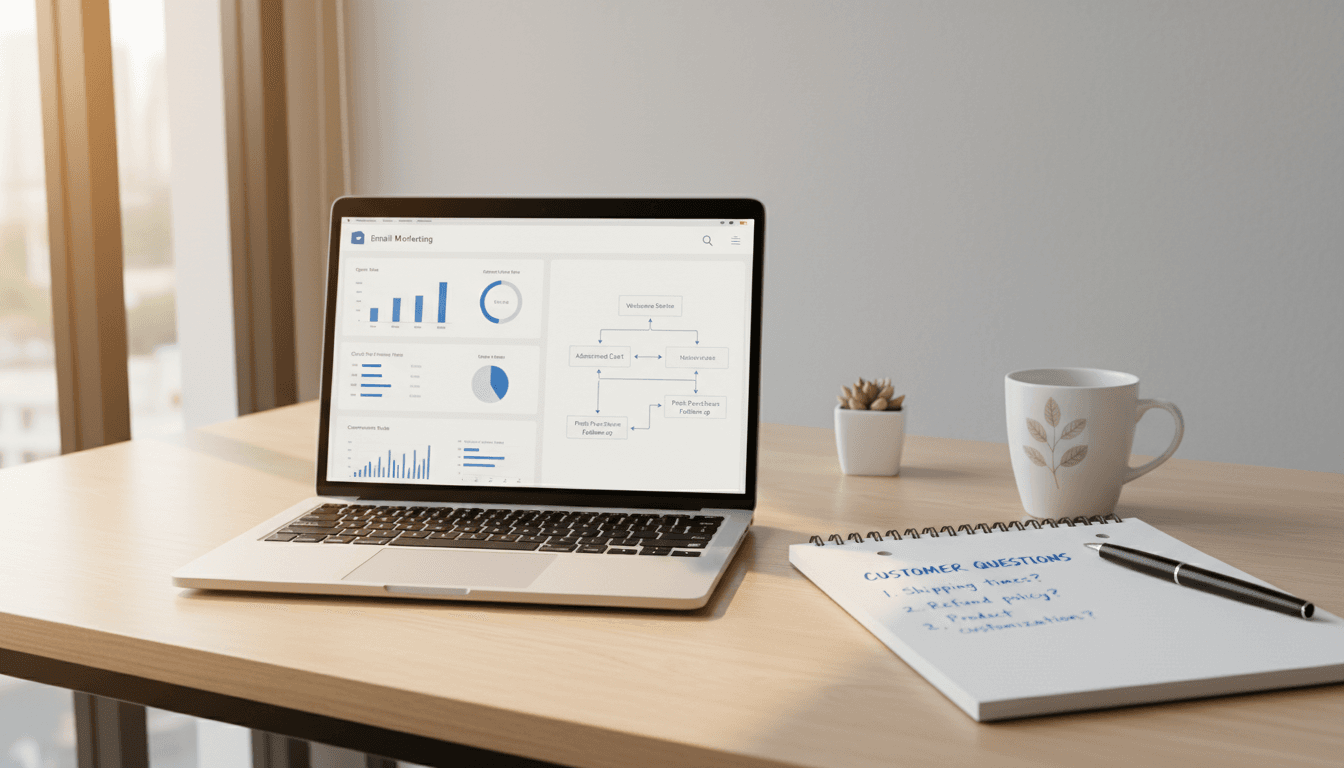
Write down the questions prospects ask repeatedly. Those questions are your content plan.
Examples tailored for Singapore SMEs:
- Renovation firm: “What’s the renovation timeline in a condo vs HDB?” “What do I need to prepare before hacking?”
- B2B accounting: “What’s the difference between bookkeeping and accounting?” “When do I need GST registration?”
- Aesthetic clinic: “What’s downtime like?” “How many sessions do I need?”
- Enrichment centre: “How do I choose the right programme for my child’s level?”
Each repeated question can become one email.
Snippet-worthy rule: If customers ask it more than 10 times, it deserves an email.
Build two topic-based sequences (most SMEs only need these)
You don’t need 12 funnels. You need two sequences that do their jobs.
1) Entry-level (newcomer) sequence
Answer first: This sequence turns a curious lead into a confident prospect.
Structure it like “What to expect” or “Your first time doing X.” It reduces anxiety, sets expectations, and positions your SME as the safe choice.
A practical 7-email example for a Singapore fitness studio:
- What to bring for your first session (and what not to worry about)
- How we assess your level (no judgement, just clarity)
- A realistic 4-week plan for beginners
- Nutrition basics for busy Singapore schedules (hawker-friendly)
- Common mistakes that cause injuries
- How to choose class types (strength vs HIIT vs mobility)
- Your next step: book a trial / schedule a consult
Keep each email focused on one outcome.
2) “Best-of library” sequence (evergreen resurfacing)
Answer first: This sequence makes sure new subscribers see your best content, even if they joined late.
If you’ve been posting on Instagram for 2 years or you’ve got 50 blog posts, your best pieces are buried. A weekly “back-catalog” email fixes that.
A simple cadence:
- Choose 26–52 evergreen pieces (FAQs, guides, case studies, before/after, comparisons)
- Write short intros for each
- Send every week on the same day
This is especially strong for SMEs with limited teams because you write it once and it keeps working.
Segmentation: one list, different paths
Answer first: Segmentation boosts conversions because relevance beats volume.
Many SMEs in Singapore serve multiple customer types. If you blast everyone with the same message, half your list tunes out.
Common segmentation patterns:
- Service type: corporate vs consumer
- Intent level: “just browsing” vs “ready to buy”
- Product category: skincare vs haircare; IELTS vs PSLE; wedding vs corporate catering
- Location: Central vs East/West (useful for outlets)
You don’t need a complex CRM to start. Even basic tags like interest:corporate or interest:beginners will lift results.
A clean way to set expectations (and reduce unsubscribes)
In your first email, tell people what they’re about to receive.
Example you can copy:
“Over the next 7 days, I’ll send one short email a day to help you decide whether [service] is right for you. If you miss a day, no stress—you can read anytime.”
This tiny line increases completion because it makes the experience feel intentional, not spammy.
How to get subscribers into your sequences (3 practical methods)
Answer first: Your opt-in method should match how your customers discover you.
Here are three approaches that work particularly well for SMEs.
1) In-content opt-ins (especially for mobile)
If your SME publishes articles, guides, or landing-page content, add an opt-in mid-article (not only in the footer). Mobile users won’t see your sidebar. Put the sign-up where attention is highest.
What converts:
- a single-topic offer (not “join our newsletter”)
- aligned with the page they’re reading
Example: a page about “GST registration” should offer a “GST readiness checklist” sequence—not a generic subscription.
2) Link triggers inside your regular broadcasts
If you already email weekly (even irregularly), add a small “PS” that moves people into a sequence.
Example:
- “PS: If you’re planning a renovation this year, click here and I’ll send you our 7-day timeline planner.”
When they click, tag them and auto-enrol them. It’s simple and it doesn’t require new traffic.
3) Landing pages you can say out loud
A landing page should be clean: no menu, no distractions, just the promise and the form.
This is useful in Singapore because so much business still happens via:
- networking events,
- webinars,
- podcast interviews,
- TikTok/IG where people might type a URL manually.
Make the URL short and memorable.
Frequency without overwhelm: a simple rule that works
Answer first: Set a predictable “no-stacking” schedule so people don’t get flooded.
Overlaps happen when someone joins multiple sequences. You can prevent most issues with one rule:
- Pick one “anchor day” for your weekly email (e.g., Thursday)
- Block that day so sequences don’t send then
So even if a subscriber is in a welcome series, they won’t get three emails on the same day.
Also, prepare one automated support reply for the inevitable “Why am I getting so many emails?” message:
- explain they joined a short series
- give the end date
- offer a preference option (pause / weekly-only)
Write emails that feel like a person, not a brand
Answer first: Plain text, short paragraphs, and a single reader in mind will outperform polished “newsletter designs” for most SMEs.
I’ve found SME emails work best when they read like a message you’d send to a client—not like a promo blast.
A practical writing formula
- Personal opener (2–4 lines): something real from the week
- One idea: one lesson, one tip, one story
- One action: reply, click, book, or read
- One question: invite a response
Why the question matters: replies are a strong deliverability signal. They also give you qualitative insight that open rates can’t.
Questions that get replies:
- “What are you stuck on right now?”
- “Which option are you leaning towards—A or B?”
- “If you could fix one thing about [process], what would it be?”
Use AI the right way (especially if you’re busy)
If you use AI, use it like an editor.
Good prompts:
- “Rewrite this to sound like a friendly WhatsApp message, keeping my meaning.”
- “Make this shorter and clearer, keep it under 180 words.”
Then edit it so it sounds like you. If it doesn’t sound like you, your customers will feel it.
What to do next: a 14-day implementation plan for SMEs
Answer first: Build one sequence, one opt-in, and one weekly email habit.
Here’s a realistic two-week plan for a small team.
- Day 1–2: List 15 customer FAQs. Pick the top 7.
- Day 3: Create a simple opt-in offer (“7-day guide”, “checklist series”, “first-time X plan”).
- Day 4–7: Write 7 emails (150–250 words each). Keep them focused.
- Day 8: Add the opt-in to your website (mid-page placement).
- Day 9–10: Draft a clean landing page for the same opt-in.
- Day 11: Set sending rules (block one day; set expectations in email 1).
- Day 12–14: Send one broadcast email that links people into the sequence.
If you do only that, you’re already ahead of most businesses competing for attention on social.
Email communities aren’t “old school.” They’re the steady channel that makes the rest of your Singapore digital marketing work better—because you’re building an audience you can reach tomorrow, next month, and next year.
What would your customers thank you for explaining in a 7-day email series?