Singapore SMEs are seeing rising dual-use AI demand. Learn how to package, position, and market advanced tech for higher-quality leads in 2026.
Dual-Use AI Tech: Singapore SMEs’ Marketing Edge
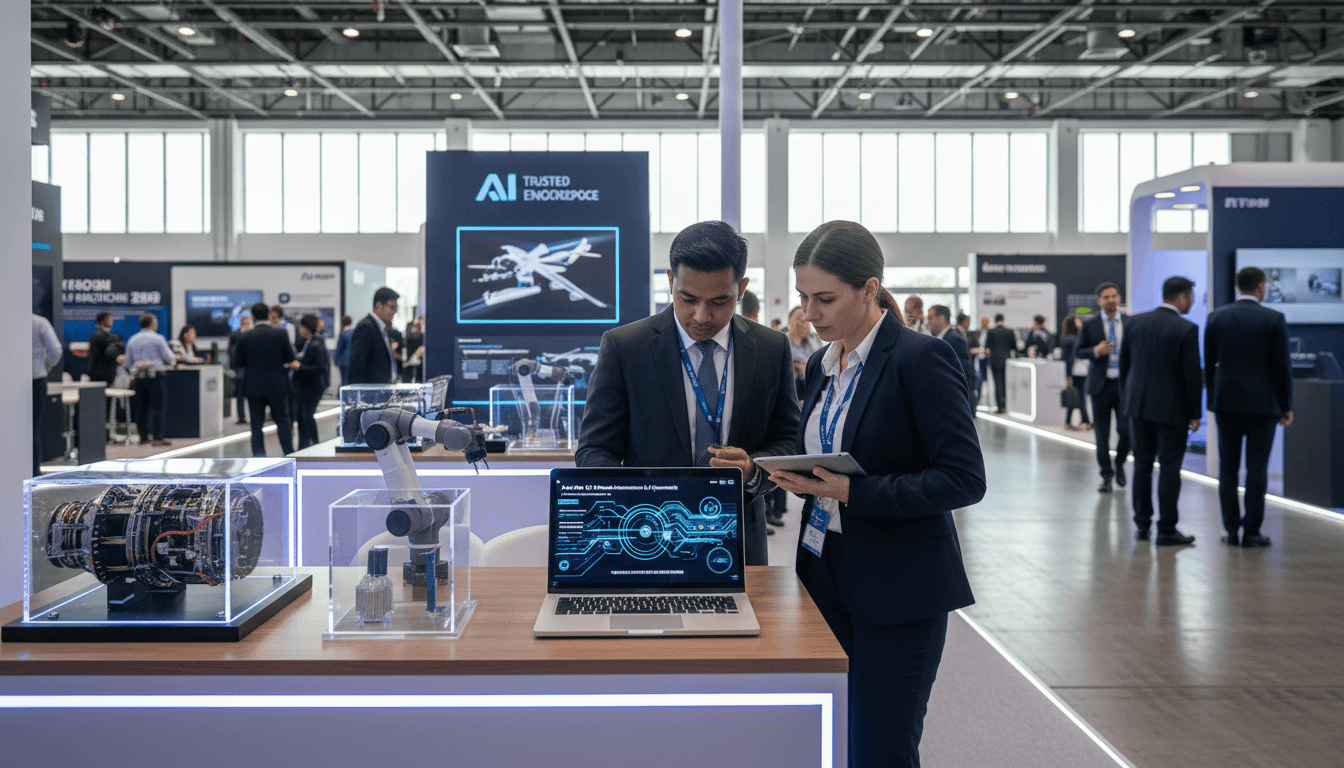
Aerospace isn’t usually where you look for practical digital marketing lessons—but the Singapore Airshow 2026 makes a strong case for it.
CNA reports that SMEs offering dual-use technologies (solutions that serve both commercial and defence needs) are seeing rising demand, driven by two forces that don’t look like they’re slowing down: commercial aviation’s ongoing capacity and maintenance needs, and heightened geopolitical tensions. One SME at the show said overseas buyer interest has more than doubled. The Association of Aerospace Industries Singapore (AAIS) also pointed to the largest-ever investment participation by SMEs at this year’s airshow—an indicator that smaller players are moving closer to the centre of the ecosystem.
If you’re running an SME in Singapore—whether you sell software, services, hardware, or industrial solutions—this matters because dual-use is not just a product strategy. It’s a positioning and go-to-market strategy. And in 2026, that go-to-market is increasingly powered by AI for marketing, sales enablement, and account-based outreach.
Dual-use technology demand is rising—and SMEs can ride it
Dual-use demand is rising because buyers want one capability that works across multiple environments: different compliance regimes, different mission profiles, different operating constraints.
At the Airshow, CNA highlighted cold spray technology as a tangible example. Cold spray is used to repair and protect metal components on aircraft. The machine’s nozzle is heated to 550°C, applying a thin coating of aluminium powder to protect exposed metal. The same process can help address manufacturing defects in commercial aviation and also repair parts on military platforms (CNA’s example includes weapon launch rails).
That detail is more than trivia. It explains why dual-use buyers pay attention to:
- Reliability under harsh conditions (temperature, corrosion, fatigue)
- Repeatability of results (process control and QA)
- Supply assurance (can you deliver parts, service, and support on time)
- Security and trust (will you protect sensitive information)
CNA also mentions other dual-use areas like satellite technology and artificial intelligence—which is where most Singapore SMEs outside aerospace should perk up.
What “dual-use AI” looks like for normal SMEs
You don’t need to build defence products to apply the dual-use playbook.
Dual-use AI is often just one core capability packaged for multiple markets. Examples Singapore SMEs can realistically execute:
- Computer vision quality inspection used in electronics manufacturing, then adapted for aviation MRO inspections.
- Predictive maintenance models used for industrial equipment, then packaged for fleet operators (logistics, maritime, aviation ground support).
- Geospatial analytics used for real estate and urban planning, then adapted for infrastructure monitoring.
- Cybersecurity monitoring used for enterprises, then offered as a stricter, compliance-ready version for regulated industries.
The reality? Your “dual-use” may simply be “commercial + regulated” rather than “commercial + defence.” The go-to-market mechanics are similar.
The biggest marketing mistake SMEs make with advanced tech
Most companies get this wrong: they market advanced technology like it’s a feature list.
But dual-use buyers don’t buy features. They buy assurance.
CNA quotes industry leaders describing the opportunity: civil aviation demand is already strong (“running on full cylinders,” per ECK director Koh Pak Keng), and defence buyers are actively searching for solutions “not conventionally available.” That’s a polite way of saying: procurement teams are open to SMEs—if you can prove you’re credible.
So your marketing job isn’t “get more eyeballs.” It’s reduce perceived risk.
The trust stack: what your website and content must prove
If you sell AI or advanced tech in Singapore, your digital presence should prove four things quickly:
- Technical credibility: clear use cases, constraints, and performance metrics.
- Operational maturity: QA processes, documentation, onboarding, support SLAs.
- Security posture: data handling, access control, vendor risk answers.
- Delivery proof: case studies, pilots, references, before/after outcomes.
This is where “Singapore SME digital marketing” stops being about social posts and starts being about sales enablement assets that shorten cycles.
A strong SME marketing site isn’t a brochure. It’s a due diligence shortcut.
How to market dual-use AI tech in Singapore (without sounding vague)
A practical approach is to market your capability in three layers: outcomes, proof, and constraints. This is especially effective for AI solutions, where buyers are tired of inflated promises.
1) Position around outcomes buyers can measure
Write messaging that ties to measurable KPIs, not generic value.
Examples that work:
- “Detect surface defects under X mm at Y throughput” (inspection)
- “Reduce unplanned downtime by Z% through predictive alerts” (maintenance)
- “Cut manual triage time from hours to minutes using automated classification” (ops workflows)
If you don’t have production metrics yet, publish pilot metrics with context: sample size, environment, and limitations.
2) Use account-based marketing (ABM) for high-value buyers
Airshow dynamics are ABM in real life: a concentrated group of high-intent accounts, long buying cycles, and multiple stakeholders.
For Singapore SMEs selling AI business tools, ABM is often the highest-ROI channel because you’re not trying to win the entire market. You’re trying to win 20–50 accounts.
An ABM stack that works for SMEs:
- A landing page per target segment (e.g., MRO, logistics, semiconductor)
- One “technical brief” PDF per use case
- A case study library with problem → method → result
- LinkedIn outreach + remarketing to known visitors
- A short demo video that shows the workflow, not the UI
3) Publish constraints to build credibility
This sounds counterintuitive, but it converts serious buyers.
If your AI model needs a certain data format, sensor quality, lighting condition, or minimum history window, say so. Defence and regulated buyers prefer suppliers who are upfront.
Weak marketing hides constraints. Strong marketing explains them and shows how you manage them.
What the Airshow story teaches about product packaging
CNA notes that local firm ECK has grown its presence at the Airshow—from a small kiosk to a full-sized booth—reflecting stronger demand. That pattern is common: SMEs win when they stop selling “a technology” and start selling a packaged capability.
Here’s how to package dual-use AI offerings so they’re easier to buy:
Package 1: “Pilot-in-a-box”
A fixed-scope engagement that answers one question fast.
- Timeline: 2–6 weeks
- Output: report + demo + rollout plan
- Pricing: fixed, transparent
This is ideal when buyers want proof before committing.
Package 2: “Compliance-ready deployment”
A higher-priced tier that includes documentation, security review support, and audit artifacts.
- Data processing diagram
- Model governance notes
- Access control setup
- Change management process
For regulated industries, this can be your differentiator.
Package 3: “Managed outcomes”
Instead of selling software licences, sell an SLA around outcomes.
- Uptime targets
- Response times
- Model refresh cadence
- Monitoring and drift reports
This matches how many enterprise buyers want to procure in 2026: fewer tools, more accountability.
The data point you should pay attention to
CNA cites reports that investment in dual-use technologies rose 25% from Q3 2024 to May 2025, reaching nearly US$1.2 trillion. The exact mix behind that number varies by report, but the direction is what matters: capital is flowing to capabilities that cross commercial and defence applications.
For Singapore SMEs, that means more opportunities—but also higher expectations.
Why Singapore SMEs are well-positioned (and how to use it in marketing)
One interviewee in the CNA piece points out Singapore’s reputation as a trusted partner: customers believe local firms will “guard the secrets.” That’s not just national branding—it’s a marketing asset if you can back it with practices.
To translate “trust” into conversion:
- Publish a security and data handling page (plain English, not legalese)
- Offer an NDA-first discovery call option for sensitive use cases
- Create a vendor due diligence pack (company profile, certifications, policies, insurance)
These assets save procurement teams time, and time is money.
Practical next steps: a 30-day marketing plan for AI and advanced tech SMEs
If you want leads (not just traffic), do these in the next month.
- Pick one dual-use story
- One capability, two markets. Example: “industrial inspection + aviation inspection.”
- Build one high-converting landing page
- Include: problem, process, proof, constraints, security notes, CTA.
- Create two sales enablement assets
- A 1-page technical brief
- A short case study or pilot summary
- Run a small ABM campaign
- Target 20 accounts, not 2,000 random clicks.
- Use LinkedIn + email + retargeting.
- Install measurement that matches long cycles
- Track: target-account visits, asset downloads, demo requests, stakeholder engagement.
If you do nothing else, do step 2. A good landing page is still the most underrated “AI business tool” in Singapore: it turns interest into qualified conversations.
Where this is heading for 2026 (and what to do now)
Dual-use technology demand isn’t a short-term spike. It’s a structural shift: buyers want adaptable tech, faster deployment, and vendors they can trust.
For the Singapore SME digital marketing series, the lesson is straightforward: advanced tech doesn’t sell itself. You need a marketing system that makes your SME feel low-risk, procurement-ready, and easy to evaluate—especially when your product touches AI, satellites, aerospace, or any regulated environment.
If your team is exploring how to package and market AI capabilities—whether for commercial operations, regulated industries, or dual-use opportunities—start by auditing your site and sales assets as if you were the buyer. What would you doubt? What would slow you down? Then fix that first.
The Singapore Airshow story is a reminder that SMEs can win big markets. But you don’t win them with hype. You win them by making trust obvious—and making evaluation simple.