China luxury spending rose 1%–3% in Q4 as stocks climbed. Here’s how Singapore startups can use AI to track confidence and boost retail conversion.
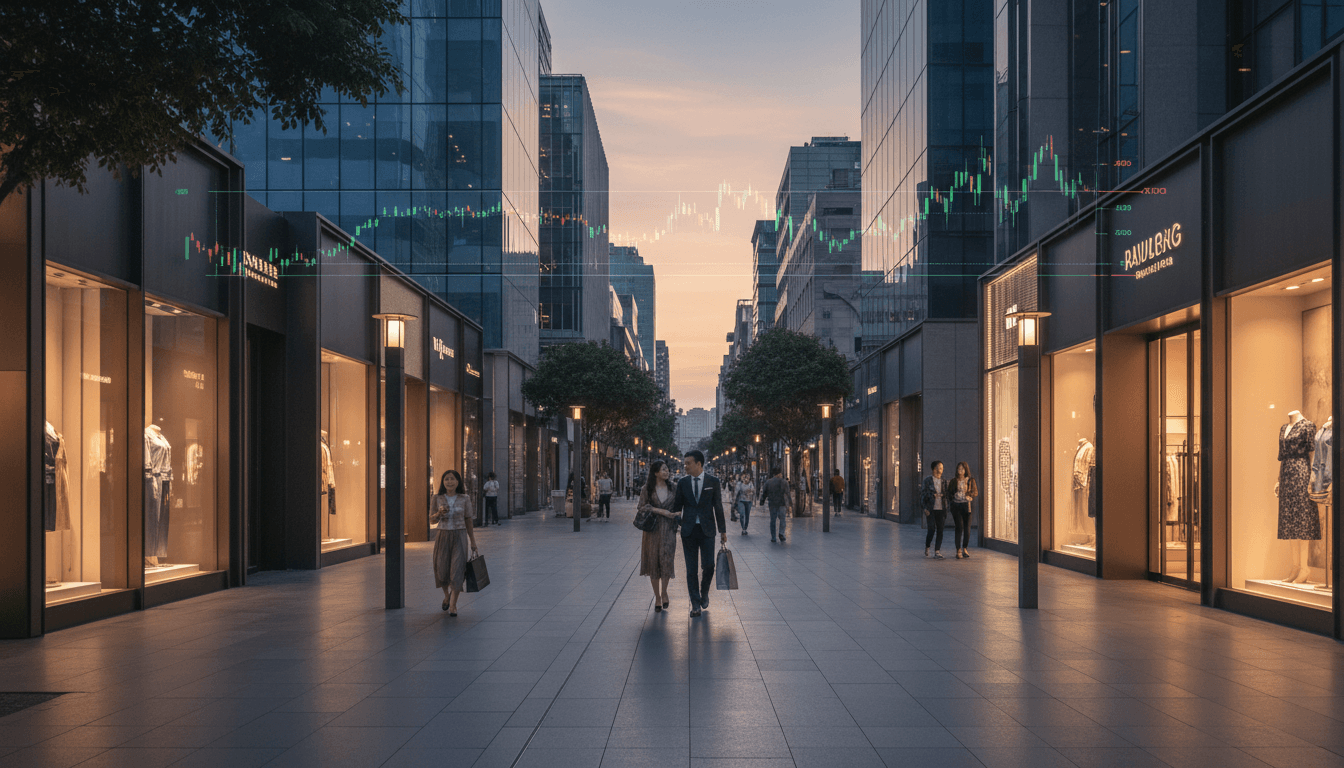
Stock Rallies, Luxury Spend: What Startups Can Learn
Chinese luxury spending doesn’t rise because people suddenly “love bags again.” It rises when confidence returns—and few confidence signals are louder than a climbing stock market.
Nikkei Asia recently reported that mainland China luxury goods spending grew 1%–3% year-on-year in Q4 (Oct–Dec), with Bain & Company pointing to a “robust stock market” as one driver. But the more interesting detail is the nuance: even as luxury ticks up, surveys show wealthy consumers are increasingly choosing experiences over products.
For Singapore startups building in retail and e-dagang (e-commerce), this is a practical playbook moment. In our “AI dalam Peruncitan dan E-Dagang” series, we keep coming back to one truth: AI works best when it’s tied to real demand signals. Stock markets, travel surges, and shifting “feel-good” spending are signals you can translate into segmentation, messaging, and inventory decisions—fast.
The fast takeaway: a rising market changes who buys—and why
A rising stock market doesn’t just increase spending power; it changes buyer psychology. When portfolios look healthier, affluent buyers loosen the rules they’ve been following during uncertain quarters.
Bain’s estimate (1%–3% YoY luxury growth in Q4) is modest, but it’s still meaningful because it suggests a turning point in high-end consumption while other parts of the economy remain uneven. For founders, I read this as: pockets of demand can return earlier than “the macro” looks healthy.
The mechanism: wealth effect + permission to spend
Here’s the cause-effect chain that matters for marketers:
- Stock market up → perceived wealth up (even if cash income doesn’t change)
- Perceived wealth up → “permission to spend” increases
- Permission increases → conversion improves on premium items and upgrades
- Upgrades rise → basket mix shifts (higher AOV, more add-ons, more gifting)
If you sell anything that sits in the “nice-to-have” zone—beauty devices, premium food & beverage bundles, boutique travel, specialist healthcare, athleisure, creator products—this pattern applies beyond luxury handbags.
Why this matters in February 2026
We’re coming off Lunar New Year season, when gifting, travel, and status purchases peak. When optimism is rising at the same time (via markets), you often see a second-order effect: post-holiday self-reward spending and experience bookings (restaurants, staycations, wellness, premium services).
That’s where AI can do real work: it can spot micro-shifts early and help you react before competitors do.
Luxury buyers are drifting toward experiences—don’t ignore that
The Nikkei piece highlights a key tension: luxury goods spending can rise while preference shifts toward experiences. That’s not contradictory. It’s segmentation.
In practice, affluent consumers are splitting into at least three groups:
- Status refreshers: still buying visible products, but more selectively
- Experience maximisers: spending on travel, dining, wellness, education
- Hybrid optimisers: fewer items, higher quality, plus high-frequency experiences
For Singapore startups, this matters because many brands still market premium products as if the customer’s goal is ownership. Increasingly, the goal is identity and memory.
Translate “experience-first” into e-commerce tactics
Even if you sell physical products, you can package the experience:
- Add “how it feels” content: fit, ritual, unboxing, usage moments
- Bundle services: consultation, setup, styling, onboarding, refill plans
- Build event hooks: limited drops tied to travel seasons, pop-ups, tastings
AI in peruncitan helps here by matching customers to the right narrative.
A snippet-worthy line I use with teams: “Premium buyers don’t buy features; they buy a future weekend version of themselves.”
Use AI to convert macro signals into campaign decisions
If you’re doing “AI-driven marketing” but your inputs are only clicks and impressions, you’re missing the bigger advantage: context.
1) Build a “confidence index” for your category
Answer first: Yes, you can operationalise market optimism without being a hedge fund.
A simple internal confidence index can combine:
- Stock index direction (weekly/monthly trend)
- Currency movement (for imported goods pricing sensitivity)
- Travel data proxies (search volume for destinations, flight capacity)
- Your own leading indicators (wishlists, add-to-cart rate, price-page views)
Then use it to adjust:
- Promo depth (premium buyers respond better to access than discounts)
- Creative angle (reward vs. prudence messaging)
- Assortment emphasis (hero SKUs vs. entry “trial” SKUs)
2) Personalised recommendations that reflect “mood,” not just history
Most recommendation engines overweight past purchases. That’s fine for staples, weak for premium.
What works better for “affluent confidence cycles”:
- Create occasion-based recommenders (gifting, self-reward, travel kit)
- Add price elasticity segments (who upgrades when confidence rises)
- Use next-best-offer models that test “trade-up” bundles (e.g., starter → premium)
This is exactly where AI dalam e-dagang shines: it can serve a different storefront to two customers viewing the same product—based on probability of upgrade, not just similarity.
3) Demand forecasting: plan for mix shifts, not just volume
Luxury growth of 1%–3% isn’t about shipping 3% more units. It’s often about:
- Higher AOV
- More premium variants selected
- More gifting bundles
- Lower return tolerance (customers choose “safe” premium options)
Your forecasting should predict SKU mix and margin mix. If you only forecast total orders, you’ll still stock out on the items that matter.
Practical move for startups: start with a lightweight model that predicts demand for top 20 revenue-driving SKUs and their alternates. You don’t need perfection; you need fewer painful stockouts.
APAC expansion lesson: segment China demand, then localise to Singapore
The biggest mistake I see in regional go-to-market plans is treating “China demand” as a monolith. The Nikkei/Bain datapoint is national, but spending surges are usually uneven by city tier, asset exposure, and travel propensity.
A segmentation approach that actually ships
If you’re a Singapore startup selling into China travelers, Chinese expats, or cross-border e-commerce audiences, segment like this:
- Asset-linked affluence: customers whose spending correlates with equities
- Travel-first affluence: customers whose spending correlates with holidays and airline capacity
- Cautious premium: customers who will buy, but only with strong value framing
Then localise for Singapore:
- For asset-linked buyers: “reward yourself” + premium upgrade paths
- For travel-first buyers: airport-ready bundles, hotel delivery, concierge-style support
- For cautious premium: durability, warranty, authenticity, and resale value cues
What to do if you’re not in luxury at all
Take the lesson up a level: confidence cycles change conversion friction.
When confidence rises:
- Customers need less reassurance
- They tolerate higher prices for convenience
- They respond to limited availability and exclusivity
When confidence falls:
- They research more
- They want flexibility (returns, instalments)
- They shift to experiences that feel “worth it”
AI lets you swap these modes faster than manual campaign planning.
“People also ask” (and direct answers)
Does a rising stock market really increase consumer spending?
Yes. The wealth effect increases perceived financial security, which raises willingness to buy discretionary and premium items.
Should startups change messaging based on macro trends?
Yes—if you can do it without thrashing your brand. The best approach is to keep your brand promise stable and rotate the angle (reward, access, convenience, durability) based on demand signals.
How do I apply AI in retail if I’m a small team?
Start with one high-impact workflow: personalised recommendations or SKU-level demand forecasting for your top sellers. Use simple models, iterate monthly, and tie outputs to actions.
What to do next (especially if you’re selling in Singapore)
The Nikkei story is about China luxury, but the underlying playbook is broader: macro optimism changes micro behavior. If you’re building a retail or e-commerce startup in Singapore, you’re operating in a region where money, travel, and sentiment move quickly across borders.
My stance: don’t treat macro trends as “interesting context.” Treat them as inputs to your growth system. Build a small dashboard, attach it to segmentation, and let AI help you make fewer guesses.
If the next leg of China’s confidence cycle continues, the winners won’t be the brands shouting “premium” the loudest. They’ll be the ones that detect who’s ready to spend this week, who prefers experiences, and what offer removes friction without discounting their value.
What signal are you watching right now—markets, travel, or your own customer data—and is it actually changing your campaigns?