A Tampines pineapple tart vending machine shows how automation and AI retail tools can reduce stockouts, improve forecasting, and boost festive sales.
Pineapple Tart Vending Machines: A Smart Retail Play
Chinese New Year retail in Singapore runs on one emotion: urgency. In the final week before visiting season, people who were totally calm in January suddenly need pineapple tarts today—and they’ll pay for convenience if you remove the friction.
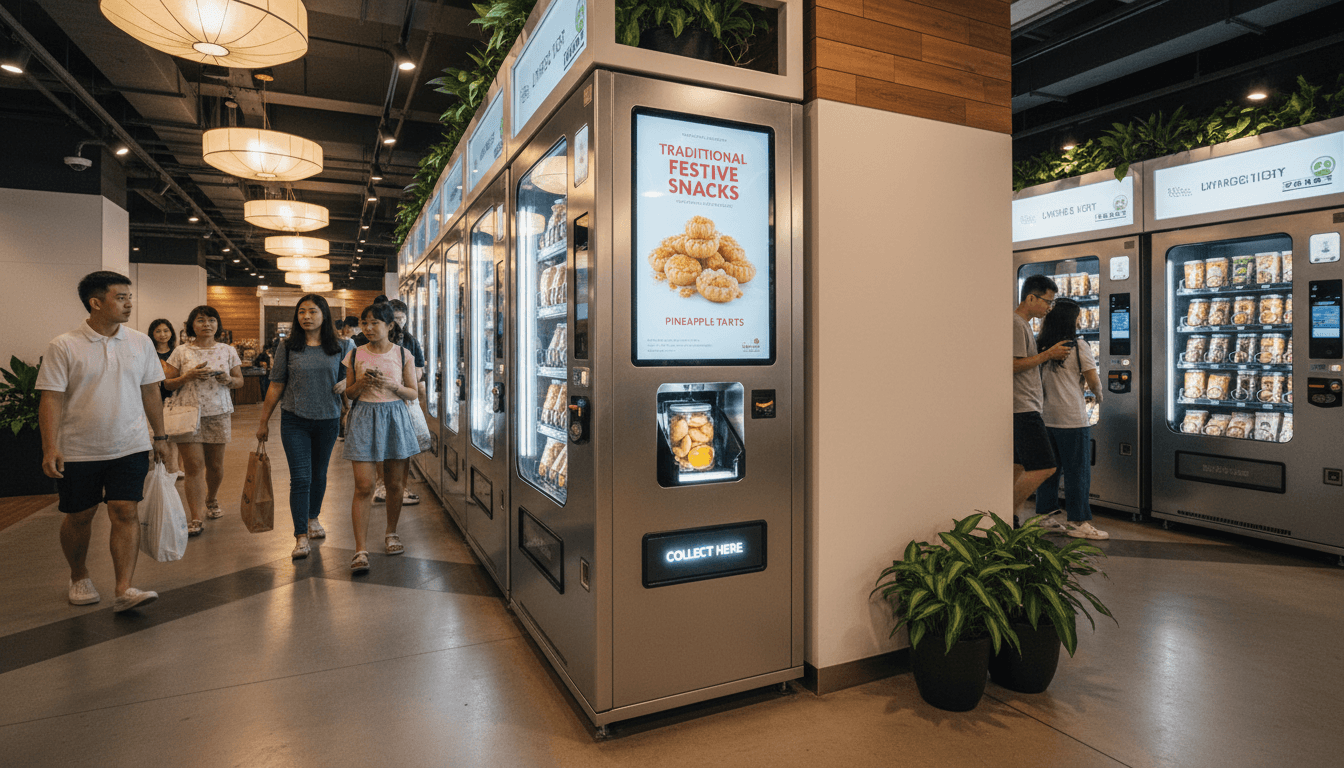
That’s why the pineapple tart vending machine at Our Tampines Hub is more than a cute festive gimmick. It’s a real-world example of how automation (and, increasingly, AI in retail) helps local brands stay visible, sell reliably during peak demand, and operate without the fixed costs that crushed many traditional storefronts.
This post is part of our “AI dalam Peruncitan dan E-Dagang” series, where we look at how AI enables ramalan permintaan (demand forecasting), smarter pengurusan inventori, personalised recommendations, and better customer experiences. A vending machine can’t replace a full e-commerce stack—but paired with the right data and tools, it becomes a powerful retail channel.
What the Tampines vending machine gets right (and why it works)
A vending machine works because it answers the customer’s real question: “Can I get the festive thing I need immediately, without a queue?” The Our Tampines Hub vending machine alley is open 24/7, positioned in a high-footfall public hub, and designed for fast payment and pickup.
In the CNA report, one standout machine is labelled “Pineapple Tart” under a new partnership: Two Bakers x Hypha Provisions (branded as “Pineapple Tart by Huat Huat Cake”). Two Bakers closed its Lavender cafe in August 2025, citing rising rental costs and lower footfall, and shifted toward online and corporate sales—then reappeared physically through a limited retail touchpoint that doesn’t involve signing another lease.
Convenience isn’t a bonus—it’s the product
For seasonal goods, convenience is often what customers are truly buying. The vending experience described is intentionally “fuss-free”: touchscreen selection, card payment, and a careful dispensing mechanism that protects fragile jars.
If you run retail or e-commerce, this is the lesson: reduce steps at the moment of urgency.
Practical takeaways you can apply this quarter:
- Put your “fast decision” items on the shortest path to purchase (fewer clicks, fewer options).
- Make fulfilment predictable (clear restock times, clear pickup expectations).
- Offer at least one channel that customers can use when they’re in a rush (express pickup, lockers, vending, same-day).
Vending machines are a distribution channel, not a novelty
Hypha Provisions (previously HYPHA Vending Retail) has built a small ecosystem of “retail micro-nodes”: shio pan “ATM” concepts, banana cake vending for legacy bakeries, and now a multi-brand alley at Tampines.
That matters because channel strategy is what keeps seasonal peaks from turning into operational chaos.
A good rule of thumb: If demand spikes 3–5x during festive periods, your distribution should multiply too—without multiplying your fixed costs.
Automation during CNY: the operational benefits most brands miss
The obvious win is 24/7 access. The bigger win is operational control.
Two Bakers’ machine stocks:
- Pineapple Tarts: S$28 for 530g
- Pineapple Balls: S$28 for 530g
- Hazelnut Butter Cookies: S$26.80 for 330g
- Orange Earl Grey Cookies: S$26.80 for 330g
The pricing matches its online shop, which is a smart move: it avoids channel conflict and trains customers to see vending as a convenience layer, not a discount channel.
Demand forecasting becomes simpler when the “store” is instrumented
Here’s the blunt truth: many SMEs “forecast” festive demand by gut feel, then spend the final week firefighting stockouts.
A vending machine is measurable by default:
- Units sold by SKU, by hour
- Sell-out speed after restock
- Basket composition (what sells together, if multi-purchase is allowed)
- Location performance vs other sites
On its own, that’s automation. Add AI, and you get ramalan permintaan that’s actually usable:
- Predict which SKUs will sell out by time-of-day
- Recommend restock frequency (e.g., “minimum twice a week” becomes dynamic)
- Optimise production planning for handmade goods (critical when output is constrained)
Snippet-worthy reality: AI demand forecasting is only as good as your data capture. Vending machines capture clean sales data automatically.
Inventory management: “restock often” is not a strategy
The CNA piece mentions restocking “a minimum of twice a week” for Two Bakers, while other vendors (like Butter Town’s festive buns) restock daily at a fixed time.
Fixed schedules are fine—but they leave money on the table.
A better approach for festive peaks:
- Set service levels per SKU (e.g., never below 20% capacity from 12pm–9pm).
- Model sell-through rate (units/hour) from the last 7 days.
- Trigger restock tasks based on predicted stockout time, not calendar days.
Even without a data science team, this can be done with lightweight AI business tools (forecasting templates, automated alerts, simple dashboards). The key is discipline: treat restocking like fulfilment operations, not “someone checks when free.”
Tech meets tradition: keeping handmade products “premium” in automated retail
A common fear is that automation makes artisanal products feel mass-market. I disagree. Automation doesn’t change the product. It changes access.
Two Bakers positions itself as handmade (“every piece is handmade”), and the machine’s gentle dispensing is designed to protect quality. This is exactly how you keep the premium story intact:
What to keep human, and what to automate
For artisanal festive goods, the split should look like this:
- Human: recipe, craft, QC, packaging, brand voice
- Automate: payment, pickup, availability visibility, replenishment workflows, customer messaging
If you’re building an “AI dalam Peruncitan dan E-Dagang” roadmap, start here. Most brands automate marketing first. It’s often better to automate operations first—because nothing kills trust like selling what you can’t fulfil.
Customer engagement: novelty fades, convenience sticks
A pink vending machine alley is Instagram-friendly, but the real customer engagement win is reliability:
- People remember the brand that saved them at 10pm when everything else was sold out.
- People re-buy when they know they can get the same quality without planning weeks ahead.
This is where AI can quietly improve retention:
- Segment customers by purchase timing (early planners vs last-minute buyers)
- Offer personalised reminders (e.g., “Your favourite hazelnut cookies are back in stock”) through WhatsApp/email—without spamming everyone
- Use simple propensity models to decide who gets which message
If you run a Singapore retail brand: a practical “vending + AI” playbook
You don’t need to own a vending network to learn from this. You need to copy the operating model.
Step 1: Choose products that fit automated retail
The best candidates are:
- Non-perishable or stable short shelf-life items
- High repeatability (consistent QC)
- Strong “giftability” (festive jars, bundles)
- Clear hero SKUs (3–6 items max)
Too many SKUs increases forecasting error and restock complexity.
Step 2: Build a mini data loop in 14 days
Even basic AI needs a feedback loop. Start capturing:
- Daily sales by SKU and hour
- Stockouts and restock times
- Promo periods (what changed, when)
Then use that data for:
- Weekly production planning
- Dynamic restock frequency
- Identifying “loss” hours (times you’re out-of-stock most often)
Step 3: Automate the boring ops first
Quick wins that improve margins fast:
- Automated low-stock alerts (email/Slack/WhatsApp)
- Simple demand forecasts for the next 3–7 days
- Batch production planning based on sell-through
- A dashboard that shows: revenue/day, sell-out time, gross margin by SKU
This is where AI business tools in Singapore make sense: you’re using AI to reduce waste and stockouts, not to chase flashy campaigns.
Step 4: Treat festive peaks as “stress tests” for your system
Chinese New Year is basically an annual load test:
- Can your operations handle spikes without degrading quality?
- Do you know exactly what sells out first, and why?
- Can you replenish before the peak, not after it?
If the answer is no, don’t wait for the next festival. Fix the system now, while demand is normal.
People also ask: Is a vending machine really “AI in retail”?
Not by itself. A vending machine is automation; AI comes in when you use the data to predict, optimise, and personalise.
- Automation = always-on sales channel, standardised payment, fewer staffing constraints
- AI = demand forecasting, inventory optimisation, customer segmentation, targeted messaging
When you connect automated channels (vending, lockers, click-and-collect) to your sales and inventory data, you get the foundation for AI dalam peruncitan dan e-dagang that actually affects profit.
One-liner worth keeping: Automation sells the product; AI prevents the stockout.
Where this trend is going next in Singapore
Singapore’s retail reality is clear: rent is expensive, labour is tight, and customers expect speed. That’s why we’ll see more “micro-retail” formats—vending alleys, pickup pods, smart lockers—especially in transport nodes and community hubs.
For brands, the opportunity is bigger than incremental sales. It’s resilience:
- A physical presence without a full store
- Continuous data for forecasting and product decisions
- A channel that performs when your e-commerce cutoff times have passed
If you’re planning your 2026 retail calendar, treat Chinese New Year as the blueprint for every other peak (Hari Raya, Deepavali, year-end gifting). The companies that win aren’t the ones that shout the loudest. They’re the ones that stay in stock.
If you want help mapping a simple AI + automation stack—forecasting, inventory, and customer messaging—start with one channel and one festive product line, then scale. The “pineapple tart vending machine” story is fun. The operating model behind it is the part worth copying.
Source story reference (no additional links): https://www.channelnewsasia.com/dining/pineapple-tart-vending-machine-tampines-hub-5908811