India’s urban demand is recovering. Here’s how Singapore startups can enter with AI-driven forecasting, inventory, and personalisation that improves unit economics.
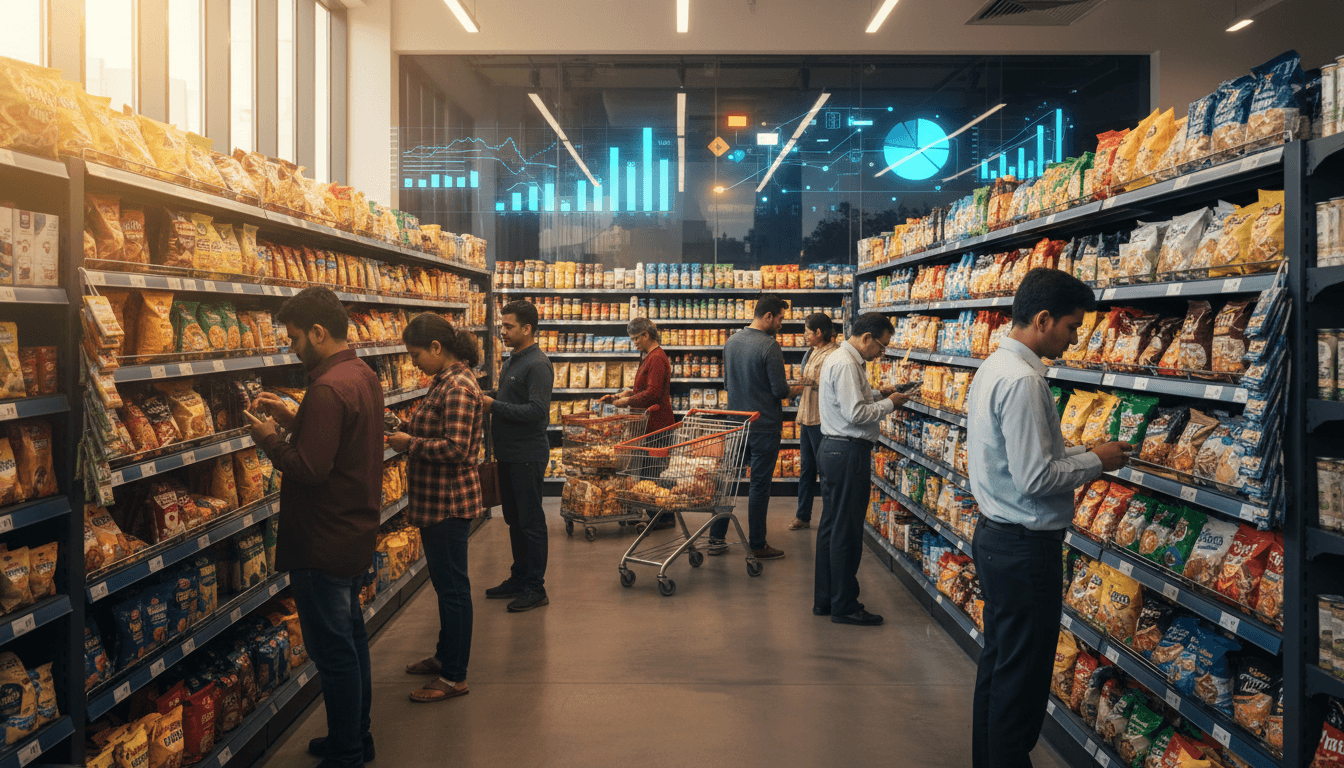
India’s Urban Demand Is Back—How Startups Can Win
India’s biggest consumer brands don’t usually change their tone unless the numbers force them to. That’s why the latest guidance from firms like Hindustan Unilever and Nestlé India matters: urban demand is improving, sales volumes are recovering, and commodity costs are stabilising. For anyone building a retail or e-commerce business in Asia, this is a signal—not noise.
From a Singapore startup marketing perspective, I see this moment as a practical opening. India’s urban consumer is spending again, and the conditions behind it (tax relief, policy support, easing input volatility) are exactly the kind that creates new whitespace for digital-first challengers. If you’re selling FMCG-adjacent products, D2C, marketplaces, consumer fintech, loyalty tech, martech, or retail AI—this is the cycle you want to catch early.
This post sits inside our “AI dalam Peruncitan dan E-Dagang” series, so we’ll go beyond the macro story and get specific: how to use AI in retail and e-commerce to enter India’s cities with sharper targeting, better forecasting, and fewer expensive mistakes.
(Source article: https://asia.nikkei.com/business/consumer/top-indian-consumer-firms-lift-outlook-on-improving-urban-demand)
What’s driving India’s urban demand rebound (and why it’s credible)
Answer first: Urban demand is improving because Indian households have more disposable income and fewer price shocks, and large consumer firms are already seeing that in volume growth.
For several quarters, Indian consumer goods companies were squeezed from two sides: urban consumers pulled back due to high living costs, while companies faced rising commodity prices that hurt margins. The Nikkei Asia report highlights a clear turning point: companies now expect better volume growth and improved profitability in the months ahead.
A few concrete drivers stand out:
- Income tax relief: India raised the threshold for paying income tax to 1.2 million rupees (up from 750,000 rupees), putting more money into consumers’ pockets.
- GST cuts: The government reduced the goods and services tax (GST) on a range of products. The article notes there was temporary disruption right after the change (Sep–Nov), but benefits are now flowing through.
- Lower inflation and steadier input costs: As raw material price volatility eases, brands can protect margins without pushing aggressive price hikes.
- Policy and trade backdrop: The report references an India–U.S. trade deal and expectations that palm oil prices could soften further—important because palm oil is a major input for many packaged goods.
This matters because big incumbents act like demand sensors. When they say volumes are back (Hindustan Unilever reported 4% year-on-year volume growth in the quarter) and when Nestlé India reports 18.5% sales growth (versus 3.9% a year earlier) citing GST-driven recovery, it’s a strong read on real consumer momentum.
What this means for Singapore startups expanding into India
Answer first: A rebound in urban demand lowers customer acquisition friction—if you enter with the right positioning, channels, and unit economics.
Most startups treat India as “big market = big upside.” That’s the wrong mental model. India is many markets stacked together. What’s different about a demand upswing in urban India is that it usually comes with:
- Faster adoption of convenience (quick commerce, online subscriptions, brand trials)
- Higher tolerance for premium tiers (not luxury—just better ingredients, better experience, better packaging)
- More predictable replenishment behaviour (great for retention and LTV)
For Singapore startups, the edge often isn’t price. It’s execution:
- Stronger operations discipline
- Better cross-border supply chain partners
- More mature performance marketing and lifecycle marketing
- Greater willingness to instrument data properly from day one
If you’re in retail tech or commerce enablement, this is also your window to sell B2B: Indian consumer firms and distributors invest more in analytics when demand improves, because they want to scale what’s working rather than fight fires.
AI in retail and e-commerce: where to apply it first in India
Answer first: Start with AI that improves cashflow: demand forecasting, inventory allocation, and personalised retention.
AI in peruncitan dan e-dagang isn’t about flashy chatbots. It’s about avoiding the classic expansion traps: overstock, stockouts, wasted spend, and misread localisation.
1) Demand forecasting that respects city-by-city reality
India’s urban demand isn’t uniform. Bengaluru, Mumbai, Delhi NCR, Hyderabad, Chennai, Pune—each behaves differently on:
- seasonality
- payday effects
- promo responsiveness
- preferred pack sizes
A simple, high-impact approach:
- Build a forecasting model per city cluster (not national)
- Use features like promo calendars, weather, local holidays, ad spend, and competitor pricing
- Forecast at the level that matches your constraint (SKU × city × week is a common starting point)
Practical result: you reduce working capital tied up in the wrong places.
2) Inventory optimisation across channels (marketplace, D2C, quick commerce)
When demand picks up, channel conflict gets expensive. Marketplaces want fill rates, quick commerce wants ultra-fast replenishment, and your D2C site wants margin.
AI-based inventory allocation helps you answer:
- Which SKUs should go to quick commerce vs. marketplace?
- Which micro-warehouses should hold the top 20% movers?
- When should you cut a promo vs. move inventory?
If you’re a startup selling physical goods, you don’t need a “perfect” model. You need a model that’s better than gut feel and improves every month.
3) Personalised recommendations that increase repeat purchase (not just AOV)
Urban demand rebounds create a surge of new and returning buyers. The winners will be the brands that convert trial into habit.
AI-driven personalisation works best when it’s tied to a clear job:
- replenishment reminders based on predicted consumption cycles
- bundles that match local preferences (e.g., “office snack kit” vs “family pack”)
- price-tier recommendations (value / standard / premium)
If your retention is weak, more acquisition will only make you feel busy while you leak money.
4) Customer insight from messy data (WhatsApp, reviews, support tickets)
India’s commerce data isn’t always clean. A lot of buying signals show up in:
- WhatsApp conversations
- vernacular reviews
- COD-related support issues
Natural language processing can help you:
- tag themes (taste, delivery delays, authenticity concerns)
- detect emerging complaints early
- prioritise fixes that protect ratings (and marketplace ranking)
That’s directly aligned with the “AI dalam Peruncitan dan E-Dagang” theme: AI as behaviour analysis, not just automation.
A practical go-to-market playbook for India’s urban upswing
Answer first: Win by sequencing: pick one city cluster, one hero SKU, one channel, then expand with data.
When incumbents regain confidence, competition increases. That’s why startups should avoid “launch everywhere” strategies.
Here’s what works in practice for Singapore teams entering India:
Step 1: Choose a wedge market
Pick one city cluster where:
- logistics is predictable
- your category already has demand
- customer support can run in a tight loop
Examples of wedge strategies:
- premium daily essentials for urban professionals
- health-focused packaged foods for young families
- beauty/personal care for tier-1 city shoppers who research heavily
Step 2: Localise the offer, not just the ads
Localisation isn’t swapping English copy for Hinglish. It’s:
- pack sizes that match purchase frequency and storage space
- payment and returns that reflect local norms (including COD realities)
- category education that matches what people already believe
Step 3: Build an AI-backed experimentation system
Treat India as an experimentation engine:
- weekly creative testing (10–20 variants)
- landing page testing by city
- pricing tests on bundles, not single items
Then feed results back into:
- recommendation logic
- forecast inputs
- audience segmentation
Step 4: Make retention your growth engine
If urban demand is improving, a lot of brands will bid up acquisition channels. Your defence is retention:
- lifecycle email/WhatsApp flows
- replenishment subscriptions
- loyalty mechanics that reward repeat, not just sign-ups
A simple benchmark I like: if you can’t get meaningful repeat purchase within 60–90 days in replenishable categories, pause scaling and fix the fundamentals.
FAQs startups ask about India’s consumer rebound
Answer first: Yes, it’s real—but it’s also fragile if you ignore unit economics and local execution.
Is this rebound only about tax cuts?
No. Tax relief and GST changes are catalysts, but the durability depends on whether inflation stays contained and whether input costs remain stable. The source article points to both: low inflation and easing raw material volatility.
Does improving urban demand mean rural demand is also strong?
Not automatically. Urban and rural cycles can diverge. If your product relies on modern trade and e-commerce, urban is your primary signal anyway.
Where does AI actually reduce risk in market entry?
In three places that hit cashflow fast:
- better demand forecasts
- smarter inventory placement
- improved repeat purchase through personalisation
What to do next (if you want leads, not just “awareness”)
India’s urban demand rebound is a timing advantage. Miss it, and you’ll still be able to enter later—just with higher ad costs, louder incumbents, and less room to test.
If you’re a Singapore startup in retail, e-commerce, or retail AI, I’d start with a simple plan for Q1–Q2 2026: one city cluster, one channel, and an AI-backed measurement stack that tracks contribution margin by cohort.
The forward-looking question worth asking your team this week: if demand is rising, are you positioned to capture repeat behaviour—or only first-time clicks?