See how Tampines’ CNY vending machines reveal practical AI retail lessons—demand forecasting, inventory control, and 24/7 sales without high rent.
AI Retail Lessons from Tampines’ CNY Vending Boom
Two days before Chinese New Year, “I forgot pineapple tarts” becomes a national emergency. The problem isn’t the tart. It’s the timing: pre-orders close, delivery slots vanish, and the queue outside a popular bakery suddenly looks like a concert line.
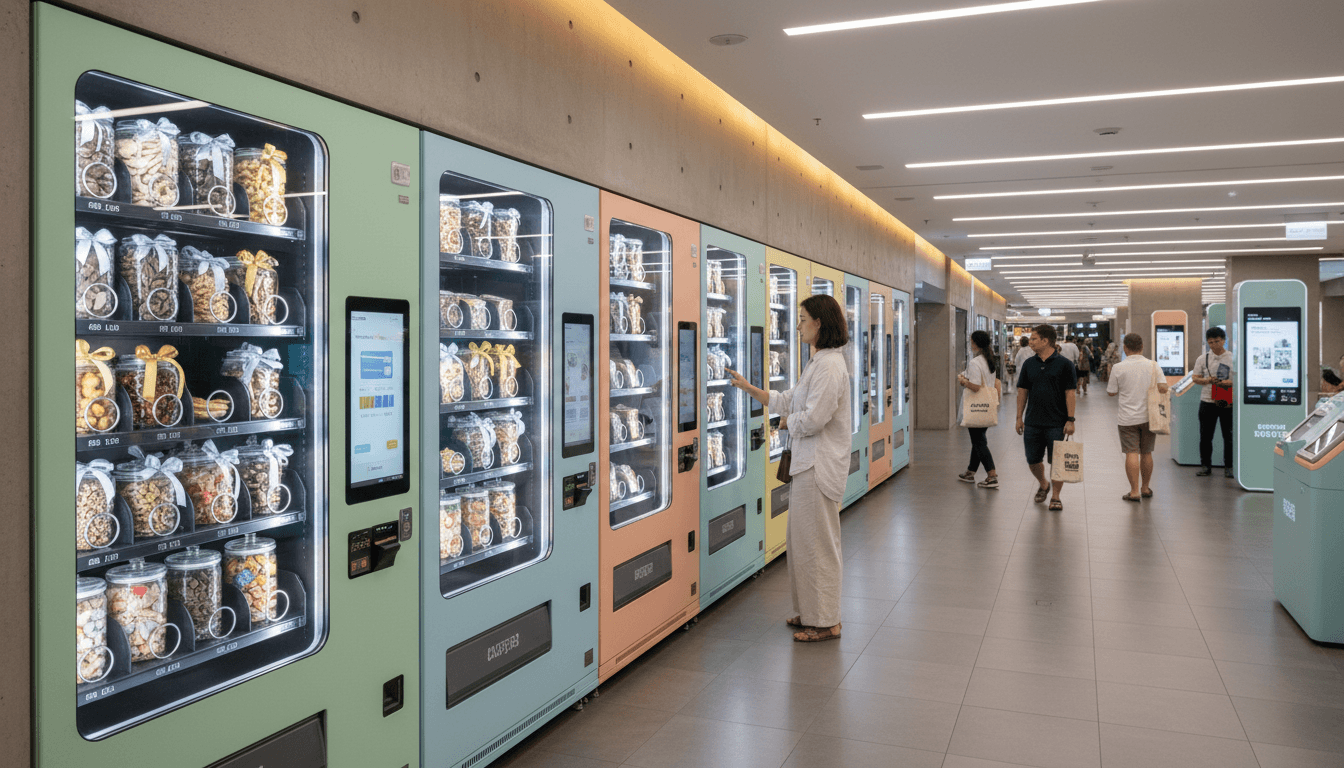
That’s why the new vending machine alley at Our Tampines Hub is more than a cute convenience story. It’s a real, local case study in AI dalam peruncitan dan e-dagang—how Singapore businesses use automation, data, and smarter retail touchpoints to survive high-demand periods without burning out teams or renting more space.
This matters if you run an F&B brand, a D2C snack label, a retail concept, or even a services business with seasonal spikes. The mechanics are transferable: demand forecasting, inventory planning, customer engagement, and always-on sales—without a full-time counter staff.
What the Tampines vending machines really prove
Answer first: Seasonal demand isn’t just a marketing challenge—it’s an operations challenge, and automation is the simplest pressure valve.
CNA Lifestyle reported that French-fusion patisserie Two Bakers (which closed its Lavender café in Aug 2025 due to rental costs and lower footfall) is selling Chinese New Year goodies through a vending machine partnership with Hypha Provisions at Our Tampines Hub.
On the surface, it’s straightforward: a touchscreen menu, card payment, and a gentle dispensing mechanism to avoid crushing fragile tarts. Underneath, it’s a modern retail pattern:
- Shift from fixed rent to flexible distribution. A vending machine is a “micro-outlet” without the full overhead of a storefront.
- Extend selling hours to 24/7. Your busiest customer might be buying at 11pm after dinner, not at 3pm.
- Treat festive retail as a “pop-up channel.” You show up where demand concentrates, then switch back to non-festive assortments after.
This is the same logic behind other Singapore vending concepts Hypha has run—like shio pan and banana cake machines. It’s not novelty. It’s channel strategy.
From tradition to tech: why this works for CNY demand
Answer first: Chinese New Year demand is predictable in shape but messy in timing, and that’s where AI-style thinking (forecast, restock, adapt) beats guesswork.
CNY buying has a familiar curve: early planners order weeks ahead, then a sharp “panic spike” hits in the final stretch. Two Bakers’ machine stocks items like pineapple tarts and cookies at online-parity pricing (e.g., pineapple tarts at S$28 for 530g), restocking at least twice a week.
The operational win isn’t only the machine itself. It’s the ability to manage micro-inventory:
The vending machine as a demand sensor
Even without fancy jargon, every vending machine acts like a real-time demand sensor. Each purchase is a clean data point:
- Which SKU sells first (pineapple tarts vs hazelnut butter cookies)
- What time demand peaks (lunch crowd vs post-gym vs late night)
- How fast stock turns (hours, not days)
That’s the same foundation used in AI-powered retail systems: collect signals, predict the next restock, and reduce lost sales.
Why “always-on” beats “one big drop”
Many festive brands rely on one large production run and a fixed pre-order window. That approach creates two problems:
- You leave money on the table when pre-orders close early.
- You create customer frustration when last-minute buyers can’t get anything.
A vending channel supports a steadier rhythm: smaller batches, more frequent replenishment, and fewer “sorry sold out” moments—assuming your operations are planned.
The operational playbook behind automated retail
Answer first: The best automated retail setups win on three things—inventory discipline, product suitability, and last-mile restocking.
If you’re considering automation (vending, smart lockers, unattended kiosks) as part of your AI retail stack, copy the operating model, not just the hardware.
1) Pick products that survive unattended retail
Two Bakers’ setup highlights an underrated constraint: products must tolerate storage and dispensing. Their machine uses a tray mechanism to avoid clattering, because fragile tarts crumble easily.
A practical checklist:
- Packaging is structural. Jars and rigid boxes beat soft pouches.
- Product consistency matters. Same weight, dimensions, and stackability reduce failures.
- Shelf stability is non-negotiable. If temperature control is limited, avoid items that degrade quickly.
If your hero product doesn’t fit these rules, you can still use the channel—just sell a “vending-friendly” SKU (sampler tins, gift packs, vouchers, or pre-packed bundles).
2) Treat restocking like a route-optimization problem
Restocking is where most vending ideas quietly fail. If someone has to drive across the island daily with no plan, costs balloon.
Even basic AI tools (or good analytics) help you plan:
- Which machines to visit first (based on sell-through rate)
- What to refill (SKU-level, not “top up everything”)
- When to refill (before peak times, not after you’re empty)
In the CNA story, Butter Town’s items are restocked daily at 4pm—a simple but effective rule that matches predictable demand.
3) Keep pricing and promotions consistent across channels
Two Bakers priced the vending SKUs the same as their online shop. That’s smart. Customers hate feeling “charged extra for convenience,” and inconsistency creates support tickets (“Why is it cheaper online?”).
Where promotions do work in vending:
- Bundles (buy 2 jars, save S$X)
- Limited festive flavours (scarcity without trickery)
- Time-based offers during off-peak hours
Consistency builds trust, and trust is what gets repeat purchases beyond CNY.
Customer engagement: vending isn’t “set and forget”
Answer first: Unattended retail still needs marketing—just a different kind, focused on discovery, retention, and feedback loops.
Our Tampines Hub’s vending alley is curated (bright machines, clear branding, multiple vendors). That’s not decoration; it’s conversion rate optimization in physical space.
Here’s what works if you’re building a similar always-on channel:
Use location as your acquisition channel
A high-footfall hub acts like an offline search engine. People didn’t “plan” to buy from you; they discovered you. Your job is to reduce friction.
- Clear product photos on-screen
- Transparent pricing and pack sizes
- Fast payments (card, contactless; ideally PayNow too)
Add a retention loop (this is where AI tools help)
Vending is usually anonymous. If you want repeat business, you need a lightweight retention mechanism:
- QR code on the jar linking to a reorder page
- WhatsApp opt-in for restock alerts
- Simple loyalty (stamp card, voucher code inside packaging)
With AI in retail and e-commerce, retention is often the highest ROI move. A small list of known customers beats chasing new footfall every day.
Collect feedback without staff
No staff means fewer conversations, so you must design feedback in:
- QR “rate this item” prompt
- Short post-purchase form (30 seconds)
- Track complaints by SKU (crumbly tarts, broken packaging)
Feedback data becomes your product roadmap for the next festive season.
“Is this actually AI?” The practical answer for business owners
Answer first: The vending machine isn’t automatically “AI,” but the system around it can be—forecasting, personalization, and inventory optimization are where AI pays off.
A lot of Singapore SMEs hesitate because “AI” sounds expensive. The reality is you can get 80% of the benefit with a few disciplined workflows:
-
Demand forecasting (simple version):
- Use last year’s sales by week + this year’s early signals.
- Assume a late spike and plan buffer stock for top SKUs.
-
Inventory management:
- Track sell-through daily during CNY.
- Set reorder points per SKU (e.g., restock when below 20% of capacity).
-
Customer analytics:
- Identify best-sellers by time of day and day of week.
- Match future production schedule to those peaks.
-
E-commerce integration:
- If vending sells out, route customers to online ordering.
- If online delivery slots fill up, direct customers to vending locations.
That’s the broader theme of this series: AI membolehkan ramalan permintaan, pengurusan inventori, dan analisis tingkah laku pelanggan—so you’re not operating on vibes.
A simple “CNY automation plan” you can copy this month
Answer first: Start with one automated touchpoint, one hero product, and one measurement dashboard.
If you’re reading this in early February 2026 and thinking, “We should’ve done this before CNY,” you’re not wrong—but you can still plan for the next seasonal spike (Hari Raya, Mid-Autumn, year-end gifting) using the same playbook.
Here’s a practical template:
- Choose the channel: vending, smart locker pickup, or unattended kiosk.
- Choose 1–3 SKUs: stable packaging, predictable demand, good margins.
- Define restock cadence: daily or every 2–3 days, with a fixed time.
- Instrument the basics: sales by hour, SKU sell-through, stockouts.
- Add one retention loop: QR reorder + restock alerts.
- Run a two-week pilot: learn fast, then scale.
A seasonal pop-up channel is only “innovative” if it reduces stockouts and makes customers’ lives easier.
Where Singapore retail is heading next
Answer first: Automated retail will keep growing because rents aren’t getting cheaper, and customers expect convenience without compromise.
Two Bakers’ story is a practical response to a real constraint: high rentals and shifting footfall. Instead of reopening a café, they focused on online orders, corporate sales, and limited retail touchpoints—then used vending to catch the festive surge.
That blend—e-commerce + automation + data-driven operations—is what modern retail in Singapore looks like. Not flashy. Just efficient.
If you’re building your own AI retail and e-commerce roadmap, start by identifying where customers feel the most friction during peak seasons. Then remove it with the simplest tool that works.
What’s one part of your current festive workflow you’d happily hand over to automation next season?