ERP2 will reshape Singapore delivery costs and ETAs. Learn how AI route optimisation and forecasting help logistics teams adapt fast.
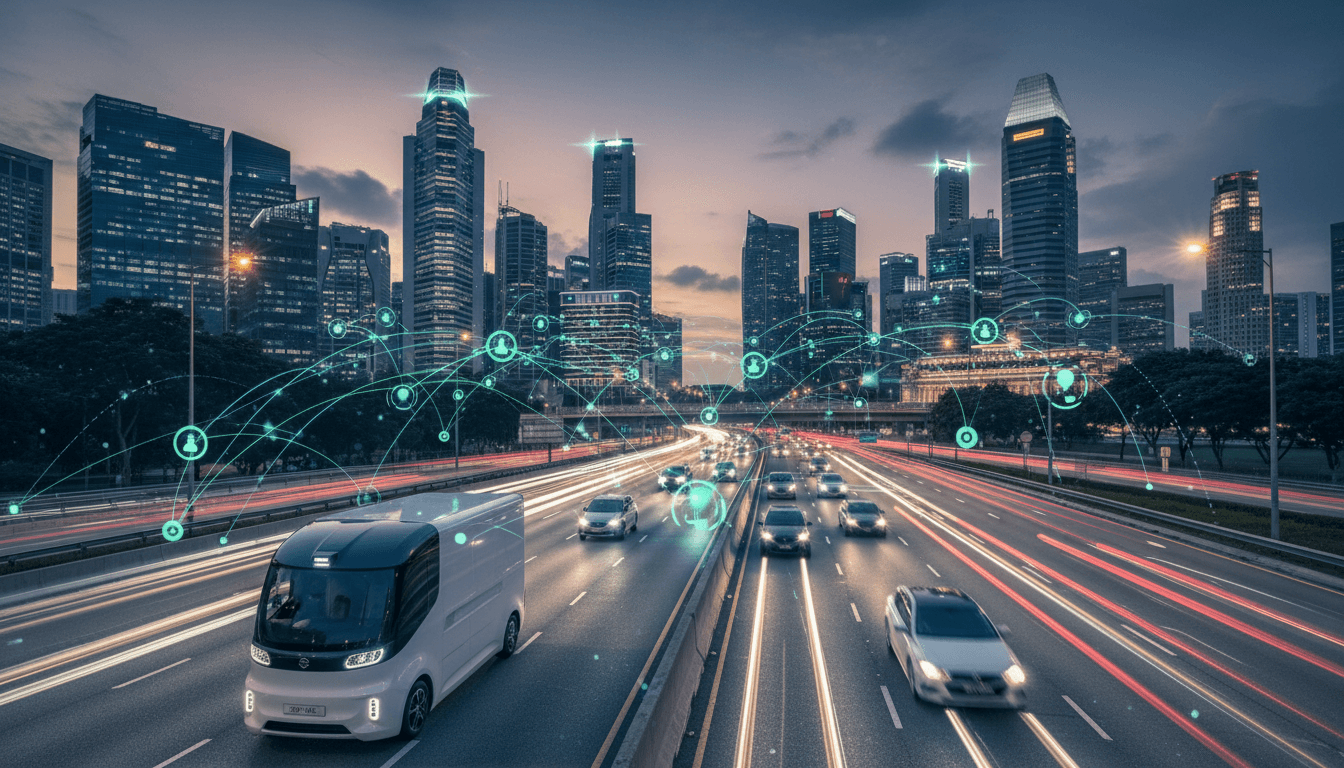
ERP2 Singapore: What It Means for Logistics & AI Ops
Singapore’s ERP2 rollout isn’t just a transport policy update—it’s a data upgrade for the whole city. When road pricing shifts from gantries to a smarter, more flexible system, businesses feel it first through deliveries: ETA reliability, driver routing, customer promises, and cost control.
Acting Transport Minister Jeffrey Siow’s comments in Parliament (Feb 2026) landed a key message: with better traffic management using ERP2 data, Singapore could potentially create more road capacity—and that could even allow future growth in car population. For logistics teams, that’s not background news. It’s a signal that congestion management is getting more dynamic, and your operating model needs to be dynamic too.
This post is part of our “AI dalam Logistik dan Rantaian Bekalan” series, where we focus on practical ways AI helps with optimasi laluan pengangkutan, demand forecasting, and operational efficiency. ERP2 is exactly the kind of city-level system that rewards companies that use AI to plan, predict, and adapt.
ERP2 in 2026–2027: the changes that matter to operators
Answer first: ERP2 makes road pricing and traffic control more adjustable and data-driven, which means delivery costs and travel times will fluctuate more often—unless you build systems to respond quickly.
From the RSS report, here are the operational changes worth paying attention to:
- Mandatory on-board units (OBUs) for all Singapore-registered vehicles from Jan 1, 2027. This is the full switch to ERP2.
- ERP rates will continue to be reviewed quarterly, now using more accurate ERP2 data.
- Pricing points can be adjusted more easily because ERP2 is “infrastructure-lite” compared to physical gantries. In practice, this makes it easier for authorities to respond to new congestion hotspots.
- Missed ERP payments will be decriminalised. The penalty approach becomes more proportional, and the vehicle owner becomes responsible (relevant for fleets, car-sharing, and companies using outsourced transport).
- Distance-based charging isn’t being implemented immediately, but it remains an option for the future.
Why quarterly reviews and flexible pricing change the logistics math
Quarterly price reviews don’t sound dramatic—until you’re running dozens of routes daily. If your delivery model assumes “typical” peak-hour patterns, a small pricing tweak can shift driver behaviour, traffic distribution, and your own delivery windows.
A practical view: ERP2 increases the likelihood of more frequent micro-shifts in congestion patterns because pricing points can be moved or introduced faster. Your routing rules need to keep up.
“More road capacity” doesn’t mean “less congestion” for your routes
Answer first: Even if ERP2 improves traffic flow overall, congestion will redistribute—and that can break fixed routes and fixed time buffers.
The article highlights the idea that ERP2 data can help create more road capacity without taking up more land, and that could allow future growth in car population. The temptation is to read that as “good news for traffic.” I wouldn’t.
Here’s what tends to happen in dense cities when traffic is managed more actively:
- Hotspots shift. When one corridor improves, other areas can become the new bottleneck.
- Driver behaviour adapts. People change departure times and routes to avoid charges.
- Service expectations rise. When the city invests in better traffic tools, customers (and internal stakeholders) expect better ETAs.
For logistics, the real win is not guessing where congestion goes next—it’s measuring and predicting it.
Where AI fits: turning ERP2-driven variability into controllable costs
Answer first: AI helps logistics teams adapt to ERP2 by forecasting travel time changes, optimising routes against pricing, and improving dispatch decisions in near real-time.
ERP2 is a reminder that your supply chain performance depends on factors outside your warehouse. When the city becomes more data-driven, logistics needs to become more data-driven too.
1) AI route optimisation that actually considers pricing
Many companies still do routing with static rules: “avoid CBD at these hours” or “run Route A for this cluster.” Under ERP2, pricing points and congestion mitigation can change faster.
What works better is constraint-based route optimisation that can account for:
- Delivery time windows
- Vehicle type and capacity
- Driver shifts and breaks
- Historical and live travel time
- Estimated ERP charges by segment/time
- Customer priority and penalties for lateness
A useful internal metric I’ve found: Cost per successful stop (fuel + labour + ERP + redelivery risk). ERP2 can move that number more than most teams expect.
2) Predictive ETAs and proactive customer communication
If your sales or customer service team only finds out a delivery is late when the driver calls in, you’re paying twice: operationally and reputationally.
AI-based ETA prediction uses patterns (day-of-week, school holidays, rain seasons, events, and route history). With ERP2, your model should also be prepared for policy-driven shifts like new charging points or revised pricing at hotspots.
In February in Singapore, businesses are typically ramping up post-year-end normalization and planning for Q2 demand. That’s a good time to tighten ETA reliability because customers reset expectations early in the year.
3) Demand forecasting to avoid “peak-hour overexposure”
ERP2 doesn’t just affect how you drive—it affects when you choose to deliver.
If demand forecasting tells you certain SKUs or regions spike at specific times, you can:
- Pre-position inventory closer to demand (micro-fulfilment or forward stocking)
- Shift deliveries to off-peak windows where feasible
- Combine orders more intelligently to reduce stop density during charged periods
This is classic AI dalam logistik dan rantaian bekalan: not only optimasi laluan pengangkutan, but also shaping demand fulfilment decisions.
Fleet operators: missed ERP payments and owner liability matter now
Answer first: With missed ERP payments decriminalised and owner liability emphasised, fleet companies need tighter payment reconciliation, driver policies, and automated back-office workflows.
The article notes two important shifts:
- Missed payments are decriminalised because most cases are oversight.
- Vehicle owners become responsible, consistent with road tax and similar obligations.
That sounds benign until you run shared vehicles, third-party drivers, or subcontractors. You’ll want a simple operating policy:
- Define who pays what (company vs driver vs vendor)
- Automate reconciliation (daily/weekly matching of trips to charges)
- Set exception handling (what happens if an OBU issue causes a miss?)
A practical workflow (simple but effective)
- Pull trip logs from telematics / dispatch system
- Match to ERP2 charge records (or internal estimates until full integration)
- Flag anomalies: unusually high charges, unexpected misses, repeated route deviations
- Auto-generate driver/vendor chargeback summaries
This is where AI tools help even without fancy integration: anomaly detection and classification can reduce manual checking dramatically.
Distance-based charging: not happening now, but plan like it could
Answer first: Even without immediate distance-based charging, companies should model “pay-per-km” scenarios because it changes routing incentives and network design.
Mr Siow stated there are no plans to implement distance-based charging immediately, but it remains an option. Businesses shouldn’t wait for a formal announcement to think through the impact.
If pricing becomes distance-based in the future, three things change fast:
- The cheapest route may become the shortest route, not the fastest route.
- Last-mile density becomes even more important (more stops per km wins).
- Warehouse placement decisions get sharper because every km has a price.
If you’re doing 2026 budgeting, run a tabletop exercise:
- What happens to delivery cost if every 10 km adds a fixed variable charge?
- Which customers become unprofitable under current service levels?
- Which zones should you serve via consolidation points or scheduled delivery days?
A 30-day action plan for Singapore logistics teams
Answer first: Treat ERP2 as a trigger to modernise routing, forecasting, and cost controls—start with baselines, then automate decisions.
Here’s a practical plan that most SMEs and mid-market teams can execute quickly.
Week 1: Baseline your exposure
- Identify routes most affected by ERP today (CBD, expressways, peak corridors)
- Track ERP costs as a percentage of last-mile cost
- Measure on-time delivery rate by time window
Week 2: Upgrade dispatch rules
- Introduce flexible windows for low-priority stops
- Add a “cost guardrail” (max ERP per route) for specific service tiers
- Create a reroute policy when congestion exceeds a threshold
Week 3: Add AI where it pays back fastest
- Predictive ETAs for top customers
- Route optimisation for the top 20% of routes by volume
- Simple anomaly detection for payment reconciliation
Week 4: Build an ERP2-ready reporting view
A good dashboard answers:
- Which routes are getting more expensive and why?
- Which customers cause most peak-hour exposure?
- What’s the trade-off between service speed and ERP cost?
If you can’t explain those in one screen, you’re guessing.
What ERP2 signals about Singapore’s direction—and why businesses should care
ERP2 is a strong indicator of how Singapore runs infrastructure: measure, adjust, and optimise using data. Logistics and supply chain teams that still operate with static SOPs will feel like the city is moving under their feet.
The better approach is to match that pace. Use AI tools to forecast demand, optimise routes, and control costs as conditions change. That’s the core theme of this series: AI isn’t “nice to have” in logistics anymore—it’s how you maintain service levels when the environment gets more dynamic.
If ERP2 makes traffic management more responsive, what will you change first: your routing rules, your delivery promises, or the way you forecast demand?