ERP2 goes fully live on Jan 1, 2027 with mandatory OBUs. Here’s what fleet and logistics teams should change now using AI-driven route and cost planning.
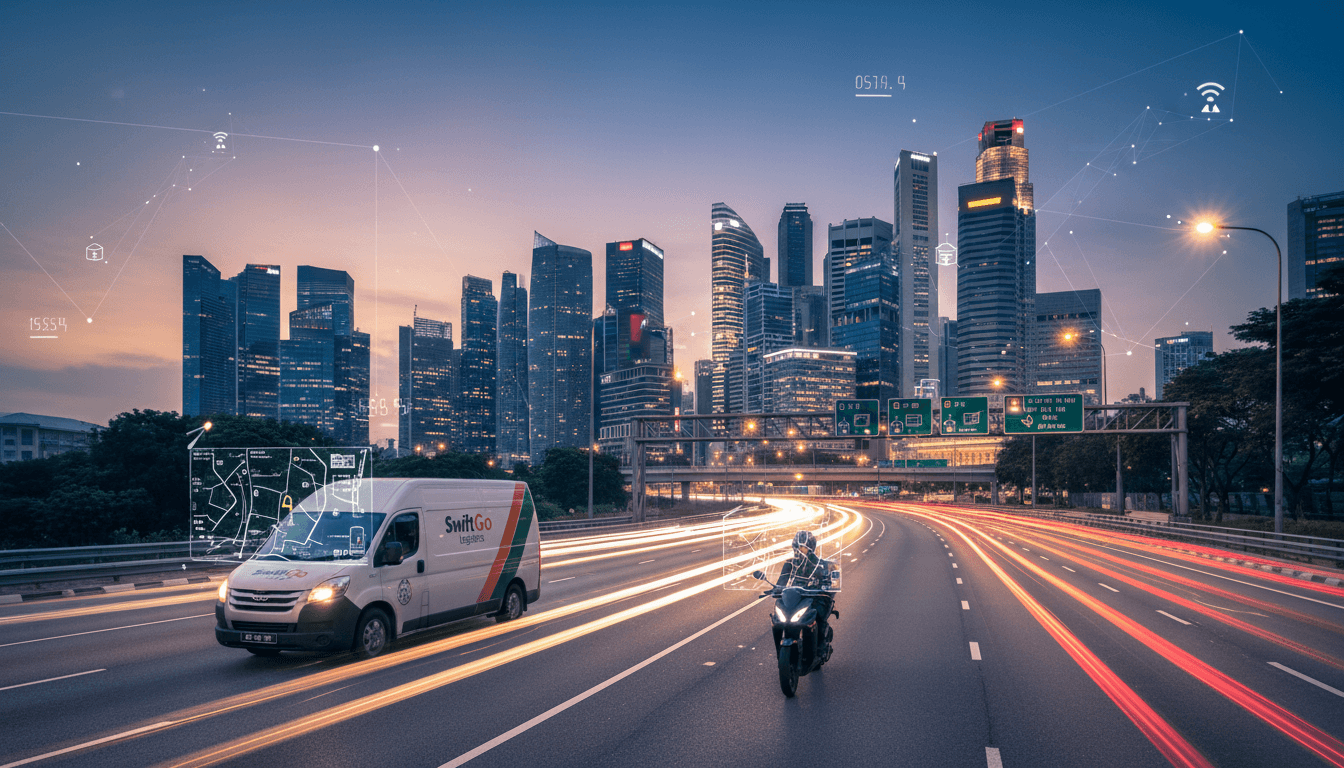
ERP2 & Mandatory OBU: What Logistics Teams Should Do
On Feb 3, 2026, Parliament debated a Bill that makes on-board units (OBUs) mandatory for all Singapore-registered vehicles, ahead of Singapore’s full switch to ERP2 on Jan 1, 2027. Here’s the part many businesses are missing: this isn’t just “a transport policy change”. It’s a live example of Singapore’s direction—more digitised infrastructure, more automated enforcement, more data-driven pricing.
If you run a logistics operation, manage a delivery fleet, or coordinate field teams, ERP2 is going to show up in your P&L through route costs, scheduling decisions, and customer promise times. And if you’re in our AI dalam Logistik dan Rantaian Bekalan series for practical ways to use AI, this is a perfect case: when the rules change, manual planning breaks first.
This post explains what ERP2 changes, what the OBU mandate really means operationally, and how to use AI for route optimisation, demand forecasting, and automated cost control so the shift doesn’t become a mess.
What’s changing with ERP2 (and why it matters to supply chains)
Singapore will switch fully from ERP1 to ERP2, which uses satellite positioning (GNSS) rather than relying on physical gantries to determine where charges apply. The stated intent is straightforward: more precise congestion management and a system that’s easier to maintain than aging gantry infrastructure.
For businesses, the “why” is less important than the effect:
- Charging points can be more granular. ERP2 can spread charges across multiple locations instead of concentrating them at a single gantry.
- Pricing becomes easier to adjust. More digital control usually means faster iteration and more targeted interventions at congestion hotspots.
- Compliance and enforcement can become more automated. The Bill includes offences for unauthorised tampering/modification of OBUs and unauthorised services advertised/provided on the OBU.
A practical way to think about ERP2: it’s “congestion pricing with better resolution.” Better resolution changes how you plan routes and delivery windows.
ERP2 won’t start with distance-based charging—but don’t plan around that forever
Acting Transport Minister Jeffrey Siow said the government will not introduce distance-based charging in the immediate term, and will study it later after motorists are more accustomed to the new system.
If you manage transport costs, don’t treat that as a permanent promise. Treat it as a runway. In fleet operations, systems tend to move in one direction: from blunt pricing to usage-based pricing.
That’s why getting your data house in order now (routes, stops, time windows, vehicle utilisation, delivery density) is worth it—because the teams with clean data can adapt pricing changes quickly.
OBU mandate: the operational details businesses can’t ignore
The Bill being debated would make OBUs mandatory for Singapore-registered vehicles because ERP2 requires the device to determine location-based charging.
Here are the specific operational points from the announced rollout that matter for fleets and SMEs:
- Target date for full ERP2 switch: Jan 1, 2027.
- Adoption status: about 93% of vehicle owners have installed the OBU so far.
- Final reminder cycle: from Feb 15, 2026, invited owners who haven’t installed get a final reminder and 3 months to install for free.
- If you miss the free window: installation fees apply (S$35 motorcycles, S$70 other vehicles).
- If you drive without an OBU after Jan 1, 2027: you pay flat fees per ERP operational day you travel on Singapore roads—S$3 for motorcycles and S$10 for all other vehicles.
- Foreign vehicles: encouraged to install for usage-based charging; otherwise can pay a daily flat fee. Malaysian taxis will be required to install for tracking/enforcement.
- Penalties for serious misuse/non-compliance: up to S$20,000, up to 2 years’ jail, or both.
The cost you’ll feel first isn’t the installation—it's planning uncertainty
Even if the installation is free for most invited vehicles, the bigger business risk is this: ERP costs become more sensitive to micro-routing decisions.
For a delivery operation, two routes that look “similar” on a map can have different ERP exposure depending on:
- time of day,
- specific road segments used,
- whether you can split drops into smaller waves,
- whether you can avoid persistent congestion hotspots without breaking delivery SLAs.
This is where AI-driven route optimisation stops being a nice dashboard and becomes a profit-protection tool.
What ERP2 teaches businesses about digital transformation in Singapore
Most companies get tech adoption backwards. They wait until the change is forced—then they scramble with spreadsheets, ad-hoc approvals, and unclear accountability.
ERP2 is a government-scale version of the same pattern:
- Aging infrastructure reaches end-of-life. ERP1 is nearly three decades old and increasingly costly to maintain.
- A new digital system is introduced. GNSS-based ERP2.
- The transition takes longer than expected. (ERP2 was first decided in 2013.)
- User experience feedback forces iteration. For example, motorists can choose not to have a display screen to keep the experience closer to ERP1.
That arc is exactly how AI adoption looks inside companies—especially in logistics and supply chain.
If your team is still treating AI as “a pilot project,” ERP2 is the reminder that Singapore’s operating environment is moving toward mandatory digital participation. Today it’s OBUs. Tomorrow it’s e-invoicing rules, customs automation, carbon reporting, or sector-specific compliance tech.
How to use AI to adapt: practical playbook for logistics and fleet teams
If you’re reading this as part of AI dalam Logistik dan Rantaian Bekalan, here’s the actionable bit. The goal isn’t “do AI.” The goal is: keep delivery performance stable while costs become more variable.
1) Build an ERP cost model you can actually trust
Answer first: You can’t optimise what you can’t estimate. Start by creating a route cost model that combines ERP exposure with your usual cost drivers.
Minimum inputs to capture per trip:
- vehicle type (and whether it’s motorcycle vs others),
- timestamped route trace (or at least ordered stop list + start/end time),
- delivery window constraints,
- number of stops and service time per stop,
- historical ERP charges (as ground truth),
- fuel/energy usage and driver cost.
Then use a simple ML model (you don’t need anything fancy) to predict expected ERP charges by time window and corridor. The point is to move from “we think it’s higher” to “it’s likely +S$X per route at 8–10am.”
2) Upgrade routing from “shortest path” to “cheapest feasible path”
Answer first: Optimise for cost under constraints, not just distance. Under ERP2, the cheapest feasible route might be slightly longer but avoids a priced hotspot.
A good route optimiser should support:
- time-window routing (VRP with time windows),
- multi-objective optimisation (cost + on-time delivery + driver hours),
- dynamic re-optimisation when orders change midday.
Where AI fits:
- Use heuristics + ML for fast re-routing,
- use demand forecasting to pre-position vehicles,
- use clustering to reduce cross-town zig-zags.
If you’re running last-mile, this is where you can often squeeze 5–12% out of operating costs—not because ERP2 “forces” it, but because it exposes inefficiencies you were previously absorbing.
3) Use demand forecasting to shift work out of peak pricing windows
Answer first: The cheapest ERP charge is the one you avoid by not being on that road at that time.
AI demand forecasting helps you shape operations upstream:
- pre-pick and stage high-probability SKUs earlier,
- offer customers narrower time windows that steer deliveries away from priced peaks,
- move replenishment runs to off-peak where service allows.
A practical example I’ve seen work: retailers split deliveries into two waves—a morning wave for strict SLA customers and an afternoon wave for flexible customers incentivised by small discounts. It reduces peak exposure without hurting overall service.
4) Automate compliance and exception handling (so ops doesn’t grind to a halt)
Answer first: Compliance failures are usually process failures, not “people problems.”
ERP2’s OBU rules create new operational edge cases:
- a vehicle newly added to fleet without OBU installed,
- a replacement vehicle temporarily used,
- drivers swapping vehicles,
- devices tampered with by third-party installers,
- foreign vehicles used for cross-border work.
Automations that pay off:
- a fleet checklist workflow that blocks dispatch if OBU status isn’t verified,
- automated reminders tied to vehicle records and installation deadlines,
- anomaly detection on ERP charge patterns (sudden drops/spikes can signal device or routing changes),
- auto-reconciliation of ERP-related charges into job-level costing.
If your ERP (the enterprise kind) and transport management system (TMS) don’t talk well, this is the moment to fix it—because ERP2 increases the value of clean job costing.
Privacy and data governance: don’t wing it
During the parliamentary debate, MPs raised concerns about privacy of vehicle movement data and how technology can become obsolete.
From a business lens, take a firm stance: treat vehicle movement data like sensitive operational data.
Do this now:
- Define who can access trip traces and why.
- Set retention periods (e.g., keep raw traces short, keep aggregated metrics longer).
- Use role-based access controls in your fleet and analytics tools.
- Document your vendor data processing terms (especially if using third-party telematics or AI route tools).
The reality is simple: if you want AI to optimise routes and costs, you’ll be using data that could be sensitive. The companies that win are the ones that govern it early instead of apologising later.
What to do this quarter (a tight checklist for SMEs and fleet managers)
Answer first: Start with installation readiness, then fix planning and costing.
- Audit your fleet list (including seasonal/rental/backup vehicles) and confirm OBU installation status.
- Tag routes by corridor + time window and estimate current ERP exposure.
- Create job-level costing (per route, per driver shift, per customer) so you can see who/what drives charges.
- Pilot an AI route optimiser on one delivery zone for 4–6 weeks and measure:
- on-time delivery rate,
- total ERP charges,
- total km,
- driver hours,
- cost per stop.
- Build a simple “pricing-response playbook”: what changes if ERP charges expand to new hotspots? Who approves route rule changes? How fast can you update dispatch rules?
If you do just two things, do (2) and (3). Visibility beats guesswork.
The bigger signal: Singapore is pricing congestion with data—so should you
ERP2’s shift isn’t only about transport. It’s a case study in how Singapore is running critical systems: digitised, measurable, and adjustable. Businesses that still operate supply chains on intuition will feel more friction every year.
For logistics and supply chain teams, AI isn’t a trophy project. It’s a way to keep service levels steady while the environment gets more dynamic—pricing changes, labour constraints, customer expectations, and now more granular road charging.
If ERP2 goes smoothly, it will set expectations for how fast future tech-driven rules can roll out. The question worth asking inside your operations team is simple: if your costs changed next quarter, could you re-plan within a week—or would it take a month of meetings and spreadsheets?
Source for policy details referenced in this post: https://www.channelnewsasia.com/singapore/erp-obu-mandatory-jan-1-parliament-jeffrey-siow-5903661