ERP2 goes fully live on Jan 1, 2027 with mandatory OBUs. Here’s what the rollout teaches about AI adoption, compliance, and logistics operations in Singapore.
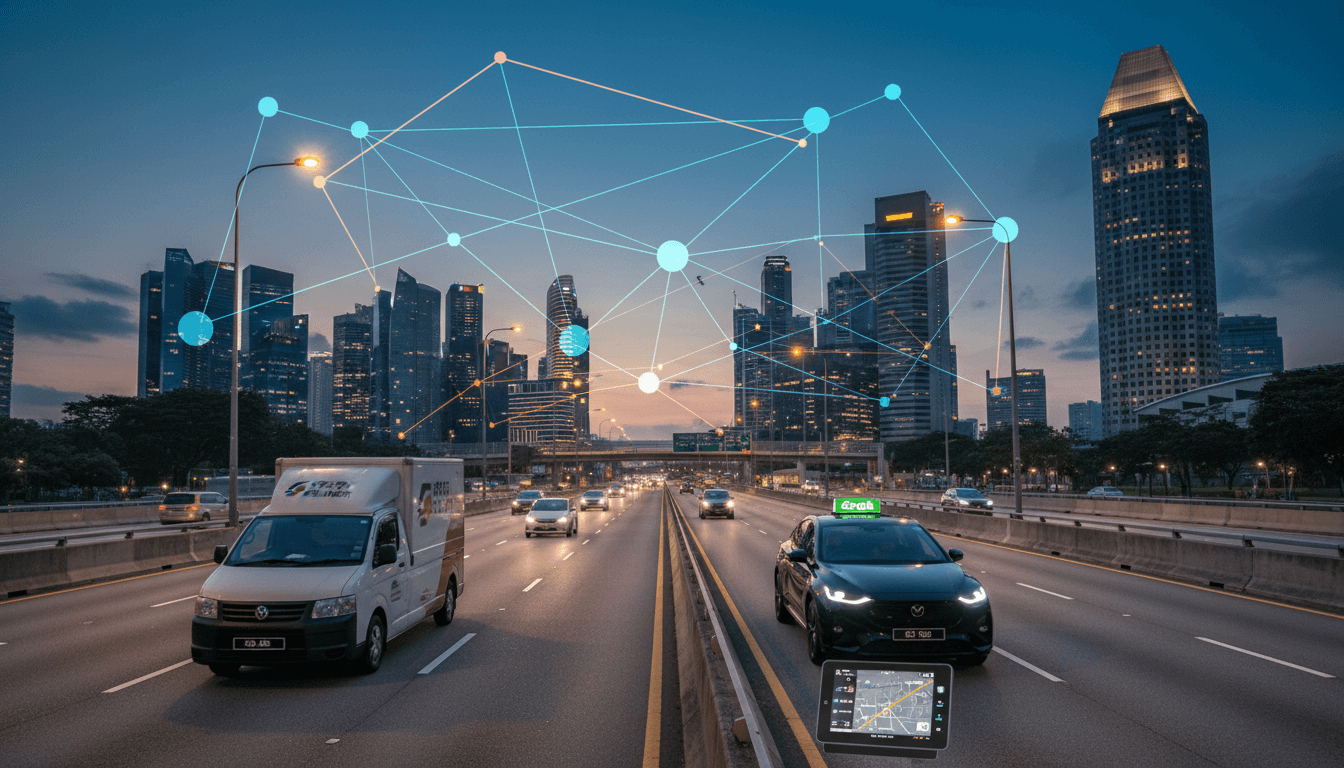
ERP2 Mandate: What Singapore’s OBU Rollout Teaches
Singapore’s next big transport switch isn’t about new gantries or a fresh coat of paint. It’s a full cutover to ERP2 on Jan 1, 2027, and it comes with a clear message: the technology layer is no longer optional.
According to Channel NewsAsia’s reporting, about 93% of vehicle owners have already installed the new on-board unit (OBU), and Parliament is debating a Bill that would make OBUs mandatory for all Singapore-registered vehicles. That last 7% matters because ERP2 runs on satellite positioning (GNSS), not roadside equipment. No unit, no reliable usage-based charging.
If you work in logistics and supply chain—especially in Singapore—this is more than transport policy. It’s a real-world case study in how large-scale digital change actually happens: incentives first, deadlines next, then enforcement. That pattern is exactly how AI in logistics and supply chain is starting to roll out across businesses too.
ERP2 is a simple idea with a hard execution: pricing needs location data, and location data needs devices people actually use.
What’s changing with ERP2 (and why it’s not a small upgrade)
Answer first: ERP2 changes the charging model from gantry detection to satellite-based location detection, and that forces a device-first compliance approach.
With ERP1, the infrastructure did most of the work: gantries detected vehicles at fixed points. ERP2 flips that. The system needs to determine a vehicle’s location across the network, so the OBU becomes the key enabling infrastructure.
CNA reports Acting Transport Minister Jeffrey Siow’s explanation plainly: ERP2 uses satellite technology rather than gantries to determine location for charging. That’s the core technical driver behind the push for mandatory OBUs.
Precision is the point: more targeted congestion charging
Answer first: ERP2 enables finer-grained charging—smaller charges across multiple points—so pricing can match real congestion patterns.
Mr Siow described ERP2 as “more precise and finer” in targeting congestion. Practically, that means:
- Charges can be spread across several locations instead of concentrated at one gantry
- Congestion “hotspots” can be addressed with more targeted pricing
- Physical gantries—costly and visually intrusive—aren’t the long-term bottleneck
In supply chain terms, ERP2 is moving from “checkpoint scanning” to “continuous tracking.” That’s the same conceptual shift many fleets and warehouses are pursuing with AI route optimisation, telematics, and real-time ETA prediction.
The mandate model: incentives, deadlines, then penalties
Answer first: Singapore is engineering a smooth transition by combining free installation windows, flat-fee fallbacks, and meaningful penalties for tampering.
One reason ERP2 is a great case study is that it’s not just a technology rollout—it’s a behaviour change program.
Based on the CNA report, here’s how the adoption plan is structured:
- Free installation for invited vehicle owners (with a final reminder approach)
- A three-month window after the final reminder to install for free
- Then paid installation: S$35 for motorcycles and S$70 for all other vehicles
- From Jan 1, 2027, vehicles without OBUs pay flat fees per ERP operational day: S$3 for motorcycles, S$10 for other vehicles
- Strong enforcement: unauthorised tampering/modification and unapproved services/ads on OBUs become offences, with penalties in serious cases up to S$20,000, up to 2 years’ jail, or both
This matters for business leaders adopting AI: most companies underestimate the power of the “last mile” of adoption. It’s not selecting the tool. It’s getting people to use it correctly, every day, under real constraints.
Foreign vehicles: flexibility—except where enforcement needs it
Answer first: Foreign-registered private vehicles are encouraged to install OBUs, but can opt into a daily flat fee—while Malaysian taxis will be required to install for enforcement.
CNA notes a practical compromise:
- Foreign private vehicles: encouraged to install OBUs, or pay a daily flat fee if they’re occasional visitors
- Malaysian taxis: required to install OBUs to enable tracking and enforcement “if needed”
If you’re in cross-border logistics, this is familiar. Authorities will allow flexibility until enforcement and fairness require standardisation. In AI terms: you can run pilots and exceptions, but once an AI workflow touches billing, compliance, or safety, standards tighten quickly.
What ERP2 reveals about data, privacy, and trust
Answer first: ERP2’s effectiveness depends on movement data, so public trust hinges on clear rules for data handling and safeguards.
The parliamentary debate covered issues that sound very similar to AI governance discussions:
- Privacy of vehicle movement data (raised by WP MP Dennis Tan)
- Technology obsolescence concerns (raised by MP Tin Pei Ling)
- Distributional impact—whether the model burdens lower-income households and gig workers (raised by MP Choo Pei Ling; also questions about private-hire and delivery drivers)
Here’s my take: governments and companies often treat “trust” like a communications problem. It’s not. It’s a systems design problem.
If you’re implementing AI for logistics and supply chain—say, driver scoring, predictive dispatching, or demand forecasting—these ERP2 debate points translate into three non-negotiables:
- Data minimisation: collect what you need, not what you can
- Explainability: be able to answer “why did the system charge/flag/route me this way?”
- Appeal paths: give users a way to resolve errors quickly
Decriminalising missed charges: a quiet but important UX shift
Answer first: Simplifying settlement and decriminalising missed ERP charges is a user-experience upgrade that reduces friction and improves compliance.
CNA reports the Bill includes efforts to simplify settlement processes and decriminalise missed ERP charges, which are currently an offence under the Road Traffic Act.
This is the kind of detail that determines whether a system becomes widely accepted or quietly resented.
In business AI deployments, the equivalent move is replacing punitive workflows (“the system rejected your claim, case closed”) with practical ones (“here’s how to fix it, here’s the deadline, here’s who to contact”). Compliance rises when friction drops.
ERP2 as a blueprint for AI in logistics and supply chain
Answer first: ERP2 shows how to roll out AI-enabled operations: build the data layer, standardise devices/processes, phase adoption, and only then expand pricing/automation models.
Transport Minister Jeffrey Siow also said Singapore won’t introduce distance-based charging in the immediate term, and will continue to study it after motorists are more used to the new system.
That’s a smart sequencing decision. You stabilise the platform first, then add more complex models later.
Here’s how to map ERP2’s approach to AI dalam Logistik dan Rantaian Bekalan initiatives.
1) Build the “OBU equivalent” in your operation
Answer first: AI can’t optimise what you can’t observe; you need consistent data capture across fleets, warehouses, and suppliers.
For logistics teams, the “OBU” is your standard telemetry and event capture:
- Fleet GPS/telematics pings with consistent timestamps
- Proof-of-delivery events captured digitally (not via WhatsApp photos scattered everywhere)
- Warehouse scan events with clear location identifiers
- Customer order and cancellation reasons stored in structured fields
AI route optimisation and demand forecasting don’t fail because algorithms are weak. They fail because the input layer is messy.
2) Adopt phased rollouts with clear fallbacks
Answer first: Adoption increases when teams can fall back to a simpler mode while learning the new system.
ERP2 includes a flat-fee fallback for those without OBUs (though it’s designed to be less attractive than adopting). In business, fallbacks look like:
- Running AI suggestions in “shadow mode” before auto-dispatch
- Keeping manual override for dispatchers for a defined period
- Implementing guardrails like maximum detour thresholds
3) Make governance part of the product, not an afterthought
Answer first: Governance is how you keep AI reliable at scale—especially when money, compliance, or safety is involved.
ERP2 proposes offences for tampering and unauthorised services/ads on the OBU. That’s governance.
In AI operations, governance should include:
- Role-based access control (who can change model parameters?)
- Audit logs for dispatch decisions and pricing recommendations
- Data retention policies aligned to business and regulatory needs
- Vendor controls (what third-party tools can plug into your workflow?)
4) Prepare for “fairness questions” early—before users ask
Answer first: If AI affects cost or workload allocation, you need fairness metrics and monitoring from day one.
ERP2 is positioned as “fairer” because it can spread charges across locations. But MPs still raised concerns about who bears the burden (private-hire drivers, delivery riders, lower-income families relying on hired transport).
In logistics AI, fairness issues show up as:
- Certain drivers consistently getting longer routes
- Certain zones consistently getting deprioritised
- SMEs paying higher “algorithmic costs” due to less historical data
You can monitor this with basic dashboards:
- Average route length by driver/zone
- Late delivery rate by area and time of day
- Workload distribution (stops per shift, time-on-road)
Practical checklist: what to do now if you run fleet or supply chain ops
Answer first: Treat 2026 as a preparation year—standardise your data, test AI in controlled workflows, and set up governance before scaling.
Even if ERP2 is “transport policy,” it will influence expectations across the ecosystem—drivers, customers, and regulators. Here’s a practical checklist I’d use for Singapore-based ops teams in 2026:
- Audit your operational data (routing, delivery events, warehouse scans) for gaps and inconsistent fields
- Standardise capture: one source of truth for orders, timestamps, locations, and exceptions
- Pilot AI route optimisation on one region or customer segment with clear KPIs (on-time rate, fuel/time, failed delivery reduction)
- Add governance controls: audit logs, override rules, and a defined escalation path
- Train for adoption: dispatchers and drivers need “what changes for me?” training, not AI theory
If you do this well, AI stops being a big-bang initiative and becomes a steady compounding advantage.
What comes after ERP2—and what it signals for AI adoption in Singapore
Singapore’s ERP2 shift is a reminder that digital transformation isn’t measured by announcements. It’s measured by installed base, daily usage, and how exceptions are handled.
The same is true for AI in logistics and supply chain. You don’t need a flashy model first. You need the operational equivalent of an OBU: reliable data capture, consistent processes, and governance that keeps the system trustworthy when it matters.
If ERP2 goes live smoothly on Jan 1, 2027, it’ll reinforce a broader reality: in Singapore, technology adoption increasingly comes with clear standards and tighter compliance expectations. Businesses that build their AI stack with that mindset will move faster—and with fewer painful surprises.
Source (landing page): https://www.channelnewsasia.com/singapore/erp-obu-mandatory-jan-1-parliament-jeffrey-siow-5903661