Vietnam is getting tougher as Chinese firms expand. Here’s how Singapore startups can compete using sharper positioning and AI in logistics.
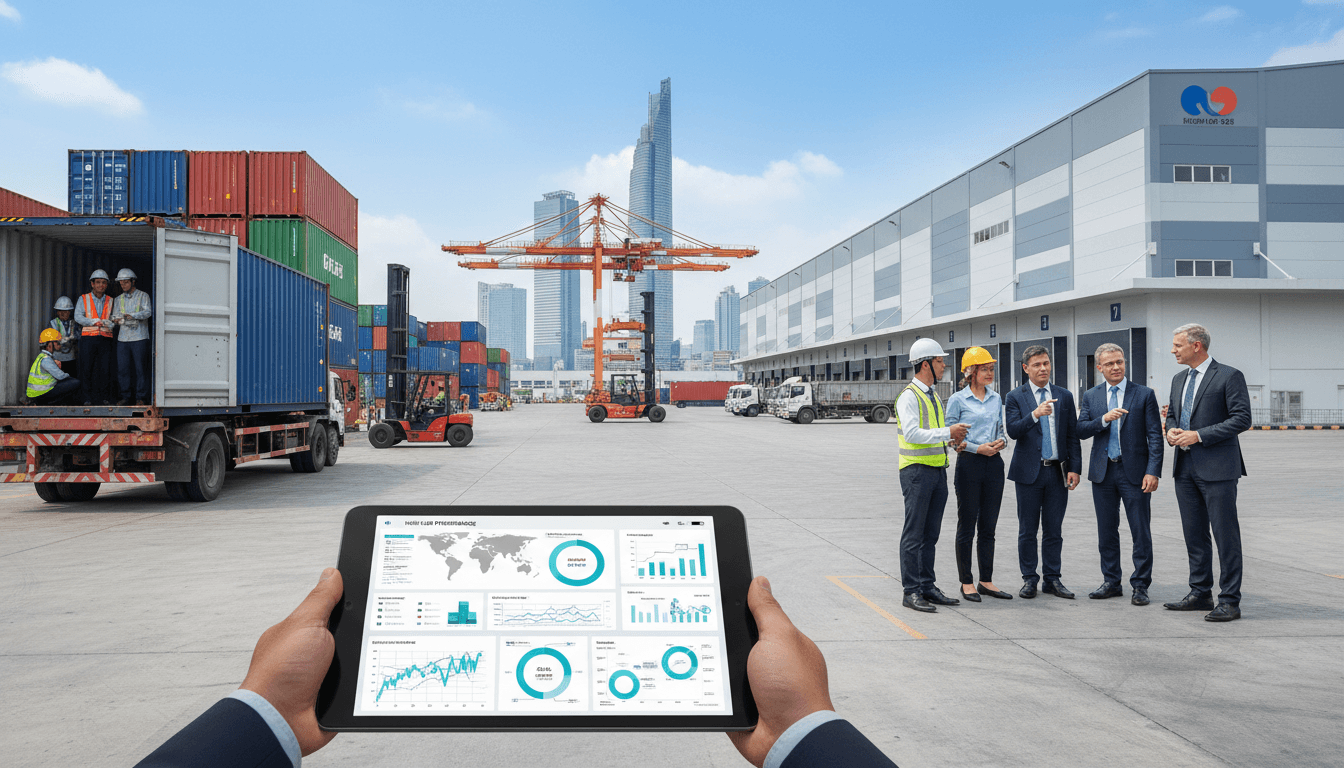
Competing in Vietnam: Lessons from Japan vs China
Recruiting and expansion in Vietnam just got more competitive—and it’s not a vague “market getting crowded” story. A recent JETRO survey reported Japanese companies in Vietnam are feeling stiffer competition from Chinese firms, as Chinese investors pour into the country across sectors from automotive to beverages. That shift isn’t only about factories and FDI. It changes how products are priced, how quickly new entrants scale, and how hard it is to hire and retain the people who keep operations running.
For Singapore startups, Vietnam is often the next logical step after proving traction at home: large consumer base, fast digitisation, and strong manufacturing and export ecosystems. But many founders underestimate what “competition” really means there. It’s not just another startup with a similar app. It’s increasingly large, well-capitalised players who can outspend you on distribution, talent, and brand.
Here’s the stance I’ll take: you don’t beat bigger competitors in Vietnam by shouting louder. You win by positioning better, moving faster, and using AI where it actually matters—especially across logistics and supply chain execution.
What JETRO’s Vietnam signal really means for startups
The practical takeaway from the JETRO signal is simple: Vietnam’s competitive baseline has risen. When Chinese firms enter aggressively, they tend to bring three things: speed, volume, and price pressure. Japanese manufacturers historically win on quality, process discipline, and long-term relationships. When the market tilts toward faster cycles and cost competition, incumbents feel it first.
For startups, the implication is even sharper:
- Customer expectations rise (faster delivery, more SKUs, better support)
- CAC goes up as more brands bid for the same audiences
- Talent gets pricier because operators, engineers, and sales leaders have more options
- Supply chain becomes a marketing variable (lead times and reliability become part of your brand promise)
This matters in the context of our “AI dalam Logistik dan Rantaian Bekalan” series because the companies that hold share in Vietnam over the next 12–24 months will be the ones that treat operations as a growth engine. AI doesn’t replace strategy—but it makes execution harder to copy.
A myth worth killing: “Vietnam is a cheaper, easier market”
Vietnam can be cost-efficient compared to Singapore, but “cheaper” doesn’t equal “easy.” The moment multiple foreign players expand at once, the local market becomes a contest of:
- distribution reach
- fulfilment reliability
- hiring speed
- content that builds trust
If Japanese companies—known for operational excellence—are reporting tougher conditions, smaller teams should take it as a warning, not a deterrent.
Why supply chain dynamics now shape brand positioning
In competitive APAC markets, your supply chain is part of your product. If your delivery is late, your inventory is inconsistent, or your returns process is painful, you don’t just lose margin—you lose credibility.
Chinese competitors often compete with:
- shorter iteration cycles (faster model refreshes, packaging changes, promo cadence)
- dense supplier networks (more flexible sourcing and substitution)
- aggressive channel incentives (distribution-first land grabs)
Startups can’t outspend that. But you can out-position it.
Positioning that survives price pressure
If your differentiation is “we’re a bit better,” Vietnam will punish you. A stronger approach is to pick a wedge that ties directly to measurable outcomes:
- Reliability: “Delivered in 48 hours in HCMC and Hanoi, or it’s free.”
- Traceability: “Batch-level provenance for regulated categories.”
- Speed-to-custom: “Localised bundles for Tet campaigns in 10 days.”
Those aren’t just marketing claims—they’re operational promises. And operational promises are where AI in logistics and supply chain becomes a defensible moat.
AI in logistics: the fastest way to compete without overspending
AI works in this context when it improves one of three metrics: time, cost, or certainty. If it doesn’t move one of those, it’s a science project.
Below are AI applications that map directly to the Vietnam expansion reality JETRO is hinting at.
Demand forecasting that reduces stockouts (and promo waste)
Vietnam’s demand patterns can be spiky—driven by platform promos, seasonal holidays (including Tet, which typically drives major shifts in buying behaviour), and region-specific preferences.
A lightweight but effective setup:
- combine historical sales with promo calendars and price changes
- add external signals (ad spend, impressions, search volume, retailer sell-through if you have it)
- forecast at SKU x city level (not just national)
When forecasting improves, marketing improves too. You can run campaigns with confidence because you know what you can fulfil.
Snippet-worthy truth: Every stockout is a forced competitor trial. If you’re unavailable, shoppers don’t wait—they switch.
Route and dispatch optimisation that turns delivery into a growth lever
If you’re doing your own fulfilment or working with multiple 3PLs, AI-assisted route optimisation can reduce:
- late deliveries
- kilometres per drop
- failed deliveries due to timing mismatches
This matters because delivery experience becomes part of your reviews and repeat purchase rate. In crowded markets, retention is cheaper than acquisition, and delivery reliability is retention.
Warehouse automation (even partial) to protect margin
You don’t need a fully automated warehouse to benefit. Simple computer-vision QA at packing stations, or slotting optimisation based on pick frequency, can:
- cut mis-picks
- reduce returns
- speed up throughput during promo peaks
For a startup, that translates to fewer support tickets and higher ratings—both of which lower CAC over time.
Marketing tactics for Singapore startups entering Vietnam (when giants are moving in)
Most companies get this wrong: they copy-and-paste their Singapore messaging, then wonder why it doesn’t convert.
Your marketing in Vietnam needs to assume two things:
- Customers have choices (and they’re getting more choices as Chinese and other foreign firms expand)
- Trust is earned through proof, not branding language
1) Build a “proof-led” content strategy
Proof-led content reduces the need for heavy discounting. It answers the exact questions buyers ask when alternatives are everywhere.
Examples of proof you can publish:
- fulfilment stats: on-time rate, average delivery time by city
- quality metrics: defect rate, return reasons, warranty claim rate
- operational transparency: how you handle recalls, replacements, and refunds
Use short formats too—carousels, short videos, simple charts. The goal isn’t virality; it’s credibility.
2) Localise around use-cases, not language
Translation is table stakes. Localisation is choosing the right story.
If you sell B2B logistics software, “AI-powered optimisation” is vague. A Vietnam-ready angle is:
- “Reduce stockouts during promo spikes by forecasting SKU-by-SKU.”
- “Cut failed deliveries by predicting best delivery windows.”
The best performing messaging usually ties to a local constraint: labour scarcity, traffic, warehouse capacity, or cross-border lead times.
3) Compete on speed of learning (not size)
Big players scale by budget. Startups scale by learning loops.
Set up a weekly cadence:
- launch 2–3 creative variants
- test 2 landing page narratives
- review not only CPL, but downstream metrics (activation, repeat, returns)
- feed insights back to ops (inventory, delivery promises, packaging)
This is where the “AI dalam Logistik dan Rantaian Bekalan” theme becomes practical: marketing and operations can’t be separate teams if you want to win in Vietnam.
4) Use supply chain storytelling as a differentiator
If you have stronger sourcing, compliance, or quality control, make it visible:
- behind-the-scenes supplier audits
- packaging QA checks
- delivery workflow walkthroughs
- maps of service coverage by region
People don’t trust claims. They trust processes they can see.
People Also Ask: practical Vietnam expansion questions
Is Vietnam still worth entering in 2026?
Yes—if you enter with a clear wedge and operational readiness. The JETRO signal doesn’t say “avoid Vietnam.” It says Vietnam is now a serious competitive arena, especially as Chinese firms expand.
How do startups compete with lower-priced competitors?
Don’t mirror pricing. Build a value story tied to outcomes: reliability, compliance, speed, or service. Then make your supply chain capable of delivering those promises consistently.
Where should AI be applied first: marketing or logistics?
Start with the bottleneck that limits growth. In Vietnam expansions, that’s often inventory accuracy and delivery reliability. Fixing those can improve reviews, retention, and paid efficiency at the same time.
Turning competition into an advantage: a simple 30-day plan
If you’re a Singapore startup evaluating Vietnam, here’s a pragmatic first month plan that aligns marketing with AI-enabled operations:
- Week 1: Define your wedge
- choose one promise you can operationalise (delivery speed, traceability, uptime, etc.)
- Week 2: Instrument the funnel + fulfilment
- track on-time delivery, stockouts, return reasons, and correlate to repeat purchase
- Week 3: Launch proof-led content
- publish 3–5 pieces showing process and performance, not slogans
- Week 4: Implement one AI workflow
- basic demand forecast per SKU x city or delivery window prediction
If you do only one thing: don’t run growth campaigns until you can fulfil the promise your ads make. Vietnam penalises mismatch fast.
Where this goes next for Singapore startups
Chinese investment into Vietnam (and the resulting pressure Japanese firms are reporting via JETRO) is a clear sign that the region’s competitive tempo is accelerating. For startups, that’s scary if you rely on generic positioning. It’s exciting if you’re willing to build a sharper narrative, supported by operational execution.
AI in logistics and supply chain isn’t a vanity upgrade in this environment. It’s how you keep delivery promises, avoid stockouts, and protect margin while competitors try to win on volume.
What would change in your Vietnam plan if you treated fulfilment reliability as your core marketing message—not a backend detail?