Robotaxi expansion shows how AI boosts utilization under cost pressure. Apply the same AI playbook to routing, forecasting, and customer updates in logistics.
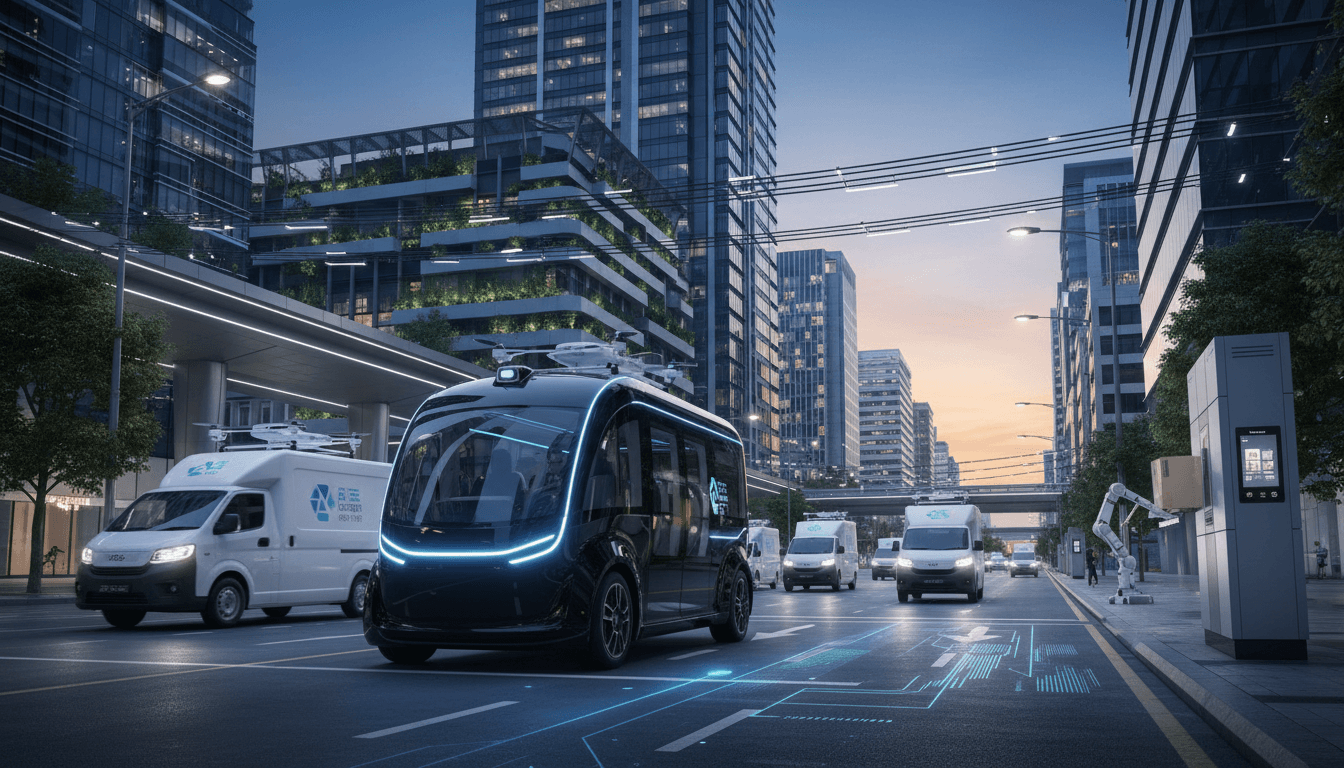
Most companies treat automation as a “nice to have” until margins get squeezed. Uber is doing the opposite.
In early February 2026, Uber doubled down on its autonomous vehicle (AV) strategy even as profits were hit by cheaper ride offerings and a higher expected effective tax rate (22%–25% for 2026). The market didn’t love it—shares fell about 5% after the earnings update. But operationally, the decision is coherent: when pricing pressure rises, the only durable response is structural efficiency, not short-term cost cutting.
This post sits inside our “AI dalam Logistik dan Rantaian Bekalan” series, where the theme is simple: AI doesn’t just automate tasks—it changes unit economics. Robotaxis are the headline, but the playbook underneath is exactly what logistics leaders in Singapore should be studying: AI-driven routing, fleet utilization, demand forecasting, and financing models that keep capex under control.
Robotaxis aren’t just a transport story. They’re a live case study in how AI changes operations, pricing, and customer experience—under real financial constraints.
What Uber’s robotaxi push really signals
Uber’s core message is clear: autonomy expands the market by adding supply, improving reliability, and lowering prices—which then increases trip volume. According to the report, Uber aims to facilitate robotaxi trips in up to 15 cities by end-2026, expanding to places like Madrid, Hong Kong, Houston, and Zurich, with Hong Kong positioned as its first autonomous ride market in Asia.
Here’s the strategic signal that matters for supply chain and logistics: Uber isn’t betting that robotaxis instantly replace its current model. It’s betting that AI increases capacity per asset and reduces the two biggest operational headaches in urban mobility:
- Idle time (vehicles waiting, drivers repositioning)
- Mismatch between demand and supply (surges, long pickup times, cancellations)
Those are the same headaches logistics teams face daily—just with trucks, vans, warehouses, and delivery slots.
The uncomfortable truth: affordability pressures force automation
Uber reported strong demand—trips rose 22% in the fourth quarter—partly driven by shared rides and lower-cost products. That’s consumer behavior you can’t negotiate with. When customers get price-sensitive, they don’t stop buying; they switch to cheaper options.
For logistics and supply chain leaders, this is the 2026 reality:
- Customers expect faster delivery windows.
- They’re less tolerant of fees.
- Competition pushes everyone toward “same-day” promises.
If you respond with manual processes and more headcount, costs balloon. If you respond with AI optimization, you can defend service levels while controlling cost-to-serve.
The unit economics of autonomy: utilization is the real prize
Uber’s CEO highlighted that vehicles operating through Uber’s platform have achieved higher utilization and shorter pickup times than standalone robotaxi services. This isn’t a throwaway line—utilization is the economic engine.
In mobility, utilization means: how many paid minutes a car has passengers.
In logistics, utilization means: how many paid minutes your assets are productive.
- A truck that’s 30% idle is a profit leak.
- A warehouse picker who walks unnecessary routes is a profit leak.
- A delivery fleet doing poor sequencing is a profit leak.
AI-driven optimization improves utilization through three mechanisms:
- Better matching: Assign the right job to the right asset at the right time.
- Better routing: Reduce deadheading and wasted distance.
- Better forecasting: Staff and position capacity before demand spikes.
What to copy (even if you’re not building robotaxis)
Uber’s model is not “build the cars.” It’s “be the orchestration layer.” It works with vehicle partners and intends to use banks/private equity to finance most autonomous fleets. That’s the part many businesses miss.
If you run a logistics operation in Singapore, you can apply the same pattern:
- Don’t buy every piece of automation upfront. Finance it or partner for it.
- Own the data layer and workflow layer (dispatch, routing, slotting, customer comms).
- Measure outcomes relentlessly: cost per stop, on-time-in-full, average delay minutes, utilization.
This is what “AI dalam logistik dan rantaian bekalan” looks like in practice: AI as a control system, not a demo.
Robotaxis as a smart city blueprint—why Singapore should care
Singapore’s smart mobility agenda is already shaping how businesses think about transport, compliance, and urban efficiency. Uber’s plan to start in Hong Kong first (for Asia) is a reminder: cities that can operationalize autonomy quickly will attract pilots, partnerships, and downstream business models.
For Singapore-based operators—3PLs, last-mile fleets, retail delivery teams—robotaxi expansion matters for three reasons:
1) Customer expectations will reset
Once customers experience consistently short pickup times and transparent ETAs in mobility, they expect the same in delivery.
That means:
- Live tracking becomes table stakes.
- Proactive delay messages become mandatory.
- Delivery slot reliability becomes a brand differentiator.
2) The talent gap will widen
As autonomy and AI systems expand, demand increases for:
- dispatch analysts who can interpret models,
- ops managers who can run experiments,
- data-savvy supervisors who can troubleshoot exceptions.
Companies that invest early in AI tooling and training will recruit better—and retain better.
3) Regulation and safety standards will spill over
Robotaxis bring scrutiny: safety cases, incident reporting, auditing, cybersecurity, and privacy. Logistics will feel the ripple, especially as fleets become more sensor-heavy and AI-managed.
My view: treat governance as a competitive advantage. If you can prove your system is safe, auditable, and fair, enterprise customers trust you faster.
Practical AI use cases in logistics you can implement now
Robotaxis grab headlines, but most supply chain wins in 2026 come from unglamorous projects that pay back fast. Here are the most transferable AI capabilities—mapped to measurable outcomes.
AI route optimization (urban delivery and linehaul)
Answer first: AI route optimization reduces kilometres, fuel, and late deliveries by re-sequencing stops based on real constraints.
What it uses:
- traffic patterns by time-of-day
- service time per stop
- vehicle capacity and cold-chain rules
- driver shift limits
- customer time windows
Metrics to track:
- cost per drop
- on-time delivery rate
- average minutes late
- km per stop
Demand forecasting for staffing and inventory positioning
Answer first: Forecasting reduces stockouts and expensive last-minute capacity buys.
Start with:
- SKU-level demand (weekly granularity)
- promo/event calendar
- weather and seasonality signals
- lead times and supplier reliability scores
Operational outputs:
- replenishment triggers
- safety stock targets by location
- labor planning by zone
Warehouse slotting and picking path optimization
Answer first: AI slotting cuts walking time and congestion by placing fast-movers in the right locations.
If you want a quick win:
- Re-slot top 200 SKUs by pick frequency and co-purchase patterns.
- Use heatmaps to reduce cross-traffic.
- Track pick rate per hour before/after.
Customer engagement automation (the underrated profit driver)
Uber’s robotaxi narrative includes reliability and price—but customer experience is the real moat.
For logistics, AI can automate:
- proactive delivery updates (“Your driver is 12 minutes away”)
- exception handling (“Address issue—confirm unit number”)
- smart rescheduling (“Choose a 2-hour slot tomorrow”)
This reduces contact center load and increases successful first-attempt deliveries.
The financing lesson: capex-light automation beats capex-heavy ambition
Uber said it’s committing capital to vehicle partners to secure supply while financing most fleets via financial partners. That’s a sophisticated response to a basic constraint: AI transformation is capital-intensive, but not all costs should sit on your balance sheet.
In supply chain, a similar approach might look like:
- leasing automation equipment instead of buying outright,
- partnering with robotics providers on outcome-based pricing,
- using usage-based software contracts tied to volume,
- co-investing with customers in dedicated capacity.
The goal is to align cost with revenue—so you can scale without betting the company.
If your AI project requires “perfect conditions” and unlimited budget, it’s not a strategy. It’s a science fair.
A simple checklist for Singapore operators planning AI in 2026
If you’re evaluating AI business tools in Singapore for logistics and supply chain, this is what I’d insist on before any rollout.
- Define one economic metric (not five): cost per order, on-time-in-full, or utilization.
- Audit your data reality: are timestamps reliable? are locations clean? are exceptions coded?
- Design for exceptions: AI should route 90% automatically and escalate 10% cleanly.
- Keep humans in control: clear override rules, explainable recommendations.
- Prove it with a pilot: one zone, one fleet, one warehouse aisle—4 to 8 weeks.
- Lock in governance: access controls, audit logs, incident playbook.
This approach isn’t glamorous. It works.
What happens next (and what to watch)
Uber forecasts first-quarter adjusted EPS of 65 to 72 cents (below expectations mentioned in the report) while gross bookings are expected at US$52.0B to US$53.5B (above estimates). Translation: demand is resilient, but profitability is under pressure—exactly the environment where AI efficiency becomes non-negotiable.
For logistics and supply chain teams, the next 12 months will likely bring more of the same: customers pushing prices down, regulators tightening standards, and competitors adopting automation in pockets. The winners won’t be the companies that “use AI.” They’ll be the companies that operationalize AI into routing, planning, and customer engagement.
If you’re mapping your AI roadmap for AI dalam logistik dan rantaian bekalan, use Uber’s robotaxi bet as a mirror: are you investing in structural efficiency even when the quarter gets tough? Or are you postponing the work until it’s painful?
Forward-looking question to sit with: when autonomy becomes normal in urban mobility, will your supply chain feel modern—or obviously behind?
Source article: https://www.channelnewsasia.com/business/uber-pushes-robotaxi-plans-even-cheaper-rides-higher-taxes-dent-profit-5907091