Shein’s $500M hub shows how AI and logistics strategy protect margins as de minimis rules shrink. Apply the same principles to APAC expansion from Singapore.
AI Logistics Lessons from Shein for APAC Growth
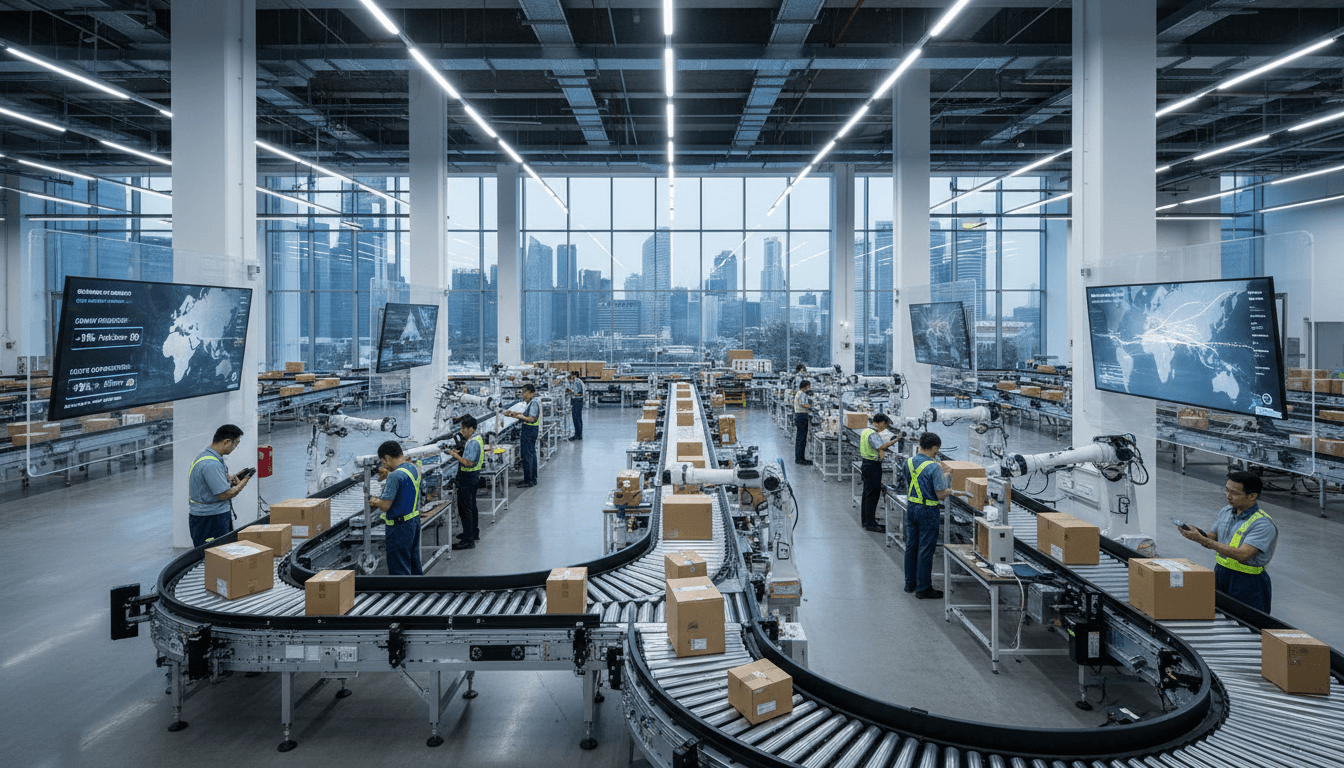
Shein is spending 3.5 billion yuan (about $504 million) on a new distribution hub in Zhaoqing, Guangdong—a facility with 14 two-story buildings and 600,000 square meters of floor area, slated to start operating in H1 2026. That’s not a “nice-to-have” warehouse upgrade. It’s a strategic bet that operational efficiency can absorb real shocks: tariff changes, tighter customs rules, and rising regulatory scrutiny in the US and Europe.
For Singapore startups thinking about APAC expansion, the headline isn’t “fast fashion builds big warehouse.” The lesson is sharper: when your growth depends on cross-border delivery speed and unit economics, logistics becomes a product feature. And in 2026—when de minimis loopholes are closing—your supply chain strategy has to be built for a world where friction is back.
This article sits squarely in our “AI dalam Logistik dan Rantaian Bekalan” series: AI can forecast demand, automate warehouses, optimize transport routes, and reduce stock risk. Shein’s model shows what happens when those capabilities are paired with a hub strategy that’s brutally pragmatic.
Shein’s $500M hub is a response to tariffs—not vanity
Shein’s Guangdong logistics hub is designed to sort and package goods from contract manufacturers for global shipping, and it’s being developed in-house (not leased) to “achieve maximum efficiency,” according to Nikkei Asia’s reporting. That detail matters. Leasing is faster, but owning the design lets you build around your operating model—your scan points, pick paths, packing logic, and automation roadmap.
The immediate trigger is external pressure:
- The US ended de minimis treatment for goods from China (May).
- The EU will start charging duties on small parcels (July).
- Japan is working on revising tariff rules for cross-border e-commerce purchases.
Shein’s historic edge has been price and speed. Tariffs directly attack price. Customs friction attacks speed. A large hub doesn’t magically remove duties—but it can reduce everything else that adds cost: mis-picks, repacks, split shipments, poor cartonization, inefficient line-hauls, and slow exception handling.
Practical takeaway for startups: If regulation increases your “fixed friction” per parcel (duties, paperwork, compliance), your only defense is lowering your “variable friction” (handling cost, error rate, shipping cost per unit).
The real engine: AI-led demand sensing + ultra-fast supply
Shein grew by pairing AI trend analysis with a manufacturing model built for small batches. Nikkei Asia cites research saying Shein’s minimum lot size can be ~100 pieces, versus ~500 for Zara, and it runs a 7-day new product cycle versus Zara’s 14 days. That’s not just merchandising. It’s a supply chain design choice.
Why this model works (and why logistics must match it)
Small batch + fast cycle creates two non-negotiables:
- High SKU churn (new items constantly)
- Low tolerance for inventory mistakes (you can’t hide errors in big safety stock)
This is exactly where AI in logistics and supply chain becomes measurable:
- Demand forecasting / demand sensing: spotting signals early (search, social, site behavior) to decide what gets produced.
- Inventory optimization: limiting overproduction by keeping lots small and replenishing only when demand proves out.
- Warehouse automation & slotting: constantly re-slotting fast movers and minimizing walking/picking time.
- Packaging optimization (cartonization): reducing volumetric weight charges.
- Exception prediction: catching address issues, customs flags, and carrier performance problems earlier.
For a Singapore startup, you may not run fast fashion. But you might run regional e-commerce, B2B spare parts, health supplements, beauty, or consumer electronics accessories—categories where SKU proliferation and cross-border fulfillment are real. Shein’s lesson isn’t “copy the product strategy.” It’s “align AI decisions with physical operations.”
A simple rule I’ve found useful
If your AI can decide what to sell, but your operations can’t fulfill it fast and cheaply, you don’t have an AI advantage. You have an AI-powered backlog.
Hub strategy: China for production density, Singapore for control
Shein is headquartered in Singapore, but operationally tied to Guangzhou and its surrounding manufacturing cluster (“Shein village”). The new hub in Guangdong keeps logistics close to supply. That reduces inland transport legs, improves consolidation, and shortens the time from factory finish to export.
This mirrors a powerful APAC growth pattern:
- Operate HQ functions in Singapore: finance, governance, partnerships, talent, and regional planning.
- Place operational hubs where the physics work: manufacturing density (China/Vietnam/Indonesia), port connectivity (Malaysia/Singapore), or demand proximity (Australia/Japan).
For Singapore startups, the mistake is thinking “regional hub” must mean “everything in Singapore.” Singapore is ideal for coordination and credibility. But your fulfillment nodes should follow unit economics, not national pride.
What “hub-and-spoke” looks like for startups in 2026
A practical APAC setup many teams can execute:
- Singapore: customer support, regional inventory planning, compliance documentation, and payments.
- One primary fulfillment hub (choose by product + lane economics):
- Southern China / Pearl River Delta for factory adjacency
- Johor / Klang Valley for cost-efficient warehousing with Singapore connectivity
- Hong Kong / Shenzhen for speed-sensitive international lanes
- Micro-fulfillment or 3PL forward stocking in 1–2 priority markets: Australia, Japan, or key SEA capitals.
Shein’s move reinforces the principle: you don’t fight tariffs with branding. You fight tariffs with operating discipline.
De minimis is shrinking: unit economics must be rebuilt
Shein benefited from de minimis rules that exempt small orders from tariffs in some countries. With those exemptions being rolled back, the “cheap parcel from abroad” model faces a new math problem.
Here are the three levers that still work when duties increase:
1) Reduce cost per order through consolidation
Consolidation can mean:
- shipping multi-item orders together (better cartonization)
- batching exports
- reducing split shipments by improving inventory accuracy
AI helps by predicting which items will be bought together and positioning stock to avoid multi-node fulfillment.
2) Improve pick-pack productivity and error rates
When margins tighten, a 1–2% reduction in fulfillment errors can be the difference between scaling and stalling—especially in cross-border where returns are expensive.
AI-enabled approaches include:
- computer vision checks at packing stations
- anomaly detection for weight/size mismatches
- dynamic labor planning based on forecasted order waves
3) Shorten cash conversion cycles with better inventory turns
Nikkei Asia notes Shein’s inventory turnover is faster than Zara’s operator, supported by systems that minimize inventory risk. Startups should care because cash is the limiting reagent in growth.
If your inventory sits 30 days instead of 60, you can reinvest in marketing, better carrier rates, or new markets—without raising money.
Snippet-worthy: In cross-border commerce, inventory turns are a growth strategy, not an operations KPI.
What Singapore startups can copy (without $500M)
You don’t need a mega-hub to apply Shein’s playbook. You need clarity on what to centralize, what to automate, and what to measure.
The “Minimum Viable Logistics Stack” for APAC expansion
- Demand forecasting that’s tied to purchasing decisions
- Not just dashboards—actual reorder triggers and budget allocations.
- Warehouse Management System (WMS) with clean SKU master data
- Garbage SKU data kills automation.
- Carrier performance analytics by lane
- Track delivery time distribution (not only averages), loss/damage rates, and exception reasons.
- Customs & compliance workflow
- HS codes, product descriptions, country-of-origin rules, restricted goods checks.
- Inventory placement logic
- Decide what stays central vs forward-stocked, based on demand and return cost.
Metrics that matter more than “fast delivery” slogans
- Cost per order fulfilled (all-in pick/pack + packaging + shipping)
- Perfect order rate (on-time, complete, undamaged)
- Inventory days on hand by category
- Split shipment rate
- Return rate and reason codes (size, damage, late delivery, wrong item)
If you’re running paid acquisition, add:
- Contribution margin after logistics (CM2/CM3, depending on your definition)
- Refunds and reships as a % of revenue
People also ask: “Should we build our own warehouse or use a 3PL?”
Use a 3PL unless your logistics process is genuinely core to your differentiation—or you’ve hit enough scale that customization is worth it.
Shein is building in-house because its operating model is unusually sensitive to speed, SKU churn, and cost. Most startups should start with 3PLs, then gradually internalize pieces where:
- automation opportunities are obvious
- error rates are stubborn
- you need tighter control over packaging/compliance
A hybrid path works well: 3PL for storage + outbound, internal team for inventory planning, analytics, and exception management.
Where this is heading in 2026: AI + compliance-first supply chains
Regulators are tightening parcel rules, marketplaces are under scrutiny, and customers still want low prices and fast delivery. That combination forces a shift: AI in logistics can’t just chase speed; it has to chase compliant, predictable execution.
Shein’s distribution hub is one answer: centralize operations near supply density, reduce handling costs, and protect price competitiveness even as tariffs rise.
For Singapore startups, the opportunity is bigger than copying a giant. Singapore is positioned to be the control plane for APAC operations—where forecasting, planning, and financial governance sit—while your physical network is optimized across the region.
If you’re planning to expand into two or three APAC markets this year, ask yourself one uncomfortable question: is your supply chain built for growth when friction increases, not when it’s discounted away?