Physical AI is moving from hype to operations. See how Singapore firms can connect edge AI to everyday business tools for safety, logistics, and automation.
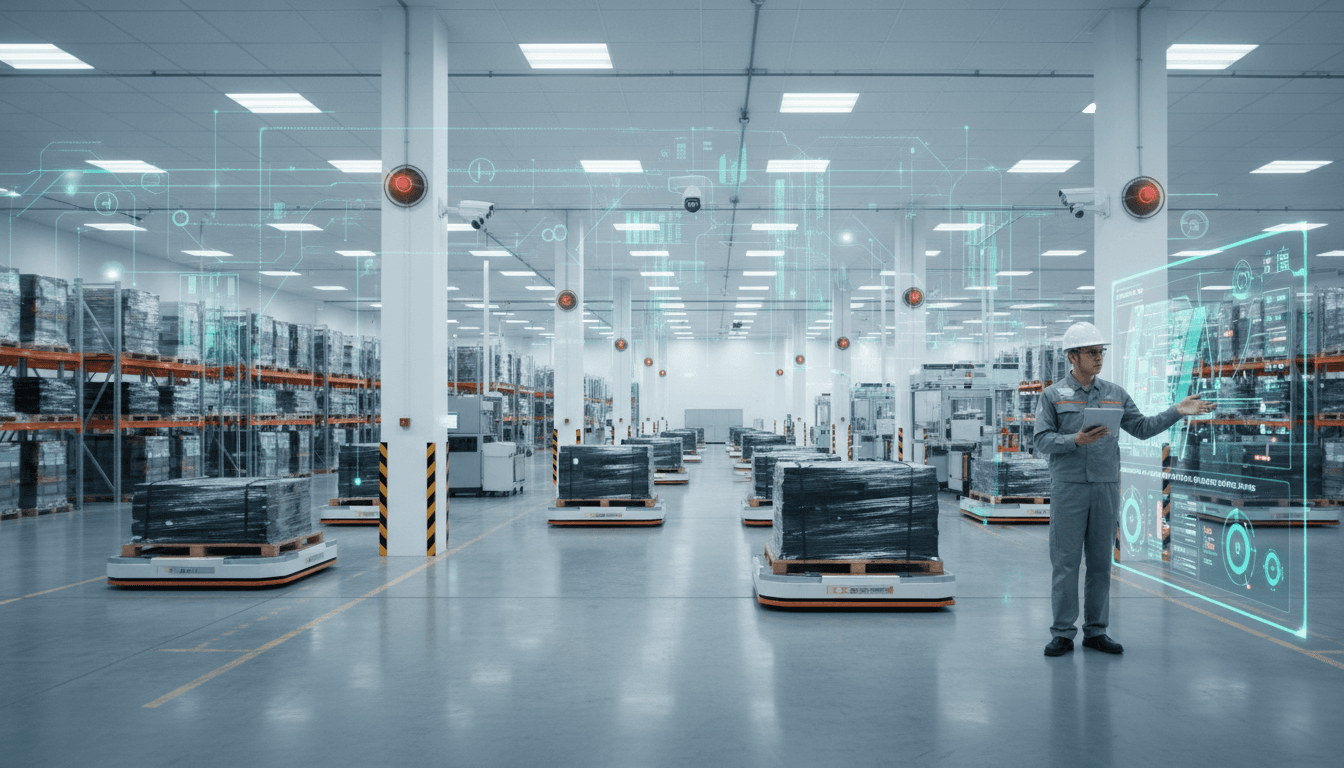
Physical AI: The Next Ops Upgrade for Singapore Firms
NXP’s CEO recently pointed to something many businesses still underestimate: AI growth isn’t only happening in chatbots and dashboards—it’s happening inside machines. In a Reuters interview carried by CNA, NXP described rising demand for “physical AI”: intelligence embedded at the edge in industrial systems like logistics automation, robotics, and workplace safety. NXP expects about 11% year-on-year revenue growth for the coming quarter, with its industrial segment growing around 20%, driven by exactly these use cases. Source: https://www.channelnewsasia.com/business/nxp-ceo-says-demand-physical-ai-boosting-outlook-5906696
For Singapore companies, this matters because physical AI is where “AI business tools” stop being a slide deck and start becoming operational infrastructure. If you run warehouses, fleets, factories, facilities, retail outlets, or even a services business with high footfall and safety requirements, you’re already surrounded by sensors, cameras, access control, and equipment telemetry. Physical AI is what turns that data into decisions—fast, local, and reliable.
This post is part of the AI Business Tools Singapore series, where the focus is practical adoption: what to implement, how to integrate it, and where the ROI actually comes from.
What “physical AI” really means (and why it’s rising now)
Physical AI is AI that senses, decides, and acts in the real world—often on-device (at the edge), not just in the cloud. Think: a camera detecting a safety breach, a robot rerouting around an obstacle, or a conveyor system predicting a jam before it happens.
NXP’s framing is useful because it highlights the demand drivers business owners recognise:
- Latency and reliability: If a forklift is about to hit a pedestrian, you can’t wait for a cloud round-trip.
- Privacy and compliance: Some video and biometric workloads are safer to process locally.
- Cost control: Edge processing reduces bandwidth and cloud compute bills.
- Industrial scale: When you have thousands of devices (cameras, sensors, scanners), centralised AI becomes messy fast.
Edge AI vs cloud AI: the clean mental model
Here’s the simplest way to decide where AI should run:
- Edge AI when you need fast response, offline resilience, or local privacy.
- Cloud AI when you need heavy training, cross-site analytics, or long-horizon forecasting.
- Hybrid when you want on-site decisions plus central oversight (this is the most common in practice).
A lot of Singapore firms get stuck because they treat this as a vendor choice. It’s not. It’s an architecture choice.
Where Singapore businesses can apply physical AI first
The best physical AI projects start with operational pain, not “AI ambition.” Below are the use cases I’ve seen deliver real wins because they map cleanly to measurable outcomes.
1) Logistics and warehouse automation
If you’re running warehousing in Singapore—where space is expensive and throughput matters—physical AI has straightforward payoffs:
- Computer vision for pick/pack verification (reduce mis-picks and returns)
- Dynamic slotting recommendations using real-time movement data
- Yard and dock optimisation based on queue detection and turn-around time
- Predictive maintenance for conveyors, sorters, and automated storage systems
AI business tools angle: pair edge detection (events) with workflow automation (actions). Example: when a camera flags “wrong pallet at lane,” your system automatically opens a ticket, pings the supervisor in Teams/Slack, and logs it against the shipment in your WMS.
2) Workplace safety and compliance
Singapore’s regulatory environment makes safety a serious business priority, not a “nice-to-have.” Physical AI fits because safety incidents are real-time problems.
Common patterns:
- PPE detection (helmets/vests) in restricted zones
- Hazard zone intrusion alerts near cranes, docks, high-voltage rooms
- Fatigue and risky behaviour signals (used carefully, with governance)
- Crowd density monitoring for facilities and events
Take a stance: If you’re deploying vision for safety, don’t start with facial recognition. Start with anonymous safety events. You’ll get faster buy-in and fewer governance headaches.
3) Robotics and smart manufacturing
NXP’s CEO explicitly called out drones and factory robots as adjacent beneficiaries of automotive-grade tech. The practical takeaway: industrial AI is being productised into chips and modules, which means adoption barriers drop over time.
What to implement:
- Quality inspection at the edge (defect detection)
- Robot navigation improvements with sensor fusion
- Energy optimisation loops (equipment-level control)
AI business tools angle: don’t stop at detection. Connect it to your MES/ERP so defects trigger containment workflows: quarantine batch, notify QA lead, update supplier scorecard.
4) Energy storage and facilities operations
The article also mentioned data centre buildout supporting demand, with strength in energy storage and factory automation. In Singapore, the data centre ecosystem and building management sophistication make this especially relevant.
High-ROI starters:
- Anomaly detection on chillers, pumps, air handling units
- Battery health monitoring and predictive failure
- Smart scheduling based on occupancy and load forecasts
This is one of the least “flashy” parts of AI, and that’s exactly why it works.
The stack you actually need: from sensors to workflows
Physical AI succeeds when it’s treated as an end-to-end system: sense → infer → decide → act → audit.
Here’s a practical reference architecture Singapore SMEs and mid-market firms can copy.
Sensing layer: cameras, telemetry, and edge gateways
Start by listing what you already have:
- CCTV (often underused)
- Access control logs
- RFID/barcode scanners
- PLC/SCADA telemetry in industrial sites
- IoT sensors (temperature, vibration, energy)
Most businesses don’t need a sensor shopping spree. They need integration.
Intelligence layer: edge models + rules that won’t embarrass you
Use a two-part approach:
- Edge inference models for perception (vision/audio/vibration patterns)
- Business rules for action thresholds (what triggers an alert, ticket, or shutdown)
Keep the rules explicit early on. If everything is “black box AI,” operators won’t trust it.
Action layer: the AI business tools layer
This is where Singapore firms win, because it’s closer to business value:
- Ticketing: Jira/ServiceNow/Freshservice
- Messaging: Teams/Slack/WhatsApp Business (where appropriate)
- Workflow: Power Automate/Zapier/Make
- Systems of record: WMS/MES/ERP/CRM
Snippet-worthy line: A physical AI pilot without workflow integration is just an expensive notification system.
Audit layer: logs, KPIs, and incident replay
If you can’t answer “what happened and why did the system act,” you’ll struggle with compliance, insurance, and internal trust.
Minimum viable audit:
- Event timestamps
- Device ID/location
- Model version
- Confidence score and thresholds
- Human override actions
Buying signals from the NXP story: what to expect in 2026
NXP’s outlook is a strong market signal: chipmakers make money when products are shipping into real deployments. In the CNA piece, NXP expects industrial chips growth of about 20% while overall revenue rises. That aligns with what’s happening across industry: the edge is getting smarter and cheaper.
Here’s what that means for budgeting and planning in Singapore this year:
1) You’ll see more “AI inside” hardware offerings
Cameras, gateways, robots, and sensors will increasingly ship with built-in inference. Treat that as an opportunity—but verify integration options and data ownership.
2) Supply chains are still a risk you should plan around
The article noted improved regional production capabilities and lingering worries about AI-driven shortages. If a project depends on specific edge hardware, qualify alternatives early and avoid single-supplier designs.
3) Durable growth depends on ROI, not hype
Even with solid results, NXP’s share price dipped because investors want proof of durable demand. That’s a reminder for operators too: your internal “investors” are finance and ops leaders. They’ll fund what shows repeatable savings.
A practical 90-day playbook for Singapore companies
You don’t need a two-year transformation plan to start. You need one workflow that gets better. Here’s a 90-day approach that works.
Days 1–15: Pick one operational KPI and one site
Good KPIs are measurable weekly:
- Mis-picks per 1,000 orders
- Safety near-misses per month
- Unplanned downtime hours
- Queue time at dock/entrance
Choose a single site first. Multi-site rollouts come later.
Days 16–45: Build the “event → action” loop
Define:
- What counts as an event (with examples)
- Who gets notified and where
- What happens if it repeats
- How it becomes a ticket
- How it closes
This is where AI business tools matter more than model accuracy.
Days 46–75: Add edge inference and measure false positives
Deploy edge inference in shadow mode:
- Record events
- Don’t trigger actions for a week
- Compare AI events vs human judgement
Then move to live mode with conservative thresholds.
Days 76–90: Prove ROI and standardise
Decide whether to scale using a simple scorecard:
- Savings / cost avoidance (S$)
- Incident reduction (%)
- Cycle time improvement (%)
- Operator acceptance (survey)
- Maintenance effort (hours/week)
If you can’t quantify at least one line item, pause and refine.
People also ask: quick answers on physical AI
Is physical AI only for factories?
No. Retail, facilities management, logistics, healthcare operations, and security-heavy environments all benefit—anywhere there’s real-world sensing and fast decisions.
Do we need to train our own models?
Usually not at the start. Many deployments begin with pre-trained models plus site-specific calibration. Custom training becomes worthwhile when you have stable data and clear edge cases.
How do we manage privacy in Singapore?
Design for minimisation: process locally, store only event metadata when possible, limit retention, and document purpose. If you’re using video, governance isn’t optional.
What to do next
Physical AI is showing up in financial results because businesses are putting it to work—automation, safety, robotics, and energy optimisation. For Singapore companies, the advantage goes to teams that connect edge intelligence to everyday tools: ticketing, messaging, workflow automation, and systems of record.
If you’re planning your next AI initiative, skip the generic “AI strategy deck” and pick a single operational loop you can tighten in 90 days. Once you’ve proven the event-to-action workflow, scaling becomes a procurement exercise—not a research project.
Where in your operations would real-time, on-device decisions save the most time next week: safety, downtime, or throughput?