Physical AI is moving beyond software into factories, logistics, and frontline operations. Here’s how Singapore businesses can adopt edge AI with clear ROI.
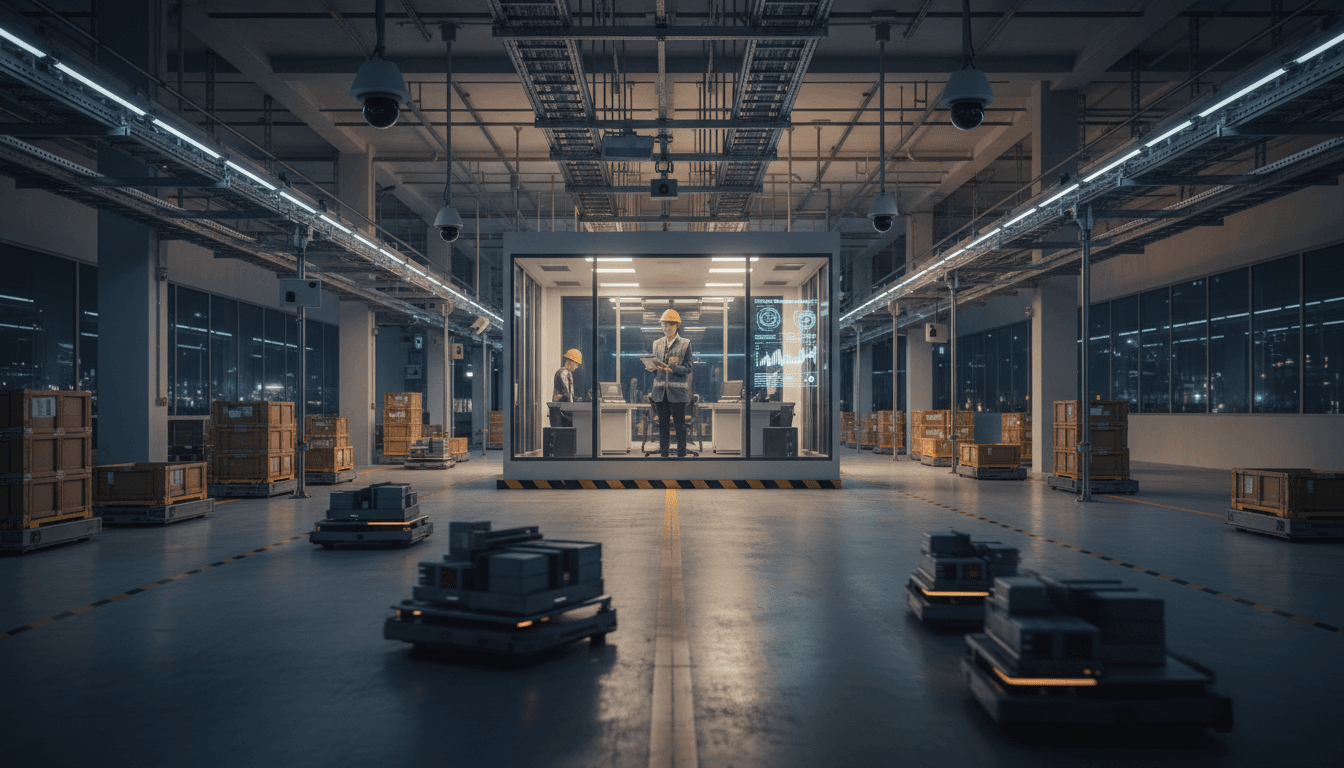
Physical AI: The Next Wave for Singapore Businesses
NXP just put a name to what a lot of operators in factories, warehouses, and vehicle fleets are already feeling: AI is moving off the screen and into real systems.
In a Reuters interview carried by CNA, NXP’s CEO Rafael Sotomayor described demand for “physical AI” as a key driver of growth—AI that runs on the edge inside industrial equipment like robots, safety systems, and logistics automation. NXP forecast about 11% year-on-year revenue growth for the next quarter and said its industrial segment is growing 20%, helped by AI-enabled industrial demand. That’s not hype. That’s a chipmaker seeing purchase orders.
For the AI Business Tools Singapore series, this matters because Singapore companies don’t need more AI demos. They need AI that changes throughput, reduces downtime, tightens safety, and improves customer experience—without requiring a full “digital transformation” programme that takes 18 months.
What “physical AI” really means (and why it’s different)
Physical AI is AI embedded in devices that sense, decide, and act in the real world—often in milliseconds—without relying on the cloud. That’s the practical meaning behind Sotomayor’s comment about “intelligence on the edge and industrial.”
Traditional “software AI” is what many SMEs started with in 2023–2025: chatbots, content generation, summarisation, CRM automation. Useful, but it lives in apps.
Physical AI is what happens when you combine:
- Sensors (vision, radar, vibration, temperature, torque)
- Edge compute (in gateways, PLC-adjacent devices, embedded modules)
- Control systems (robots, conveyors, access systems, AGVs)
- Connectivity (industrial Ethernet, 5G/private networks, Wi‑Fi 6/7)
The big shift is the feedback loop. Physical AI isn’t just predicting something—it’s triggering actions: slowing a forklift, pausing a conveyor, rerouting a robot, raising an alert to a supervisor, or adjusting energy draw.
Snippet-worthy definition: Physical AI is AI you can trip over—because it sits inside machines that move, monitor, and make decisions at the edge.
Why chipmakers are bullish: edge AI is becoming the default
When a company like NXP says AI demand is boosting outlook, it’s a signal that edge AI has crossed from experimentation into procurement. Chips don’t get ordered for “pilots” at scale. They get ordered when systems are being deployed.
A few forces are pushing physical AI forward right now:
1) Latency and reliability beat “send it to the cloud”
If a worker steps into a restricted zone, you can’t wait for a round-trip to a data centre. Edge AI is designed for local decision-making.
2) Data gravity and privacy are real constraints
Manufacturing video feeds, safety camera footage, and proprietary process data are sensitive. Companies increasingly prefer on-prem or edge inference so raw data doesn’t leave the site.
3) The ROI is easier to prove
Edge AI tends to attach to very measurable outcomes:
- fewer incidents and near-misses
- lower unplanned downtime
- faster picking and packing
- better yield and scrap reduction
- improved energy efficiency in plants
4) Automotive AI is spilling into industry
Sotomayor’s point that NXP is reusing automotive tech in drones and robots is key. Automotive has been building edge intelligence for years (radar, ADAS, networking). Now those capabilities are being repackaged into industrial systems.
For Singapore, where advanced manufacturing, logistics, and transport are economic pillars, that “spillover” matters.
What physical AI looks like in Singapore operations
Physical AI isn’t only for multinationals. SMEs can adopt it in narrow, high-impact slices. I’ve found the best results come from targeting one bottleneck and instrumenting it properly—rather than trying to “AI everything.”
Workplace safety: vision + edge alerts
Common pattern:
- Cameras observe PPE compliance, restricted zones, or unsafe behaviours
- Edge inference detects issues in near-real time
- Alerts go to a supervisor, Andon board, or incident log
Value: faster interventions, auditable safety records, fewer stoppages.
Logistics automation: smarter routing and exception handling
In warehouses and distribution centres, edge AI supports:
- dynamic slotting suggestions
- congestion detection in aisles
- AGV/AMR navigation improvements
- anomaly detection on conveyor flow
Value: fewer mis-picks, fewer “where did that pallet go?” moments, higher throughput.
Predictive maintenance: vibration and current signatures
A very practical use case:
- install sensors on motors/pumps
- edge models detect vibration patterns or current anomalies
- maintenance is scheduled before failure
Value: downtime avoidance and a better maintenance backlog (less firefighting).
Customer experience: physical AI at the front line
Not all physical AI is industrial. Retail, F&B, and services can apply it to:
- queue monitoring and staff allocation
- smart kiosks that adapt based on demand
- inventory shrinkage detection
Value: faster service and fewer revenue leaks.
The business tool stack that makes physical AI usable
Most companies don’t fail at physical AI because models are “bad.” They fail because the workflow around the model is missing. Physical AI needs a stack that connects sensors to actions and reporting.
Here’s a practical map of the tooling layers Singapore businesses should think about:
1) Edge layer: devices and deployment
You need a way to manage:
- model deployment to edge devices
- versioning and rollback
- device health monitoring
If you can’t update a model safely, you’ll freeze innovation after the first deployment.
2) Data layer: event streams, not just dashboards
Physical AI produces high-frequency events. The goal isn’t “store everything forever.” It’s:
- capture what’s needed for audit/training
- log decisions and confidence scores
- trace actions (who acknowledged the alert, what happened next)
3) Process layer: automation and escalation
The model output must trigger something:
- ticket creation (maintenance)
- messaging (Ops WhatsApp/Teams/Slack)
- workflow (SOP checklists)
- system control (slow/stop, reroute, lock/unlock)
A good rule: If the AI result doesn’t change a decision within 10 minutes, it’s probably a reporting feature—not an operational feature.
4) Business layer: ROI, compliance, governance
Leadership will ask:
- What’s the measurable benefit?
- What’s the false positive rate?
- Who owns the risk if it misses something?
- Is it compliant with internal policy?
Answer these early and adoption accelerates.
A simple “first physical AI project” plan (that won’t drag on)
The reality? It’s simpler than it sounds if you keep the scope tight. Here’s a plan that fits a typical SME timeline.
Step 1: Pick one metric you can’t argue with
Choose something measurable weekly:
- downtime hours
- near-miss counts
- pick rate per hour
- incident response time
- energy consumption per unit output
Step 2: Start with detection, not autonomy
Many teams jump straight to “AI controls machines.” Don’t.
Start with:
- detection (anomaly, unsafe behaviour, congestion)
- human-in-the-loop confirmation
- then semi-automated actions
Step 3: Design the escalation path before training anything
Write the SOP:
- who gets alerted
- what they do
- what gets logged
- when it escalates
Then build the AI around that.
Step 4: Set acceptance thresholds
Agree upfront:
- acceptable false positives (e.g., 1–2/day)
- acceptable miss rate
- how you’ll measure drift
Step 5: Roll out in one site, one shift
Prove it in a controlled slice. Expand after you’ve stabilised.
“But we’re not a factory”—why this still matters for marketing and growth
Physical AI sounds industrial, but the underlying signal is broader: AI spending is shifting from experiments to embedded capability. That changes expectations across every department.
For marketing and customer engagement in Singapore, it shows up as:
- smarter in-store experiences (kiosks, queue optimisation)
- faster fulfilment (operations driving better delivery promises)
- improved service reliability (maintenance reducing disruptions)
In other words: your “AI business tools” strategy can’t be only about content and chat. Operations is becoming a growth lever, and AI is increasingly how operations gets upgraded.
What to do next (if you want results this quarter)
NXP’s CEO is effectively saying: companies are buying the building blocks for AI in the physical world—edge intelligence, industrial chips, and embedded systems—because the ROI is becoming obvious. Singapore businesses that wait for a perfect roadmap will end up paying a “late adopter tax” in slower ops and weaker service levels.
If you’re planning your 2026 AI initiatives, take a balanced approach:
- Keep using software AI for sales/marketing productivity
- Add one physical AI pilot tied to a hard operational metric
- Build the workflow around the AI output, not the other way around
Physical AI is already showing up in purchase orders and revenue forecasts. The more useful question for your business is: where would a 5–10% operational improvement translate directly into customer experience and growth?
Source article: https://www.channelnewsasia.com/business/nxp-ceo-says-demand-physical-ai-boosting-outlook-5906696