Global cybersecurity funding rose 41% in 2025 while APAC cooled. Here’s what Singapore SMEs must secure in their marketing stack—using AI safely.
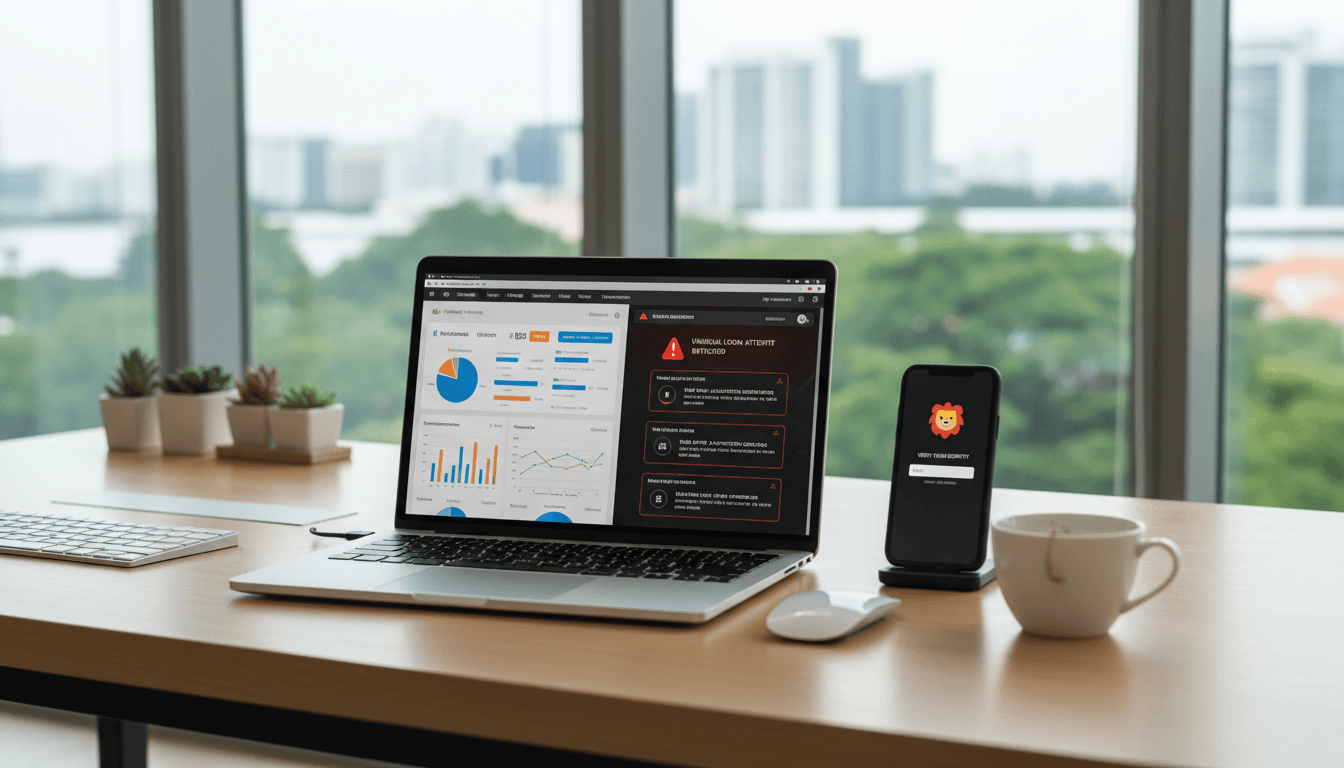
Cybersecurity Funding Shifts: What SG SMEs Must Fix
Global cybersecurity investment is accelerating again—up 41% worldwide in 2025, according to reporting based on Tracxn research—while APAC saw fewer deals and tighter capital allocation over the same period. That combination creates a strange reality for Singapore SMEs: threats and expectations keep rising, but it’s harder to “buy your way out” of risk with flashy new tools.
If you run marketing for an SME, this matters more than most people admit. Digital marketing stacks are basically data pipelines: web forms, CRM, email automation, ad pixels, payment links, analytics dashboards, WhatsApp inboxes, and a growing layer of AI tools. Every integration is a new door. And attackers don’t care that you’re not a bank.
This post is part of our AI Business Tools Singapore series—practical guidance on using AI to run leaner, smarter operations. Here, we’ll focus on the uncomfortable truth: your marketing growth is only as strong as your weakest security control.
What “global heats up, APAC cools off” really means for SMEs
The headline isn’t just investment gossip. It signals where cybersecurity product innovation and vendor attention will concentrate—then how quickly that value reaches SMEs in Singapore.
More global funding = faster attacker innovation too
When global funding grows, you get better defensive tools (great). You also get faster commercialisation of offensive capabilities: phishing kits that feel “human,” deepfake voice scams, automated credential-stuffing, and AI-written social engineering that targets specific job roles.
For SMEs, the key implication is simple:
Attack quality rises even when your budget doesn’t.
That’s why “we’re too small to be targeted” is a myth. Attackers run campaigns like performance marketers: they test, optimise, and scale what converts.
Fewer APAC deals = security vendors will demand clearer ROI
When capital tightens in APAC, vendors push harder for:
- shorter sales cycles
- clearer compliance outcomes
- measurable risk reduction
- customer retention (not pilots that go nowhere)
That’s good news for buyers—if you know what to ask for. It’s bad news if your SME buys tools based on fear, buzzwords, or a single incident.
The uncomfortable weak point: your marketing tech stack
Most Singapore SMEs don’t get breached because they lack “advanced cybersecurity.” They get breached because the business moved fast and left gaps.
Here’s where I see risk cluster in SME marketing operations.
1) Lead capture and web forms
Your website forms often feed directly into:
- email marketing tools
- a CRM (HubSpot/Salesforce alternatives)
- Google Sheets (still common)
- WhatsApp/Telegram workflows
Common failure modes:
- no rate-limiting or bot protection → spam floods, fake leads, resource waste
- weak admin passwords on CMS → site takeover
- plugins/extensions not patched → known vulnerabilities exploited
Practical fix: treat forms as a “public API.” Protect them like one.
2) CRM and email automation permissions
Marketing teams usually have broad access because “we need to move quickly.” Then:
- shared logins happen
- ex-staff accounts remain active
- API keys live in a doc
Practical fix: role-based access isn’t enterprise theatre—it’s how you stop a small mistake becoming a big incident.
3) Ad accounts and social media managers
Meta, Google, TikTok, LinkedIn—these accounts are money pipes. A takeover can mean:
- ad spend drained overnight
- fake promos posted to your audience
- brand trust loss that takes months to rebuild
Practical fix: enable MFA everywhere, and avoid granting full admin unless necessary.
4) AI tools plugged into customer data
In 2026, plenty of SMEs are trialling AI business tools for:
- ad copy generation
- customer support summaries
- email personalisation
- competitor monitoring
The risk is less “AI is dangerous” and more data handling and access control:
- staff paste customer lists into tools
- browser extensions capture sessions
- vendors store prompts for training unless configured otherwise
Practical fix: define what data can be used in AI tools, and enforce it.
The APAC funding slowdown creates a trap: buying tools instead of building basics
When budgets tighten, many SMEs do one of two things:
- buy nothing and hope
- buy a single “all-in-one security product” and assume solved
Both are mistakes. The better approach is to invest in controls first, then add tools that automate those controls.
The SME cybersecurity baseline (non-negotiable)
If you only do eight things this quarter, do these:
- Turn on MFA for email, CRM, ad accounts, cloud storage
- Enforce a password manager (no shared passwords)
- Patch your website CMS/plugins on a schedule (weekly is realistic)
- Remove ex-staff access within 24 hours (HR offboarding checklist)
- Back up critical systems and test a restore (not just “we have backups”)
- Basic endpoint protection on laptops (and don’t ignore alerts)
- Lock down admin rights (least privilege)
- Run one phishing drill + 20-minute training (quarterly)
Most SME incidents are preventable with boring controls.
Where AI and automation actually help (without overcomplicating things)
AI in cybersecurity isn’t magic. It’s useful when it reduces response time and human workload—especially for small teams.
1) AI-assisted threat detection for “no SOC” companies
You don’t have a 24/7 Security Operations Center. So your system must:
- detect anomalies (odd logins, impossible travel, unusual export activity)
- alert the right person
- provide clear next steps
Look for tools that summarise alerts in plain language and give immediate actions, not just “high severity event.”
2) Automated brand and domain monitoring
SMEs doing active digital marketing are exposed to:
- spoofed domains (typosquatting)
- fake social accounts impersonating your brand
- phishing pages copying your landing page
AI-powered digital risk monitoring platforms (a category companies like CloudSEK operate in) typically focus on:
- external attack surface discovery
- credential leak monitoring
- phishing/takedown workflows
Even if you don’t buy a platform, you can set a lightweight process:
- monitor for lookalike domains monthly
- set up alerts for brand mentions + scam keywords
- lock down your DNS and registrar accounts with MFA
3) Smarter bot protection for lead-gen campaigns
If you run lead-gen ads, you’ve probably paid for junk leads. Attackers and bot farms now generate form submissions that look real enough to pass basic checks.
Bot mitigation providers (Kasada is one example of this broader category) focus on making automated abuse expensive.
Outcome to measure: cost per qualified lead (not cost per lead). Security is marketing efficiency here.
4) AI-supported incident response playbooks
The best “AI use” for SMEs may be documentation and speed:
- generate first-draft incident comms templates
- assemble checklists for account takeover response
- summarise audit logs during an investigation
Use AI to speed up thinking, but keep decisions with a trained owner.
A Singapore SME scenario: the breach that starts in marketing
Here’s a common chain I’ve seen (with details changed, but pattern real):
- Marketing intern receives a legitimate-looking email: “Meta ads account verification required.”
- They log in via a spoofed page and enter credentials.
- Attacker adds themselves as an admin, changes billing settings.
- Overnight: ad spend spikes; scam ads run under your brand.
- Support inbox floods with complaints; sales team scrambles; finance disputes charges.
Notice what’s missing: malware, zero-days, anything “advanced.”
The fixes are also not exotic:
- MFA on Meta Business Manager
- no shared accounts
- a rule: all platform verification happens from within the platform, never via email links
- daily spend anomaly alerts
What to do in the next 30 days (a realistic plan)
If you’re an SME owner or marketing lead, you need a plan that fits real constraints. Here’s one that works.
Week 1: secure the money and identity accounts
- Enforce MFA on Google Workspace/Microsoft 365, Meta, Google Ads, CRM
- Remove shared logins; roll out a password manager
- Audit admin users and API keys
Week 2: harden the website and lead pipeline
- Patch CMS/plugins and remove unused ones
- Add rate-limiting / bot checks to forms
- Review who can access lead lists and exports
Week 3: set monitoring and alerts
- Alerts for ad spend spikes
- Alerts for new admin additions on critical platforms
- Basic domain/brand impersonation checks
Week 4: prepare for the day something goes wrong
- One-page incident playbook: who does what, in what order
- Draft customer message templates for common incidents (account takeover, data exposure)
- Run a tabletop exercise (30 minutes)
Security planning is marketing continuity planning.
Why this trend will continue through 2026 (and why you should act now)
The funding pattern—global growth, APAC selectivity—signals a market that rewards proven outcomes. For SMEs, that’s an advantage if you treat cybersecurity as operational discipline rather than a last-minute purchase.
Also, March–June is typically a heavy period for campaigns (product launches, new budgets, regional events), and Singapore businesses are heading into a packed mid-year calendar—including major tech and business gatherings. That’s when attackers strike: when teams are busy and approvals get sloppy.
If you’re adopting AI business tools in Singapore to move faster, pair that speed with guardrails. Otherwise, you’re just scaling risk.
Next step: make your marketing stack defensible
Global cybersecurity may be heating up, but your SME doesn’t need to chase every new product. You need to eliminate the easy wins attackers rely on—then automate what you can.
Start with the baseline controls, secure your ad and identity accounts, and treat customer data like the asset it is. Once that foundation is in place, AI and automation become genuinely useful rather than another source of exposure.
If your marketing operations were disrupted for 72 hours—no ads, no CRM, no inbox access—what would it cost you in revenue and trust, and what’s the one control that would’ve prevented it?