ChatGPT’s Feb 2026 outage is a reminder: AI is operational risk. Here’s a practical reliability plan for Singapore teams using AI in marketing and ops.
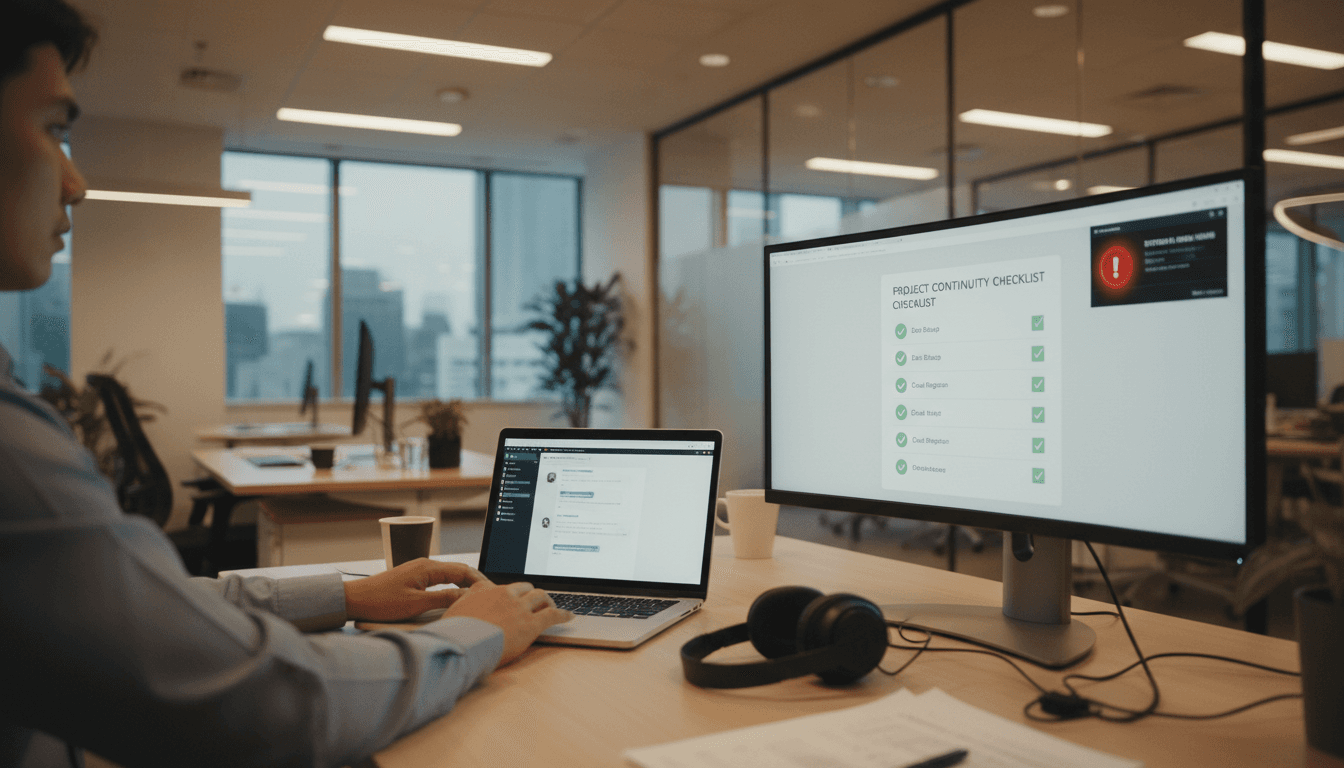
When ChatGPT Goes Down: A Reliability Plan for SG
On 4 Feb 2026, Reuters reported that ChatGPT briefly went offline for thousands of users in the US. Downdetector logged more than 13,000 reports at the peak, then dropped to a few hundred as service recovered. OpenAI said it had “identified the issue” and applied mitigations while monitoring recovery. Source: https://www.channelnewsasia.com/business/chatgpt-down-thousands-users-in-us-downdetector-shows-5905096
If you run a business in Singapore and ChatGPT is embedded in your marketing, customer replies, internal SOPs, or content workflow, this isn’t just global tech news. It’s a practical warning: AI is now part of your operations stack, so it needs the same resilience thinking you’d apply to payments, email, or your website.
I’ve found that most teams treat AI tools like “nice-to-have software” right up until the day it stops working. Then you realise how many tasks quietly depended on it.
The real lesson: AI outages are operational risk
AI tools fail in the same ways other cloud services fail—unexpectedly, at scale, and at the worst time. The difference is that AI tools often sit inside human workflows (writing, summarising, responding), so when they go down, work doesn’t just slow—people get stuck.
A brief outage can cause disproportionate disruption when:
- Your team has one AI tool and no backup
- Your prompts, templates, and brand guidelines live inside a single chat history
- AI is used in time-sensitive workflows (campaign launches, customer support peaks)
- Staff no longer remember the “manual way” because AI became muscle memory
For Singapore businesses, that last point matters. Many SMEs adopted AI fast over the past two years—often without formal IT governance—because the ROI was obvious: faster content, quicker replies, better sales enablement. The trade-off is that speed-first adoption tends to ignore continuity planning.
“But it was only brief”—why short downtime still hurts
Short outages break momentum, deadlines, and confidence. Even 30–60 minutes can derail:
- A marketer finalising EDM copy before a scheduled send
- A sales team generating proposals for a same-day pitch
- An ops team translating or drafting customer-facing messages
- A customer support lead trying to summarise a spike in tickets
The cost isn’t just the minutes lost. It’s the context switching and rework when partial outputs or failed automations leave people unsure what was completed.
Where Singapore companies are most exposed
The highest-risk teams are the ones using AI as a production dependency rather than an assist. In the “AI Business Tools Singapore” series, we often talk about adoption. This post is about the less glamorous part: keeping things running when adoption is already high.
Marketing teams: content calendars don’t pause
Marketing is usually the first function to depend on ChatGPT daily. Common dependencies include:
- Social captions and campaign concepts
- SEO outlines and metadata drafts
- Landing page copy variations for A/B testing
- Post-webinar recap emails and LinkedIn posts
If your team has built a system where “drafts start in ChatGPT”, an outage means you’re suddenly drafting from scratch, without your prompt library, tone rules, or past examples.
Customer support and CX: response time is a KPI
Many Singapore businesses use AI to:
- Summarise long email threads
- Draft first responses based on knowledge base content
- Translate replies between English and Chinese/Malay/Tamil
- Create polite, consistent messaging for refunds or delivery delays
When the tool fails, your team either replies slower (hurting CSAT) or replies faster with less consistency (hurting trust). Neither is great.
Operations: AI is now “shadow infrastructure”
Ops teams use AI for:
- SOP drafts and checklists
- Vendor email templates
- Meeting summaries and action items
- Policy clarifications (with internal references)
This work is invisible until it’s blocked. Then leadership hears: “We can’t proceed because ChatGPT is down.” That sentence is the signal that AI has become infrastructure—just unmanaged infrastructure.
A practical reliability plan (built for SMEs)
You don’t need enterprise-grade complexity to be resilient. You need a few deliberate choices. Here’s a plan I’d actually implement for a lean team.
1) Map your “AI-dependent workflows” in 45 minutes
If you can’t list where AI sits in your process, you can’t design fallbacks. Do a quick workshop and capture:
- Task name (e.g., “Weekly promo email copy”)
- Tool used (ChatGPT, others)
- Owner (role/team)
- Frequency (daily/weekly/monthly)
- Time sensitivity (high/medium/low)
- What happens if it’s unavailable for 2 hours?
This becomes your AI dependency register. Keep it simple—one shared sheet is fine.
2) Create a “Minimum Viable Manual” for high-sensitivity tasks
Your manual fallback shouldn’t be perfect; it should be usable under pressure. For each high-sensitivity workflow, prepare:
- A basic template (email, support reply, proposal structure)
- A short checklist (tone rules, disclaimers, mandatory fields)
- A repository of approved phrases (refund policy, delivery timelines, PDPA wording)
This is what prevents teams from freezing or improvising risky messaging.
Snippet-worthy rule: If a task affects revenue or customer trust, it needs a non-AI fallback.
3) Diversify tools—but do it strategically
Tool diversity reduces single-point failure. But “sign up for five AI apps” isn’t a strategy. A practical approach:
- Keep one primary generative AI tool for most use cases
- Add one secondary tool that can handle core text generation and summarisation
- Use specialised tools only where they clearly outperform (e.g., meeting transcription, design)
For Singapore businesses, this is also a procurement and compliance win: fewer vendors, clearer access control.
4) Store prompts and brand rules outside chat
Your prompt library should never live only in a chat sidebar. Put critical assets in:
- A shared knowledge base (Notion/Confluence/SharePoint)
- A simple internal wiki
- A version-controlled doc if your team is technical
Include:
- Brand voice rules (what to do and what to avoid)
- Product facts and approved claims
- Industry compliance notes (financial services, healthcare, education)
- “Golden prompts” that reliably produce usable drafts
This makes switching tools possible during an outage and improves consistency even when everything is working.
5) Design “graceful degradation” into automations
Automations should fail safe, not fail loud. If you use AI in Zapier/Make/CRM workflows, set rules like:
- If AI step fails → route to a human review queue
- If response generation fails → send a holding message or create a ticket
- If summarisation fails → store raw transcript and notify owner
The goal is: no dropped leads, no silent failures, no missing customer replies.
6) Set internal rules for what AI must never do alone
Reliability isn’t just uptime; it’s reducing risk when people scramble. When tools go down, teams may copy-paste between tools or skip reviews.
Create a simple policy:
- AI can draft, but a human must approve anything that is:
- Legal/policy related
- Pricing or promotions
- Medical/financial advice
- PDPA-related or sensitive customer data
If you operate in regulated industries in Singapore, this is non-negotiable.
What to do during an outage (a one-page playbook)
When AI tools go down, teams waste time diagnosing instead of executing fallbacks. A short playbook prevents chaos.
Step-by-step outage response
-
Confirm scope quickly
- Is it the web app, API, or just one account?
- Are colleagues affected?
-
Switch to your secondary tool or manual templates
- Don’t wait “five more minutes” repeatedly.
-
Prioritise external-facing work
- Customer support, sales proposals, time-based campaigns.
-
Pause non-urgent AI tasks
- Backlog them for later instead of forcing subpar outputs.
-
Log what broke
- Which workflow failed, what data was impacted, what the workaround was.
This log is gold. It tells you where your AI stack is brittle.
People Also Ask: “Should we stop using ChatGPT for business?”
No—stopping isn’t the smart move. Building resilience is. AI productivity gains are real, but treating one vendor as a single point of failure is a self-inflicted wound.
People Also Ask: “How many AI tools do we need?”
Two is the sweet spot for most SMEs: one primary, one backup. More than that tends to create confusion, duplicated costs, and inconsistent outputs.
The Singapore angle: reliability is part of competitiveness
Singapore businesses compete on speed and trust. AI helps with speed, but reliability protects trust.
February is also when many teams are ramping up after year-end planning and pushing Q1 campaigns. If your pipeline is active right now, an AI outage can hit when your team is least willing to slow down.
The teams that perform well aren’t the ones with the most AI tools. They’re the ones with:
- Clear workflows
- Documented prompts and brand rules
- Backup options
- Automation that routes failures safely
That’s the difference between “we use AI” and “AI is reliably embedded in the business.”
A simple next step: an AI reliability check for your team
If you’re adopting AI business tools in Singapore, treat this week’s ChatGPT outage as a free stress test. Pick one workflow—marketing content, customer replies, or sales proposals—and ask: If ChatGPT is unavailable for two hours, what do we do? If the answer is “we wait,” you’ve found your first improvement.
If you want help designing a resilient AI workflow—tool choices, prompt libraries, guardrails, and automations that don’t drop leads—this is exactly what our AI Business Tools Singapore series is about: practical adoption that holds up under real-world conditions.
What would break first in your company if your main AI tool went offline tomorrow morning?