Learn how Samsung House in Milan shows the power of AI-driven event marketing—turning physical experiences into measurable leads for Singapore businesses.
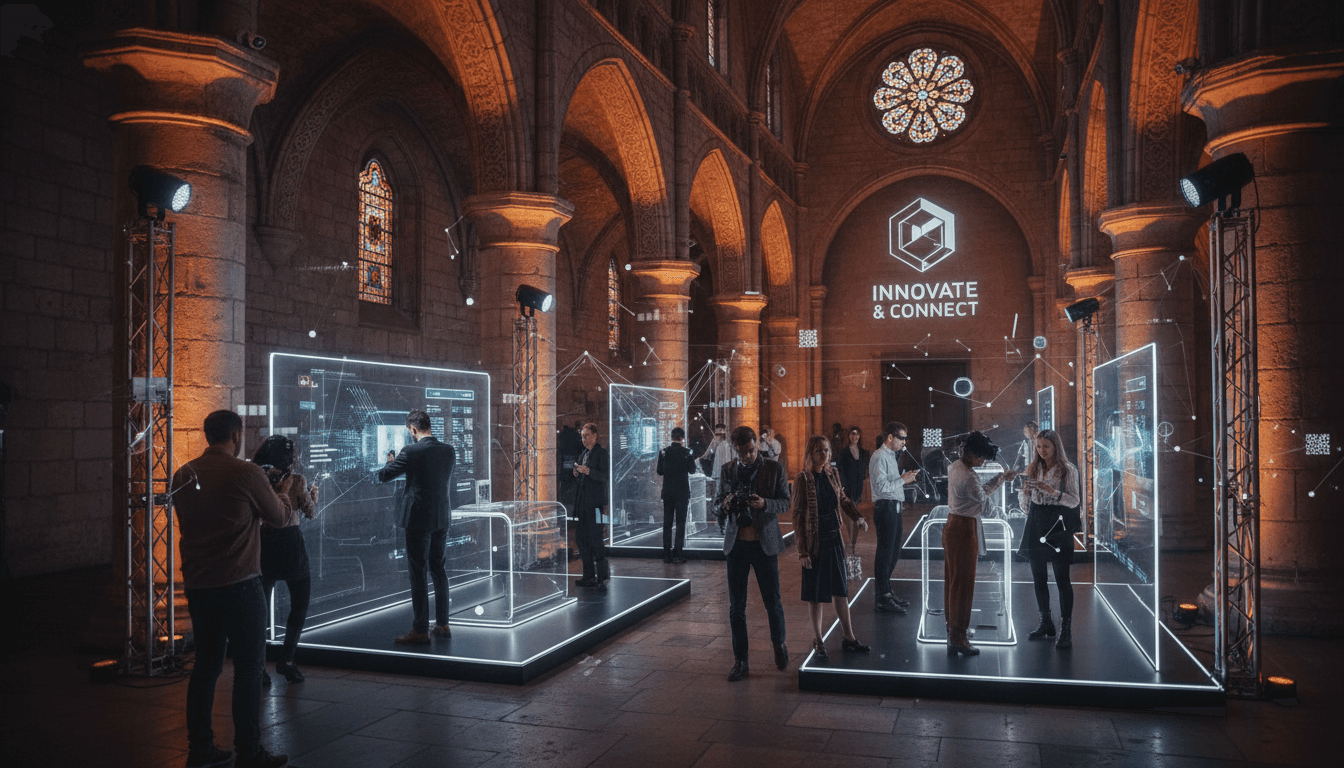
AI Event Marketing Lessons from Samsung House Milan
Samsung isn’t opening “Samsung House” in Milan because it needs more floor space. It’s doing it because physical experiences still convert attention into loyalty faster than ads do—especially when they’re tied to a major cultural moment like the Milano Cortina Winter Games.
And here’s the part Singapore businesses should pay attention to: the real advantage isn’t the building. It’s the system around it—how a brand connects an on-site experience to digital engagement, measurable outcomes, and follow-up that actually sells. That’s exactly where AI business tools earn their keep.
Samsung’s play (a flagship “house,” athlete-led content, and thousands of devices seeded into the community) is a useful case study for anyone in the “AI Business Tools Singapore” series who’s trying to make events, pop-ups, launches, and partnerships drive leads instead of just “buzz.”
Why Samsung House works: it’s an experience, not a showroom
The core idea is simple: Samsung House is designed as a connection hub for athletes and the Olympic community, not a retail outlet. According to the Reuters report carried by CNA, it opened at Milan’s historic Palazzo Serbelloni and is positioned as a space “dedicated to connection,” shaped around athletes.
That framing matters because people don’t travel across a city to be sold to. They show up for:
- Access (to people, stories, behind-the-scenes)
- Status (being “inside” the community)
- Emotion (shared moments)
- Participation (something they can do, post, keep)
The myth most businesses believe
Most companies get event marketing wrong by treating the venue as the product.
The reality? The venue is only the stage. The product is the storyline and the data trail you build around it.
For Singapore SMEs, you don’t need a palazzo in Milan. You need:
- A clear audience moment (conference, industry week, mall pop-up, partner activation)
- A capture mechanism (QR flows, RSVP, on-site check-in, demo sign-ups)
- A follow-up system (personalised sequences, sales routing, remarketing)
AI makes #2 and #3 dramatically easier to run without hiring a full events ops team.
The “victory selfie” strategy is really a content engine
Samsung is reviving its “victory selfies” programme—athlete-led product placement it debuted at the Paris Games—and it’s giving around 3,800 Galaxy Z Flip7 Olympic Edition phones to Olympians and Paralympians.
Forget the phone for a second. What Samsung is buying is:
- Guaranteed content creation capacity at scale (thousands of creators)
- Authentic distribution through personal channels
- A consistent visual format (selfies) that audiences already understand
- A high-frequency stream of moments tied to achievement
How Singapore brands can copy the mechanics (without celebrities)
You can recreate the same flywheel locally with AI-driven workflows:
- Micro-influencer seeding: Identify and invite niche creators (fitness coaches, founders, stylists, community organisers) based on audience overlap, not follower count.
- Moment templates: Create 3–5 “moment prompts” for content (before/after, behind-the-scenes, results, customer reaction, founder note).
- AI content QA: Use AI tools to check brand compliance, detect missing product mentions, and suggest tighter captions.
- Real-time performance tracking: Track what’s getting saved/shared, then boost only proven winners.
A practical stance: If your event doesn’t produce reusable content within 24 hours, it’s underperforming. AI helps you compress that cycle.
Physical-to-digital is where the lead generation happens
Samsung House is a physical space, but its impact is digital: selfies, shares, stories, and ongoing narratives.
For Singapore businesses, bridging physical experiences to measurable outcomes comes down to designing the event like a funnel.
A simple “AI event funnel” you can implement this month
Answer first: You need three layers—capture, enrich, route.
-
Capture (on-site)
- QR code check-in (with explicit consent)
- One-question intent form (“Shopping for myself / researching for company / partnership inquiry”)
- Calendar link for demos or consultations
-
Enrich (minutes after capture)
- AI auto-tags the lead (industry, intent, urgency)
- AI summarises what they interacted with (booth visited, session attended, question asked)
- AI predicts next best action (send case study, send pricing, schedule call)
-
Route (same day)
- Hot leads go to sales with a short AI-generated brief
- Warm leads enter a personalised email/WhatsApp sequence
- Cold leads go into retargeting audiences and content drip
If you’re running events and still doing manual spreadsheet exports two days later, you’re leaving money on the table.
What tools typically make this work (without naming vendors)
Most Singapore teams I’ve worked with succeed when they combine:
- An event registration + check-in tool
- A CRM (even a lightweight one)
- An automation layer (email/WhatsApp)
- An AI layer for tagging, summarising, and content generation
The key is integration. AI can’t fix disconnected systems. It can, however, turn connected systems into a fast, consistent pipeline.
Real-time analytics: the difference between “busy” and “effective”
Big brands use major events to learn in real time: what content is resonating, which segments are responding, and what should be amplified immediately.
You can do the same on a smaller budget.
What to measure during an event (not after)
Answer first: Track signals that change decisions while the event is still live.
- Check-in to action rate (what percentage of attendees take a next step)
- Content output per hour (posts/stories/assets produced)
- Top questions asked (sales objections and interest areas)
- Booth/session dwell time (what people actually engage with)
- Lead quality mix (hot/warm/cold distribution)
AI helps by clustering feedback and questions instantly. Instead of reading 200 notes, you get a dashboard that says:
- “Most common question: warranty and support”
- “Most engaged segment: HR managers from 50–200 headcount firms”
- “Most shared content: behind-the-scenes setup and winner moments”
Then you can adapt:
- Change signage
- Adjust your pitch
- Swap the featured offer
- Post more of what’s working
Localisation: global campaign, Singapore execution
Samsung is a global sponsor (from Seoul 1988 to worldwide partner status since 1998, with sponsorship running through 2028). Yet the “Samsung House” activation is local to Milan, using the city’s architecture, culture, and the Olympic community.
That’s a strong reminder for Singapore marketers: global playbooks only work when they’re localised in tone, channel, and community.
How AI helps localise without watering down your brand
Answer first: Use AI to adapt assets, not your identity.
- Message localisation: Tailor copy for Singapore audiences (direct, practical, price-aware) vs other markets.
- Audience segmentation: Build different journeys for tourists, locals, corporate buyers, and partners.
- Language variants: Create versions in English plus Mandarin/Malay/Tamil when it actually helps conversion (not just for optics).
- Offer personalisation: Different bundles for students, SMEs, enterprise procurement.
A specific, useful rule: Localisation should change the examples and offers first, not the logo and colours.
“People also ask” (and the answers you can act on)
How can AI improve event marketing ROI in Singapore?
AI improves ROI by shortening the time from interaction to follow-up and increasing relevance via segmentation (intent tags, personalised sequences, lead scoring).
What’s the simplest AI use case for events?
Start with AI-generated lead summaries (who they are, what they asked, what to send next). It saves sales teams hours and prevents leads from going stale.
Do small businesses need immersive brand experiences?
Yes—but “immersive” doesn’t mean expensive. A workshop, a demo bar, a partner pop-up, or a community night can be immersive if it’s designed for participation and content creation.
A practical blueprint: build your own “brand house” play
Samsung House is a premium version of a pattern you can replicate.
Here’s a Singapore-friendly blueprint I’d use:
- Pick a moment that already has footfall (trade show, mall atrium, co-working hub, community festival)
- Design 3 interactive stations (demo, consultation, user story wall)
- Create one signature “shareable ritual” (photo moment, winner board, personalised takeaway)
- Instrument everything (QR codes, intent capture, consent)
- Use AI to produce same-day assets (recap video script, captions, email follow-ups)
- Follow up in 24 hours with personalised next steps
Snippet-worthy truth: The best event is the one that keeps working after the lights go off.
Where this fits in the “AI Business Tools Singapore” series
This post is part of a bigger theme we keep coming back to: AI is most powerful when it’s attached to real customer interactions. Samsung House is a reminder that the “real world” still matters—people want experiences. But the win goes to brands that can turn those moments into scalable, measurable, localised growth.
If you’re planning a 2026 product launch, a roadshow, or even a single high-stakes partner event, treat it like Samsung does: build a space people want to be in, then use AI to capture what happened and follow up like you actually listened.
If you want help mapping this to your own business—what to measure, how to set up capture flows, and which AI automations make sense for your team size—reach out through our AI Business Tools Singapore contact channels and we’ll recommend a practical stack and rollout plan.
What’s one customer moment in your business that deserves a “brand house” treatment—and what would happen if your follow-up got 10x faster?