EU regulators may force Meta to keep WhatsApp open to AI rivals. Here’s what it means for Singapore firms using WhatsApp and how to avoid AI lock-in.
AI Access Rules: What Meta-WhatsApp EU Fight Means
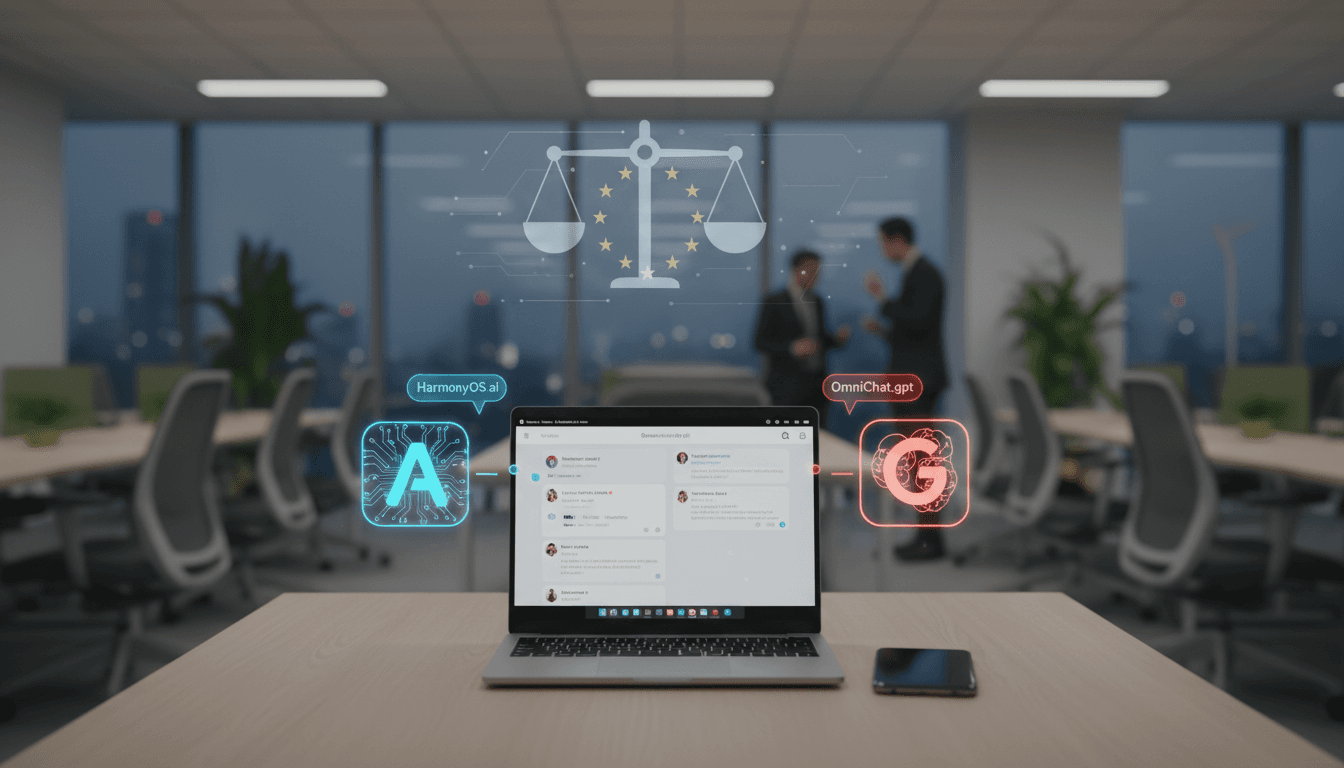
On Jan 15, 2026, Meta changed course: WhatsApp would allow only Meta AI inside WhatsApp (via the WhatsApp Business API). A few weeks later, the European Commission escalated—sending a statement of objections and warning it may impose interim measures to stop Meta from blocking AI rivals while the investigation runs. That’s a big deal because interim measures are the regulator’s “hit pause now” button—used when they believe serious and irreparable harm could happen before a final ruling.
If you run a business in Singapore and you’re thinking, “EU politics isn’t my problem,” I’d push back. This is exactly the kind of platform decision that can reshape which AI business tools you can use for customer support, marketing automation, and sales ops—especially if your go-to channel is WhatsApp.
This post is part of the AI Business Tools Singapore series, and here’s the angle: global regulation is becoming a practical constraint (and sometimes a protective guardrail) on AI distribution. The companies that do well in 2026 won’t just “use AI.” They’ll build systems that keep working even when a platform changes the rules.
One-liner worth remembering: If one platform controls the channel, it can control which AI tools you’re allowed to use.
What happened with Meta, WhatsApp, and the EU (in plain English)
The core issue is straightforward: WhatsApp is a distribution channel. If you sell, support, or market via WhatsApp at scale, you likely use the WhatsApp Business Platform / Business API through a solution provider. That’s how businesses power:
- customer service chat queues
- order updates
- appointment reminders
- lead qualification
- and increasingly, AI chatbots
According to the Reuters report republished by CNA (Feb 9, 2026), the EU says Meta may be abusing a dominant position by changing policy to allow only Meta AI inside WhatsApp—potentially locking out rival AI assistants that previously competed on the same channel.
Why “interim measures” matter more than the final verdict
The EU isn’t just investigating. It’s threatening temporary measures to preserve competitor access while the case is ongoing.
That’s significant for two reasons:
- Timing is everything in AI. If rivals are blocked for 6–12 months, many won’t recover—even if regulators later rule against Meta.
- It signals what regulators care about: access, choice, and preventing “distribution chokepoints.”
Meta’s response (per the article) is also telling: it argues WhatsApp isn’t a “key distribution channel” because users can get AI elsewhere—app stores, devices, websites, partnerships.
As someone who’s watched businesses operationalise WhatsApp in Southeast Asia, I don’t buy that argument fully. Not because Meta is always wrong—but because workflows beat theory. If your customers already live on WhatsApp, that’s your distribution channel whether regulators agree or not.
Why Singapore businesses should care (even if you don’t operate in Europe)
Even if you never sell to an EU customer, platform and regulatory decisions in major markets often ripple outward.
1) WhatsApp is a default business channel in Singapore
For many SMEs here, WhatsApp is where leads arrive, questions get answered, and deals get closed. When you attach AI to that channel—auto-replies, FAQ bots, product recommendations, quote generation—you’re building on rented land.
If the “landlord” changes the terms, your tool choices can shrink overnight.
2) Regulation is shaping AI tool availability, not just AI safety
A lot of AI compliance talk focuses on privacy, bias, or model risk. Those matter. But the Meta-WhatsApp issue highlights something more operational:
- Who gets access to the channel?
- Can you use the AI assistant that fits your business, or only the one the platform prefers?
For Singapore companies adopting AI tools for marketing and operations, this is a reminder to avoid over-dependence on a single platform’s embedded AI.
3) “Ethical AI adoption” includes competition and customer choice
Ethical AI isn’t only about not leaking customer data. It’s also about:
- giving customers meaningful choice in how they interact
- avoiding dark patterns (forcing users into one assistant)
- ensuring your business can switch vendors without massive pain
The reality? Ethical choices are easier when your architecture isn’t locked in.
The practical risk: AI lock-in through messaging channels
Here’s the mechanism that worries operators:
- A platform owns the messaging channel (WhatsApp).
- Businesses build their customer journey there.
- The platform introduces an in-house AI assistant.
- The platform restricts or taxes third-party AI assistants.
- Businesses “standardise” on the default AI because switching becomes expensive.
That’s not hypothetical. It’s a standard playbook across tech sectors.
What does lock-in look like on the ground?
For a Singapore SME, it often shows up as:
- Rising per-conversation costs if you’re forced into a specific provider stack
- Lower bot quality because the default AI isn’t tuned to your products, tone, or languages (Singlish/Mandarin/Malay/Tamil mixing is real)
- Slower experimentation because your AI roadmap is tied to one vendor’s release cycle
- Compliance headaches if you can’t choose where data is processed or how logs are stored
If you’re using WhatsApp for revenue, the key question is simple: Can you swap AI layers without rebuilding your entire customer workflow?
A better way: build an “AI tool stack” that survives platform shifts
My stance: Singapore businesses should treat messaging platforms like channels, not brains. The “brain” should be your AI orchestration layer—something you control.
Principle 1: Separate the channel from the intelligence
Your architecture should look like:
- Channel layer: WhatsApp, web chat, email, Instagram DM
- Orchestration layer: routing, intent detection, knowledge retrieval, escalation rules
- Model layer: your chosen LLM(s), plus fallback models
- Knowledge layer: approved FAQs, product catalog, policy docs, SOPs
- Audit layer: logs, approvals, red-team prompts, PII handling
When the channel changes policy, you ideally replace only the connector—not your whole system.
Principle 2: Use “multi-model” thinking for core workflows
A single model is rarely optimal for every task. In practice, a resilient stack uses:
- a fast, cheaper model for classification/routing
- a stronger model for complex answers
- a strict “no hallucination” mode for policy and pricing
That way, if a platform blocks one assistant, you still have options.
Principle 3: Put your knowledge base on your side of the fence
If your AI’s product truth lives only inside a platform’s AI assistant, you’ll struggle to prove what was said, when, and why.
A clean setup:
- one source of truth (knowledge base)
- versioned updates
- approval workflow
- clear “citations” inside answers (even if you don’t show them to customers)
This is where responsible AI adoption becomes tangible: govern the content, not just the model.
What to do if WhatsApp is central to your marketing and operations
This is the “do it next week” section.
1) Map your WhatsApp dependency in 60 minutes
List every place WhatsApp is used:
- lead gen (ads → WhatsApp click-to-chat)
- sales (quotes, follow-ups)
- service (refunds, rescheduling)
- ops (delivery confirmations)
For each, write down:
- what tool runs it today (CRM, helpdesk, chatbot)
- what AI features you rely on
- what breaks if you can’t use your current AI vendor
If you can’t answer that, you have hidden platform risk.
2) Design a fallback path that doesn’t involve “humans doing everything”
A realistic fallback is not “we’ll do it manually.” That fails during peak periods.
A better fallback:
- Route to web chat or email for complex issues
- Keep WhatsApp for notifications and simple intents
- Use a separate AI layer for FAQ + ticket drafting
Even this partial decoupling reduces your exposure.
3) Add three non-negotiables to vendor evaluation
When choosing AI business tools in Singapore for WhatsApp workflows, I’d insist on:
- Data portability: export chat logs, intents, and bot training data
- Connector flexibility: WhatsApp today, but can you add web chat/Telegram later?
- Human-in-the-loop controls: approvals for sensitive actions (refunds, cancellations, compliance replies)
If a vendor can’t answer these clearly, you’re paying for future pain.
4) Treat policy changes as a business continuity risk
Most companies only do business continuity for outages. In 2026, you also need it for:
- API policy restrictions
- pricing changes
- AI feature lockouts
Put a quarterly reminder to review platform terms and roadmap notes—especially for customer messaging channels.
The EU’s stance is a preview of how AI distribution will be policed
The EU competition chief (Teresa Ribera, per the article) framed this as protecting “effective competition” and preventing dominant firms from using dominance to gain unfair advantage.
Whether you agree with the EU approach or not, it signals something useful for businesses:
- Regulators are focusing on distribution power (not just model capability).
- Big platforms will keep bundling AI into their ecosystems.
- The line between “product improvement” and “foreclosure of rivals” will be contested.
For Singapore businesses, that means your AI adoption strategy should anticipate two forces at once:
- More embedded AI inside platforms (convenient, but sticky)
- More scrutiny of how that AI is distributed (which can change availability fast)
Where this fits in the AI Business Tools Singapore series
This series is about choosing and implementing AI tools that actually improve marketing, operations, and customer engagement—without creating fragile dependencies.
The Meta-WhatsApp EU dispute is a timely reminder: tool choice isn’t only about features. It’s about control, compliance, and long-term access.
If you’re building on WhatsApp, build like rules will change—because they will.
What’s one customer workflow you could redesign this quarter so that switching AI providers becomes a configuration change, not a replatforming project?
Source URL (landing page): https://www.channelnewsasia.com/business/eu-threatens-temporary-measures-stop-meta-blocking-ai-rivals-whatsapp-5917411