Agritech platforms helped 233,250 farmers grow smarter. Here’s the SME playbook: connect workflows, add AI where it cuts time-to-cash, and scale leads.
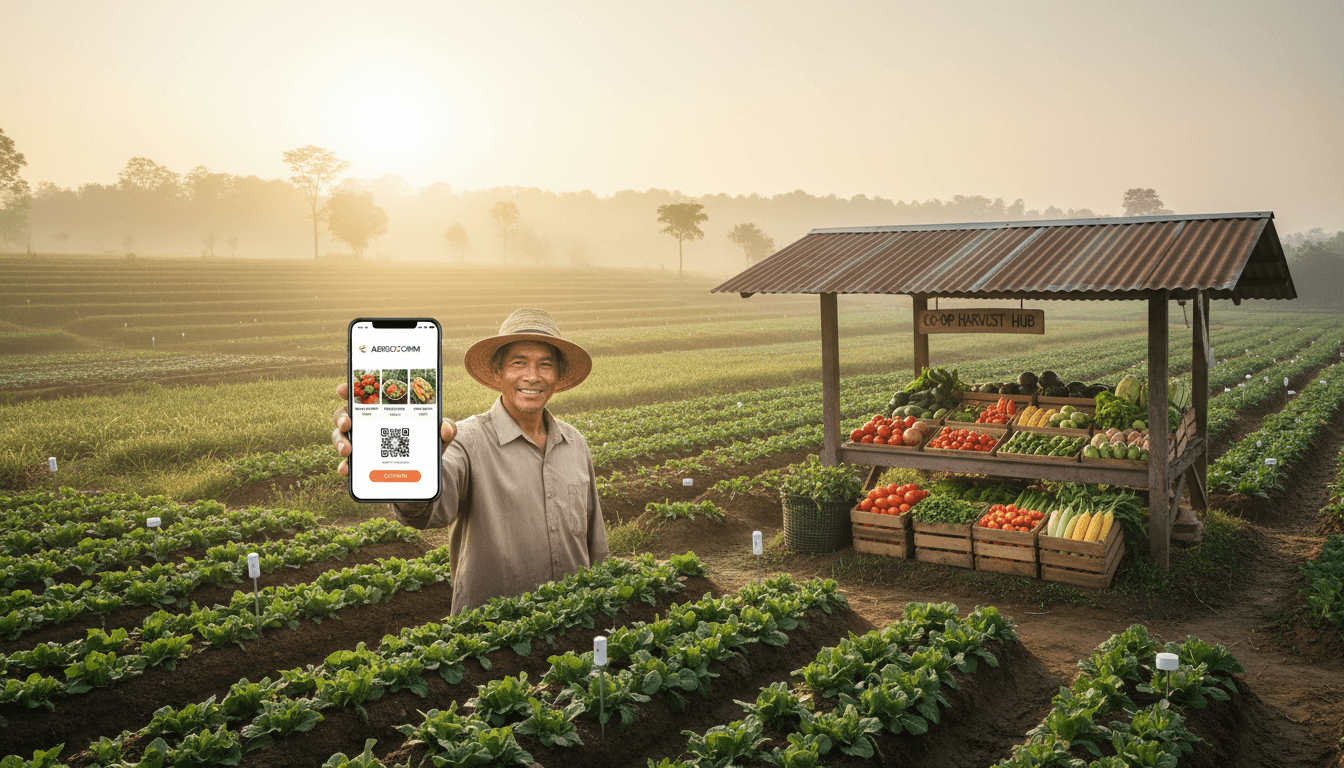
Agritech Platforms: A Playbook for SME Digital Growth
233,250 farmers used one platform to improve market access and financing in a single year (2024). That number matters even if you don’t sell rice, fertiliser, or farm equipment—because it shows what happens when a fragmented SME ecosystem finally gets a usable digital operating system.
Most SMEs in Southeast Asia share the same underlying problem: they’re good at the work, but the work is disconnected—from customers, from payments, from financing, from logistics, from data. Southeast Asian agritech is fixing that for smallholders at scale, and there are direct lessons here for Singapore SMEs thinking about AI business tools, digital marketing, and operational resilience.
The reality? The “future of SME growth” isn’t a shiny app. It’s a connected stack: marketplaces + data + financing + workflow tools + trust. Agritech just happens to be proving it fastest.
What agritech platforms are really doing (and why SMEs should care)
Agritech platforms win when they connect the entire value chain, not when they add another tool to a farmer’s phone. In Vietnam, TechCoop’s CEO Hao Diep describes how farmers have moved from isolated traditional methods to using digital platforms that coordinate production, inputs, financing, and sales. That shift turns individual operators into a network.
For Singapore SMEs, the equivalent isn’t “start an app.” It’s designing your customer and revenue flow so every step informs the next:
- Marketing generates demand (and data)
- Sales converts and records intent
- Ops fulfils with fewer manual handoffs
- Finance collects faster and reduces risk
- Insights improve targeting and inventory decisions
A platform approach makes the business more predictable. Predictability is what makes growth affordable.
The overlooked point: platforms create trust at scale
Smallholders often struggle with fair pricing, quality standards, and timely payments. Digital platforms reduce these friction points by making transactions trackable, repeatable, and less dependent on middlemen.
SMEs face a similar “trust tax” online. Prospects hesitate because they don’t know you. A connected digital system helps you prove reliability through:
- consistent follow-up
- transparent pricing/packages
- clear delivery timelines
- verified reviews and case studies
- predictable service experience
This is where AI business tools in Singapore start to pay off: not as gimmicks, but as trust infrastructure.
The numbers behind the shift: inclusion, financing, and marketplaces
The RSS story highlights a key constraint across Indonesia, the Philippines, and Vietnam: only 43% of adults have bank accounts (as cited in TNB Aura’s 2024 impact reporting). When banking access is limited, platforms that bundle commerce and financing become unusually powerful.
In agriculture, this shows up as input financing and better market access. In SME land, it looks like:
- pay-later options or subscription models that reduce upfront friction
- faster invoicing and automated reminders
- alternative underwriting (using transaction history, not just collateral)
- embedded payments and reconciliation
The important stance here: if your business still treats payments and financing as “back office,” you’re leaving growth on the table. Agritech isn’t doing that anymore.
Case examples from Southeast Asia’s agritech wave
The article points to several operators backed by impact-focused investors:
- TechCoop (Vietnam): In 2024, 233,250 farmers improved livelihoods through the platform via market access and input financing.
- AgriAku (Indonesia): Partnered with 8,170 farmers in 2024, and went beyond distribution by registering agri-biological products that regenerate soil and reduce reliance on synthetic fertilisers.
- Eratani (Indonesia): Built a platform that bundles input procurement, financing access, and sales channels.
Even if you’re not in agribusiness, the pattern is consistent: distribution alone isn’t enough. The winners wrap distribution with data + financing + workflow.
The “digital ecosystem” model: one stack, many benefits
TNB Aura reports that over 209,000 small-scale enterprises across its portfolio have been integrated into digital ecosystems. The phrase sounds abstract, but the mechanism is simple: digitisation turns scattered micro-decisions into a dataset.
For SMEs, that dataset is your unfair advantage—if you actually use it.
What this looks like for a Singapore SME using AI business tools
A practical “ecosystem stack” for an SME (service, retail, B2B, or light manufacturing) might look like:
- Demand capture: paid ads + SEO + WhatsApp + landing pages
- Lead management: CRM with deal stages and automated follow-ups
- Customer comms: WhatsApp automation, email sequences, appointment reminders
- Operations workflow: job scheduling, inventory, project management
- Finance: invoicing, embedded payments, cashflow forecasting
- Analytics: dashboards that tie spend → leads → revenue
- AI layer: forecasting, segmentation, content support, customer service triage
The agritech lesson: don’t buy seven disconnected tools. Pick a backbone (usually CRM + payments + analytics), then add AI where it reduces time-to-cash.
A blunt rule I’ve found helpful
If an “AI tool” doesn’t do one of these, it’s probably a distraction:
- reduces response time to leads
- increases conversion rate
- improves repeat purchase/retention
- shortens fulfilment cycle time
- reduces errors or rework
Agritech platforms survive because they deliver measurable outcomes—higher yields, better pricing, improved access to financing. SMEs should demand the same clarity from their digital marketing and automation stack.
Climate resilience isn’t just a farm problem—it’s an SME continuity plan
The source article frames climate change as Southeast Asia’s biggest challenge and opportunity, citing a ~US$1.49 trillion regional investment gap in decarbonisation efforts (via TNB Aura’s reporting). Agriculture feels the pain first—floods, droughts, input volatility—but the shockwaves hit everyone: logistics delays, price spikes, supply shortages, shifting consumer demand.
For SMEs, “resilience” often sounds like corporate theatre. I disagree. Resilience is operational math.
What climate-smart thinking looks like for non-farm SMEs
You don’t need to measure soil health to copy the approach. You need to:
- reduce dependency on one channel: don’t rely on only walk-ins, only Shopee, or only referrals
- tighten cash conversion: invoice faster, collect faster, manage stock tighter
- forecast demand: use historical sales + seasonality to plan inventory and staffing
- build supplier redundancy: have a Plan B for critical inputs
- document processes: so you can train quickly when turnover happens
AI business tools can support these basics through demand forecasting, anomaly detection in spend, automated customer updates, and faster customer support triage.
A line worth stealing from agritech: technology works when it changes decisions, not when it changes dashboards.
Digital marketplaces: the real growth engine is distribution + data
Digital marketplaces are rewriting how products move in Indonesia, Vietnam, and the Philippines. In agritech, marketplaces don’t just match buyers and sellers—they standardise quality, pricing signals, financing eligibility, and logistics.
For Singapore SMEs, this maps cleanly to digital marketing:
- Your “marketplace” might be Google Search, Meta, TikTok, Grab, Carousell, Lazada, or a niche B2B directory.
- The mistake is treating these channels as mere exposure.
- The better approach is using them as structured demand capture, then pulling leads into owned systems (CRM, email, WhatsApp) where you can nurture and convert.
A practical 30-day action plan (borrowed from the agritech playbook)
If you want the agritech-style “flywheel” without rebuilding your company, do this over the next month:
-
Week 1: Fix your intake
- One clear offer
- One landing page per offer
- One primary CTA (WhatsApp or form)
-
Week 2: Connect lead-to-cash
- CRM pipeline stages (Lead → Qualified → Proposal → Won/Lost)
- Auto-follow-up within 5 minutes for inbound leads
- Quote template + standard package/pricing
-
Week 3: Add an AI layer where it saves time
- AI-generated first-draft replies for FAQs
- Call summary + next-step suggestions
- Lead scoring based on intent signals (page visits, message content, budget)
-
Week 4: Measure one metric that forces focus Pick one:
- cost per qualified lead (CPQL)
- lead-to-sale conversion rate
- time-to-first-response
- days sales outstanding (DSO)
Agritech platforms scale because they obsess over throughput and trust. SMEs should, too.
People also ask: “What does agritech have to do with digital marketing?”
Agritech and digital marketing are solving the same business problem: reducing friction between supply and demand.
- Agritech reduces friction in inputs, financing, and market access.
- Digital marketing reduces friction in discovery, consideration, and conversion.
The shared insight is that automation works best when it’s tied to a value chain, not when it’s bolted on. That’s why agritech platforms bundle services—and why SMEs get better results when CRM, ads, content, and customer comms are connected.
Snippet-worthy stance: If your marketing can’t see your sales outcomes, it’s not marketing—it’s content production.
Where this fits in the “AI Business Tools Singapore” series
This series is about practical adoption: AI for marketing, operations, and customer engagement. Agritech is a useful mirror because it’s a high-friction industry with thin margins—exactly the kind of environment where wasted clicks, slow follow-ups, and messy operations are fatal.
Southeast Asia’s agritech leaders are proving a point Singapore SMEs can use immediately: the winners aren’t the ones with the most tools; they’re the ones with the most connected workflows.
If you’re trying to drive leads this quarter, start where agritech starts: connect demand → fulfilment → payments, then apply AI to the bottleneck that slows cash down.
What would change in your business if every lead response happened in 5 minutes—and every follow-up was automatic, tracked, and measured?