Nepal’s 140-tonne pickle exports show how AI can scale Nepal’s global brand. Apply the same AI marketing systems to tourism and hospitality to win leads.
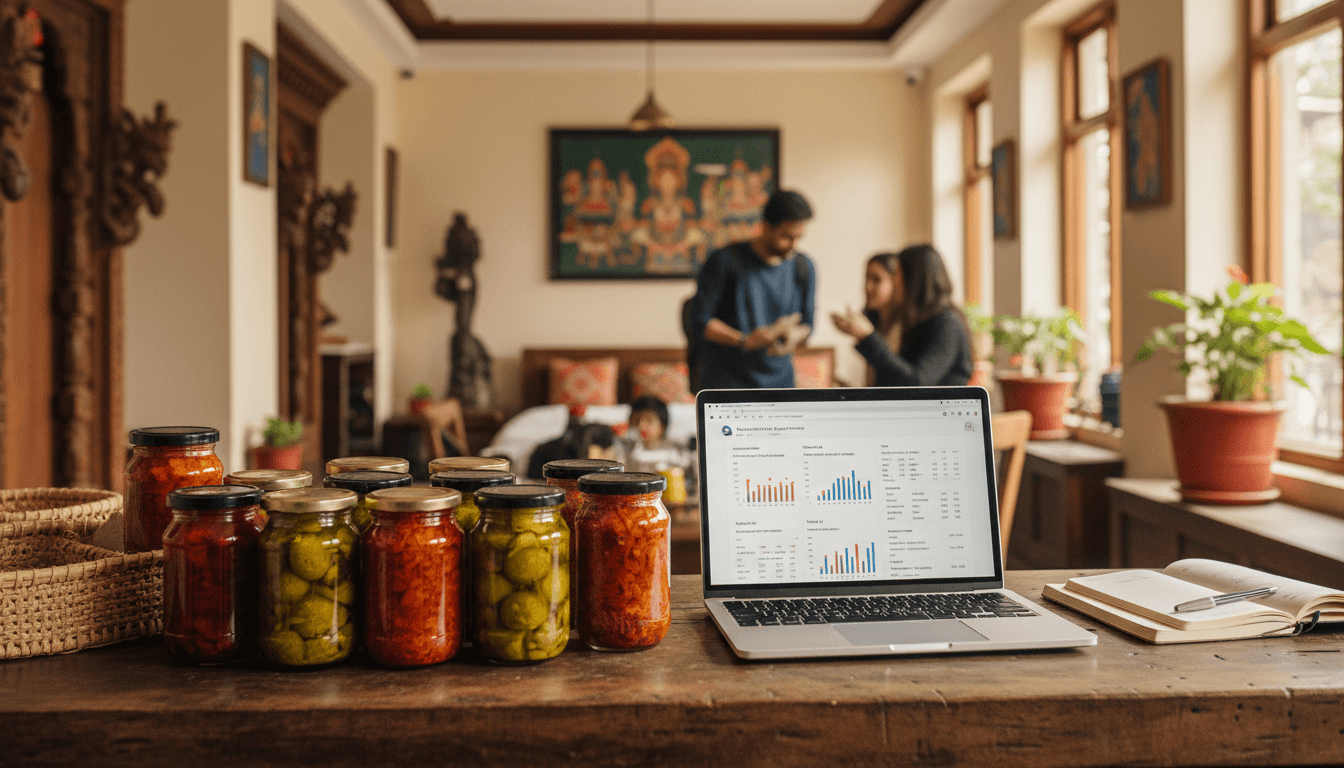
Nepal Pickle Exports Show How AI Can Sell Nepal Globally
Nepal shipped 140.3 tonnes of pickles in just five months, earning Rs 82.48 million and reaching 10 countries—from Australia and Canada to Japan, South Korea, the UK, and the US. That’s not a “small niche” story. It’s a signal that Nepali taste travels when packaging, compliance, and distribution line up.
Here’s what most tourism and hospitality brands miss: exports and tourism are the same branding problem in two different forms. One sells a jar; the other sells a journey. Both depend on trust, discoverability, and consistent storytelling across languages and platforms.
This post is part of our series on “नेपालको पर्यटन तथा आतिथ्य उद्योगलाई कृत्रिम बुद्धिमत्ताले कसरी रूपान्तरण गरिरहेको छ”. We’ll use the pickle-export data as a practical lens: what it teaches about global demand, and how AI in Nepal tourism and hospitality can help hotels, trekking agencies, tour operators, and destination brands market Nepal more effectively—without blowing budgets.
What Nepal’s pickle export numbers really tell us
Answer first: The export data proves Nepal can build repeatable global demand for culturally specific products—if the brand story and buying experience are frictionless.
According to the customs figures reported, exports over the past five months totalled 140,304 kg valued at Rs 82.48 million. The largest markets by volume and value include:
- Australia: 41,377 kg worth Rs 19.32 million
- Canada: 34,768 kg worth Rs 19.44 million
- South Korea: 20,655 kg worth Rs 12.53 million
- United States: 13,729 kg worth Rs 8.43 million
- Japan: 13,794 kg worth Rs 9.35 million
- Italy: 8,892 kg worth Rs 6.32 million
- United Kingdom: 3,393 kg worth Rs 3.61 million
- Belgium: 2,496 kg worth Rs 2.65 million
There’s also a reality check: the previous fiscal year (same five-month period) recorded Rs 95.69 million, higher than this year’s Rs 82.48 million. That drop doesn’t mean the opportunity vanished. It means competition, costs, and attention are real—and Nepal can’t rely on word-of-mouth alone.
Tourism faces the same pressure. Nepal is famous, yes. But fame doesn’t automatically translate into bookings, longer stays, higher spend, or off-season travel. Attention must be earned every day, in many languages, on many platforms.
The bridge: exports and tourism run on the same global trust engine
Answer first: If Nepal can sell pickles internationally, it can sell experiences internationally—by using AI to reduce buyer friction and scale credibility.
A jar of pickle is a high-trust purchase when the buyer is overseas. They’re betting on hygiene standards, consistent taste, shipping reliability, and brand integrity.
A trek, a hotel stay, or a guided food tour is an even bigger bet. Travelers worry about:
- “Will someone actually pick me up?”
- “Is this itinerary real or copied?”
- “Can I communicate easily if something goes wrong?”
- “Will this be safe and well-managed?”
This matters because tourism is mostly sold before it’s experienced. So the “product” online must do heavy lifting.
AI isn’t magic, but it’s extremely good at the unglamorous work that builds trust:
- Fast, consistent answers to guest questions
- Clean multilingual content at scale
- Review intelligence (what guests actually complain about)
- Campaign testing (what message works in which market)
If a pickle exporter can justify multi-market distribution, a trekking agency can justify multi-market messaging.
Where AI helps Nepal’s tourism and hospitality most (practical uses)
Answer first: AI creates leverage in three areas—content, communication, and conversion—so Nepali brands can market globally without hiring huge teams.
1) Multilingual content that doesn’t sound translated
Nepal loses bookings when great offerings are explained poorly. A German hiker, a Japanese family, and a Korean adventure group don’t read the same way or worry about the same details.
A strong workflow looks like this:
- Write one clear “source” page in English (or Nepali)
- Use AI to generate market-adapted versions (not word-for-word translations)
- Human-check the final copy for cultural fit and factual accuracy
For example, the way you sell a “local food experience” changes by market:
- Some markets want authenticity and family stories
- Others want hygiene assurances and clear timings
- Others want dietary options and allergens listed up front
Pickle exporters already understand this: packaging, labels, and compliance vary by destination. Tourism content should be treated the same way.
2) Social media and campaign automation without becoming generic
Most Nepali hotels post the same three things: rooms, breakfast, and a mountain photo. It’s not that those are bad—it's that they’re interchangeable.
AI helps you build a content system with variety:
- Weekly content themes (food, staff stories, behind-the-scenes, guest itineraries)
- Market-specific captions (Australia vs Japan vs UK)
- A/B testing ad copy (“short trek + comfort” vs “culture + slow travel”)
A simple, effective routine:
- Generate 30 post drafts per month with AI
- Keep 10 that feel real
- Shoot photos/videos for those 10
- Schedule and track performance
This is how you turn “we post sometimes” into consistent demand generation.
3) Booking communication that feels instant (even in peak season)
Fast replies win bookings. Slow replies lose them.
AI-assisted messaging (website chat + WhatsApp + email) can handle:
- Availability queries
- Itinerary questions
- Dietary requests
- Airport pickup details
- Cancellation policy explanations
The key is to set boundaries: let AI handle the repetitive 70%, and route the complex 30% to a human.
If your average first response time drops from 6 hours to 10 minutes, you don’t need a theory about ROI—you’ll see it in conversion rates.
Lessons from pickle exports: how to build a “Nepal global brand” story
Answer first: The pickle numbers show Nepal wins when it sells specificity—unique taste, origin, and identity. Tourism should sell the same way.
Pickles are culturally loaded. They’re not “just food.” They’re memory, spice, and region. That’s exactly what travelers want from Nepal too: not generic luxury, but meaningful, local, specific experiences.
Here’s the stance I’ll take: Nepal should stop competing on “cheap adventure.” It attracts volume, but it also attracts low trust and price sensitivity. Instead, Nepal should compete on:
- Distinctiveness (places, food, festivals, craft)
- Care (safety, communication, service)
- Credibility (clear policies, verified guides, consistent reviews)
What AI can do for the Nepal brand (beyond one business)
Individual hotels and agencies can benefit immediately, but the bigger opportunity is collective:
- Standardized market messaging (shared destination narratives)
- Multilingual destination content for key countries
- Trend monitoring: what travelers are searching for this season
- Reputation insights: what foreigners praise vs criticize across platforms
Exports reached 10 countries. That list can guide tourism marketing priorities too. If Australia, Canada, Japan, South Korea, the UK, and the US already buy Nepali products, those audiences are warm for Nepali travel—especially for food tourism, cultural itineraries, and curated Himalayan experiences.
A simple 30-day AI plan for Nepali hotels and tour operators
Answer first: You don’t need a complex “AI transformation.” You need one measurable workflow that improves leads and response times.
Week 1: Fix your core pages (conversion first)
- Create one strong page per core offering (rooms, treks, tours)
- Add FAQ blocks: permits, weather windows, what’s included, safety, payment
- Use AI to rewrite for clarity and scannability (then human-proofread)
Week 2: Go multilingual for one priority market
Pick one: Japan, South Korea, Australia, UK, US, Canada.
- Translate and localize your top 3 pages
- Create 10 market-specific social captions
- Draft 2 email templates: inquiry reply + booking confirmation
Week 3: Add AI-assisted messaging
- Put a chat widget on your site (or a simple WhatsApp flow)
- Set response templates for common questions
- Track: average response time + inquiry-to-booking rate
Week 4: Launch one campaign and measure it
Run one targeted offer:
- “3-night Kathmandu + Bhaktapur food trail”
- “Short trek for winter: 5-day itinerary”
- “Family-friendly Chitwan + Pokhara plan”
Measure only three things:
- Clicks to inquiry
- Inquiry to booking
- Booking value (average)
That’s enough to decide what to scale.
Snippet-worthy truth: If your story is strong but your response time is slow, you’re paying to lose customers.
People also ask: does AI replace human hospitality?
Answer first: No. AI handles speed and consistency; humans handle empathy, judgment, and real service.
Tourism and hospitality are emotional businesses. Guests remember how you made them feel. AI can’t replace that. But it can remove the operational mess that prevents your team from delivering that feeling.
The best pattern I’ve seen is AI as the front desk assistant, not the front desk manager.
What to do next (and why this fits the series)
Nepal’s pickle export story is proof that Nepal can sell identity globally. Tourism sells identity too—just with higher stakes and bigger lifetime value.
If you run a hotel, trekking agency, or tour operation, your next lead probably won’t come because Nepal is “beautiful.” Everyone already knows that. It’ll come because your brand communicates clearly, responds quickly, and feels trustworthy in the traveler’s language.
Want a practical next step? Choose one offering, one market, and one month. Build the system, measure the results, then scale. That’s how AI becomes useful in Nepal’s tourism and hospitality industry—not as hype, but as a habit.
Where should Nepal’s next global brand win come from: food-led travel experiences, winter itineraries, or premium small-group treks?