AI-powered tourism marketing can learn a lot from Kathmandu’s BFA Show 2025—voice, curation, and multilingual storytelling that converts.
AI-Powered Tourism Marketing: Lessons from BFA Show 2025
A single student exhibition in Kathmandu can tell you a lot about where Nepal’s tourism marketing should head next.
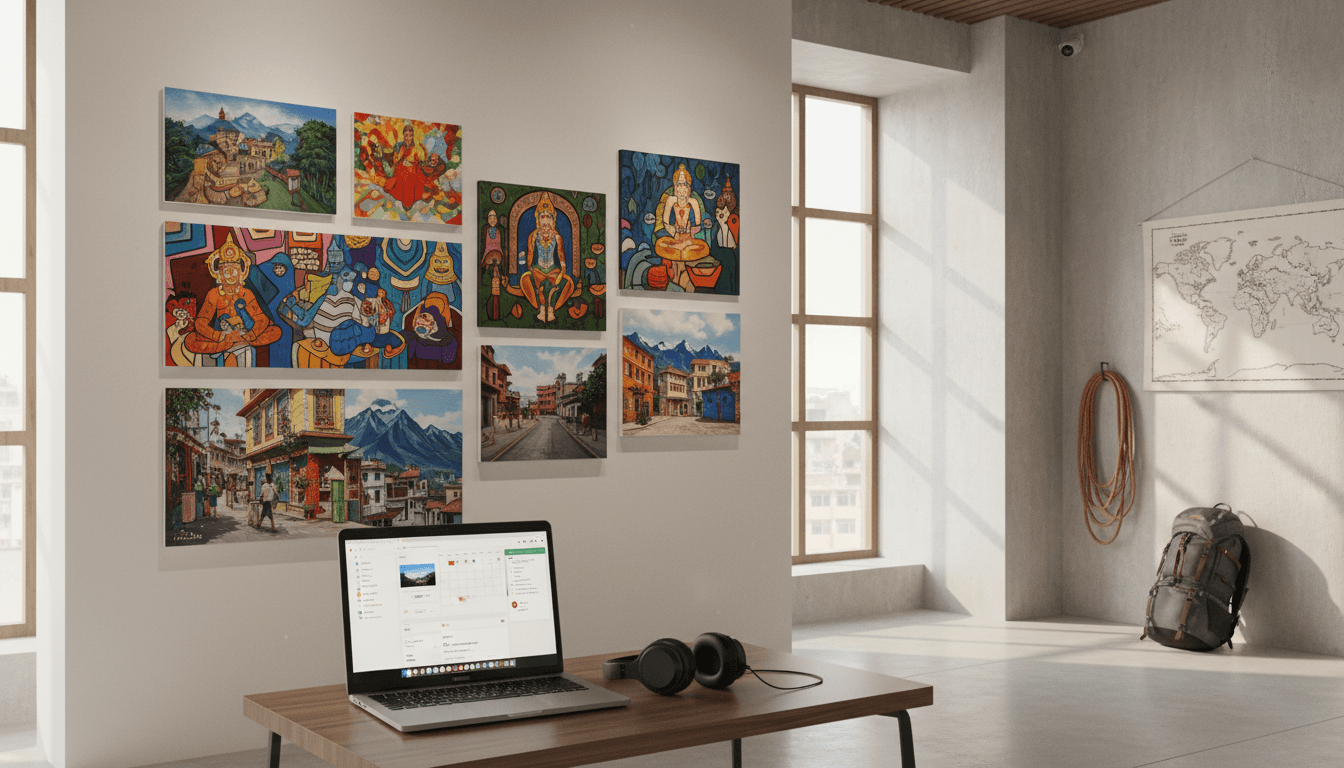
At the BFA Show 2025—hosted by Sirjana College of Fine Arts at Nepal Art Council, Baber Mahal—final-year students presented work across painting, printmaking, mixed media, branding, animation, photography, and illustration. It ran from December 21 to 27, and it wasn’t just “nice art.” It was a public display of voice, craft, and identity—exactly the three things Nepal’s tourism and hospitality brands struggle to communicate consistently online.
Here’s the link I want to draw in this ongoing series, “नेपालको पर्यटन तथा आतिथ्य उद्योगलाई कृत्रिम बुद्धिमत्ताले कसरी रूपान्तरण गरिरहेको छ”: AI isn’t here to replace creativity. It’s here to help Nepali travel brands produce more of it—faster, in more languages, with better targeting, and with less waste.
What the BFA Show gets right (and tourism marketing often misses)
Answer first: The BFA Show works because it’s structured around clear storytelling—individual perspective, strong presentation, and a curated mix of mediums. Tourism marketing often fails because it posts “pretty pictures” without a narrative system.
Bal Krishan Ranjit (PhD), principal of Sirjana College of Fine Arts, noted that each work reflects technical skill and the unique perspectives and voices of graduating students. That line should ring bells for anyone selling experiences—hotels, trekking agencies, tour operators, destination campaigns.
Most tourism content in Nepal still looks like this:
- A mountain photo with a generic caption
- A discount banner
- A TikTok trend that doesn’t match the brand
It’s not that these are useless. It’s that they’re disconnected. They don’t build a recognizable “voice,” and they rarely adapt to different traveler segments.
The exhibition’s hidden marketing lesson: mix mediums, keep one identity
The BFA Show doesn’t stick to one format. It blends illustration, photography, animation, branding, and mixed media—yet it still feels like one exhibition.
Tourism brands can do the same with AI-assisted content systems:
- One core story (your brand identity)
- Multiple formats (reels, blogs, itineraries, email, chatbot scripts)
- Multiple languages (English, Hindi, Chinese, French, German, Japanese—based on demand)
A consistent identity across formats is how you become memorable.
AI as a “creative assistant” for Nepal’s tourism and hospitality teams
Answer first: The practical value of AI in tourism marketing is speed + consistency—especially for multilingual content creation, campaign automation, and guest communication.
If you run a hotel in Thamel or Pokhara, a trekking agency in Kathmandu, or a homestay network in Bandipur, you already know the real bottleneck: content production doesn’t scale. Teams are small. Seasons are intense. Everyone’s busy handling operations.
AI tools help you produce the first draft, the first storyboard, the first caption set, the first email sequence—then humans edit and approve. The best results come when you treat AI like a junior creative who’s fast but needs direction.
Multilingual content: the most obvious win (and often the easiest)
Nepal loses bookings when travelers can’t quickly understand:
- What’s included
- What to pack
- How difficult a trek is
- How airport pickup works
- Cancellation rules
AI can turn one solid Nepali or English base document into clear, consistent multilingual versions—and keep them aligned when details change.
A simple operating rule I’ve found works: one “master” itinerary + AI translations + human spot-checking (especially for safety, medical notes, altitude guidance, and pricing).
Social media automation that doesn’t feel robotic
Automation is only a problem when the content is generic.
AI can help plan and produce:
- 30 days of themed posts (food, culture, nature, adventure, wellness)
- Caption variations for different audiences (budget, luxury, family, solo)
- Short video scripts for guides and hotel staff
- UGC-style prompts that guests can follow (so they create better content for you)
The human part is still essential: you approve tone, verify facts, and add real local detail.
From “artworks by 22 students” to “campaigns by 1 small team”
Answer first: The BFA Show proves a small group can produce a wide range of high-quality outputs; AI lets small tourism teams do the same by standardizing workflows.
The exhibition showcased works by 22 students, each with a distinct approach. That matters because Nepal’s tourism offering is also diverse—wildlife in Chitwan, heritage walks in Patan, luxury stays in Nagarkot, tea trails in Ilam, trekking in the Annapurna region.
Yet online, many brands still communicate as if they offer the same thing.
AI-driven marketing changes that by making segmentation affordable.
A simple segmentation model Nepali brands can actually run
You don’t need a “big data” department. Start with 4–5 segments:
- Adventure trekkers (altitude, gear, difficulty, safety)
- Culture travelers (heritage, food, festivals, crafts)
- Luxury/comfort seekers (service, rooms, transfers, privacy)
- Family groups (ease, safety, schedules, flexibility)
- Wellness/slow travel (retreats, nature, calm itineraries)
Then use AI to produce different landing page copy, email follow-ups, and social content for each segment—without rewriting everything manually.
A useful rule: if your message fits everyone, it converts no one.
Turning cultural identity into bookings: the “digital exhibition” idea
Answer first: Cultural exhibitions build identity in person; AI helps tourism brands build identity online by packaging stories into repeatable content products.
BFA Show 2025 wasn’t just a gallery event. It was cultural communication. The same cultural depth is Nepal’s strongest tourism asset—but online it often gets reduced to clichés.
A stronger approach is to treat your marketing like a curated show:
What a “curated” tourism content system looks like
- Collection: 20–30 real stories (guides, chefs, artisans, porters, local elders)
- Curation: 5 themes you’ll own (e.g., Newar heritage, Himalayan kitchens, women-led travel, sacred trails, wildlife ethics)
- Exhibition format: publish as blogs, reels, photo essays, mini-documentaries
- Docent layer: chatbots and FAQs that guide visitors through decisions
AI helps you repurpose each story across formats while keeping tone consistent.
Practical example: one story, six outputs
Say you feature a short interview with a guide about winter trekking safety.
AI can help generate:
- A blog post draft (800–1200 words)
- A 45-second reel script
- A packing checklist
- 5 Instagram captions (different tones)
- An email subject line set (A/B testing)
- A chatbot answer set for “Is it safe in January?”
One real story becomes a campaign.
People Also Ask: AI in Nepal’s tourism—what owners worry about
“Will AI make our brand sound generic?”
Answer first: Only if you feed it generic inputs.
If you give AI bland prompts, it produces bland copy. If you provide:
- Your actual guest reviews
- Your real itinerary details
- Your founder story
- Your photography style
- Your brand do’s and don’ts
…it will sound far more like you. The goal is AI-assisted consistency, not AI-written randomness.
“Is AI safe for guest communication?”
Answer first: It’s safe when you set boundaries.
Use AI chat for:
- FAQs
- booking steps
- pickup times
- room policies
- packing suggestions
Don’t let it freestyle:
- medical guidance
- rescue claims
- permits and legal commitments
- pricing without approval rules
A simple setup is “AI drafts, humans approve” for sensitive areas.
“Do we need expensive tools?”
Answer first: No—start with one workflow.
Pick one:
- multilingual website pages
- automated email replies + follow-up sequence
- social media content calendar
Build it, measure results, then expand.
A 30-day starter plan (realistic for Nepali tourism businesses)
Answer first: The fastest path is to standardize your core information, then automate content and communication around it.
Here’s a practical month-long sprint many Nepali travel brands can handle—even with a small team:
-
Week 1: Build your “master info pack”
- 5 core itineraries OR 10 core services (rooms, tours, packages)
- policies, inclusions/exclusions, seasonal notes
- your brand tone in 10 lines (what you say, what you never say)
-
Week 2: Multilingual rollout
- translate the top 3 pages that drive inquiries
- create a standard FAQ in 2–3 key languages
-
Week 3: Content system
- 12 posts + 4 reels + 2 blog drafts from the same source material
- schedule and assign owner for approvals
-
Week 4: Lead capture + follow-up
- simple inquiry form + auto-reply + 3-email sequence
- track: inquiry-to-call rate, call-to-booking rate
If you can’t measure it, you can’t improve it. Even a basic spreadsheet beats guessing.
Where this connects back to BFA Show 2025—and why it matters now
December is when many tourism businesses plan for the next season. It’s also when Kathmandu’s cultural calendar is busy and visitor intent spikes—people are actively browsing, saving, and planning.
BFA Show 2025 is a reminder that creative identity doesn’t appear by accident. It’s built through practice, iteration, and presentation. Nepal’s tourism industry needs the same discipline online.
AI won’t create your authenticity. Your people will. But AI will help you package that authenticity into multilingual campaigns, faster guest replies, and marketing that feels like a coherent story instead of a random feed.
If your travel brand had to “exhibit” itself the way those students did—clear voice, clear craft, clear intent—what would you change first?