Nepal events Dec 27–Jan 2 plus how AI boosts promotion, translation, and guest communication for tourism and hospitality brands.
AI-Ready Nepal Events (Dec 27–Jan 2): A Smart Visitor Guide
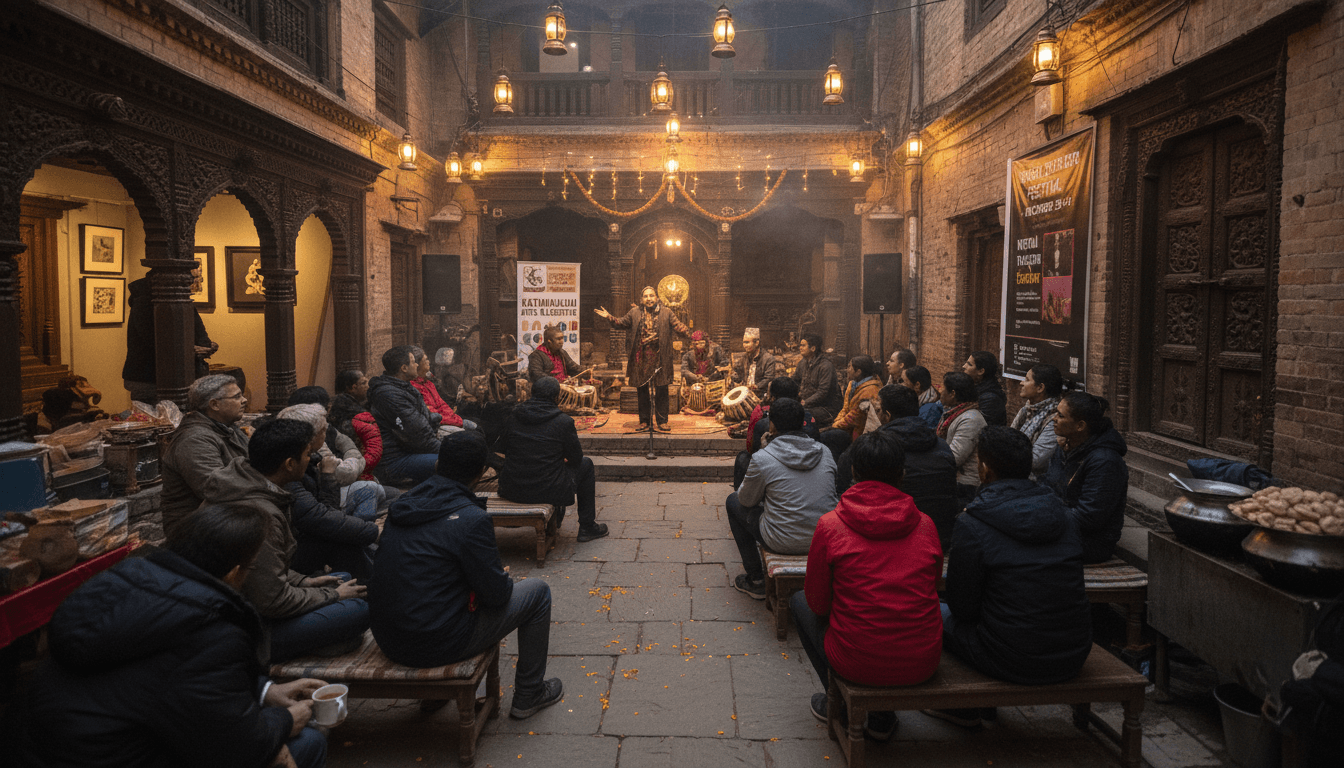
Kathmandu is unusually busy this week—not because one giant festival is taking over the city, but because multiple “micro-events” are happening at the same time: live storytelling with traditional instruments, gallery shows, theatre runs, concerts, and even an anime-and-gaming jatra. For travelers, that’s perfect. It means you can build a night out around your interests instead of settling for the one thing everyone else is doing.
Here’s the problem, though: many international visitors don’t hear about these events early enough, and when they do, details are often scattered—venue pages, social posts, posters, or word-of-mouth. This is exactly where AI in tourism and hospitality in Nepal is starting to matter. When events are easy to discover, easy to understand (in your language), and easy to book or plan around, tourists spend more nights, dine out more, and explore beyond the usual checklist.
Below is a practical guide to the major events from December 27 to January 2, plus a clear look at how AI-driven platforms can promote, translate, and coordinate these experiences for international guests—without turning Nepal’s culture into generic marketing.
This week’s events are perfect for “culture stacking”
The simplest way to get more from Kathmandu and Lalitpur this week is to stack experiences: pair a daytime exhibition with an evening performance, or a gaming event with live music later.
These events fall into three tourist-friendly buckets:
- Low-commitment cultural immersion (storytelling, theatre)
- Nightlife and live music (concerts, themed club nights)
- Community gatherings (anime/gaming jatra, gallery visits)
This matters for Nepal’s tourism economy because stacking increases:
- Length of stay (you don’t “finish Kathmandu” in one day)
- Per-visitor spending (restaurants, ride-hailing, shopping, tickets)
- Cross-neighborhood movement (Jhamshikhel, Durbarmarg, Thapagaun, Sukedhara)
And yes—this is where AI-powered event discovery helps. When a traveler searches “things to do in Kathmandu this weekend,” an AI-assisted itinerary tool can recommend a sequence that actually works geographically and by time, not a random list.
What’s happening Dec 27–Jan 2 (and who it’s for)
If you’re visiting Nepal this week, these are the standout picks to consider.
Storytelling Evening (Jhamshikhel)
Answer first: If you want a culturally rich, low-pressure night that doesn’t feel touristy, go to this.
A storytelling and live-music evening features narratives spanning Kathmandu to Everest, with traditional instruments like Dhampu and Tungna.
- Where: Satya Collective, Jhamshikhel
- When: December 27
- Time: 6:00 pm onwards
- Entry: Free
Why it works for international visitors: language barriers are real in storytelling, but rhythm, emotion, and context travel well. With better AI translation and event summaries, organizers can publish short multilingual “what to expect” notes that keep the integrity of the stories.
Bhairav Bhav: Solo Exhibition (Durbarmarg)
Answer first: This is an easy daytime anchor—perfect between meetings, shopping, or a late lunch.
A solo exhibition by Mukesh Shrestha explores the intertwined presence of Shiva and Bhairav, balancing power and peace.
- Where: Gallery 108, Durbarmarg
- When: December 18 to January 31
- Time: 11:00 am to 7:00 pm (Mondays by appointment)
- Entry: Free
Tourism angle: galleries are underrated tourism infrastructure. They’re weather-proof, solo-traveler friendly, and help visitors connect with Nepali iconography beyond temples.
AI opportunity: galleries can use AI to generate:
- concise placard translations,
- audio-guide scripts in multiple languages,
- short reels explaining symbolism (accurate, not sensational).
Fake New Year x Punjabi Night (Kathmandu nightlife)
Answer first: If you’re looking for a big energy night out, this is the most “party-forward” listing.
Punjabi pop artist MixSingh Juss performs live in Nepal for the first time.
- Where: Club Nova, Kathmandu
- When: December 27
- Time: 9:00 pm onwards
- Entry: Rs999 to Rs5,000
Hospitality tie-in: nightlife is where hotels quietly win or lose guest satisfaction. When guests ask, “What’s on tonight?” the best properties answer fast with specifics.
AI use-case for hotels: a concierge chatbot (WhatsApp/web) that can respond with:
- nearest venue options,
- expected crowd vibe,
- dress norms,
- ride estimates and timing.
New Year’s Eve Edition (Live music festival format)
Answer first: If you want a classic New Year’s Eve plan with multiple acts, choose this.
Featuring Purna Rai and Daju Bhai Haru, John and the Locals, and Dilip and the Valley Crew.
- Where: Malla Hotel, Kathmandu
- When: December 31
- Time: 4:00 pm onwards
- Entry: Rs2,000 to Rs10,000
AI event marketing insight: New Year’s Eve is high-intent traffic. AI tools help organizers spend smarter by:
- predicting which audiences convert (expats vs. regional tourists vs. locals),
- optimizing ad creatives by language,
- auto-answering FAQs (timings, parking, age restrictions).
Otaku Jatra 2025 (Lalitpur)
Answer first: This is the strongest “community culture” event of the week—great if you’re tired of only temples and viewpoints.
The event features PUBG MOBILE battles, cosplay, and gaming arenas.
- Where: The Plaza, Lalitpur
- When: December 27
- Time: 11:00 am onwards
- Entry: Rs500
Why this matters for Nepal tourism: Nepal isn’t only heritage tourism. Events like this signal a modern, youth-driven city culture—something many travelers actively seek.
AI opportunity: gaming events already have digital audiences. With AI, organizers can quickly produce:
- multilingual highlight clips,
- auto-captioned reels,
- creator-ready media kits for influencers visiting Nepal.
Avatar (Nepali traditions meet jazz)
Answer first: If you like experimental live sets and smaller venues, this is the pick.
A fusion of Nepali musical traditions with Scandinavian and contemporary jazz, combining composition and open improvisation.
- Where: Moksh Restaurant and Bar, Lalitpur
- When: December 27
- Time: 7:30 pm onwards
- Entry: Rs800 to Rs1,000
Tourist planning tip: choose this when you want music plus dinner in one spot, especially if your schedule is tight.
Theatre: Bahadurpurko Dantyakatha (Thapagaun)
Answer first: This is the best option for travelers who want depth and don’t mind leaning into context.
A folk tale rooted in memory and myth, unfolding through layered storytelling and lived emotions.
- Where: Mandala Theatre Nepal, Thapagaun
- When: December 19 to January 11
- Time: 11:00 am onwards
- Entry: Rs300 to Rs1,000
AI can help without diluting art: theatres can offer a two-minute AI-assisted “context primer” in multiple languages: setting, themes, and cultural references—without translating the whole script or oversimplifying it.
Theatre: Bhatti Tales (Sukedhara)
Answer first: This is a friendly, affordable way to spend an evening like a local.
Presented by Oscar International College in association with Franklin Education Consultancy.
- Where: Sadhanaghar Theatre, Sukedhara
- When: December 31 to January 17
- Time: 5:15 pm onwards (except Tuesdays); 1:00 pm on Saturdays
- Entry: Rs300 to Rs500
Hospitality tie-in: this is the kind of event a hotel can recommend to guests who ask for “something authentic” that isn’t a packaged cultural show.
How AI makes Nepal’s cultural events easier to find (and easier to trust)
Answer first: AI improves tourism outcomes when it reduces friction—discoverability, language, and coordination—without inventing facts or flattening culture.
In Nepal’s tourism and hospitality industry, the biggest event marketing gap isn’t creativity. It’s consistency: details change, posts get buried, and visitors don’t know what’s reliable.
1) Multilingual content that stays accurate
AI translation is useful, but only when it’s controlled.
A practical workflow for organizers and venues:
- Write one verified master description (English or Nepali)
- Use AI to translate into priority languages (e.g., Hindi, Chinese, French, Japanese)
- Have a human review the top 20 lines (time, venue, entry, age rules)
- Reuse the same structured block everywhere
That single change reduces the most common tourist complaint: “We saw different times on different pages.”
2) Smarter promotion, not louder promotion
AI in tourism marketing works best for targeting and timing, not for spamming.
For example, New Year’s Eve events can run separate ad sets:
- expats: “live bands + early start time + hotel venue”
- regional tourists: “NYE party + ticket tiers + photo zones”
- locals: “lineup-first + transport tips + gates-open time”
Same event. Different motivations. AI helps test and learn quickly.
3) AI concierge: the missing layer between events and visitors
Most travelers won’t browse ten pages to plan one night.
Hotels, tour operators, and even event venues can deploy an AI concierge that answers:
- “What’s happening near Patan tonight under Rs1,000?”
- “Is this venue walkable from Jhamshikhel?”
- “Do I need to pre-book tickets?”
- “What should I wear?”
This is where AI-driven communication directly supports lead generation: once a guest gets helpful answers, it’s easy to offer a booking, a table reservation, or transport support.
A practical “AI-friendly” checklist for event organizers and tourism brands
Answer first: If you want more international attendees, standardize your event data and make it machine-readable.
Here’s what works (and what I’d insist on if I were advising a venue):
- One canonical event card: title, venue, date, start time, end time (if known), ticket price range
- Three-line description written for first-time visitors (no insider shorthand)
- Location clarity: neighborhood + a simple landmark reference
- Language notes: “Performance in Nepali” or “Mostly instrumental” helps tourists choose
- Refund/entry rules: age limits, ID requirements, door policy (especially for club nights)
- Media kit folder: 5 photos, 3 short clips, and a logo—so partners can promote correctly
When this information is consistent, AI tools can distribute it cleanly across search, social, and concierge channels.
“AI doesn’t create demand for culture. It removes the friction that stops interested people from showing up.”
If you’re visiting Nepal this week, plan like a local (with a system)
Answer first: Pick one daytime anchor and one nighttime anchor, then keep transport simple.
A simple approach:
- Daytime: Gallery 108 (Durbarmarg) or Otaku Jatra (Lalitpur)
- Evening: Storytelling Evening (Jhamshikhel) or Avatar (Lalitpur)
- Late night: Punjabi Night (Kathmandu)
- NYE: Malla Hotel event for a multi-act lineup
The best nights in Kathmandu usually come from one decision: choose the neighborhood you want to be in after dark, then build around it. Your hotel (or your tour operator) should be able to help—and if they can’t, that’s a sign they need better AI-supported guest communication.
Nepal’s tourism and hospitality industry is already changing: multilingual content, automated responses, smarter promotion, and better itinerary design are becoming standard expectations. The travelers arriving in 2026 won’t separate “culture” from “convenience.” They’ll want both.
If you run a hotel, trekking agency, tour operator, or event venue, ask yourself one forward-looking question: when a traveler searches for “events in Kathmandu this week” in their own language, will your experience show up clearly—and will they know exactly how to attend?