Use holiday baking as a model for AI in Nepal hospitality—personalization, better guest comms, and warmer service that converts inquiries into bookings.
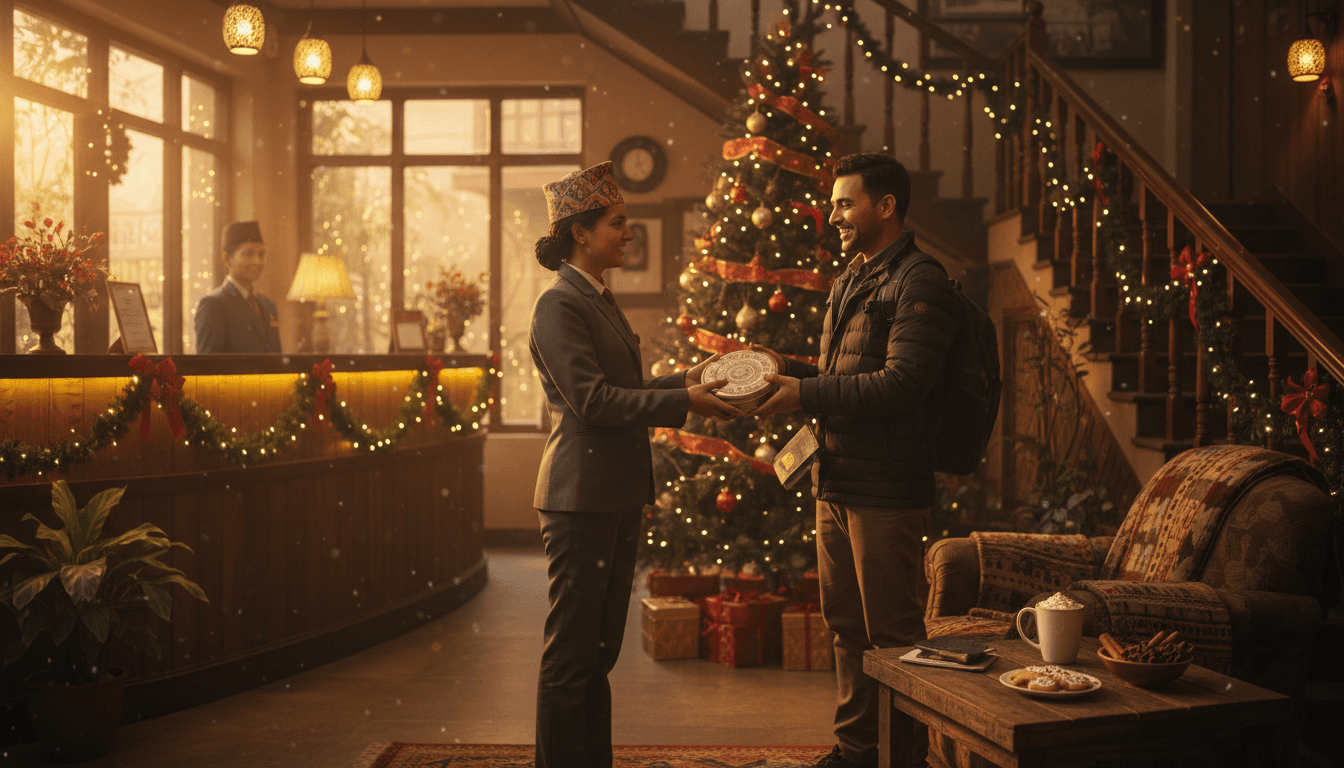
AI-Powered Hospitality: Serving Guests Like Holiday Baking
December has a smell. Butter warming on the counter, cinnamon hitting hot milk, chocolate turning glossy in a bowl. That sensory “extra-ness” isn’t really about dessert—it’s about intention. You’re not baking to be efficient. You’re baking to make someone feel seen.
Nepal’s tourism and hospitality industry is chasing the same feeling, especially at the end of 2025 when travel demand is split between spontaneous short trips and carefully planned long-haul journeys. Guests want speed and warmth: quick replies and personal care. Most hotels, trekking agencies, and tour operators still treat those as a trade-off.
I don’t think they should. AI in tourism and hospitality works best when it behaves like holiday baking—not as a cold automation layer, but as a system that remembers preferences, reduces friction, and helps teams deliver small, personal moments at scale.
Holiday baking teaches the real lesson: personalization beats perfection
The strongest hospitality brands don’t win by being flawless; they win by being personal. Holiday baking makes this obvious. You make shortbread for the aunt who loves simple buttery things; ginger biscuits for the friend who wants spice. The “recipe” changes depending on who’s coming.
Tourism is the same. A guest flying into Kathmandu for a two-night city break needs a different tone, pace, and offer than a group preparing for a 12-day trek. Yet many Nepali businesses still send the same messages, the same itineraries, the same follow-ups.
What AI personalization looks like in Nepal tourism (practically)
AI-driven personalization doesn’t require a massive budget or a Silicon Valley team. It starts with using the data you already have—messages, booking forms, reviews—and turning it into actions:
- Language matching: replying in the guest’s preferred language (or at least a high-quality version of it), especially for French, German, Spanish, Japanese, and Hindi-speaking travelers.
- Preference memory: “You mentioned vegetarian meals and early starts—here’s a suggested plan.”
- Purpose-based recommendations: honeymooners get different room add-ons than solo trekkers; corporate visitors get different check-in guidance than families.
A useful stance: If your team has to ask the same question twice, it should be automated once. Not to remove humans, but to free them to be more human.
Quick stat that frames the business case
Personalization isn’t just “nice.” It converts. McKinsey reported in 2021 that companies that excel at personalization generate 40% more revenue from those activities than average players. Tourism is a high-consideration purchase, so relevance matters even more.
Automation can feel ceremonial—if you design it like a ritual
Holiday baking slows you down in the right places: resting dough, gently melting chocolate, letting spices steep. That “ceremonial” pacing is what makes it feel special.
AI automation in hospitality should do the same: remove chaos while preserving care. If your automation makes guests feel rushed or processed, it’s doing the opposite of its job.
Where AI automation should sit (and where it shouldn’t)
Here’s the split that works for hotels and tour operators in Nepal:
Automate these (high volume, low emotion):
- Instant inquiry replies (with clear next steps)
- Room/itinerary availability confirmations
- FAQ handling: permits, seasons, packing lists, airport pickup, SIM cards
- Payment reminders and invoice sharing
- Pre-arrival messages: check-in time, location pin, what to expect
Keep these human-led (high emotion, high nuance):
- Complaints and service recovery
- Special occasions (anniversary, illness, accessibility needs)
- High-value itinerary redesigns
- Post-incident coordination (weather disruptions, route changes)
A simple operating rule: AI handles the first 80%; staff owns the last 20% where trust is built.
Example flow: the “welcome tin” for travelers
Bakers don’t just hand you cookies. They wrap them, label them, and make it feel like a gift. You can recreate that in guest communication with AI:
- Inquiry comes in (Instagram DM, WhatsApp, website form).
- AI sends a warm, short reply within 60 seconds, in the guest’s language.
- AI asks two smart questions only (dates + travel style).
- AI drafts an itinerary/offer, but a staff member adds a human note and checks details.
- Pre-arrival: AI delivers a one-page “what to expect” guide + local etiquette + weather.
That’s not “automation.” That’s hospitality discipline.
Mood and atmosphere are measurable—AI can help you craft them
A great kitchen in December feels theatrical: aprons as costumes, wooden spoons as props, the oven waiting for its cue. That atmosphere doesn’t happen by accident.
In tourism, ambiance is created by hundreds of tiny decisions: when you message, what you say, what you remember, how you handle confusion. AI can support that craft.
AI tools that improve guest experience without feeling robotic
1) Sentiment detection for service teams If a guest message shifts from neutral to stressed (“we’re stuck,” “we can’t find,” “this is urgent”), AI can flag it for priority handling. Your team responds faster where it matters.
2) Review intelligence Instead of reading 300 reviews manually, AI can summarize patterns:
- What guests praise most (breakfast, staff warmth, cleanliness)
- What hurts ratings (hot water, noise, unclear directions)
- What competitors are consistently doing better
Then you turn it into a weekly checklist. Hospitality is built on repetition.
3) Dynamic upselling that feels like care Bad upselling is pushy. Good upselling is thoughtful:
- A guest arriving late gets an offer for a packed dinner.
- A winter traveler gets a heater/extra blanket confirmation.
- A trekker gets a gear check reminder and a porter guide.
The point isn’t more revenue (though it helps). It’s fewer regrets.
Memorable hospitality is “I thought of you,” not “I processed you.”
Three “recipes” Nepali hotels and tour operators can copy now
The RSS article gives us three December classics: a soft Japanese strawberry shortcake, a spice-laced hot chocolate with Nepali soul, and a bold Black Forest cake. Treat them as service metaphors—three experiences your business can systematize.
1) The Strawberry Shortcake Rule: keep it light, not loud
Answer first: Guests don’t want a long pitch; they want clarity and ease.
Use AI to produce short, high-signal communication:
- A one-paragraph itinerary summary
- A clear price breakdown
- Three inclusions and three exclusions
- A single call to action: “Confirm dates” or “Share passport details for permits”
This reduces back-and-forth and increases conversions.
2) The Hot Chocolate Rule: add a “Nepali soul” layer
Answer first: Standard information isn’t enough; travelers remember local texture.
AI can help you create content that feels local without exhausting your team:
- Kathmandu neighborhood mini-guides (quiet cafés, bookstores, temples)
- Winter travel tips for Nepal (altitude nights, road delays, what to pack)
- Cultural do’s/don’ts in friendly language
- Food notes: dal bhat expectations, spice levels, tea culture
If you run a trekking agency, create route-specific micro-guides (Manaslu vs Annapurna vs Langtang) and send them automatically when guests book.
3) The Black Forest Rule: be unapologetic about celebration
Answer first: Special moments should be recognized proactively.
Hotels can use AI to detect signals:
- “Honeymoon,” “anniversary,” “birthday,” “proposal,” “first time in Nepal”
Then trigger a staff task:
- A handwritten note
- A simple room setup
- A recommended photo spot itinerary
This costs little and raises the chance of glowing reviews.
People also ask: common AI questions in Nepal hospitality
“Will AI replace our front desk or reservations team?”
No. It replaces repetitive typing, not human judgment. The best setups make staff more present because they’re not stuck answering the same five questions all day.
“Do we need a lot of guest data to personalize?”
You need less than you think. Start with:
- Name
- Language
- Dates
- Purpose of visit
- Dietary needs
- Comfort preferences (quiet room, early breakfast, pickup help)
That’s enough to feel personal.
“How do we avoid sounding robotic?”
Write a brand voice guide and enforce it. I’ve found the simplest approach is:
- Short sentences
- Fewer exclamation points
- Local specificity (“Thamel” beats “city center”)
- Staff sign-off when it matters (“—Sita, Reservations”)
A practical 30-day plan to start using AI in tourism marketing
If you’re part of this series—“नेपालको पर्यटन तथा आतिथ्य उद्योगलाई कृत्रिम बुद्धिमत्ताले कसरी रूपान्तरण गरिरहेको छ”—this is a clean starting sprint.
Week 1: Fix response speed
- Set up AI-assisted replies for website, WhatsApp, and social DMs
- Build an FAQ bank for permits, seasons, payments, pickups
Week 2: Personalize the essentials
- Add two preference questions to booking/inquiry forms
- Create 3 templates: city stay, trekking, luxury/retreat
Week 3: Upgrade pre-arrival and on-trip messaging
- Auto-send a pre-arrival guide + packing/weather notes
- Create an “arrival day” checklist message
Week 4: Make reviews and referrals easier
- AI drafts review reply templates (warm, specific, non-generic)
- Auto-send a post-stay message with a referral prompt
Track three numbers only:
- Median first-response time
- Booking conversion rate from inquiries
- Review volume + average rating trend
If those improve, you’re on the right path.
The real point: AI should feel like a tin of homemade sweets
Holiday baking endures because it’s imperfect, human, and generous. Nepal’s hospitality sector shouldn’t chase AI for novelty. It should use AI to protect the things guests actually remember: being welcomed, being understood, and being cared for without having to ask three times.
If you’re running a hotel, trekking agency, or tour company, here’s a strong next step: pick one guest journey (inquiry → booking → arrival) and redesign it like you’re baking for someone you know. What would you remember? What would you prepare ahead of time? What would you never rush?
That’s the bar. And with the right AI setup, it’s achievable—without losing the warmth that makes Nepal feel like Nepal.