BGIS’s Women Who Build premiere shows how storytelling—and AI—drive visibility, trust, and leads for women founders in Nigeria’s creator economy.
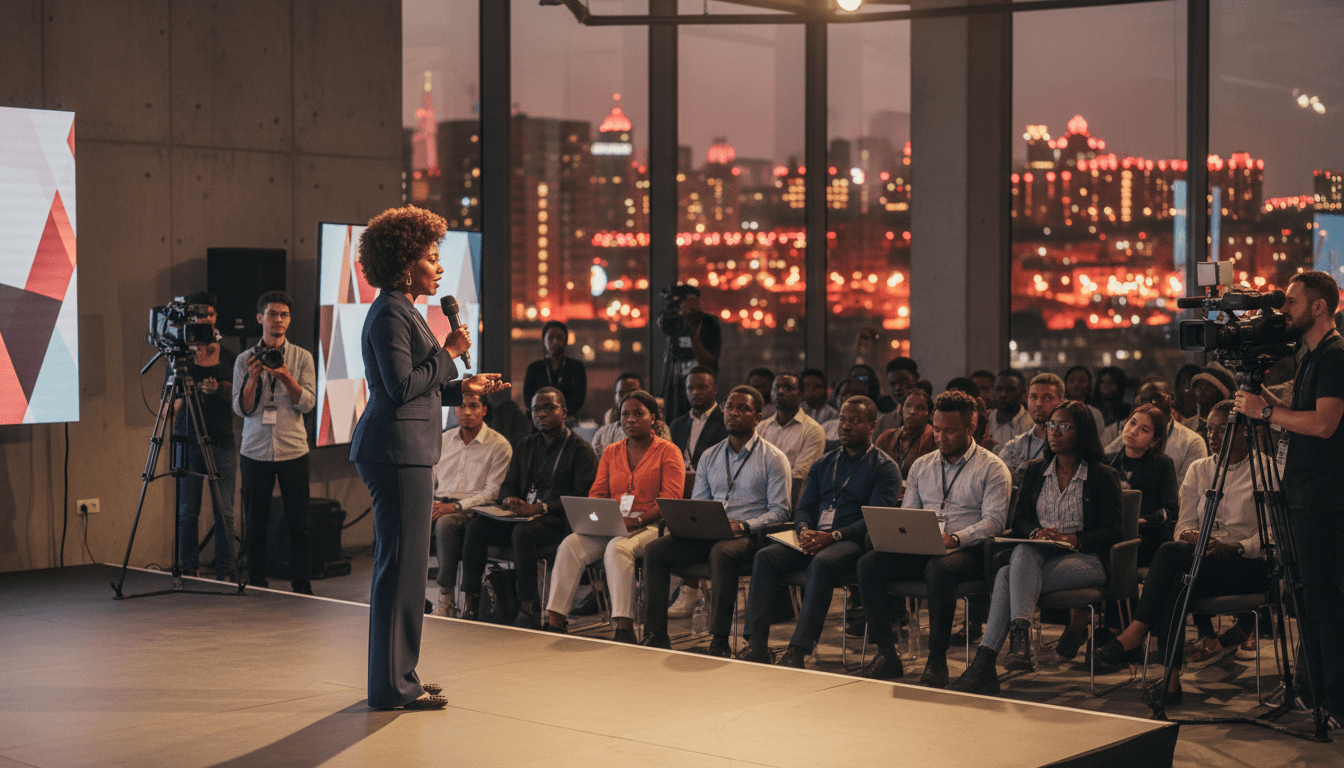
Women Who Build: Storytelling Fueling Nigeria’s Creator Economy
A five-month startup programme ending with a film premiere might sound like a neat PR wrap-up. But the BGIS “Women Who Build” documentary premiere in Lagos (December 2025) points to something bigger: in Nigeria, visibility is becoming a growth channel, and storytelling is starting to sit on the same table as product, revenue, and fundraising.
That’s especially true right now. December in Nigeria is peak attention season—events, culture, and community collide, and content travels faster than business cards ever did. If you’re building in tech, media, or the creator economy, you already know the real fight isn’t just distribution. It’s being remembered.
BGIS (Business Growth Initiative for Startups) closed its 2025 cohort with a reception and the premiere of “Women Who Build,” a 20-minute documentary featuring founders across sectors like healthtech, AI, SaaS, logistics, fintech, and more. The cohort had 14 women-led startups, and the programme included strategic support, visibility, and investor access. On paper, that’s startup ecosystem business as usual. The reality? This is also a case study in how Nigeria’s digital content economy is evolving—and how AI is increasingly the engine behind what gets produced, packaged, and amplified.
A documentary premiere is a distribution strategy, not just a celebration
A founder can have real traction and still be “unknown.” In Nigeria’s market, that’s expensive: it affects partnerships, hiring, press, investor interest, and even customer trust. The BGIS documentary functions like a shortcut through that fog.
Here’s the direct takeaway: a well-produced founder documentary is high-trust content. It compresses months of “getting to know you” into a tight narrative people can share.
Why founder storytelling works in Nigeria’s creator economy
Nigeria’s creator economy is powered by formats people already engage with daily—short video, interviews, docu-style reels, behind-the-scenes content, community clips. A documentary like Women Who Build borrows from the same attention mechanics, but gives it more depth:
- It turns founders into characters, not just LinkedIn headlines.
- It shows context (constraints, customer realities, market texture) that pitch decks usually hide.
- It creates reusable IP: clips for social, quotes for PR, themes for panels, and proof for partnerships.
If you’re a startup founder, your story isn’t a “nice-to-have.” It’s a repeatable marketing asset.
What BGIS got right: support + narrative + investor access
Most ecosystem programmes focus on skills (product, finance, growth). BGIS did that and leaned into storytelling as a form of scale support—especially important for women founders who face structural visibility gaps.
At the reception, BGIS leadership spoke directly about the imbalance in representation and the “lip service” problem—where people claim to support women-led startups without building real pipelines.
My view: programmes that don’t solve for visibility are leaving value on the table. In Nigeria’s ecosystem, attention is liquidity. It moves opportunities.
The cohort shows how wide “women-led innovation” really is
BGIS supported 14 women-led startups across sectors including healthtech, AI, SaaS, logistics, fintech, food, edtech, creative commerce, and community health.
That variety matters for two reasons:
- It breaks the lazy stereotype that women-led businesses cluster in a narrow range of “safe” categories.
- It reflects how Nigeria’s digital economy actually grows—through practical ventures that serve real customer pain.
A moment from the event captured this well: a conversation featuring Folake Kofo-Idowu (Iyewo) highlighted healthcare access for Nigeria’s informal sector—market traders, artisans, informal workers who often fall outside insurance systems. That’s not “nice impact.” That’s a massive market reality.
The tension: customer-led ventures vs venture capital expectations
One of the sharpest observations from the BGIS event is that women-led ventures are often customer-led and need-driven, and that can make them “less primed” for conventional venture capital.
This isn’t because the businesses are weak. It’s because VC pattern-matching tends to favour:
- fast-scaling distribution loops,
- simple unit economics narratives,
- markets that resemble previous wins,
- and aggressive growth storytelling.
A customer-led business often scales differently. It may start with messy operations, hard-to-digitise customers, and complex trust-building.
This matters for Nigeria’s creator economy too. Many creator businesses (studios, media IP, community platforms, talent networks) are also customer-led and operationally heavy at the beginning. They’re valuable, but they don’t always fit the neat VC template.
What to do if your startup sits in the “hard to fund” middle
If your business is real but investors keep calling it “impact” as a soft dismissal, you need better packaging—not a different business.
Practical moves that work:
- Build an evidence library
- customer testimonials
- cohort retention numbers
- before/after outcomes
- case studies with clear timelines
-
Translate impact into unit economics
- CAC by channel
- payback period
- gross margin and contribution margin
- churn (even if it’s early)
-
Show operational repeatability
- documented processes
- standardised onboarding
- clear roles and capacity planning
Iyewo reportedly got investor feedback to better document impact metrics and outcomes. That’s not a minor note—it’s a fundraising accelerant.
Where AI fits: turning founder stories into content systems
This post is part of the “How AI Is Powering Nigeria’s Digital Content & Creator Economy” series, so let’s address the practical question founders and creators ask quietly:
How do you produce consistent, high-quality storytelling without burning out or hiring a huge team?
AI doesn’t replace taste or truth. But it absolutely helps you turn one good story into a content engine.
A simple AI workflow for founders (and creator teams)
Here’s a workflow I’ve found is realistic for Nigerian teams that are lean but ambitious:
- Record one strong asset per month (interview, mini-doc, founder talk, customer visit)
- Use AI to create:
- short clips (30–60 seconds) for social
- a written founder story for your website
- press-ready boilerplates for media outreach
- investor updates with consistent structure
- sales collateral that explains value in plain language
The point is consistency. Nigeria’s digital content market rewards repetition. People don’t buy because they saw you once. They buy because they saw you five times and finally trust you.
“Representation” is also an algorithm problem
When women-led startups get less press and fewer stage slots, it’s not just unfair—it affects the datasets and signals that algorithms learn from.
- Less coverage → fewer searches → fewer recommendations
- Fewer quotes → fewer citations → less perceived authority
- Less video presence → weaker audience familiarity
A documentary premiere is a countermeasure. It creates a dense, shareable asset that can be clipped, quoted, reposted, and referenced.
Deal Day + angels: why community capital still wins in Nigeria
The BGIS closeout also included a Deal Day Showcase in partnership with an angel network (Rising Tide Africa). Founders pitched to angels and got feedback and follow-up discussions.
Here’s the blunt truth: in Nigeria, early growth is often funded by belief before it’s funded by metrics.
Angels and ecosystem investors tend to be better at funding:
- trust-based markets,
- community-first products,
- operationally complex businesses,
- and founders who are still finding the cleanest growth loop.
The documentary + reception format supports that. It’s not just pitches; it’s social proof in a room.
If you’re raising soon, copy these two BGIS mechanics
- Narrative-first visibility: Don’t wait for TechCrunch-style press. Create your own mini-documentary, founder profile, or customer story series.
- Feedback-rich pitching: Pitch in rooms where people will challenge your model and still support you. Avoid “performative pitching” where nobody follows up.
Practical playbook: how to turn your founder story into leads
If your goal is leads (customers, partners, investors), storytelling needs structure. Here’s a practical playbook you can run in January 2026 without overthinking it.
1) Write your “one-paragraph truth”
Not a mission statement. The truth.
- Who has the problem?
- What does it cost them (money, time, dignity, risk)?
- What do you do differently?
2) Build a 5-asset content kit
- 1 founder video (2–5 minutes)
- 2 customer stories (written or video)
- 1 metrics snapshot (simple, not inflated)
- 1 “how it works” explainer
3) Use AI to multiply, not invent
AI should help you:
- outline scripts
- generate cut-down versions
- produce captions and summaries
- draft email outreach
- maintain a consistent editorial voice
But your raw material must be real: customers, field visits, product demos, hard lessons.
4) Add one strong CTA everywhere
Don’t scatter five asks.
Pick one:
- book a demo
- join a waitlist
- sponsor a pilot
- partner with us
- invest / intro us
Consistency beats cleverness.
What “Women Who Build” signals for 2026
Nigeria’s creator economy isn’t just influencers and skits. It’s also founders building in health, logistics, legal, fintech, and AI—and learning that content is infrastructure.
BGIS closing its programme with a documentary premiere is a strong signal: the ecosystem is starting to treat storytelling as part of scale support, not an afterthought. That’s good for women founders, and it’s good for the market. Better stories produce better understanding, and better understanding produces better capital decisions.
If you’re building a startup or a content brand in Nigeria going into 2026, take the lesson seriously: your traction deserves a narrative people can repeat accurately. And if you’re using AI in your content process, use it to stay consistent, not to sound impressive.
Where does this go next—more founder-led documentaries, more creator-led startup marketing, and more AI-assisted content systems that help Nigerian businesses show their work publicly?