Nigeria’s undersea cable talks with Google could boost digital resilience—meaning fewer outages, better AI workflows, and more income stability for creators.
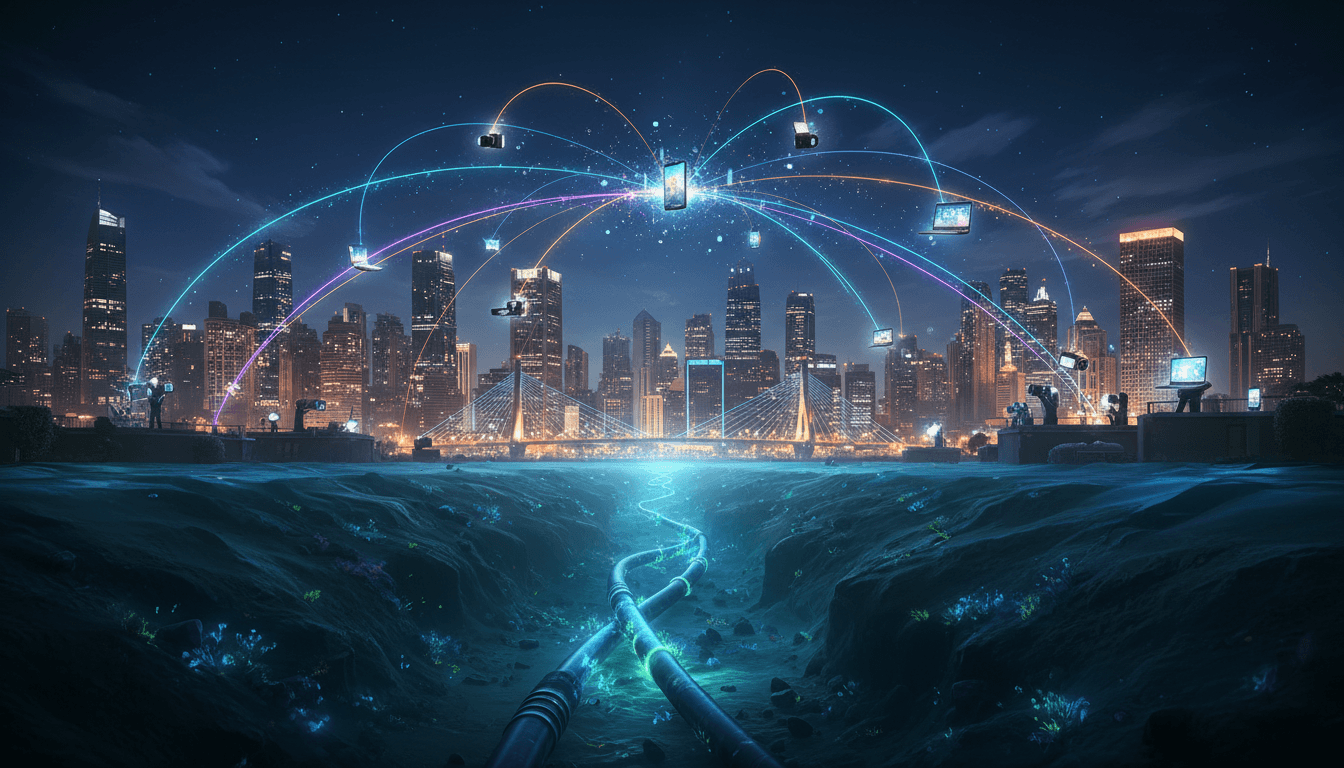
Nigeria’s New Undersea Cable: What Creators Gain
Nigeria’s creator economy doesn’t fail loudly. It fails quietly.
A video upload stalls at 92%. A livestream drops to “reconnecting…” right when the audience count peaks. A brand campaign misses a posting window, and suddenly you’re refunding deliverables. If you create content for a living in Nigeria—YouTube, TikTok, film, music, newsletters, courses, podcasts—your biggest risk isn’t talent or strategy. It’s network fragility.
That’s why the news that Nigeria is in advanced talks with Google on a new undersea cable for digital resilience is more than infrastructure chatter. It’s a foundational bet on whether Nigeria’s digital content and creator economy can keep scaling without being kneecapped by the next cable cut.
This post sits inside our series, “How AI Is Powering Nigeria’s Digital Content & Creator Economy,” because AI only “works” when creators can actually access compute, cloud tools, and distribution reliably. No stable internet, no stable AI workflow.
What “digital resilience” really means (and why creators should care)
Digital resilience means the internet keeps working when something breaks. Not “eventually comes back,” but stays available enough that businesses and creators don’t lose money, momentum, or trust.
Nigeria already has multiple undersea cables landing (systems such as MainOne, SAT-3/WASC, Glo-2, ACE, WACS, Equiano, 2Africa, and others are commonly referenced). The problem, as Nigeria’s NITDA leadership has pointed out, is that many routes still represent a shared corridor risk—too many critical links follow similar paths. When damage happens along that corridor, the country can feel it fast.
If you remember the major outages that hit West Africa in 2024—when several international subsea cables were damaged near Abidjan and businesses across the region were disrupted—you already understand this in practical terms:
- Creators lost upload windows and ad revenue days.
- Agencies struggled to coordinate client approvals.
- Banks and fintechs slowed down, which affects creator payouts.
- Remote work and editing pipelines broke.
Resilience is not just “more bandwidth.” It’s more paths, more redundancy, and faster failover.
The “single point of failure” problem in plain language
When your connectivity depends on a few major routes, an accident (or sabotage) becomes everyone’s emergency.
Creators feel that emergency immediately because your work is distribution-heavy:
- large video files
- cloud editing projects
- livestreaming
- real-time community management
- AI tools that run in the cloud
A new undersea cable—especially one designed to add alternative routing—reduces the odds that one incident knocks out your week.
Why a Google-backed undersea cable matters for Nigeria’s creator economy
Big tech doesn’t build undersea cables for vibes. They build them because traffic is exploding and reliability is now an economic requirement.
Google’s involvement signals two things at once:
- Nigeria’s demand is real and growing. Content consumption, cloud usage, and data demand are climbing.
- Infrastructure is becoming “creator infrastructure.” The same pipes that power enterprise cloud also power your uploads, your livestreams, your audience analytics, and your monetisation.
This also connects to a broader push Nigeria has discussed: attracting more cloud computing and even high-performance computing (HPC) capacity. That’s not abstract. It’s the difference between:
- waiting hours for an AI video tool to render because your connection is unstable
- versus running smooth workflows that let you iterate faster than your competitors
Faster internet doesn’t automatically mean better creator income—reliability does
A lot of people assume speed is the whole story. I don’t.
For creators, the money is in consistency:
- consistent publishing
- consistent quality
- consistent delivery for brand deals
- consistent community presence
Reliability protects those habits. And habits protect revenue.
The hidden link between undersea cables and AI-powered content workflows
AI is already a daily tool for Nigerian creators—but most of it is cloud-dependent. Even when you use mobile-first apps, they often rely on servers outside your device.
Undersea cable capacity and route diversity support AI workflows in three big ways.
1) Upload-heavy formats become less risky
AI is pushing creators toward heavier content:
- 4K video (because audience expectations keep rising)
- multi-cam podcasts
- long-form YouTube
- higher bitrate music releases
Those formats punish unstable networks. A resilient backbone makes them viable.
2) Cloud collaboration becomes normal, not aspirational
Teams are increasingly distributed: editor in Ibadan, motion designer in Enugu, producer in Lekki, brand manager in London.
That model works when:
- files sync predictably
- review links load quickly
- version control doesn’t corrupt projects mid-transfer
Stable international connectivity makes “remote studio” workflows realistic.
3) Creator tools shift from “apps” to “services”
The future creator stack looks like subscriptions and APIs:
- AI captioning and translation
- speech-to-text for podcast clipping
- AI-assisted storyboarding
- background cleanup and audio mastering
- predictive analytics for posting schedules
All of these get worse when latency spikes and connections drop. Infrastructure is the quiet enabler.
A practical definition: In a creator economy, undersea cables are the supply chain. When the supply chain breaks, creators don’t ship.
What improved subsea resilience could change in Nigeria (real scenarios)
A resilient cable network doesn’t just reduce outages—it changes what people are willing to build. When connectivity is fragile, everyone designs small. When it’s dependable, people invest.
Scenario A: Livestream commerce actually scales
Nigeria has the audience for live selling, live product drops, and interactive creator-led launches. The friction is technical confidence.
With fewer disruptions and better routing, brands can plan:
- live product reveals
- ticketed livestream events
- creator-hosted webinars
…without the fear that “network did us” will trend in the comments.
Scenario B: More Nigeria-based post-production and creative services exports
Nigeria already exports culture. The next step is exporting services: editing, animation, sound design, creative strategy.
International clients don’t care that an outage was “regional.” They care that deadlines slipped.
Resilient connectivity makes Nigerian studios more bankable for global work.
Scenario C: Better odds for local data centres and edge services
When international links are robust, investors are more comfortable deploying:
- data centres
- caching and content delivery infrastructure
- cloud regions
That reduces latency and cost over time. And it gives creators faster access to tools that feel “local,” even when the audience is global.
What creators and digital businesses should do now (so you’re not waiting on policy)
You can’t control when a new undersea cable lands. You can control how exposed you are today. If you’re serious about content as a business, treat resilience like a line item.
Build your “outage-proof” creator workflow
Here’s a practical checklist I recommend:
- Keep two networks available
- primary ISP + backup (another ISP, mobile hotspot, or a shared office option)
- Schedule uploads like a producer, not an artist
- upload earlier than you think you need to, especially for campaigns
- Use resumable upload tools where possible
- platforms and file transfer tools that continue after a drop save hours
- Mirror critical assets
- store final exports in two places (local drive + cloud, or cloud + cloud)
- Design content with “graceful degradation”
- have a lower-bitrate stream option, compressed backup versions, and a fallback posting plan
Use AI tools that reduce bandwidth pressure
AI can actually help you spend less time uploading huge files by improving efficiency:
- AI compression and upscaling workflows: export smaller previews for review, then final masters later
- AI clipping: create multiple short formats from one long recording, reducing repeated uploads
- AI transcription: generate text assets (blogs, captions, newsletters) from audio/video without moving giant files around repeatedly
The point: AI isn’t just creativity. It’s operational speed.
What to watch as Nigeria and Google progress these talks
Undersea cable announcements are easy. Outcomes are what matter. If you’re tracking this as a creator, founder, or marketer, focus on signals that change the business environment.
The signals that actually affect creators
- Route diversity: Does the new system provide genuinely alternative paths, or does it still rely on the same vulnerable corridors?
- Landing and backhaul: Landing in Lagos is only part of the story. How quickly does capacity move inland?
- Wholesale pricing dynamics: More capacity can improve competition, but pricing depends on market structure.
- Local infrastructure tie-ins: Are there parallel moves on data centres, cloud capacity, and peering?
If these pieces connect, you don’t just get “faster internet.” You get predictable digital business conditions.
Where this fits in the bigger “AI + creator economy” story
AI is making it cheaper to create, edit, translate, and distribute content. That’s already true. But Nigeria’s next creator-economy leap won’t come from another editing app.
It’ll come from infrastructure that makes publishing reliable.
If Nigeria secures additional undersea cable capacity and, crucially, better route redundancy, creators will feel it in the most important metric: how often your work gets interrupted by things you can’t control.
The next year or two will reveal whether this push for digital resilience turns into more than headlines—into the kind of dependable connectivity that lets Nigerian creators build media businesses, not just social pages.
If you’re building in this space—creator, agency, platform, or brand—what would you ship if you could trust the network 99% of the time?