Starlink’s rise shows why reliable internet is now creator infrastructure. Here’s how better connectivity can boost Nigeria’s AI-powered creator economy.
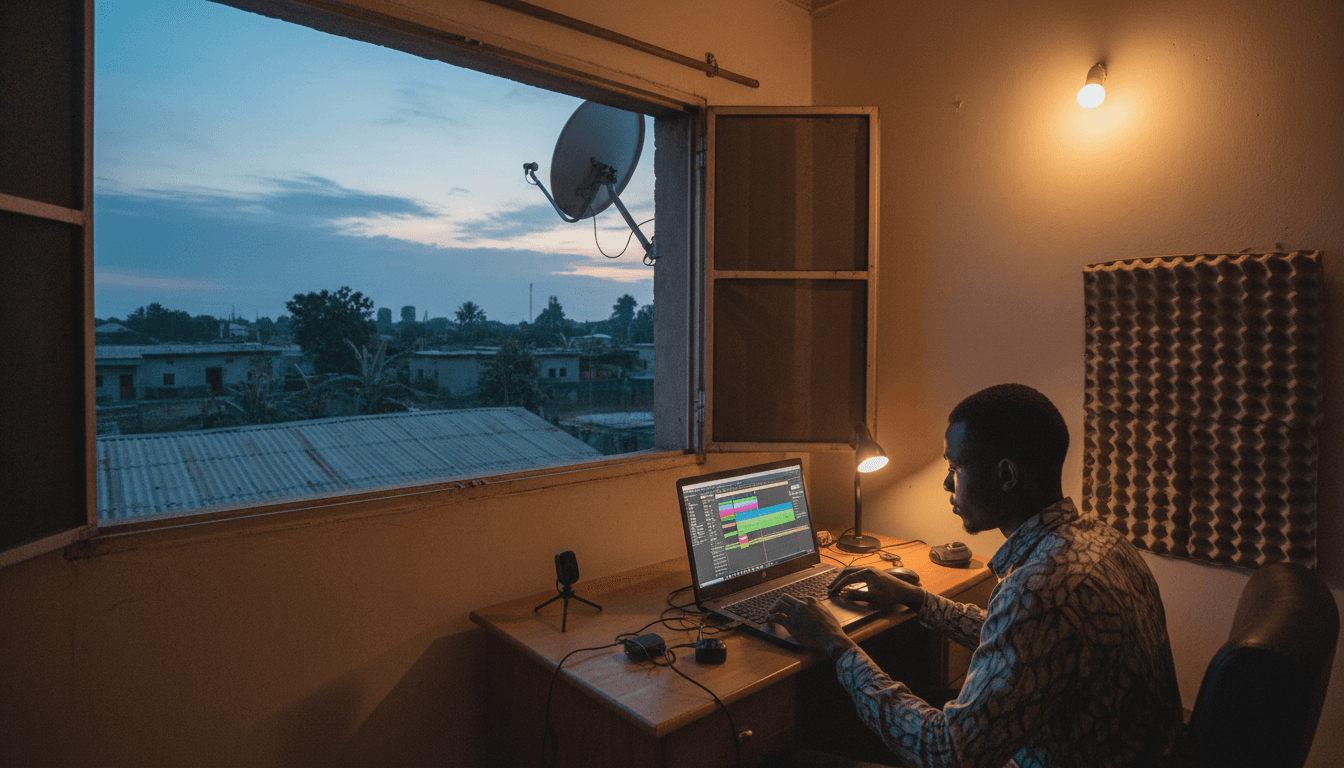
Starlink and Nigeria’s Creator Economy: The Connectivity Shift
Starlink went from a 2019 launch to 8 million users across 150+ markets—and it did it fast enough that SpaceX has been putting up new Starlink satellites at an average pace of one rocket launch every three days in 2025. That speed matters for Nigeria, because the creator economy isn’t held back by talent. It’s held back by the boring stuff: unstable power, inconsistent broadband, and upload speeds that make “post daily” sound like a joke outside major cities.
Here’s what I think most people miss: connectivity is now a competitive advantage for creators, not just a utility. When your income depends on timely uploads, livestream stability, and responding to brand emails on deadline, “internet availability” becomes business infrastructure.
This post uses Starlink’s global expansion as a lens to talk about Nigeria’s real opportunity: when reliable internet reaches more places, AI-powered content workflows (editing, repurposing, captioning, translation, analytics) can actually work for more Nigerians—not just creators in Lagos or Abuja.
Why Starlink became the “internet alternative”
Starlink became the internet alternative because it skips the hardest part of traditional broadband: laying fiber and building last-mile networks in places where it’s slow, costly, or politically complicated. Instead, it uses a large constellation of low-Earth orbit satellites and a user kit on the ground.
That “alternative” framing isn’t marketing fluff. In many markets, it’s a practical escape hatch when the local internet situation is any mix of:
- Limited fixed broadband coverage
- Chronic outages and congestion
- High prices for low speeds
- Slow infrastructure rollouts outside commercial centers
The Rest of World reporting also highlights another reality: telecom is political. Starlink’s approvals and activations have sometimes been caught in regulatory delays, then suddenly accelerated—especially during periods when Elon Musk’s proximity to U.S. political power was high. Whether you see that as normal lobbying or something more troubling, the implication is the same: countries don’t just “get” satellite internet; they negotiate it.
For Nigeria’s digital content and creator economy, that negotiation matters because the stakes are bigger than convenience. It shapes who gets to participate in the modern internet economy.
The satellite boom is real—and it’s accelerating
The satellite internet industry can feel abstract until you attach it to a pace and a number. SpaceX launching Starlink satellites every few days in 2025 tells you two things:
- Capacity and coverage are being built aggressively.
- Competitors are being forced to respond, which can push pricing and service quality in the right direction over time.
Nigeria doesn’t need to “pick a winner.” It needs a connectivity environment where multiple solutions (fiber, fixed wireless, 4G/5G, satellite) compete and complement each other.
What this means for Nigeria’s creator economy (beyond the hype)
Reliable connectivity is a creator multiplier. It doesn’t make you creative. It makes your creativity shippable.
Nigeria’s creator economy—music, Nollywood, skits, education content, sports commentary, beauty, tech reviews, live commerce—runs on distribution. If distribution fails, the business fails.
Consistency beats virality, and internet stability is how you get consistency
Most sustainable creators aren’t surviving on one viral moment. They’re surviving on consistency:
- predictable upload schedules
- faster iteration based on analytics
- regular brand deliverables
- community engagement that doesn’t vanish for days
Satellite internet can matter most in the places where creators are currently boxed out—peri-urban areas, smaller cities, and communities where fixed broadband isn’t realistic soon.
And yes, Starlink has already become one of Nigeria’s top internet providers. That’s not a vibe. It’s a structural shift.
A clear stance: Starlink won’t “solve” Nigeria’s internet—competition will
I don’t buy the narrative that one provider fixes a nation’s connectivity. Nigeria’s long-term win comes from real competition and smarter regulation.
Local ISPs complaining about unfair competition is a signal that the market is being disrupted. Disruption isn’t automatically good—but it often forces improvements:
- better service guarantees
- clearer pricing
- network upgrades to reduce churn
The ideal outcome isn’t “everyone moves to satellite.” The ideal outcome is: everyone gets better options.
The AI angle: connectivity turns AI tools into real income
This blog is part of the “How AI Is Powering Nigeria’s Digital Content & Creator Economy” series, so let’s be blunt: AI tools don’t help you if your internet can’t support your workflow.
AI has become the production layer for creators and small teams:
- auto-captioning and subtitle generation
- noise removal and audio cleanup
- script assistance and outline generation
- thumbnail testing and title variations
- short-form repurposing from long videos
- translation/localization for multi-language audiences
But these tools depend on stable uploads/downloads, cloud sync, and quick iteration. If you’re fighting a bad connection, you can’t:
- upload raw footage reliably
- collaborate with remote editors
- run livestreams without drops
- publish time-sensitive content (news, sports, trends)
The practical impact in Nigeria: creators outside big cities can finally compete
When connectivity improves in underserved areas, it changes who gets to play:
- A creator in Ilorin can deliver brand content without traveling to Lagos “to upload.”
- A media startup in Enugu can run remote interviews and publish faster.
- A training business in Uyo can host stable live classes.
And when those creators can participate, the ecosystem expands: more niche content, more local language content, more regional communities, more commerce.
A simple rule: AI makes creators faster. Reliable internet makes creators consistent. Consistency is what brands pay for.
The global lessons Nigeria should take seriously
Starlink’s story isn’t just “satellite internet is cool.” It’s a case study in how internet access is getting reshaped—by technology, geopolitics, and consumer frustration.
Lesson 1: People will bypass restrictions when demand is high
In Bolivia, when Starlink was banned, people reportedly smuggled Starlink kits across borders. That’s not only about Starlink. It’s about demand for a functional internet experience.
Nigeria should read that as a warning: when the official path is too slow, too restrictive, or too expensive, the market routes around it.
For creators, “routing around” looks like:
- traveling just to upload
- paying for multiple SIMs and routers
- stitching together unreliable connections
These workarounds are hidden taxes on productivity.
Lesson 2: In fragile political environments, satellite internet becomes strategic
In Myanmar, where internet blackouts are common, opposition forces have reportedly used Starlink to maintain communications and support humanitarian work. That’s extreme compared to Nigeria’s situation, but the principle matters: connectivity is strategic infrastructure.
For Nigeria’s digital economy, strategic infrastructure means:
- resilience during outages
- redundancy for businesses that can’t go offline
- stability for remote work and remote production
Lesson 3: Pricing narratives can flip—sometimes satellite is cheaper
In at least five of 16 African countries where Starlink operated as of early 2025, reporting found that Starlink was cheaper than the leading fixed internet provider.
That should make Nigerian consumers ask harder questions about value:
- What’s the real cost per usable Mbps?
- How many hours are lost to downtime?
- What’s the cost of missed deliverables?
For a creator, the “cheapest” plan is often the one that reduces failed uploads and missed deadlines.
How Nigerian creators can use better internet to earn more (actionable)
Reliable connectivity doesn’t automatically increase income. Your workflow has to change to take advantage of it. Here are practical moves I’ve seen work.
1) Build an “AI-first” content pipeline (but keep it simple)
Start with one repeatable pipeline you can run weekly:
- Record one long video (10–20 minutes) or one podcast episode.
- Use AI to generate clips, captions, and a summary.
- Publish 3–7 shorts across platforms.
- Turn the summary into a newsletter post.
- Track performance and repeat.
Stable internet makes the boring part—uploads, exports, collaboration—predictable.
2) Adopt redundancy like a real business
Even with satellite, assume failures happen. Creators who earn consistently treat connectivity like production gear.
- Keep a second connection option (mobile hotspot or alternate ISP).
- Schedule uploads ahead when possible.
- Maintain local backups; don’t rely on cloud only.
3) Use AI analytics to decide what to post, not vibes
Once your upload friction drops, your biggest bottleneck becomes decision-making. AI tools can summarize what’s working:
- which hooks retain viewers
- what posting times perform best
- what topics drive saves and shares
Better internet means you can actually act on those insights quickly.
4) Negotiate brand deals with “delivery certainty”
Creators often pitch reach. Start pitching reliability:
- consistent delivery timelines
- fast review turnaround
- predictable posting schedule
If you can say, “I can deliver within 48 hours because my production and upload pipeline is stable,” you’re not competing with hobbyists anymore.
The policy question Nigeria can’t dodge
Satellite internet creates new regulatory questions: licensing, spectrum coordination, consumer protection, taxation, security, and fair competition.
Nigeria needs regulation that does two things at the same time:
- Protect consumers (service transparency, pricing clarity, dispute channels)
- Protect competition (no artificial barriers that keep prices high and service poor)
If approvals and pricing become politicized, creators and small businesses pay the price first—because they don’t have enterprise backup lines or dedicated IT teams.
A healthy outcome is one where satellite pushes incumbents to improve, and incumbents push satellite providers to localize, reduce friction, and serve more communities.
Where this goes next for Nigeria’s AI-powered creator economy
Starlink’s rise is a signal that the internet is being rebuilt from the edges: remote towns, underserved regions, and markets tired of waiting for terrestrial infrastructure to catch up. Nigeria’s creator economy should pay attention because the next wave of breakout creators won’t all come from the same postcodes.
If you’re building in Nigeria’s digital content economy, the play is straightforward: treat connectivity as core infrastructure, then build AI-powered systems that turn stable internet into consistent output and revenue.
What would Nigeria’s creator economy look like if creators in every state could upload, livestream, collaborate, and get paid without planning their week around network outages?