OneDosh is live in the US–Nigeria corridor. Here’s what borderless, AI-supported payments mean for Nigerian creators earning globally.
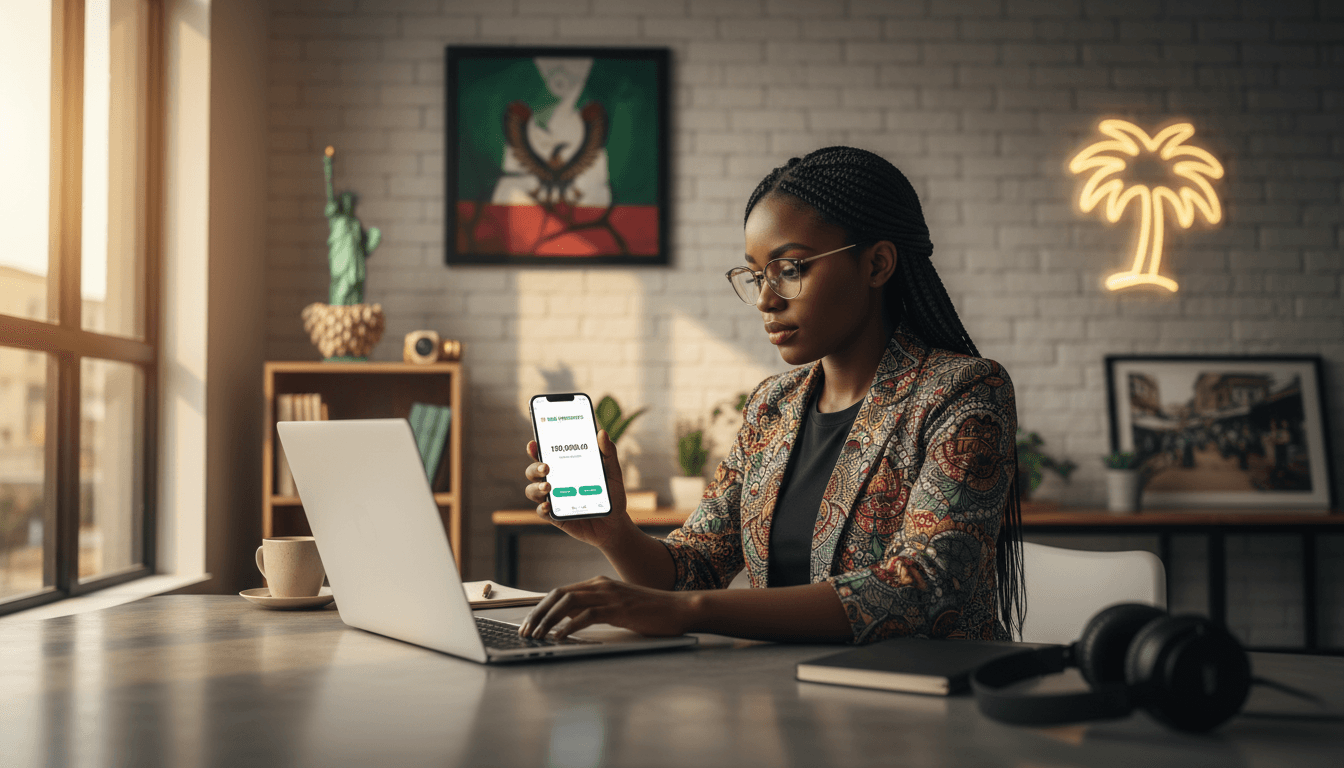
Borderless Payments for Nigerian Creators: OneDosh
December is when many Nigerian creators feel the gap between audience and income most sharply. Your content travels globally in seconds—your money often doesn’t. Brand deals arrive late, payouts show up short after fees, and the “please send your account details” back-and-forth can drag on for days.
That’s why OneDosh’s new US–Nigeria launch matters beyond fintech headlines. A faster cross-border payment rail doesn’t just help importers or multinational companies. It directly affects the creator economy: YouTubers paid in dollars, TikTok influencers invoicing US brands, podcasters with diaspora subscribers, digital artists selling to collectors abroad, and micro-teams running remote creative businesses.
OneDosh says it’s live across 49 US states (with New York coming soon), and it’s positioning itself around instant transfers, real-time FX, a global USD card, and 24/7 AI-powered customer support. If you’re following this series—How AI Is Powering Nigeria’s Digital Content & Creator Economy—this is a practical example of how “AI + modern payment infrastructure” shows up in real creator workflows.
Why borderless payments are a creator-economy problem (not a finance problem)
Creators don’t lose money because they’re not talented; they lose money because payments are slow, expensive, and unpredictable.
The creator economy runs on speed:
- A brand approves a script on Monday; they want the campaign live by Friday.
- A freelancer delivers a motion graphic pack in 48 hours.
- A digital product launch can earn most of its revenue in the first week.
Traditional cross-border payments often work against that rhythm. Delays create operational problems (you can’t pay your editor), while unclear exchange rates and intermediary fees create margin problems (you can’t forecast revenue). Even when the payment arrives, creators still deal with conversion spreads, bank transfer charges, and card spending limits.
Here’s the reality I’ve seen with creative teams: once you can’t predict payout timing and FX outcomes, you start making conservative choices—smaller ad budgets, fewer contractors, fewer experiments. That slows growth.
What OneDosh is launching—and what’s actually new here
OneDosh is pitching “send, receive, spend, and convert” across borders in seconds using asset-backed stablecoin technology—wrapped in compliance, KYC, and a familiar app experience.
From the announcement, the product package includes:
- Instant transfers between the US and Nigeria corridor
- Real-time foreign exchange rates (meaning you see conversion outcomes upfront)
- A global USD card compatible with Apple Pay and Google Pay
- 24/7 AI-powered customer support
- “Enterprise-grade compliance,” KYC, and security standards
Stablecoin rails, familiar UX
Stablecoins matter because they can move value quickly across networks compared to old correspondent banking paths. But creators don’t want to become part-time crypto operators.
The interesting part isn’t “stablecoins” as a buzzword—it’s that stablecoin rails can sit underneath a normal-looking app that behaves like a modern fintech wallet. If OneDosh executes well, creators experience it as: faster settlement, clearer rates, and fewer middlemen.
A corridor-first strategy
Launching with a clear US–Nigeria corridor is a serious signal. The US is a major source of creator income—brand budgets, diaspora purchases, ad networks, consulting gigs, Patreon-style subscriptions, and course sales. A corridor-first approach is often how cross-border winners scale: do one route well, then expand.
Where AI fits: not “magic,” just fewer painful moments
AI in cross-border payments is most valuable when it reduces support load, catches fraud early, and makes compliance less annoying for legitimate users.
OneDosh mentions 24/7 AI support, but AI’s value in fintech typically shows up in four places creators actually feel:
1) Faster, cleaner customer support
Creators don’t have time to chase a missing transfer for three days. AI support can:
- Identify the transaction state quickly
- Surface the right help article or resolution path
- Route complex cases to humans with full context
If you’ve ever had a payment “pending” while a campaign deadline approaches, you know why this matters.
2) Fraud detection without punishing real users
Cross-border platforms attract fraud attempts. AI models can flag unusual patterns (device changes, velocity spikes, mule accounts) while reducing false positives that block legitimate creator payments.
The creator-friendly version of fraud controls is simple: keep bad actors out without freezing honest creators during payday.
3) Smarter compliance and KYC workflows
No creator wants to upload documents five times because a name mismatch triggers a manual queue. AI can help with document verification, text extraction, and discrepancy checks—ideally shortening onboarding and reducing re-verification loops.
4) FX transparency and pricing consistency
Some platforms win trust by showing rates clearly and sticking to them. AI can support pricing monitoring, anomaly detection, and even personalized prompts (e.g., “you’ll receive more if you convert at X time”)—though the most important part is still: show the number upfront and honor it.
What this means for Nigerian creators and creative businesses
Borderless payments aren’t a “nice-to-have” anymore—they’re part of your growth stack, like editing software or analytics.
Here are concrete creator scenarios where a product like OneDosh can change outcomes:
Freelancers selling services to US clients
If you’re a video editor, designer, developer, copywriter, or creative strategist, getting paid quickly affects how many clients you can handle.
What to aim for:
- Invoice in a stable currency (often USD)
- Receive funds fast enough to keep delivery cycles tight
- Convert only what you need to naira, when you need it
Influencers running cross-border brand deals
Brand deals often include:
- Upfront deposit
- Mid-campaign milestone payment
- Final payment after reporting
If each transfer takes days and costs too much, your cash flow becomes fragile. Faster rails mean you can structure contracts more confidently and accept more projects without borrowing to bridge payment delays.
Digital product sellers and communities
Creators selling templates, LUTs, sound packs, newsletters, paid communities, or mini-courses often get many small payments rather than one big wire.
A creator-friendly payment stack needs:
- Low friction receiving
- Predictable conversion
- A way to spend in USD for tools (ads, software, cloud services) without extra gymnastics
The included USD card angle matters here. Many creators pay for international tools—editing suites, design subscriptions, domain hosting, ad spend, stock footage. If you can receive in USD and spend in USD, you reduce forced conversions.
Practical checklist: how to evaluate a borderless payment platform (creator edition)
Don’t choose a cross-border app because it’s trending. Choose it because it improves your cash flow and reduces risk.
Use this checklist when testing OneDosh or any alternative:
- Speed: What’s the typical settlement time from US sender to Nigeria receiver?
- Total cost: Add fees + FX spread. Ask: “If a client pays $1,000, how much do I actually get?”
- Rate clarity: Do you see the exchange rate before confirming?
- Reliability: What happens on weekends, holidays, or high-traffic periods?
- Support quality: Can you reach a human? Does AI support solve real issues or just paste scripts?
- KYC friction: How long does verification take? What triggers extra reviews?
- Card utility: If there’s a USD card, does it work smoothly for the tools you pay for?
- Business fit: Can you separate personal vs business flows (helpful for taxes, reporting, team payments)?
If a platform can’t answer these clearly, it’s not ready for serious creator income.
Nigeria’s creator economy is scaling—payments have to catch up
Nigeria’s digital content economy is increasingly global: the audience is global, collaborators are global, and revenue is global. Payments are the last system still acting local.
OneDosh’s positioning—borderless transfers in seconds, real-time FX, and a compliance-forward approach—fits what creators have been asking for in plain language: “Let me get paid without drama.”
This also ties back to the bigger theme of this series: AI doesn’t only help creators generate content. It also supports the infrastructure around content—customer support, fraud detection, and compliance—so digital businesses can scale without collapsing under operational stress.
If you’re a Nigerian creator earning from the US (or planning to), the next step is straightforward: audit your current payout experience. Measure delays, costs, and friction points for a month. Then test a modern cross-border option and compare results.
The creator economy is getting more professional in 2026. The creators who win won’t just be the most talented—they’ll be the ones with the cleanest operations and the fastest money movement. What part of your payment flow still feels stuck in 2008? That’s your next upgrade.