Nomba’s Apple Pay acceptance helps Nigerian creators collect global payments faster, improve checkout conversion, and monetize diaspora audiences with less friction.
Apple Pay on Nomba: A Bigger Win for Creators
Nigerians in the diaspora spent ₦60 billion during December 2024 when they came home, according to NiDCOM. That single number explains why payment speed matters more than most businesses admit—especially in December, when lines are long, POS failures feel more frequent, and tourists (and returning Nigerians) are less patient with “please try again.”
Nomba’s new Apple Pay acceptance for Nigerian merchants is a practical response to that reality. It’s not just a fintech product update; it’s a quiet upgrade to how Nigerian businesses—especially digital-first brands and creators—can collect money from global customers with less friction.
This post sits inside our series on How AI Is Powering Nigeria’s Digital Content & Creator Economy, because payments are the part creators often underestimate. You can have AI-assisted content production, automated editing, and distribution systems—but if checkout is clunky, international fans don’t pay. Simple.
What Nomba’s Apple Pay integration actually changes
Nomba’s Apple Pay integration changes one thing that creators and online businesses care about: conversion at the point of payment.
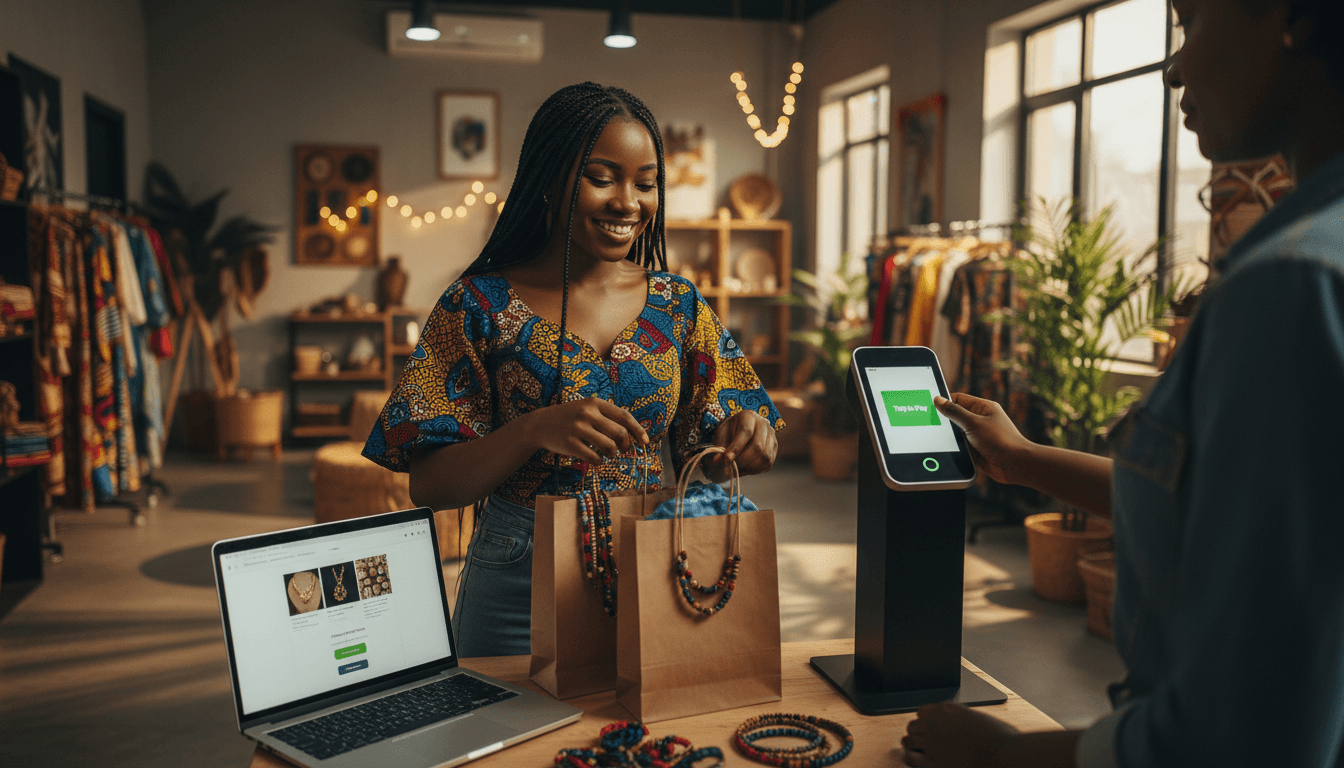
Apple Pay is built for “invisible checkout”—customers pay from their iPhone using Face ID, without typing card numbers or switching apps. For a Nigerian merchant using Nomba, that means Apple Pay works at both in-store POS and online checkout (where supported by the merchant’s setup), allowing global customers to pay using cards already stored in Apple Wallet.
Two details matter here:
1) This is merchant acceptance, not a full consumer rollout
A full consumer rollout would require Nigerian banks to issue Apple Pay-enabled cards locally. Nomba’s approach focuses on letting Nigerian merchants accept Apple Pay from customers abroad.
That’s a big deal for businesses that sell:
- Digital products (templates, courses, presets)
- Remote services (design, video editing, strategy, coaching)
- Creator merch (streetwear drops, limited collections)
- Event tickets and experiences (community meetups, masterclasses)
2) It’s designed around speed, security, and compliance
Nomba says the integration required meeting strict payment security and certification standards. The company also noted it holds Money Transmitter (MTL) and Money Services Business (MSB) licences in the United States, enabling it to work with global processors under defined service-level agreements.
If you’re a creator, you don’t need the licensing details—but you do benefit when compliance is handled well because it reduces the “random account limitation” moments that kill momentum.
Invisible checkout isn’t a luxury. It’s the difference between “I’ll buy later” and “paid.”
Why global payments are a creator-economy problem (not just fintech)
Creators in Nigeria aren’t just competing with other Nigerian creators. They’re competing with anyone selling attention, education, entertainment, or services globally.
The hard truth: international customers have a low tolerance for payment friction. If your checkout asks them to do too much—manual card entry, bank transfer, additional verification steps—many will bounce.
This is why Apple Pay acceptance can matter disproportionately for the creator economy:
Faster checkout raises conversion, especially on mobile
Most creator sales happen on mobile. Apple Pay reduces typing, reduces error rates, and feels familiar to global buyers.
That translates into fewer failed payments and fewer abandoned carts—especially for impulse purchases like:
- ₦10k–₦30k digital downloads
- Quick consulting calls
- Tickets to a small creator event
Diaspora buyers behave like global e-commerce customers
Diaspora Nigerians often want to support businesses back home, but they still expect the ease they get abroad. December makes this more obvious, but it applies year-round.
If your brand is positioned for diaspora customers (food brands, fashion, skincare, culture media, community events), your checkout experience becomes part of your brand.
Creators need predictable settlements, not payment drama
A recurring pain point for cross-border payments is delayed settlement, withheld funds, and unpredictable FX outcomes when transactions route through upstream processors.
Nomba’s stance here is strong: it says that even when upstream settlements delay, it pays merchants on time using its own funds. For creators running launches (course drops, merch drops, ticket sales), cashflow timing isn’t a minor detail. It’s operations.
Where AI fits: turning better payments into real growth
Payments don’t create demand. They convert demand. AI is what helps creators create and capture demand at scale—and it’s most effective when the last step (checkout) is frictionless.
Here’s the practical connection I’ve seen: AI helps you produce more output and run tighter experiments, which increases the number of payment moments you create. If you increase payment moments but checkout stays weak, you’re basically pouring water into a basket.
AI-powered funnels need low-friction checkout
Many Nigerian creators are now using AI tools for:
- Ad creatives and rapid iteration
- Email sequences and landing page copy
- Customer support chat flows
- Personalized offers and segmentation
These systems work best when the buyer can pay instantly—especially when the offer is time-bound (flash sales, “cart closes tonight,” limited seats).
AI improves customer experience; Apple Pay reduces payment anxiety
Creators often underestimate how “unsafe” a checkout can feel to a first-time international buyer. Apple Pay’s Face ID authentication signals security and legitimacy.
That trust signal complements AI-driven customer service (fast replies, clear FAQs, automated receipts) and reduces the back-and-forth that slows down purchases.
AI brings the buyer to the checkout. Payments decide whether they cross the line.
Practical ways Nigerian creators can use Apple Pay acceptance (starting this week)
If you’re a creator or digital entrepreneur using Nomba (or considering it), the best approach is to treat Apple Pay as a conversion tool, not a badge.
1) Add an “Apple Pay available” cue where people actually decide
Don’t bury it on a payments page.
Use it in:
- Checkout microcopy (“Pay with Apple Pay in seconds”)
- Your link-in-bio landing page
- Product pages for diaspora-focused offers
- Event posters and IG story frames (if you’re doing physical sales)
Keep it simple. You’re not trying to educate customers on Apple Pay. You’re trying to reduce hesitation.
2) Design one offer specifically for diaspora buyers
Diaspora customers respond well to offers that feel like connection, not charity.
Examples:
- A “December Homecoming” city guide (Lagos, Abuja, PH)
- A culture-focused photo preset pack
- A remote service package with clear turnaround times
- A giftable digital product (gift codes, printable cards)
Then make Apple Pay the default “fastest route to pay.”
3) Tighten your mobile checkout flow
Apple Pay shines on mobile, but only if the rest of your flow doesn’t sabotage it.
Quick checklist:
- Keep your checkout steps minimal
- Reduce form fields (name + email is often enough for digital)
- Put pricing in one currency and be clear about what customers will be charged
- Confirm delivery instantly (auto-email, download page, WhatsApp confirmation)
4) Treat December as a stress test for your payments stack
December in Nigeria is basically a live load test—high volume, high emotion, low patience.
If you sell anything seasonal (fashion drops, tickets, beauty services, hospitality), use this period to track:
- Payment failure rate
- Time-to-successful-payment
- Customer complaints about checkout
- Refund requests and why they happened
Then fix one thing per month in 2026. Small improvements compound.
“People also ask” questions creators have about Apple Pay in Nigeria
Can Nigerians use Apple Pay locally with Nigerian bank cards? Not broadly. What’s expanding faster right now is merchant acceptance for customers abroad, enabled via partnerships and regulatory alignment.
Does Apple Pay help if my audience is mostly in Nigeria? Less than if your audience is international or diaspora. If your buyers are mostly local, you’ll still benefit more from reliable transfers and card options—but Apple Pay becomes useful as soon as you market beyond Nigeria.
Is Apple Pay only for online businesses? No. Nomba says Apple Pay works across in-store POS and online checkout, which matters for creators who sell both online (digital) and offline (events, pop-ups, merch stands).
What’s the real benefit for a creator? Fewer abandoned checkouts, better trust signals for international customers, and more predictable cashflow during launches.
What this signals for Nigeria’s creator economy in 2026
Apple Pay acceptance on Nigerian payment rails is a sign that the market is bending toward global commerce norms—faster checkout, stronger authentication, and more consumer choice.
And that matters for our broader theme—AI powering Nigeria’s digital content and creator economy—because AI lowers the cost of creating content and running campaigns. As more creators scale output, the winners won’t just be the loudest. They’ll be the ones with a clean path from attention to payment.
If you’re building in the creator economy, here’s a stance worth adopting: treat payments like product. Audit them, measure them, and improve them the same way you improve your content.
What would happen to your revenue next quarter if you reduced checkout friction by just 10%—especially for diaspora buyers who already want to support you?