Women Who Build shows how documentary storytelling—powered by AI tools—can help women-led startups in Nigeria earn trust, attention, and investor leads.
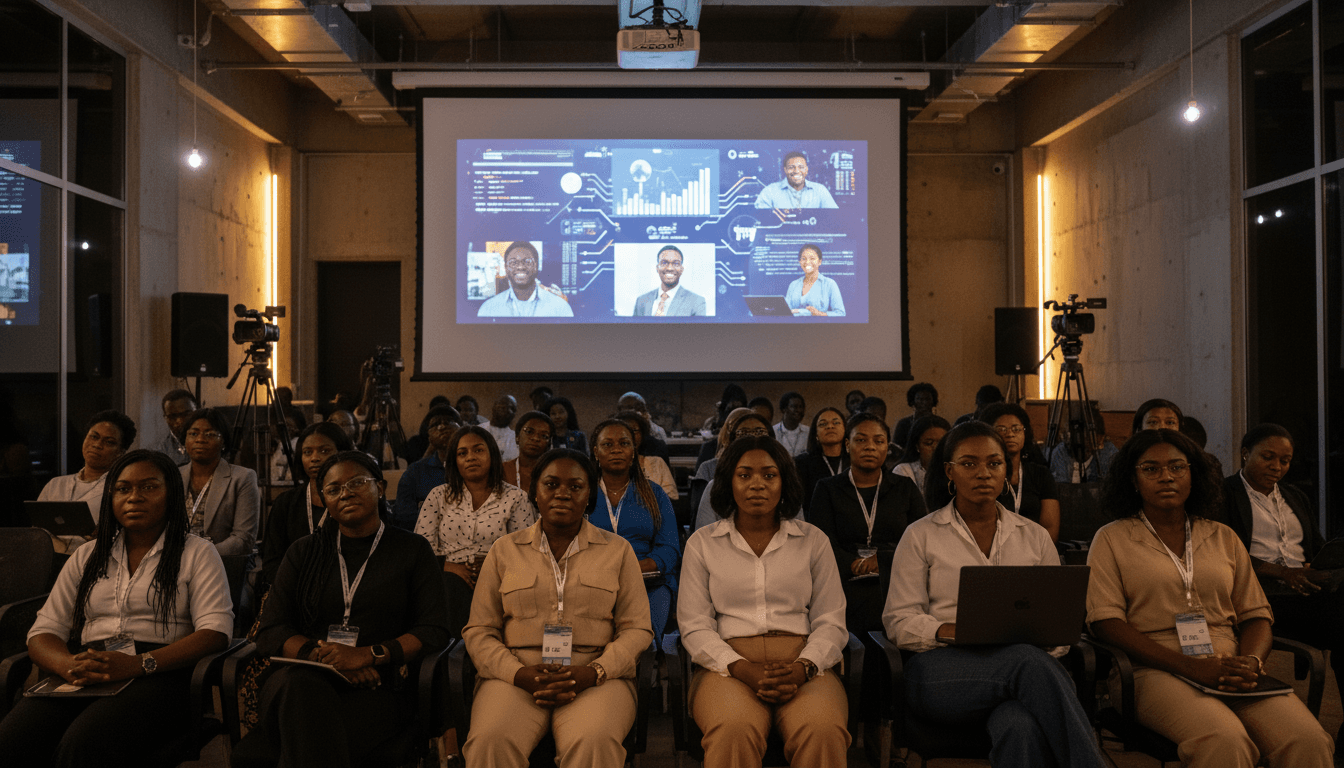
Women Who Build: AI Storytelling Meets Nigeria’s Startups
A 20-minute documentary can do what a 20-slide pitch deck often can’t: make people feel the problem, the stakes, and the founder’s grit. That’s why the premiere of Women Who Build—screened as BGIS wrapped its 2025 programme in Lagos—matters beyond the room it happened in.
It’s not just a nice end-of-year event. It’s a signal about where Nigeria’s digital content and creator economy is headed: more founder-led stories, more documentary-style storytelling, and more distribution that travels through YouTube, WhatsApp, and short-form clips. And yes, AI is sitting in the middle of all of this—not as a replacement for human stories, but as the quiet system that helps those stories get produced, packaged, and pushed further.
BGIS (Business Growth Initiative for Startups) supported 14 women-led, growth-stage startups across healthtech, AI, logistics, SaaS, fintech, food, creative commerce, and community health. The closing reception did two smart things at once: it showcased companies to investors (Deal Day), and it captured the human narrative through a documentary that can outlive the cohort.
Why a documentary premiere is a creator-economy move
A documentary is content, but it’s also infrastructure for attention. Once a story exists in a strong video format, it becomes a reusable asset that can fuel months of marketing and partnerships.
For Nigeria’s creator economy, the shift is clear: founders and operators are no longer relying only on press mentions or conference panels. They’re investing in owned media—films, podcasts, newsletters, behind-the-scenes videos—that build trust over time.
Here’s the business logic:
- Investors back clarity. If people can understand your mission quickly, they lean in.
- Talent follows meaning. Great hires don’t just want salaries; they want stories they can join.
- Partnerships need narrative. NGOs, corporates, and government collaborators often fund outcomes, not hype.
BGIS didn’t just “celebrate women founders.” It created a distribution-ready narrative that can be repurposed across platforms—especially YouTube, LinkedIn, Instagram, and WhatsApp.
The format is the message: short documentary beats long explanations
In Nigeria, attention is expensive. Data costs money. Time is tight. A documentary that respects pacing—tight scenes, clear stakes, real faces—can outperform long articles for broad reach.
And documentary-style content is growing because it solves a real problem in the ecosystem: people want proof, not promises. A camera pointed at real customers, clinics, market traders, and operations is often more convincing than any slogan.
What BGIS 2025 reveals about women-led startup storytelling
BGIS is a women-focused scale-support programme backed by the UK Government’s FCDO and the UK-Nigeria Tech Hub, implemented by UBDEV and Spurt!. Over five months, it provided structured advisory, visibility, and strategic support to women-led startups.
At the reception, UBDEV’s CEO Odiong Akpan called out a reality most people avoid saying plainly: women-led startups are underrepresented, and even when support exists, it’s too often “lip service.” That line lands because it’s true in practice—many programs still optimize for founders who already look fundable.
The customer-led pattern (and why it complicates fundraising)
A central theme from the cohort is that many women-led ventures are customer-led and need-driven, which often places them closer to “impact” than “hypergrowth.” The market loves to praise impact. The funding market, however, doesn’t always price it well.
This showed up clearly in the on-stage conversation between:
- Folake Kofo-Idowu, founder of Iyewo
- Oyindamola Oyinlola-Eyitayo, Programme Manager at the UK-Nigeria Tech Hub
Iyewo serves Nigeria’s informal sector—market traders, artisans, informal workers—people typically excluded from formal health insurance. It’s the kind of business Nigeria needs. But it also forces hard questions investors like to dodge: unit economics in low-income markets, retention under income volatility, and outcomes measurement.
Here’s my stance: if your business is need-driven in Nigeria, you must become excellent at storytelling and metrics. Not “branding.” Storytelling that proves causality: what changed, for whom, and at what cost.
How AI is powering Nigeria’s digital storytelling (without stealing the story)
AI isn’t the headline of the BGIS event, but it’s absolutely part of why documentary storytelling is becoming more accessible to startup ecosystems.
When people hear “AI in content,” they jump to synthetic videos or deepfakes. That’s not the real day-to-day value. The real value is operational:
AI makes production faster and cheaper
Most teams don’t have time for full post-production workflows. AI tools reduce the burden in practical ways:
- Auto-transcription for interviews (turns hours of footage into searchable text)
- Rough-cut support (finding usable takes and generating timestamped selects)
- Subtitle generation (critical for mobile viewing and noisy environments)
- Audio cleanup (reducing background noise in Lagos street-level recording)
- Format resizing (turning one documentary into vertical clips for short-form)
The result: one documentary can become 30–60 content assets—teasers, founder quotes, behind-the-scenes, investor-ready clips, and thematic segments.
AI helps with distribution, not just editing
Nigeria’s creator economy is increasingly distribution-first. If your content doesn’t travel, it doesn’t convert.
AI supports:
- Title and thumbnail testing ideas (what will people click?)
- Audience segmentation (different cuts for investors vs. customers vs. partners)
- Clip selection based on watch-time patterns (what actually holds attention)
- Repurposing into newsletters and LinkedIn posts without starting from scratch
Put simply: AI turns one story into many entry points.
The line you shouldn’t cross
If you’re telling real founder stories—especially women-led, impact-adjacent stories—authenticity is the asset. Don’t over-polish it into something fake.
A good rule:
Use AI to remove friction (time, cost, complexity). Don’t use AI to manufacture emotion.
From premiere to pipeline: turning founder stories into leads
This post is part of the How AI Is Powering Nigeria’s Digital Content & Creator Economy series, so let’s talk about what the BGIS approach teaches anyone trying to generate leads—startups, accelerators, NGOs, brands, or creator-led businesses.
The event ended with a Deal Day Showcase in partnership with Rising Tide Africa, where selected founders pitched to angels. Pitches included:
- Iyewo (community-based primary healthcare)
- PocketLawyers (legal technology)
- Muvment (on-demand digital vehicle rental)
Iyewo reportedly stood out, with a clear investor note: document impact metrics better. That’s not a throwaway comment. It’s the blueprint.
A practical “documentary-to-demand” funnel
If you’re building in Nigeria’s creator economy, treat documentary content like the top of a funnel, not a vanity project.
- Documentary (YouTube / screening)
- Goal: credibility and emotional clarity
- Short clips (Instagram, TikTok, YouTube Shorts, WhatsApp status)
- Goal: reach and repeat exposure
- Founder explainers (LinkedIn, webinars, X Spaces recordings)
- Goal: authority and conversion intent
- Proof assets (case studies, metrics one-pagers, customer stories)
- Goal: close partnerships and funding
This is how content becomes leads.
What metrics should women-led, impact-driven startups track?
If you’re building something like Iyewo (or any customer-led solution), your “content” must be backed by numbers people can quote.
Track these three layers:
- Activity metrics (what you did)
- customers onboarded, claims processed, clinics activated
- Outcome metrics (what changed)
- reduced wait time, improved follow-up rates, treatment adherence
- Economic metrics (what it costs)
- CAC, retention, contribution margin, default rates (if relevant)
Then make the metrics usable in content:
- Put them into simple visuals
- Repeat them across clips
- Teach your team a consistent “metrics script”
People trust what they can repeat.
What Nigeria’s ecosystem should copy from BGIS
BGIS called itself a pilot model. I hope others copy the parts that matter, not the parts that look good in photos.
1) Treat visibility as a product, not a perk
Many programs treat media as a nice-to-have. That’s outdated. Visibility is part of scaling.
If you support founders, include:
- a content day (interviews, b-roll, founder portraits)
- a distribution plan (platform-by-platform)
- a post-programme editorial calendar
2) Build post-programme support that’s actually usable
BGIS outlined continued engagement via advisory support and amplification through digital platforms. The best version of this is not “we’re here if you need us.” It’s structured:
- monthly metrics check-ins
- quarterly investor updates templates
- partner intros tied to clear milestones
3) Don’t confuse “investment-ready” with “VC-shaped”
Some businesses are great but not built for venture-scale returns. Pretending otherwise wastes time.
A better approach is to prepare founders for multiple capital paths:
- angel networks
- revenue-based financing (where available)
- corporate partnerships
- grants tied to measurable outcomes
Documentary storytelling supports all of these because it builds trust with non-VC decision makers.
The bigger trend: documentaries are becoming Nigeria’s trust layer
Nigeria’s creator economy isn’t just skits, music promos, and influencer ads anymore. It’s maturing into trust-building formats—documentaries, founder diaries, investigative explainers, and community stories.
Women Who Build sits inside that trend. It frames women-led startups not as exceptions, but as operators building real systems in healthcare, legal access, mobility, logistics, and SaaS.
If you’re building a startup or a support program going into 2026, here’s the bet I’d place: the teams that win attention will be the teams that can package proof into stories people want to share. AI will help with speed and scale. The story still has to be true.
The next question is the one that matters: What founder stories are we still not funding, filming, or distributing—and what is that silence costing the ecosystem?