Women Who Build shows how documentaries, AI tools, and founder storytelling are shaping Nigeria’s creator economy—and helping women-led startups get seen.
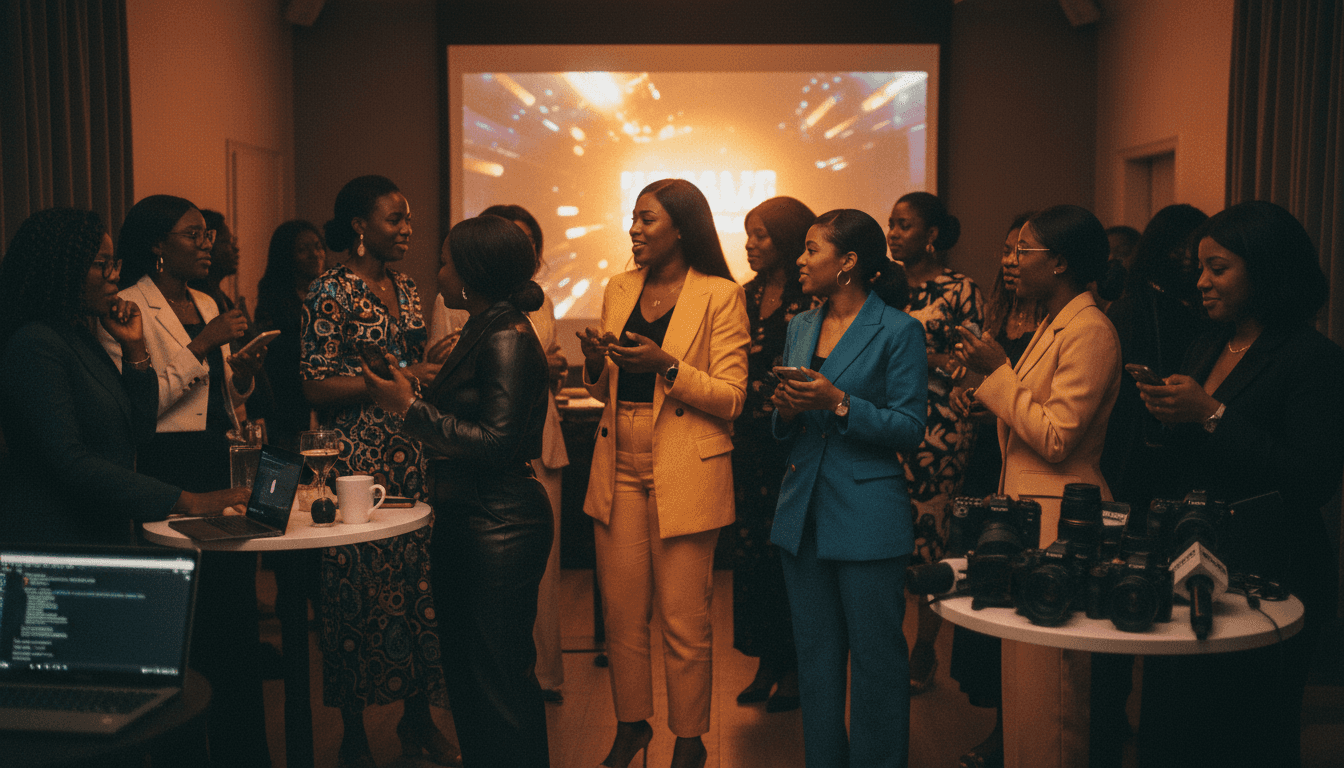
Women Who Build: AI Storytelling in Nigeria’s Tech
A 20-minute documentary shouldn’t be able to move markets. But it often does.
When BGIS (Business Growth Initiative for Startups) premiered Women Who Build in Lagos this December, it wasn’t just a feel-good end-of-programme screening. It was a smart reminder that Nigeria’s creator economy isn’t only skits, music, and influencer deals—it’s also the stories we package around innovation, impact, and who gets to be seen building.
This matters for founders, investors, and marketers because visibility is now infrastructure. In Nigeria’s digital content ecosystem, a startup with traction but weak storytelling can get ignored, while a clear narrative—told consistently across short-form video, podcasts, newsletters, and community channels—can pull in partners, talent, and funding. And increasingly, AI content tools are making that storytelling cheaper, faster, and more scalable, especially for underrepresented founders.
Why a documentary premiere is a creator-economy event
A documentary like Women Who Build is content, but it’s also distribution strategy.
BGIS closed its 2025 programme with a reception on December 12, 2025, bringing together founders, investors, ecosystem leaders, and partners in Lagos. The cohort included 14 women-led, growth-stage startups across sectors such as healthtech, AI, logistics, SaaS, fintech, edtech, food, creative commerce, and community health. That breadth matters because it mirrors how Nigeria’s digital economy actually works: sector lines blur, and growth often comes from media and community as much as product.
Here’s the practical point: a premiere creates a “moment”. Moments drive attention; attention drives conversations; conversations drive deals. If you’re building in Nigeria, you don’t just need a product roadmap—you need a content calendar that creates moments people can rally around.
What BGIS got right: turning programme outcomes into a narrative
Most startup programmes stop at demo day. BGIS pushed further by creating an asset that outlives the cohort: a documentary that can be clipped, quoted, excerpted, and repurposed.
That single choice creates multiple content surfaces:
- Short-form video snippets for social platforms
- Founder quotes for PR and newsletters
- Thematic episodes for podcasts or Twitter/X spaces
- A reference point for investor follow-ups
- A recruiting story for talent who wants mission and momentum
For Nigeria’s digital creator economy, this is the bigger shift: institutions are becoming publishers. Not in a “media house” way, but in the sense that they’re learning to package proof of work into content audiences want.
Women founders, visibility gaps, and why media is now part of funding
Women-led startups in Nigeria still face structural barriers—network access, biased pattern-matching in funding, and “polite support” that doesn’t translate into capital. BGIS is explicitly designed to address those gaps with structured advisory, visibility, and strategic support.
At the reception, Odiong Akpan (CEO, Ubulu Development Foundation) framed the problem plainly: representation is lopsided, and support for women founders is often performative.
That’s not just a social issue; it’s a market inefficiency.
When investors don’t see enough women-led companies, they assume there aren’t enough scalable ones. When founders don’t get distribution, they struggle to show traction. And when traction is unclear, funding slows.
The reality: “customer-led” founders need different capital stories
A standout conversation at the event featured Folake Kofo-Idowu (Founder, Iyewo) and Oyindamola Oyinlola-Eyitayo (Programme Manager, UK-Nigeria Tech Hub). Iyewo is a community-based primary healthcare company serving Nigeria’s informal sector—market traders, artisans, and informal workers often excluded from formal insurance systems.
This is where many women-led ventures land: need-driven, customer-led models that are real businesses but don’t always fit the neat venture narrative.
So the job becomes: translate impact and operational traction into a fundraising language investors trust.
That’s where creator-economy mechanics matter:
- Strong founder storytelling clarifies the “why now”
- Consistent content shows market proximity and trust
- Sharp metrics turn emotional resonance into investment readiness
Where AI fits: from cameras to algorithms
AI is already reshaping Nigeria’s digital content production, and not only for entertainment creators. For founders and ecosystem builders, AI helps with three bottlenecks: speed, consistency, and distribution.
If you’ve ever tried to ship content while running a startup, you know the pain: one good video takes days, and then you still need captions, edits, variants, thumbnails, and posts.
AI doesn’t replace a good story. It makes it easier to tell the story everywhere.
Practical ways women-led startups can use AI for content (without losing authenticity)
1) Turn long-form into weekly content
- Record one 20–40 minute founder interview (or fireside chat)
- Use AI transcription to extract themes
- Generate 10–20 short clips with suggested hooks
- Produce carousel summaries for LinkedIn/Instagram
2) Build a “metrics-to-story” workflow Investors don’t fund vibes; they fund evidence.
- Feed monthly metrics into a structured template
- Use AI to draft a one-page “traction story” (what changed, why, what’s next)
- Keep a running “impact log” that can be converted into pitch material
3) Localize for Nigerian audiences Nigeria is multilingual; your customers don’t all think in formal English.
- Use AI-assisted translation for Yoruba, Igbo, Hausa, and Pidgin drafts
- Then have a human reviewer fix tone, slang, and context
4) Reduce editing overhead
- Auto-captioning, noise cleanup, and formatting for vertical video
- Consistent brand kits (colors, lower-thirds, templates) generated once and reused
The stance I’ll take: founders who treat content as a product feature will outgrow founders who treat it as marketing homework. AI makes that approach realistic even for small teams.
Deal Day is content too: how to package investor moments
BGIS didn’t end with a screening—it included a Deal Day Showcase in partnership with Rising Tide Africa, where selected founders pitched to angels. The pitches covered sectors like healthcare access (Iyewo), legal tech (PocketLawyers), and on-demand digital vehicle rental (Muvment).
This part is important for the creator-economy angle: pitching is performance, but it’s also content.
If you capture a pitch the right way, you can create:
- A 60-second “what we do” founder video
- Investor FAQ clips (pricing, traction, unit economics)
- Customer proof snippets (“why people choose us”)
- Hiring assets (“come build with us”)
A simple founder content checklist for investor readiness
Use this as a minimum baseline if you want your story to travel:
- One clear positioning sentence (what you do, for who, and why you win)
- Three proof points (customers, revenue, retention, outcomes)
- One founder origin (why you, why this problem)
- Two customer stories (real people, real outcomes)
- One visual dashboard (simple, readable metrics)
Iyewo reportedly stood out, with investors encouraging stronger documentation of impact metrics and outcomes. That advice is gold because it’s the bridge between social impact and investability: don’t just say it works—show the before and after with numbers.
How ecosystem builders can copy this model (and generate leads)
If your goal is leads—founders applying, partners sponsoring, investors joining—don’t only host events. Publish.
BGIS plans continued engagement through post-programme advisory, digital amplification of founder stories, and deeper ecosystem collaboration. That’s the right order: support the business, then amplify the story, then use the story to attract more support.
A repeatable “programme-to-content” playbook
If you run an accelerator, hub, community, or brand initiative, here’s a practical structure you can replicate:
- Before: announce cohort with founder mini-profiles (short videos + written threads)
- During: monthly “build logs” (metrics, lessons, pivots)
- After: a documentary or mini-series + a pitch showcase
- Ongoing: quarterly updates to keep momentum and retain audience
AI helps you keep this sustainable:
- Auto-generate episode outlines from transcripts
- Summarize panel discussions into newsletter-ready insights
- Create consistent social variations without rewriting everything manually
The payoff is compounding: each cohort becomes an archive that improves search visibility and credibility over time—exactly what Nigeria’s creator economy rewards.
What to do next if you’re a founder, investor, or brand
If you’re a founder, treat Women Who Build as a reminder that traction needs packaging. Set up one recurring content system you can maintain—weekly founder notes, monthly customer stories, or a quarterly mini-doc style update. Keep it tight. Keep it honest.
If you’re an investor, look beyond polish and pay attention to distribution discipline. A founder who can consistently communicate progress will usually run a tighter operation. Storytelling doesn’t replace fundamentals, but it’s correlated with them.
If you’re a brand or ecosystem operator, sponsor stories, not just stages. A reception ends in a night; a documentary clip can bring qualified leads for months.
Nigeria’s digital content and creator economy is maturing fast, and AI is accelerating how stories are produced and spread. The open question is who will use that speed to widen representation—and who will keep getting erased by default.
The women are building. The smart move is making sure the market can’t look away.