ASF 2025 crowned 10 founders with Antler mentorship and $50k resources. Here’s how AI helps Nigerian founders and creators turn traction into scalable growth.
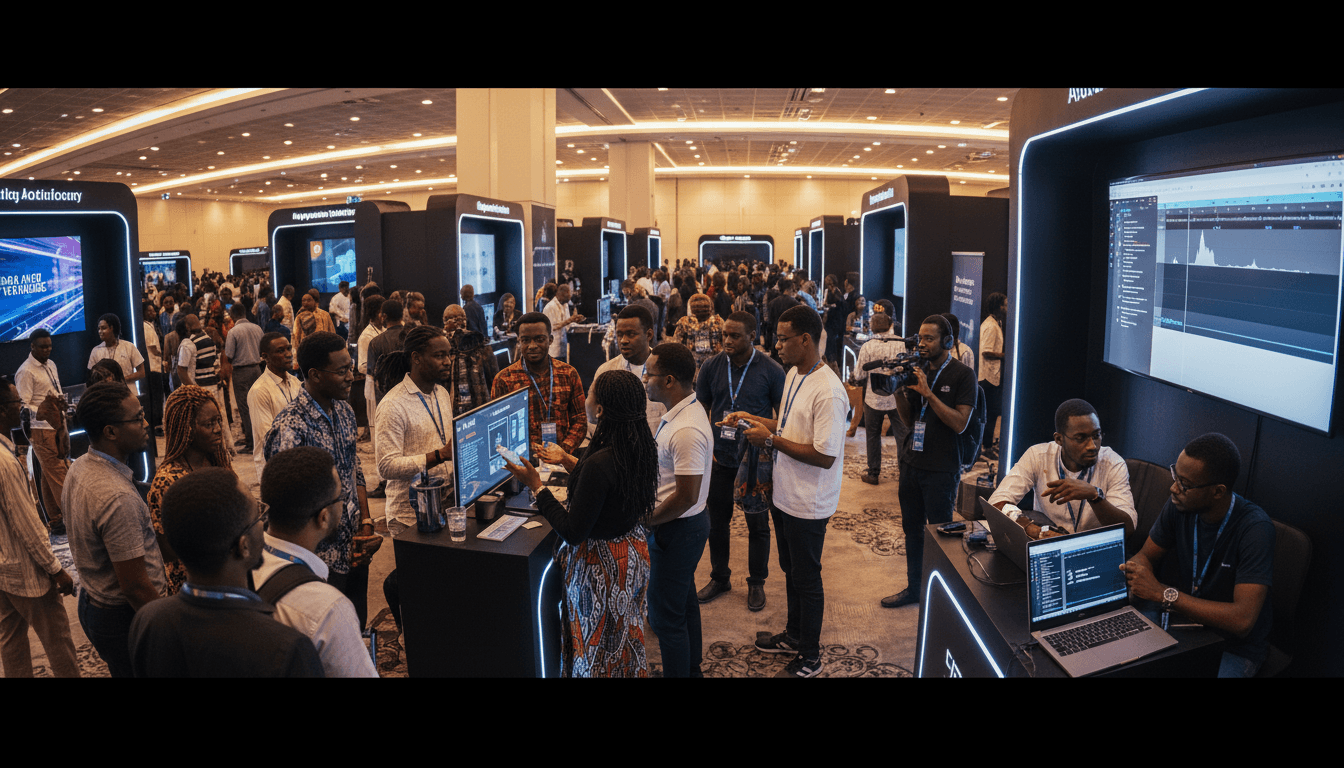
ASF 2025 Winners: Mentorship, AI, and Creator Scale
3,000+ people showed up in Lagos for Africa Startup Festival (ASF) 2025, and the most practical outcome wasn’t a headline-grabbing valuation story. It was 10 founders walking away with $50,000 worth of resources and exclusive mentorship from Antler—support that helps teams ship faster, sell better, and make fewer expensive mistakes.
Here’s why this matters for our series on how AI is powering Nigeria’s digital content & creator economy: the lines between “startup founder” and “creator” keep blurring. Founders now market like creators. Creators now build products like founders. And AI is the bridge—shrinking the cost of content, customer research, design, editing, analytics, and even customer support.
Most people think these festivals are about hype. I disagree. The real value is what happens after the applause: founders return to their laptops and try to turn attention into traction. That’s where mentorship and AI tooling become the difference between “great pitch” and “repeatable growth.”
What ASF 2025 signals about Nigeria’s digital economy
ASF 2025 made one thing clear: Nigeria’s startup ecosystem is now tightly linked to the creator economy—not because every startup makes media, but because every startup must earn attention and trust.
The event brought together founders, operators, and investors for what was described as “no-fluff” conversations: capital efficiency, operational excellence, and real traction. That tone is a direct reflection of the current funding climate. Investors are more cautious, and founders are being pushed to show proof, not vibes.
The trust gap is real—and content is now part of the solution
A standout theme at ASF 2025 was the widening trust gap between founders and investors—a mismatch between narratives and data. That same gap shows up with customers.
If you’re building in Nigeria, trust is a product feature. People don’t just buy what you sell; they buy that you’ll still exist next month, that support will respond, that payments won’t fail, that delivery will happen.
This is where the creator economy mindset helps founders:
- Consistent founder-led content reduces perceived risk
- Clear case studies turn “claims” into evidence
- Transparent product storytelling makes adoption easier
AI doesn’t create trust on its own. But it reduces the cost of communicating trust—more updates, more explainers, faster turnaround, better visuals.
Mentorship and resources: why Antler’s model fits this moment
The Antler Super Day at ASF 2025 prioritized what serious markets require: revenue clarity, team strength, and traction evidence. Over 15 founders pitched across sectors like healthcare, enterprise software, and sustainable agriculture, with the top 10 earning mentorship and $50,000 in resources.
This kind of support matters because many early-stage teams don’t fail from lack of ideas. They fail from:
- confusing demand signals
- weak positioning
- slow execution cycles
- inconsistent distribution
Mentorship is a shortcut to better decisions
Founders often treat mentorship like “nice to have.” It’s not. It’s decision compression—getting to good answers faster.
At ASF 2025, speakers repeatedly focused on operational reality. One comment captured the cost of scaling plainly:
“Engineering resources are very expensive.”
That’s the truth in Nigeria in 2025—talent is global-priced, even when revenue is local-priced.
A good mentor pushes you toward:
- narrower scope (ship what sells)
- clearer ICP definition (who exactly pays?)
- simpler onboarding (reduce drop-offs)
- proof-based storytelling (demo + numbers)
$50,000 in resources isn’t “free money”—it’s runway
Founders hear $50,000 and think spend. The smarter approach is runway extension.
If you’re a founder (or creator building a product), treat resources like a budget for:
- testing distribution channels
- hiring part-time specialists instead of full-time guesses
- building analytics discipline
- creating repeatable content and sales systems
Where AI fits: the creator-grade operating system for startups
AI is now the most affordable “team member” Nigerian builders can add—especially for content, marketing, and operations. Used well, it doesn’t replace talent; it removes bottlenecks.
Here’s a practical way to think about it: mentorship tells you what to do; AI helps you do it faster and more consistently.
AI for founder-led marketing (the easiest win)
Founder-led marketing is basically creator behavior: showing work, sharing lessons, documenting customer stories.
AI can support:
- Content repurposing: turn one webinar into 10 clips + 5 posts + 1 newsletter
- Copy drafting: landing pages, email sequences, ads, onboarding messages
- Design assistance: social creatives, pitch deck polish, basic brand templates
- Community ops: FAQ bots, onboarding scripts, DM triage
A simple workflow I’ve found effective:
- Record a 10-minute voice note after customer calls (what people asked, what confused them)
- Use AI to convert it into three post angles (problem, solution, lesson)
- Turn the best-performing post into a landing page section and email
Same insight, multiple assets. That’s how creators scale.
AI for “traction proof” investors actually respect
Investors at ASF 2025 emphasized performance proof. AI can’t fabricate traction (and you shouldn’t try). But it can help you instrument it.
Use AI to:
- summarize weekly metrics into a clean investor update
- spot churn patterns from support tickets or app reviews
- draft experiment plans (hypothesis → test → success metric)
- turn user interviews into structured insights
If your startup can’t explain:
- who buys
- why they buy
- what makes them stay
…you don’t have a growth problem; you have a clarity problem.
Lessons from ASF 2025 for creators building businesses
ASF 2025 wasn’t only about raising money. It centered building durable value in tough markets. That applies to creators too—especially creators trying to move beyond brand deals into products, courses, communities, SaaS, or commerce.
1) Treat content as distribution, not decoration
Creators already understand attention. What many underestimate is how much attention can become repeatable distribution if you build systems.
Do this:
- pick one primary channel (YouTube, TikTok, X, Instagram, LinkedIn)
- build one consistent format (weekly teardown, customer story, tutorial)
- capture leads (email list, WhatsApp community, waitlist)
AI helps you maintain consistency when your schedule gets chaotic.
2) Don’t confuse automation with strategy
A quote from ASF 2025 landed strongly: automation saves time and cost, and profit can be reinvested.
But automation doesn’t fix a weak offer.
Use AI and automation only after you can answer:
- What pain do we solve?
- What result do we deliver?
- What does success look like for the customer?
3) Learn publicly, but measure privately
One refreshing thing at ASF 2025 was founders openly discussing failed products and failed assumptions. That honesty isn’t just inspiring—it’s a competitive advantage.
Creators and founders who win in Nigeria do two things at once:
- share lessons publicly to build trust
- track numbers privately to build discipline
AI can help you document learnings, but your analytics must stay grounded in reality.
A practical “Mentorship + AI” playbook for the next 30 days
If you want to copy what the ASF 2025 winners are likely to do next—turn resources into momentum—here’s a clean 30-day plan you can execute whether you’re a founder or a creator-entrepreneur.
Week 1: Clarify the offer and audience
- Write a one-sentence promise (what outcome, for whom)
- List 3 customer segments and pick one primary
- Draft 10 customer questions you must answer
AI task: Turn customer call notes into a structured “Top objections + responses” doc.
Week 2: Build a simple content engine
- Choose 1 channel + 1 content format
- Create 4 posts that address 4 objections
- Create 1 case study-style story (even if early)
AI task: Repurpose each post into a short script, a long post, and a newsletter version.
Week 3: Tighten conversion
- Improve landing page clarity (headline, proof, CTA)
- Add an onboarding checklist
- Set up a weekly metrics dashboard (even in a spreadsheet)
AI task: Rewrite your landing page with two variations: “direct response” and “founder story.”
Week 4: Show proof and ask for the sale
- Publish a “what we learned this month” update
- Run one webinar/live demo
- Send a direct offer email/message
AI task: Draft the webinar outline, demo script, and follow-up email sequence.
This is the reality: momentum loves structure. AI makes structure cheaper.
What to watch in 2026: founders who act like creators will outpace the rest
ASF 2025 ended the year by highlighting something bigger than an event highlight reel: Nigeria’s next wave of growth is operational, not performative. The founders who earn trust, document proof, and keep shipping will attract the best customers, partners, and capital.
For the creator economy, the implication is simple. Creators who learn startup discipline—offer clarity, retention, distribution systems—will build real businesses. Founders who learn creator discipline—storytelling, community, consistent communication—will scale faster.
If you’re building in Nigeria right now, don’t wait for perfect conditions. Build your proof. Build your audience. Build your systems. Then use AI to keep the machine running when life gets loud.
Where do you want to be by this time next year: still pitching for attention, or running a business that earns it?