AI localized campaigns in India show how Nigerian creators can scale hyperlocal content on WhatsApp—without losing trust. Practical workflows inside.
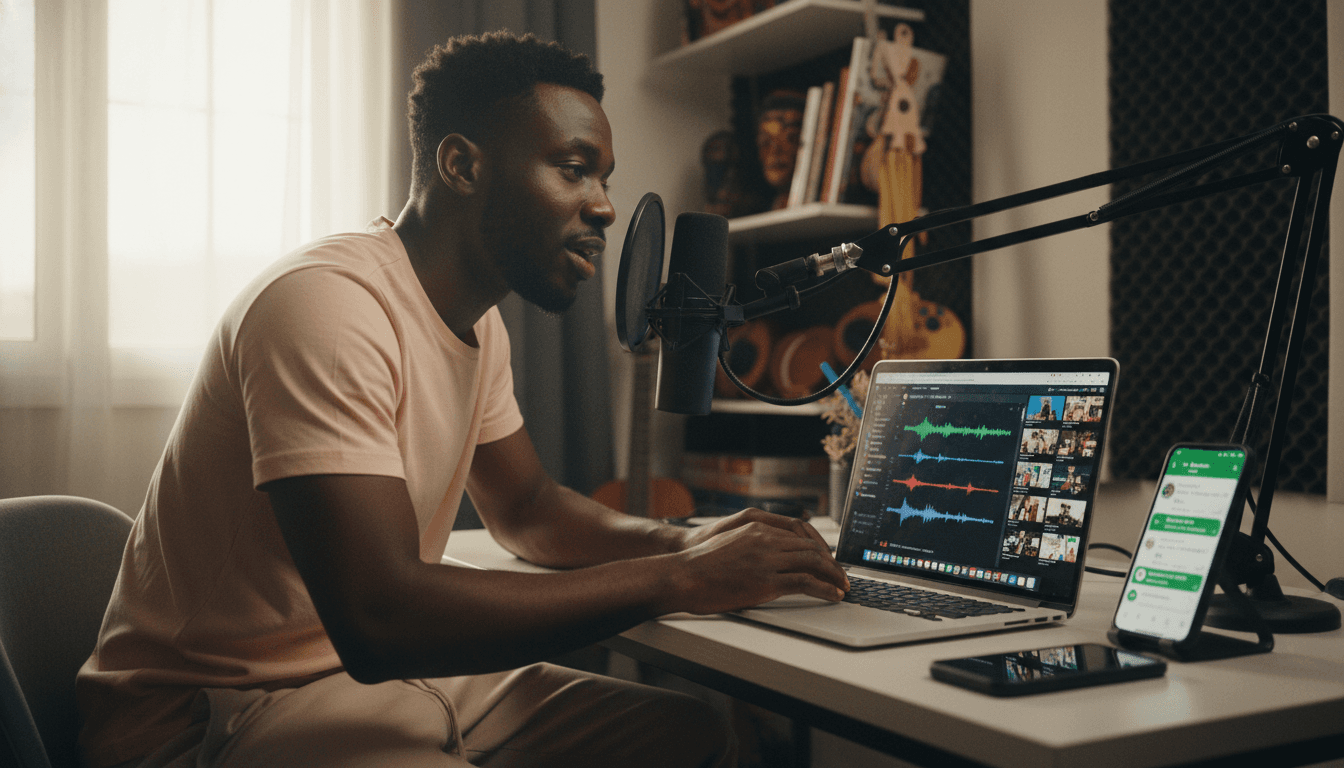
AI Localized Campaigns: Lessons for Nigeria Creators
A political campaign in India’s Bihar state reportedly ran on about $1,500/month in AI tool subscriptions—and used that to pump out dialect-specific speeches, videos, posters, and WhatsApp chatbots at a scale that would normally require a much larger team. That number should make every Nigerian creator, agency, and digital entrepreneur sit up.
Not because politics is a blueprint for entertainment (it isn’t), but because the content mechanics are the same: hyperlocal language, high-frequency distribution, and algorithm-friendly formats—delivered at a cost that keeps dropping. If you’re building an audience in Nigeria’s fragmented market (by language, city, culture, and platform), the Bihar story is a sharp preview of where the creator economy is heading.
This post is part of our series on How AI Is Powering Nigeria’s Digital Content & Creator Economy, and it’s a practical translation of what happened in India into what Nigerian creators can do—without inheriting the misinformation mess that came with it.
What Bihar proves: AI makes “hyperlocal at scale” cheap
AI-powered campaigning in Bihar wasn’t just about fancy tech. The point was volume plus precision.
Teams used a mix of tools (voice generation, chatbots, writing assistants, basic design and video generation) to create content variants tailored to:
- Local dialects and phrasing
- Different communities and voter concerns
- Distribution channels that already have trust (especially WhatsApp and Telegram groups)
That combination matters in Nigeria because our attention economy is similarly shaped by:
- Multiple major languages (Yoruba, Hausa, Igbo, Nigerian Pidgin) plus regional slang
- A heavy reliance on WhatsApp communities for “what people are saying”
- Creators who need to produce a lot—short videos, voice notes, captions, skits, livestream prompts—without burning out
Here’s the stance I’ll defend: Nigeria’s next wave of growth in the creator economy will come from creators who can localize content, not just creators who can go viral. AI makes that operationally possible.
The “dialect advantage” is real—and it’s underused in Nigeria
In Bihar, voice cloning in local dialects was described as the most demanded capability. The why is obvious: a message delivered in your dialect feels closer, even when you don’t fully trust the source.
For Nigerian creators, this is a creative superpower when used ethically.
Examples of ethical, high-performing localized content:
- A skincare creator producing the same 45-second routine in Pidgin + Yoruba + Hausa voiceover versions
- A fintech startup creating voice-note explainers in localized language for WhatsApp onboarding
- A music promoter generating region-specific hype scripts and short video captions that actually match how people speak in that area
The goal isn’t to “sound perfect.” It’s to sound familiar.
The distribution lesson: WhatsApp is the real feed
Bihar’s campaigns pushed AI content into social platforms, but the real muscle showed up in WhatsApp and Telegram group chats. That’s the same reality Nigerian marketers meet every day.
When people say “social media,” they often mean public platforms. But for Nigeria’s digital content economy, the private feed is just as important:
- WhatsApp communities
- Telegram broadcast channels
- DM groups on Instagram
- Influencer fan groups
AI helps you serve these channels better because it can generate:
- Multiple versions of the same message (short, medium, voice note script, caption)
- Auto-replies and FAQ flows for community managers
- Local-language summaries of long content
A practical workflow Nigerian creators can copy (without the politics)
If you manage a brand page, personal brand, or creator community, try this weekly system:
- Pick one “pillar idea” (a topic you can talk about for 7 days).
- Use AI to generate 10 short hooks (headline-style openers).
- Turn the best 3 hooks into:
- 1 short video script (30–60 seconds)
- 1 carousel outline (6–8 slides)
- 1 WhatsApp broadcast message (6–10 lines)
- Translate or re-voice into two language styles (for example: Standard English + Pidgin).
- Post publicly, then adapt the best performer into your community channels.
The Bihar playbook is essentially this—just at election intensity.
The uncomfortable part: AI content also scales deception
The Bihar story wasn’t only efficiency. It also surfaced a hard truth: when AI gets cheap, misinformation gets cheap too.
The reported problems included:
- Deepfake-like videos of people appearing where they weren’t
- Voice cloning that sounded “real enough” to convince older audiences
- Fact-checkers overwhelmed by volume
- Enforcement teams unable to catch everything
This is relevant to Nigeria’s creator economy because creators operate in the same attention environment. When synthetic audio and video flood the timeline, trust becomes the scarce resource.
The creator who wins long-term in Nigeria won’t be the one who generates the most content. It’ll be the one who generates the most trust.
What creators should do now to protect trust
If you’re using AI voice, AI video, or AI avatars, adopt clear trust practices before your audience forces you to.
A simple “trust stack” for Nigerian creators and agencies:
- Disclose AI use when the voice or face isn’t real (a short line in the caption is enough).
- Don’t clone a real person’s voice without explicit written consent.
- Keep receipts: store drafts, scripts, and source clips so you can prove what’s authentic.
- Add human anchors: show behind-the-scenes clips, real mic takes, real camera moments.
- Avoid synthetic “endorsements” entirely. If it sounds like a celeb, people will assume fraud.
If your business model depends on credibility (education, finance, health, faith, news), your AI policy is now part of your brand identity.
Chatbots, persuasion, and the “always-on” creator
In Bihar, AI chatbots answered voter questions in local dialects and continued interacting even during a 48-hour “silence period.” Whether you agree with that loophole or not, the pattern is clear: chatbots create always-on messaging.
For Nigeria’s creator economy, chatbots are already becoming the quiet engine behind:
- Course sales funnels
- Community onboarding
- Event ticket sales
- Customer support for small online businesses
Use chatbots for service, not manipulation
There’s a line. If your chatbot is designed to corner people into a decision they didn’t understand, it will backfire.
Better uses that feel fair:
- “Send ‘START’ to get a free 5-day editing checklist”
- “Reply with your budget and I’ll suggest a phone tripod and mic options”
- “Choose your language: English / Pidgin / Yoruba”
Your aim should be: reduce friction, increase clarity, and respect the user’s decision-making space.
Does AI help smaller creators—or widen the gap?
One losing candidate in Bihar argued that AI favors bigger, richer players who can pay for tech and training. That complaint is valid in politics—and it’s a live question in Nigeria too.
My view: AI lowers the cost of production, but raises the premium on strategy.
So yes, a solo creator can now compete on output. But the winners will be those who can:
- Pick a clear niche
- Build a repeatable content system
- Understand distribution (especially WhatsApp and community networks)
- Protect trust with consistent disclosure and ethical standards
The Nigerian creator “unfair advantage” is cultural fluency
Here’s where Nigeria has an edge: creators already understand how quickly language shifts across:
- Lagos vs Port Harcourt vs Abuja
- Pidgin variants by community
- Youth slang that changes every quarter
AI can generate drafts. But you know what will sound cringe.
If you want a practical way to combine both:
- Let AI create 70% of the structure (outline, options, first draft)
- You supply the final 30% that matters most: tone, slang, cultural references, and boundaries
People also ask: “What AI tools should Nigerian creators start with?”
Tool choice changes fast, so focus on categories rather than brand names.
A starter stack for most creators and small teams:
- Writing assistant for scripts, captions, content repurposing
- Voice tools for voiceovers in different styles (only with consent)
- Basic video editing + auto-subtitles for short-form speed
- Design templates for carousels and thumbnails
- Chatbot builder connected to WhatsApp or web DM flows
The Bihar lesson isn’t “use Tool X.” It’s “build a system that turns one idea into many localized formats.”
What this means for Nigeria’s 2026 creator economy
AI-localized content campaigns are already normal in politics and advertising. Next, they’ll become normal for creators.
Nigeria is entering a phase where:
- One creator can run a mini media house from a laptop and phone
- Content will be expected in multiple language styles
- Trust signals (proof, transparency, real presence) will matter more than aesthetics
If you’re building in Nigeria’s digital content and creator economy, don’t wait until everyone is doing this. Set up your workflow now, and set your ethical rules even earlier.
If your audience could hear your best idea in their own language tomorrow—what would you say, and what would you refuse to fake?