AI hyperlocal content is getting cheaper and faster. Here’s what Nigeria’s creator economy can learn from India—without copying the misinformation problem.
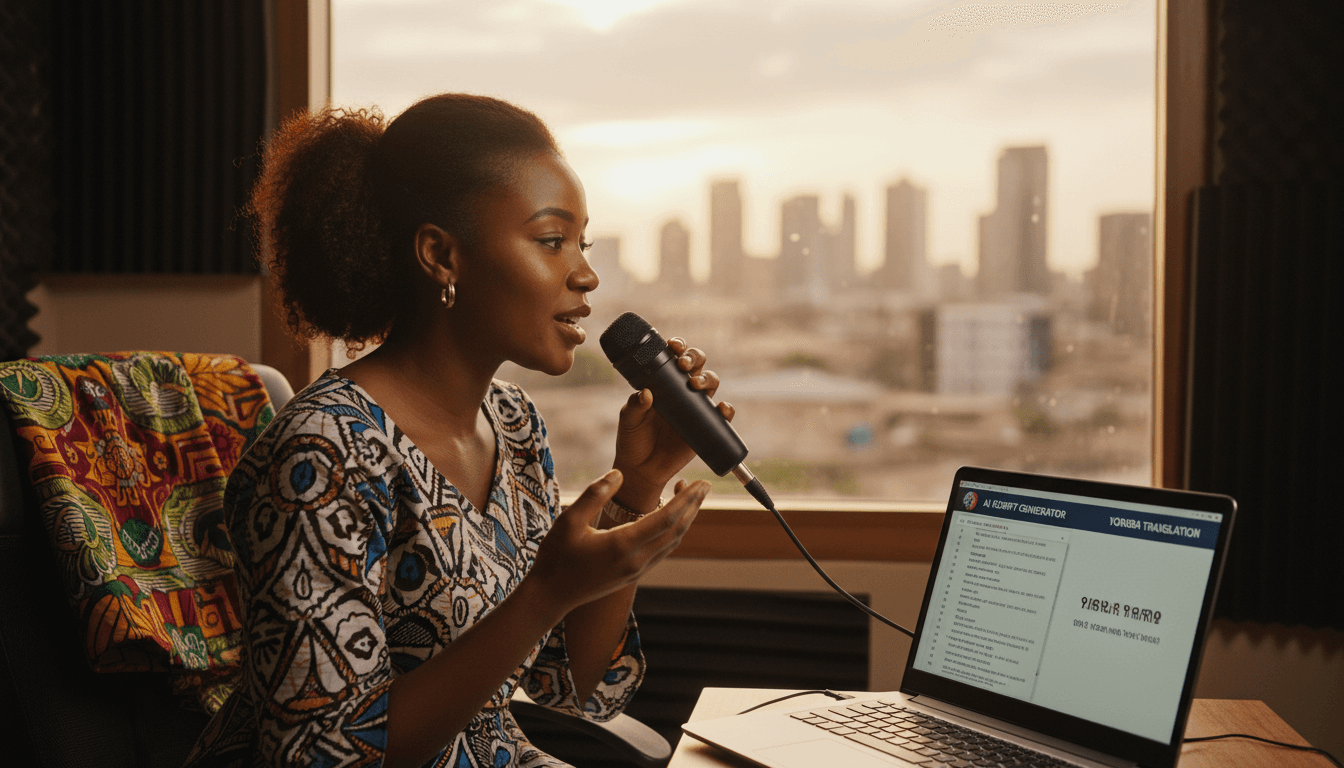
AI Hyperlocal Content: Lessons Nigeria Can Use Now
A campaign team in India recently ran statewide political messaging on roughly $1,500 a month in AI tool subscriptions—creating speeches in local dialects, generating videos for specific voter groups, and pushing them through WhatsApp and Telegram at scale. That figure should land with anyone building in Nigeria’s creator economy, because the same math applies: AI makes “small team, massive output” possible.
But there’s a catch. The exact things that make AI powerful for creators—voice cloning, fast video generation, personalized chatbots—also make misinformation cheap, persuasive, and hard to spot. India’s Bihar election became a real-world stress test: hyperlocal content everywhere, deepfakes circulating, and even fact-checkers saying the hardest part was telling what was real.
This post connects what happened in Bihar to what’s already happening (and what’s about to happen) in Nigeria’s digital content and creator economy—across skits, music promotion, brand campaigns, community media, and yes, politics. If you create content, manage creators, run a small media team, or sell to Nigerian audiences, you’ll want both the opportunity and the guardrails.
What Bihar proved: hyperlocal AI content wins attention
The clearest lesson from Bihar is simple: people respond to content that sounds like them and speaks to their daily reality. Campaign teams used AI tools to produce speeches and clips in local dialects, and to tailor messages for specific voter segments. Distribution wasn’t complicated—it was social platforms plus the same private group channels that dominate communication in many emerging markets.
That combination—hyperlocal language + high-frequency distribution + low cost—is the playbook.
Why “local” beats “polished”
Most teams overestimate production value and underestimate resonance. In practice, audiences forgive rough edges if the message feels familiar.
In Nigeria, we see this daily:
- A creator’s Pidgin punchline outperforms a glossy brand video.
- A short, voice-led explainer in Yoruba or Hausa spreads faster than a generic English reel.
- Community pages grow by narrating street-level reality—transport costs, school runs, market prices—not abstract trends.
AI accelerates this because it reduces the hardest part: time and cost of adapting content for multiple micro-audiences.
The “WhatsApp effect” is the real distribution engine
Bihar’s campaigns pushed targeted content through WhatsApp and Telegram groups. Nigeria’s equivalent is already the spine of the internet for many communities—WhatsApp groups, broadcast lists, niche Telegram channels, and Instagram DMs.
Here’s the uncomfortable truth: when content goes private, moderation gets weaker and virality gets stronger. That’s great for creators trying to build community. It’s also perfect for synthetic media that’s designed to mislead.
The Nigeria connection: creators are building the same machine—just for culture and commerce
Nigeria’s creator economy isn’t waiting for permission. Skit creators, podcasters, community journalists, TikTok educators, music marketers, and small business owners already behave like “mini media houses.” Bihar shows what happens when AI becomes the default production assistant.
Where AI fits naturally in Nigeria’s digital content workflow
AI isn’t magic. It’s a multiplier for repeatable tasks. In creator work, that usually means:
- Script variations for different audience segments (Gen Z slang vs. professional tone)
- Captioning and subtitling for accessibility and cross-platform reach
- Translation and localization (English ↔ Pidgin ↔ Yoruba/Hausa/Igbo)
- Voiceovers for explainers and product demos
- Short-form video repurposing (turn one long video into 10 clips)
- Community management (drafting replies, FAQs, comment moderation)
Bihar also highlighted another point that’s very relevant to Nigeria: AI favors teams who ship fast. Not necessarily teams with the most talent—teams with the tightest workflow.
Cost matters more than most people admit
In the Bihar story, agencies said they could replace hiring a larger staff by paying for AI subscriptions. That’s not just a political insight—it’s a business insight.
For Nigerian creators and startups, the real advantage is:
- You can operate like a studio with 2–5 people.
- You can keep output high without burning out.
- You can test formats quickly and kill what doesn’t work.
But don’t romanticize it: the market will get noisier. When everyone can publish more, attention becomes more expensive. The winners won’t be the loudest. They’ll be the most trusted.
The danger zone: voice cloning, deepfakes, and “always-on persuasion”
Bihar’s campaigns were flooded with voice cloning and deepfakes, and voters described genuine confusion about what to believe. A tech-literate voter in the report pointed out that older family members were more easily convinced.
Nigeria has the same vulnerability profile: fast-growing digital adoption, heavy reliance on private forwarding, and big gaps in media literacy across generations.
Voice cloning is the easiest trust hack
Voice is intimate. Nigerians trust voice notes more than flyers.
That’s why voice cloning is risky: it can imitate a public figure, a pastor, a celebrity, or even someone’s relative. Once that audio lands in a family WhatsApp group, the content doesn’t need to be “perfect.” It only needs to sound familiar.
Snippet-worthy truth: When a message sounds like someone you trust, your brain stops fact-checking.
Chatbots can bypass “quiet periods” and personal boundaries
One of the most striking details from Bihar: chatbots kept delivering political exchanges even during the 48-hour “silence period.” The rule didn’t cover chatbots.
Whether or not Nigeria adopts similar rules for elections and advertising, the bigger issue is persuasion that never sleeps:
- Automated DMs that respond instantly
- Personalized scripts that adapt based on your replies
- Targeted content that follows you from platform to platform
For brands and creators, the ethical line is clear: don’t build systems that exploit vulnerability. If your growth strategy depends on confusion, you’re building something brittle.
What Nigerian creators and brands should copy (and what to refuse)
If you work in Nigeria’s digital content and creator economy, you can learn from Bihar without importing its mess.
Copy this: the hyperlocal content operating system
Build a repeatable system that turns one idea into multiple localized outputs.
A practical workflow I’ve found works:
- Create one “master” script (clear, factual, and short)
- Generate 3–5 localized versions (tone, slang, examples)
- Produce two audio options (your real voice + a narrator voice you’re licensed to use)
- Cut platform-native edits (TikTok, Reels, YouTube Shorts)
- Distribute via public + private channels (page posts, broadcast lists)
- Track which version wins, then iterate weekly
This is how you scale without losing your voice.
Refuse this: deception as a growth tactic
Bihar showed how quickly AI can flood an information environment with misleading media.
For Nigerian creators and marketers, here’s a clean standard:
- Never clone a real person’s voice without explicit, written permission.
- Label synthetic media when it could mislead (voiceover, altered video, generated imagery).
- Keep source materials (original audio, raw footage) for proof if a claim is challenged.
- Don’t automate persuasion in sensitive categories (politics, health, finance) without human review.
Trust is the asset that compounds. Everything else is a spike.
“People also ask” questions Nigerians are already thinking about
Is AI-generated content bad for the Nigerian creator economy?
No. Unlabeled and deceptive AI content is bad. AI used for scripting, editing, localization, and accessibility can increase legitimate output and raise income for creators.
Will AI make content “too easy” and kill originality?
It will kill lazy formats. Originality shifts from “who can edit” to who has point of view, taste, community insight, and consistency.
How can audiences protect themselves from AI misinformation?
Three habits work in practice:
- Treat viral voice notes as unverified until confirmed.
- Look for multiple independent confirmations before sharing.
- When stakes are high (money, health, politics), pause and verify—even if the content feels urgent.
The lead opportunity: teams that can scale responsibly will dominate 2026
Bihar is a warning and a blueprint. The warning is about synthetic misinformation. The blueprint is about what happens when hyperlocal content becomes cheap enough to produce daily.
Nigeria’s creator economy is already built for this moment—high mobile usage, cultural dynamism, and a distribution culture that rewards consistency. The creators and brands who win next won’t just post more. They’ll build systems that produce local, relevant, repeatable content while protecting trust.
If you’re planning your 2026 content strategy now, here’s the question worth sitting with: when AI makes production easy for everyone, what will make your audience choose you—and keep choosing you?