Cavista’s Feb 2026 hackathon shows how AI talent is fueling Nigeria’s creator economy—through tools that help creators produce, grow, and earn.
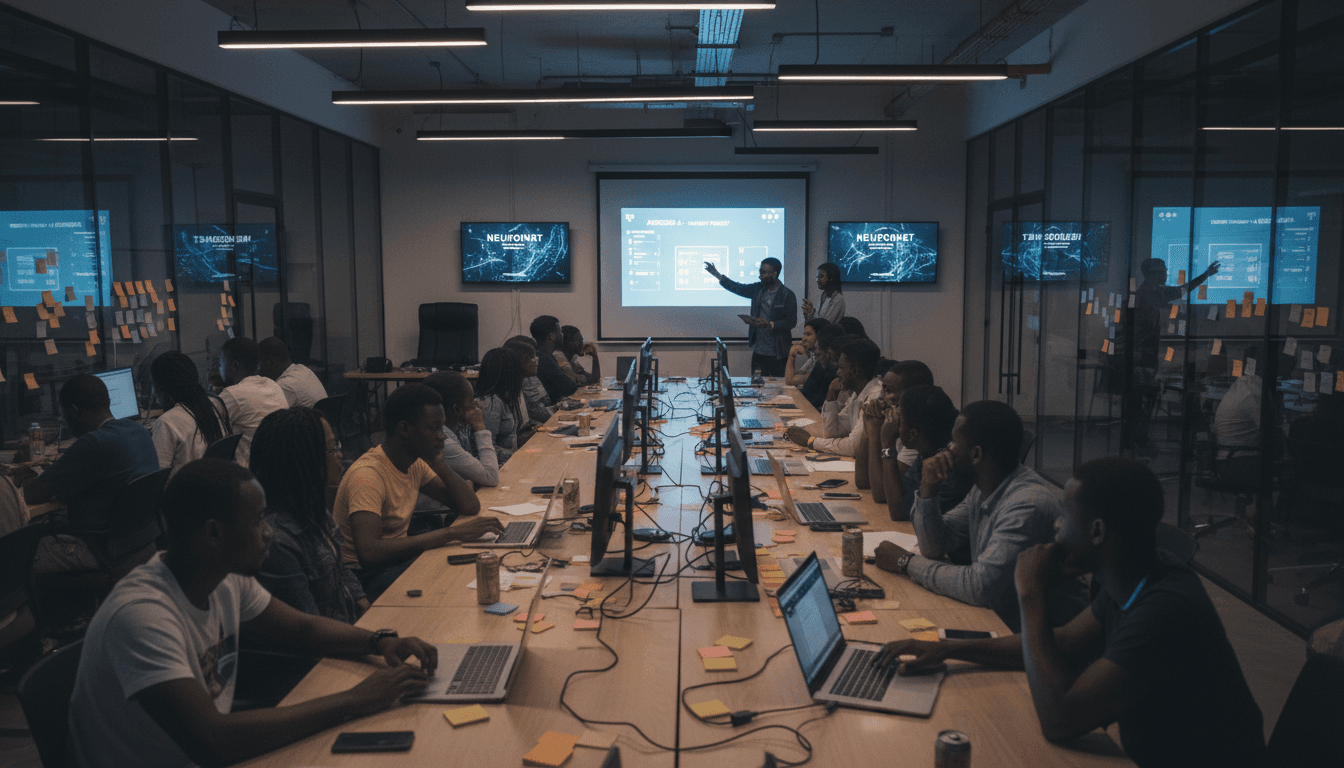
Cavista Hackathon: Where Nigeria’s AI Creators Get Built
Nigeria’s creator economy doesn’t just come from ring lights, dance trends, or a lucky TikTok push. A lot of it starts in quieter places: a team huddled around a laptop at 2:00 a.m., arguing about product flow, testing a model, and trying to make something work before the demo clock hits zero.
That’s why the 4th Cavista Technologies Hackathon, scheduled for February 21–22 in Ikeja, Lagos, matters beyond the usual “students will build cool stuff” headline. Hackathons like this are becoming a serious part of Nigeria’s digital talent pipeline—and that pipeline feeds the tools, platforms, and workflows creators depend on every day.
This post sits inside our series, “How AI Is Powering Nigeria’s Digital Content & Creator Economy.” The thread is simple: when you build more builders, creators get better infrastructure. And when AI skills spread beyond a small circle, the creator economy stops being about hype and starts being about systems that scale.
Why hackathons are quietly shaping Nigeria’s creator economy
Hackathons are one of the fastest ways to compress learning, teamwork, and shipping into a single weekend. In Nigeria’s creator economy, that compression is especially valuable because the market moves quickly: formats change, platforms tweak algorithms, audiences switch tastes, and creators need new tools yesterday.
The Cavista Technologies Hackathon is designed for undergraduate students across Lagos and surrounding areas, screened through an application process and then placed into teams for a 24-hour build spread over two days. The winners and runners-up share cash prizes worth millions of naira, but the bigger prize is what happens after: people leave with portfolio projects, product sense, and new networks.
Here’s the creator-economy connection many people miss:
- Creators scale with tools. Scheduling, editing, captioning, content research, community management, analytics—those are tool problems.
- Tool problems are software problems. And software problems are exactly what hackathons train people to tackle.
- AI is now the default tool layer. From summarization to transcription to generative visuals, creators increasingly rely on AI-assisted workflows.
A strong hackathon culture doesn’t just produce future startup founders. It produces the product managers, designers, ML engineers, and full-stack developers who will build Nigeria’s next wave of creator infrastructure.
Inside the Cavista Technologies Hackathon (and why the format works)
The Cavista event is scheduled at Welcome Centre Hotel, Ikeja, and it’s positioned as a platform where students “collaborate, innovate, and build impactful solutions to real-world challenges.” That “real-world” part is where hackathons either succeed or fail.
A good hackathon format forces three things:
1) Shipping over perfection
In a 24-hour sprint, nobody has time for overthinking. You build the smallest version that proves the idea, then you demo it.
That’s the same muscle creators build when they post consistently. Momentum beats perfection.
2) Teamwork under pressure
Most creator-tech products fail because teams can’t align: the designer wants polish, the engineer wants stability, the “business” person wants features. Hackathons make those trade-offs unavoidable.
3) A public proof of skill
In Nigeria’s job market, “I’m good” isn’t enough. A working demo is harder to ignore. For students trying to enter tech—or shift into AI roles—hackathons create credible artifacts.
Cavista’s General Manager, Oyebola Morakinyo, frames the goal clearly: to “discover, empower and celebrate Nigeria’s tech talents,” while fostering collaboration, entrepreneurship, and digital transformation. I like that stance because it focuses on talent production, not just talent celebration.
The AI angle: what teams should be building for creators in 2026
A hackathon theme doesn’t need to be “AI” for AI to show up. In 2025–2026, AI is simply the most practical way to add value fast—especially for creator workflows where time and consistency decide earnings.
If I were advising a team going into Cavista’s hackathon, I’d push them toward creator economy painkillers, not “nice-to-have” demos. Some high-impact directions:
AI tools creators in Nigeria actually need
1) Multilingual content operations Nigeria’s audience isn’t monolithic. Tools that support English + Pidgin + major local languages (even at a basic level) can help creators widen reach. A practical MVP could be:
- auto-subtitles that handle Nigerian accents better
- caption rewrites for different audience segments
- translation + tone control (serious, funny, street, formal)
2) Short-form editing assistants Creators lose hours cutting clips. An MVP can:
- detect highlights in long videos (podcasts, live sessions, interviews)
- suggest hook options for the first 2 seconds
- generate multiple cut-down versions (15s, 30s, 60s)
3) Brand deal readiness and media kits A lot of creators don’t monetize because they can’t package their value. AI can help generate:
- a one-page media kit from platform stats
- audience summaries (demographics, engagement patterns)
- rate card suggestions based on benchmarks the creator inputs
4) Community moderation that respects culture Moderation in Nigeria is tricky: slang evolves, sarcasm is common, and context matters. A smart MVP could combine:
- rule-based filters for obvious abuse
- AI classification for harassment, scams, and impersonation
- “review queue” UX that doesn’t overwhelm creators
5) Creator business accounting and rights tracking For skit makers, musicians, filmmakers, and editors, money leaks through poor tracking. AI can help categorize income/expenses, detect anomalies, and remind creators about deliverables for brand campaigns.
The point isn’t to build “the next big platform” in 24 hours. The point is to ship one feature that makes a creator’s weekly workflow measurably easier.
Why mentorship and institutional support change outcomes
Cavista’s announcement highlights support from the Ministry of Youth Development and the presence of tech leaders like Iyinoluwa Aboyeji. That combination—government visibility plus industry operators—can change how students think about their work.
Mentorship matters at hackathons for one main reason: beginners default to building features; experienced builders push teams toward a user, a problem, and a constraint.
Here’s what a strong mentor typically forces teams to answer by hour 6:
- Who is the user (be specific—“beauty creators on TikTok in Lagos,” not “content creators”)?
- What’s the exact workflow pain (time, cost, quality, access)?
- What’s the one metric you’ll improve (minutes saved per edit, higher retention, faster scripting)?
That’s also why hackathons are a good fit for our broader series theme. AI doesn’t power the creator economy by magic. It powers it when builders learn to translate models into real workflows.
“Creators don’t need more apps. They need fewer steps between idea and output.”
What participants can do now to stand out (even before the event)
Because applications are screened and teams are formed from shortlisted candidates, preparation isn’t optional. If you want to be selected—and be useful when the sprint begins—show up with proof.
A simple pre-hackathon checklist
-
Pick a creator niche you understand Not “creators.” Choose one: skit makers, X creators, beauty influencers, music promo pages, podcast editors, campus content teams.
-
Bring a mini-portfolio (even if it’s scrappy)
- a small web app
- a Figma prototype
- a chatbot demo
- a data project with clear outputs
-
Learn one AI workflow you can explain You don’t need to train models from scratch. You need to show you can apply AI responsibly.
- prompt + evaluation basics
- handling sensitive data (don’t paste private user info into tools)
- knowing where AI fails (hallucinations, bias, language gaps)
-
Practice a 60-second demo pitch Most hackathon judging comes down to clarity:
- Problem
- User
- Solution
- What you built
- Next step
If you’re a creator, here’s how to benefit without attending
Hackathons aren’t only for engineers. Creators can participate indirectly by becoming the “user” teams build for.
- Write down your most annoying workflow step (editing, scheduling, captions, client briefs, community moderation).
- Describe it in 5–10 bullet points.
- Share it with a student team in your network.
You’d be surprised how many strong products start with a creator saying, “I waste 3 hours on this every week.”
What this signals for Nigeria’s digital content economy in 2026
Cavista notes that the hackathon runs alongside editions in the USA, India, and Botswana, which matters for two reasons.
First, it normalizes the idea that Nigerian students are building in the same arenas as global peers—same sprint format, same expectations.
Second, it pushes local teams toward global-quality thinking: documentation, user testing, responsible AI use, and clearer product narratives.
For Nigeria’s creator economy, the 2026 story is less about “who went viral” and more about who built the rails:
- Rails for faster production (editing, scripting, captions)
- Rails for distribution and analytics
- Rails for monetization (brand deals, invoicing, rights management)
- Rails for trust and safety (moderation, impersonation detection)
Hackathons produce the people who build those rails. Consistently.
If you’re a student builder, treat Cavista’s hackathon like a real product deadline, not a school competition. If you’re a founder hiring for AI roles, treat events like this as a scouting ground. And if you’re a creator, start paying attention to who’s building tools around your workflow—because the next wave of creator winners won’t just be talented. They’ll be too efficient to ignore.
Where do you think Nigeria’s creator economy needs AI the most in 2026: editing, monetization, distribution, or community management?