Africa Startup Festival 2025 shows why mentorship and measurable traction matter for Nigeria’s AI creator economy. Learn what founders should copy next.
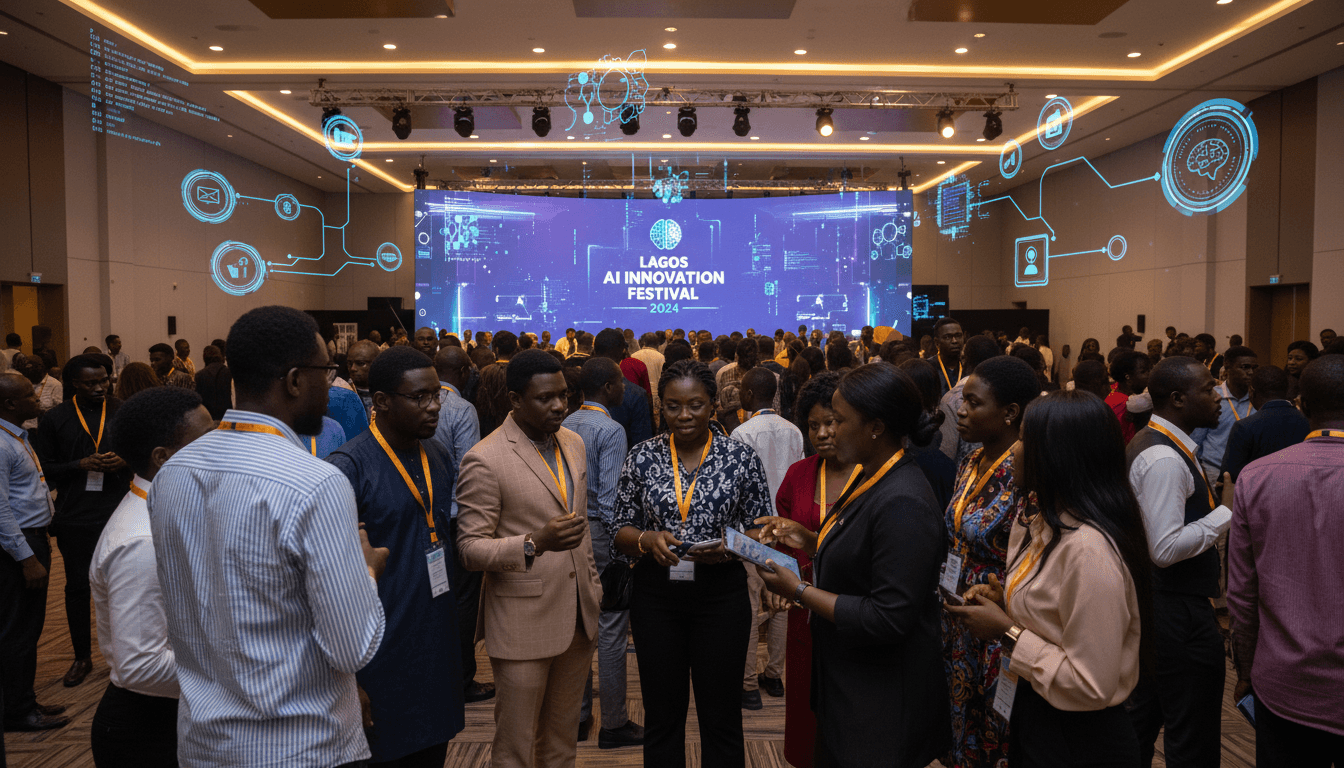
Africa Startup Festival: Mentorship Fuel for Creators
3,000 people showed up in Lagos for Africa Startup Festival 2025, and that number matters more than it sounds. Not because big crowds are impressive, but because Nigeria’s creator economy is now getting pulled into the same room as venture capital, product operators, and serious mentorship—the stuff that turns “I’m building something” into “this can scale.”
The headline from the event was simple: ten founders won $50,000 worth of resources and exclusive mentorship from Antler. The subtext was bigger: Africa’s funding climate is cautious, and founders are being pushed to prove traction, not just pitch potential. If you’re building in Nigeria’s digital content and creator economy—creator tools, media tech, community platforms, adtech, martech, payments for creators, AI editing workflows—this is the environment you’re operating in.
This post is part of our series, “How AI Is Powering Nigeria’s Digital Content & Creator Economy.” And here’s the stance I’ll take: mentorship is becoming as valuable as capital for creator-economy startups, especially when AI is moving fast and “good enough” products are easy to copy.
Why Africa Startup Festival 2025 matters for Nigeria’s creator economy
Answer first: Events like Africa Startup Festival matter because they compress months of learning, introductions, and deal feedback into one day—and that speed is exactly what the creator economy runs on.
Nigeria’s creator market isn’t only influencers and skits. It’s also:
- Businesses selling to creators (editing apps, scheduling tools, AI content assistants)
- Platforms paying creators (subscriptions, tips, commerce, brand deals)
- Infrastructure enabling creators (payments, identity, analytics, rights management)
- Studios and media startups operating like tech companies
Africa Startup Festival (ASF) 2025, held November 28 at the Balmoral Convention Centre in Victoria Island, brought together operators, investors, and founders with a shared emphasis: building enduring businesses in difficult markets.
That “difficult markets” line is not a throwaway. If you’re serving creators, you’re serving people with:
- unpredictable income
- high churn (audiences change fast)
- multi-platform dependence (one policy change can wreck a channel)
- intense competition for attention
So when ASF pushes “operational excellence” and “proof,” it’s directly relevant to creator-economy founders who often over-index on vibes and under-index on retention.
The shift: from narrative to numbers
One of the clearest threads at ASF 2025 was a growing trust gap between founders and investors. Investors aren’t saying “Africa isn’t interesting.” They’re saying “show me the data that matches the story.”
That’s healthy. It forces clarity.
For creator-economy products, your “proof” usually looks like:
- creator retention (week 4 and week 8)
- payout volume and payout frequency
- cohort revenue (do creators earn more over time?)
- content throughput (how many assets created per week?)
- CAC vs LTV by segment (new creators vs pro creators)
If you can’t measure these, you’re not “early.” You’re blind.
What the Antler Super Day win really signals
Answer first: The Antler Super Day at ASF 2025 signals that structured mentorship + resourcing is now the bridge between a solid pitch and a scalable company.
ASF’s deal-making focus culminated in the Antler Super Day, where more than 15 selected founders pitched across industries like healthcare, enterprise software, and sustainable agriculture. The judging emphasis wasn’t hype. It was fundamentals:
- revenue model clarity
- team strength
- evidence of traction
Then came the outcome: ten founders secured exclusive mentorship from Antler plus $50,000 worth of resources.
If you build in Nigeria’s creator economy, you should read this as an instruction: your product isn’t competing only on features anymore. It’s competing on execution speed, distribution, and learning loops. That’s what mentorship buys you.
Mentorship is the anti-copycat advantage
Creator-economy products get copied quickly—especially AI features.
Add auto-captions? Copied.
Add script suggestions? Copied.
Add “generate content ideas”? Copied.
What doesn’t copy easily:
- distribution deals (telcos, OEMs, creator networks)
- brand partnerships and enterprise contracts
- reliable payout operations
- compliance and risk systems
- pricing discipline (most teams price emotionally)
Strong mentorship tends to push founders into the uncomfortable work: unit economics, pricing, funnels, onboarding, and retention. It’s not glamorous, but it’s how you survive a cautious funding cycle.
A practical way to use mentorship (even if you don’t get it)
A lot of founders hear “mentorship” and think “advice.” Better framing: mentorship is forced accountability on a cadence.
Here’s a simple system you can copy for your creator startup over 6 weeks:
- Pick one North Star metric (e.g., weekly active creators publishing 3+ assets).
- Instrument your product (events for create → edit → export → publish → earn).
- Run weekly cohort reviews (new creators, returning creators, paid creators).
- Ship one onboarding improvement per week (reduce time-to-first-export).
- Talk to 5 creators weekly (not surveys—calls or voice notes).
- Write a one-page weekly memo: what changed, what you learned, what you’ll test.
This is the “no-fluff” mindset ASF was rewarding.
The founder lessons ASF surfaced (and how creators can apply them)
Answer first: ASF’s strongest lessons were about cost, automation, humility, and trust—and those are exactly the pressure points in AI-powered content businesses.
ASF’s sessions didn’t pretend scaling is cheap. One speaker pointed out that building systems and automation requires expensive engineering resources. That’s a reality check for creator-tech teams that assume AI means “instant product.” AI reduces some costs, but it introduces others: inference, data, evaluation, and safety.
Another theme was automation as profit: making businesses more efficient, reinvesting profits into value creation. For creator tools, automation must be tied to a measurable outcome, not a demo.
Here’s what that means in practice.
Automation that actually matters in creator products
Creators don’t pay for AI because it’s AI. They pay because it produces outcomes:
- faster turnaround
- more consistent quality
- better engagement
- fewer edits
- more revenue per hour
If you’re building AI for creators in Nigeria, focus your roadmap on workflow bottlenecks:
- turning long videos into short clips
- repurposing across formats (TikTok/Reels/Shorts)
- brand brief → script → shot list
- captioning in Nigerian languages and Pidgin
- content performance insights (what to repeat, what to drop)
Then measure whether it reduces time-to-publish or increases output.
Humility is a growth strategy
ASF highlighted founders openly discussing failed products and failed expansions. That openness is rare—and useful.
Creator products especially need humility because audiences change fast. What worked last quarter might flop this quarter.
A practical “humility loop” for creator startups:
- Keep a kill list: features you’ll delete if they don’t hit usage targets
- Don’t run more than 3 experiments at once (you won’t learn what caused what)
- Treat every “viral” spike as suspicious until retention confirms it
If your growth depends on constant novelty, you don’t have a business yet.
Trust is the product (for investors and users)
The event also surfaced the trust gap between founders and investors. In the creator economy, there’s a second trust gap: creators don’t trust platforms to keep paying, keep reach stable, or keep rules consistent.
If you’re building anything involving creator earnings—marketplaces, payout tools, monetization platforms—trust is not branding. It’s operations.
Operational trust looks like:
- transparent payout schedules
- visible dispute resolution
- fraud prevention that doesn’t punish legit creators
- clear pricing and fees
- fast support (even if it’s small-team support)
Most companies get this wrong: they spend on marketing before building payout reliability.
What ASF says about funding in 2026 (and how to prepare)
Answer first: Funding is available, but it’s flowing to teams with measurable traction, credible execution plans, and clean data rooms.
ASF’s tone matched what many founders have felt all year: capital is cautious. That doesn’t mean “no.” It means higher standards.
If you’re a creator-economy founder planning to raise in 2026, your prep list should be boring and thorough:
Your “creator economy traction” checklist
- Retention: weekly retention by cohort (new creators vs power users)
- Monetization: clear pricing and conversion path (free → paid)
- Unit economics: CAC, payback period, gross margin (including AI compute)
- Distribution: 2–3 scalable channels (communities, agencies, telcos, OEMs)
- Moat: proprietary workflow, dataset, partnerships, or switching costs
- Data room: metrics, contracts, cap table, financial model, product roadmap
If you can’t explain your unit economics in two minutes, you’re not raising—you’re hoping.
A note on the gender gap conversation
ASF also hosted energetic conversations about the persistent gender gap in tech—especially how women are framed as “female entrepreneurs” instead of simply entrepreneurs. In creator tech, women creators drive huge categories (beauty, lifestyle, education, small business content). If your product strategy ignores that, you’re leaving growth on the table.
A concrete move: build onboarding, safety, monetization, and community features with women creators as a primary segment—not an afterthought.
How Nigeria’s AI creator economy can use events like ASF better
Answer first: The best way to use events like ASF is to treat them as a sales and validation sprint, not a motivational conference.
If you’re attending the next major startup event in Lagos (or anywhere in Africa), don’t go with “networking” as your plan. Go with targets.
Here’s what works, especially for AI creator tools:
- Pre-book 10 meetings with agencies, creator managers, studios, and payments partners
- Bring three case studies with numbers (time saved, output increased, revenue lift)
- Have a live demo that works offline or on weak internet
- Prepare a one-page “why now” narrative: what changed in behavior or costs?
- Know your ask: pilots, distribution partnership, mentorship, or capital
ASF showcased startups on an exhibition floor and emphasized pitching with traction. That’s not a festival gimmick. It’s a preview of how the market now evaluates you.
Snippet-worthy truth: In the AI creator economy, features are cheap. Trust, distribution, and retention are expensive.
Where this leaves Nigerian creators and founder-builders
Africa Startup Festival 2025 ended with ten founders walking away with Antler mentorship and $50,000 in resources. The bigger win is the signal it sends to the ecosystem: operators are rewarding execution, not noise.
For Nigeria’s digital content and creator economy, that’s good news. It means the next wave won’t just be creators getting bigger; it’ll be tools, platforms, and infrastructure getting more reliable—and more investable.
If you’re building or creator-tech in 2026, here’s the question worth sitting with: what would your metrics look like if investors and creators both stopped trusting your story and only trusted your data?