Cavista’s 4th Hackathon shows how student builders are shaping AI-powered tools for Nigeria’s creator economy—editing, monetization, and analytics.
Cavista Hackathon: Building AI Skills for Creators
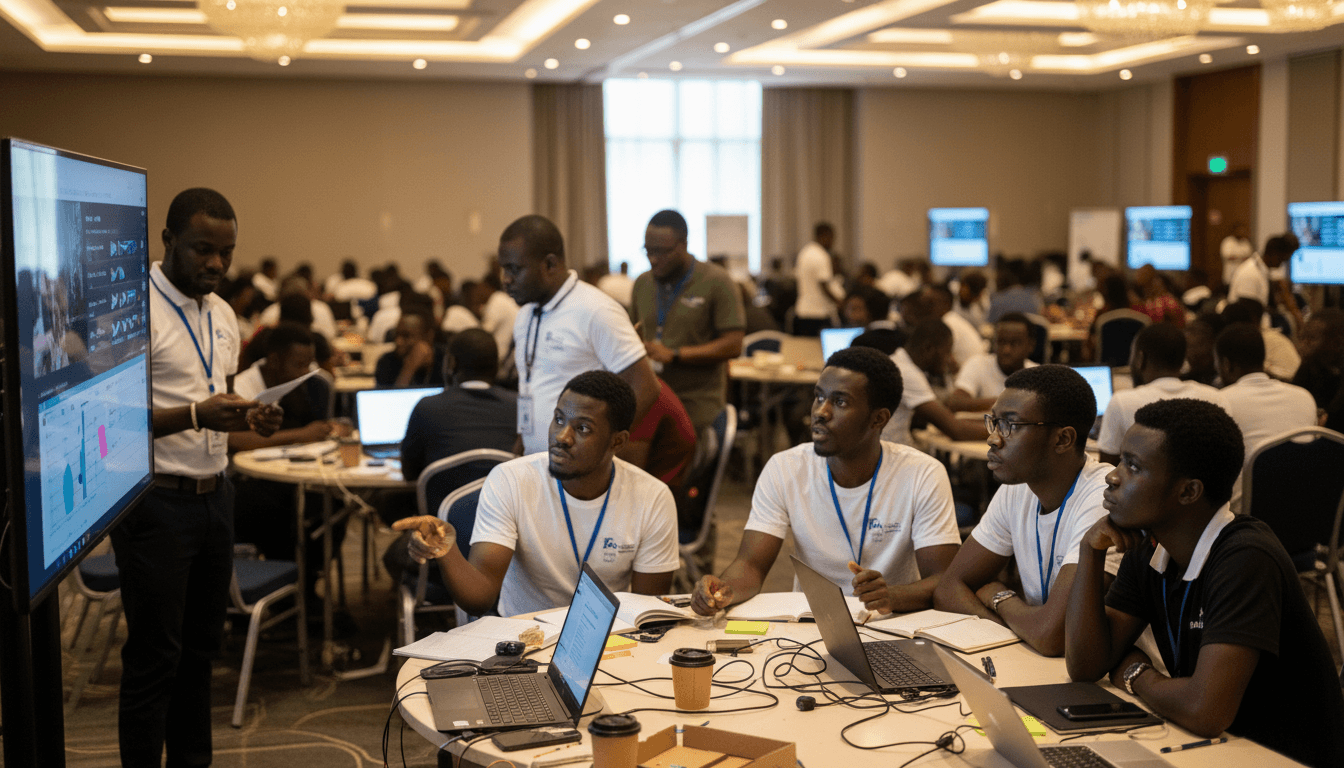
Nigeria’s creator economy isn’t being built only on Instagram reels, Afrobeats rollouts, and Nollywood premieres. A big chunk of it is being built in places most audiences never see: hotel conference rooms, campus labs, and 24-hour hackathons where teams ship working products under pressure.
That’s why the 4th Cavista Technologies Hackathon (set for February 21–22 in Ikeja, Lagos) matters beyond the usual “students competing for prizes” storyline. Hackathons like this are quietly training the people who will design the tooling behind Nigeria’s next wave of AI-powered content creation, monetization, and distribution.
If you’re building in media, running a content brand, managing creators, or simply trying to understand where Nigeria’s digital talent pipeline is headed, this is the real signal: creator growth is increasingly a software problem, and software talent is being formed in events exactly like this.
Why hackathons are feeding Nigeria’s AI creator economy
Hackathons matter because they compress learning, teamwork, and product thinking into a single weekend—then reward execution, not vibes.
In the creator economy, the winners are rarely the people with the fanciest cameras. They’re the people who can consistently produce, distribute, measure, and monetize content. AI makes that easier—if you have the right systems:
- Tools for scripting, editing, captioning, and repurposing
- Smart workflows for content calendars and approvals
- Audience insights that go beyond vanity metrics
- Automated distribution, community management, and customer support
Here’s the thing about AI in the creator economy: most of the value isn’t in the model. It’s in the product decisions around it—UX, onboarding, pricing, analytics, and integrations. Hackathons force teams to practice exactly those decisions.
Cavista’s event is also intentionally student-focused (undergraduates across Lagos and surrounding areas), which is where Nigeria’s next generation of builders is already developing instincts about what creators need—because many of them are creators themselves.
Inside the Cavista Technologies Hackathon (and what it signals)
Cavista Technologies is hosting its 4th hackathon edition in Lagos, with a format that’s familiar but effective: applications, screening, team formation, and a 24-hour build sprint spread over two days, capped with cash prizes.
But the more important part is the signal around ecosystem support.
Cavista’s General Manager, Oyebola Morakinyo, frames the hackathon as a pipeline to “discover, empower and celebrate Nigeria’s tech talents” while fostering collaboration, entrepreneurship, and digital transformation.
This year’s edition is also expected to draw high-profile support—from public sector (Nigeria’s Ministry of Youth Development) and private sector leaders and mentors, including Iyinoluwa Aboyeji. Whether or not a student wins, access to credible mentorship tends to change trajectories fast: it improves product taste, introduces real expectations, and connects talent to opportunities.
A global footprint, local relevance
Cavista also runs the hackathon simultaneously in global offices (USA, India, Botswana). That matters for one reason: Nigerian teams can build with global product standards in mind while solving local problems.
For creators, that’s huge. Nigeria’s content increasingly travels—across Africa, to the diaspora, onto global DSPs and streaming platforms. The tooling around creators needs the same cross-border thinking: multi-currency payments, multi-language workflows, rights management, and data portability.
What creators and content businesses should want students to build
Most hackathons default to “cool apps.” The creator economy needs boring infrastructure—the stuff that makes content businesses predictable and scalable.
If I were advising a team for a hackathon like Cavista’s (especially under the theme of real-world solutions), I’d push them toward these AI-heavy problem areas.
1) AI tools for consistent publishing (not just “content generation”)
Creators don’t fail because they can’t generate ideas. They fail because they can’t ship consistently.
A strong hackathon project could be:
- A content ops assistant that turns one long video into: shorts, captions, thumbnails, and posting schedules
- A “brand voice” system that enforces tone guidelines across writers and editors
- A pipeline that outputs platform-specific versions (TikTok vs YouTube vs Instagram) automatically
What would make it valuable in Nigeria: offline-friendly drafts, low-data modes, and export formats that work with common mobile editing tools.
2) Creator monetization and commerce workflows
Nigeria’s creator economy is commercial, but monetization is fragmented: ad deals, affiliate links, digital products, community subscriptions, events, brand retainers.
Hackathon-worthy ideas:
- A deal tracker that manages briefs, rates, deliverables, and approvals
- An AI assistant that drafts proposals, invoices, and contract clauses (with human review)
- A creator CRM that tags leads, predicts close probability, and schedules follow-ups
For leads and revenue, this is where the real pain is. Tools that reduce admin time by even 30–60 minutes per day are sticky.
3) Rights, reuse, and attribution for digital media
As AI remixing grows, disputes grow with it. Creators need lightweight rights tools.
Build directions:
- Audio/video fingerprinting for tracking reuse across channels
- Smart “content licenses” that define reuse terms clearly for clients
- Attribution tracking for collaborative teams (writer, editor, producer, designer)
Even a basic MVP that helps creators prove ownership is meaningful.
4) Audience intelligence creators can act on
Creators don’t need dashboards with 40 charts. They need 3–5 decisions surfaced clearly.
A strong AI analytics project would:
- Explain why a post performed (hook retention, watch-time drop points, topic fatigue)
- Recommend what to do next (post time, format, series continuation)
- Track series performance over time (Episode 1 vs Episode 5)
And it should output recommendations in plain English, not analyst language.
Why this matters for Nigeria in 2026 (and why February timing is smart)
The Cavista hackathon lands in late February—right when many students are back in rhythm and many startups/brands are setting Q1–Q2 priorities.
By 2026, Nigeria’s content market will be even more system-driven:
- More creators will operate like small studios
- More brands will demand measurable outcomes (leads, sales, retention)
- More content will be produced with AI assistance—especially scripting, editing, and repurposing
The teams that build practical creator tooling now will have an edge because they’ll understand Nigerian constraints firsthand: payment friction, device variety, inconsistent connectivity, and the need for mobile-first workflows.
Most companies get this wrong: they copy creator tools built for the US or UK and then wonder why retention is poor. Local context isn’t a “nice to have”; it’s the product.
If you’re a student: how to win a hackathon with an AI creator-economy idea
Winning isn’t about writing the most code. It’s about building the clearest value.
Start with one measurable outcome
Pick one:
- Reduce editing time by 50%
- Increase posting consistency (e.g., from 2x/week to 5x/week)
- Improve lead response time (e.g., from 24 hours to 10 minutes)
When judges ask “what problem are you solving?”, you’ll have a clean answer.
Make the demo creator-realistic
Use realistic assets: a sample vlog, a skit, a brand brief, a product catalog, a client message thread. A demo that looks like Nigeria wins trust.
Build for the workflow, not the model
Your AI can be simple. Your workflow shouldn’t be.
A practical MVP usually includes:
- Input step (upload / paste / record)
- Processing step (summarize / cut / tag / schedule)
- Output step (export / share / assign / publish)
- Feedback loop (what performed, what to repeat)
Don’t hide the human-in-the-loop
Creators want control. Add toggles, approvals, and “edit before export.” It reduces fear and boosts adoption.
If you’re a creator or content business: how to benefit from hackathons like this
Hackathons aren’t only for students. They’re also a scouting ground.
If you run a creator team, an agency, a media brand, or a content-led startup, here are practical ways to use events like Cavista’s to drive leads and growth.
Bring one painful problem and offer it as a challenge
Write it as a one-pager:
- Context: what you do
- Problem: what’s broken
- Constraints: devices, budget, time, platforms
- Success metric: what “better” looks like
The best teams love clear constraints.
Hire for product instinct, not just GitHub
Watch who:
- clarifies requirements quickly
- tests with users (even 2–3 people)
- communicates trade-offs
- ships a coherent MVP
Those are the people who’ll build tools your business can actually deploy.
Partner early if a team nails your workflow
If a prototype fits your business, offer:
- pilot access to your assets
- a small paid build contract
- distribution (introductions to other creators)
That’s how hackathon demos turn into products.
The bigger picture: hackathons as creator-economy infrastructure
Cavista’s 4th hackathon is a talent event on the surface. Underneath, it’s part of a broader movement: Nigeria is building the technical layer that will power the next era of digital content.
Within our series on How AI Is Powering Nigeria’s Digital Content & Creator Economy, this is the connective tissue people overlook. AI tools don’t appear by magic. They come from trained builders who understand local needs, can collaborate under pressure, and are getting consistent opportunities to practice.
If you’re a student, take hackathons seriously—not as a weekend hobby, but as a career accelerant.
If you’re a business, stop waiting for perfect tools from abroad. Nigeria’s talent is already capable of building what the market needs, and events like Cavista’s are where you meet them.
What creator workflow in Nigeria do you think deserves an AI tool first: editing, monetization, analytics, or rights management?