ASF 2025 shows why mentorship, proof, and practical AI tools are shaping Nigeria’s creator economy. See the lessons founders can apply now.
Africa Startup Festival: Fuel for Nigeria’s AI Creators
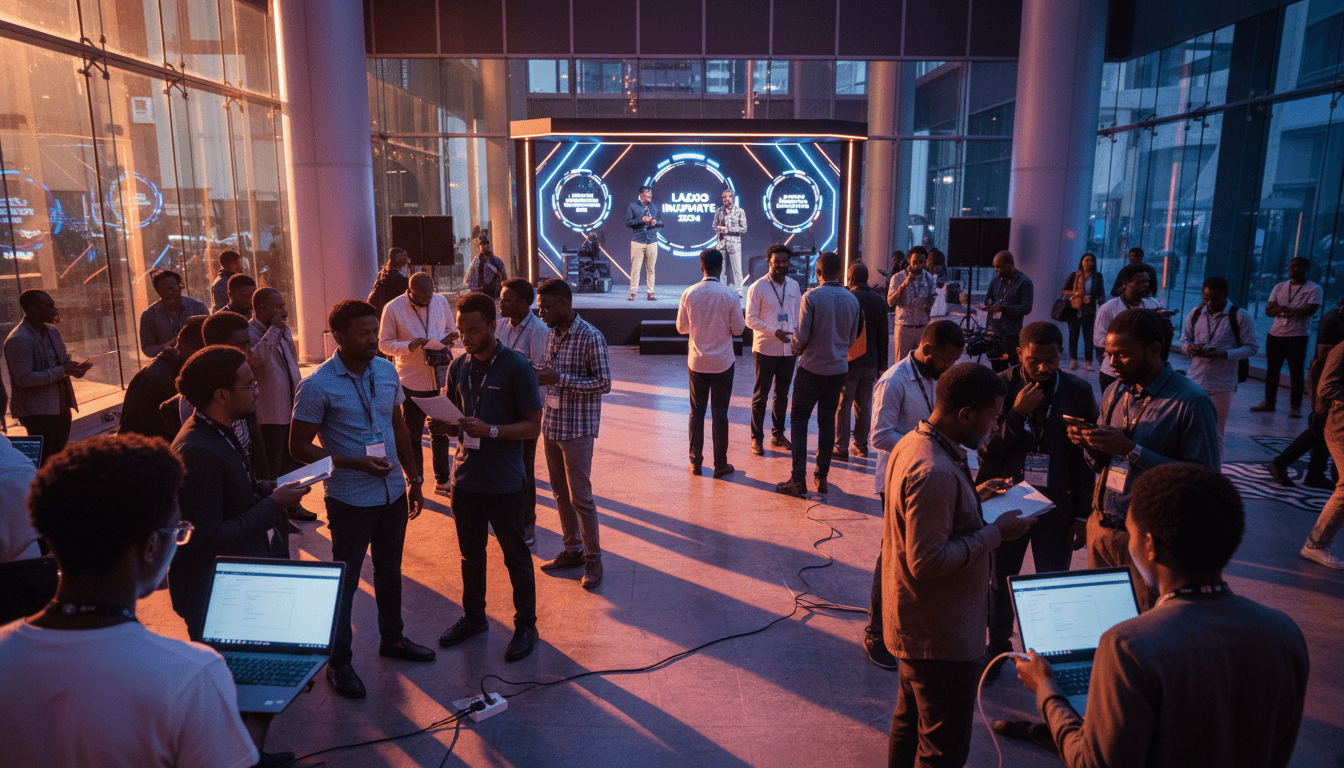
3,000+ people in one room is noisy. But at Africa Startup Festival (ASF) Lagos 2025, the signal cut through: founders and investors are done with vibes. They want proof—traction, margins, repeatable distribution, and products that can survive Nigeria’s realities.
That’s exactly why ASF matters for this series on how AI is powering Nigeria’s digital content and creator economy. The creator market isn’t just influencers and skits anymore; it’s a full supply chain—content tools, monetisation infrastructure, audience analytics, community commerce, and the startups building them. When ASF puts resources and mentorship behind founders, it indirectly strengthens the entire creator ecosystem.
ASF’s headline moment was the Antler Super Day: 10 founders won $50,000 worth of resources and exclusive mentorship from Antler’s team. But the bigger story is what that kind of support signals: Nigeria’s next creator economy winners will be the teams that can operationalise AI, not just talk about it.
ASF 2025 showed what investors want now: data over narrative
The clearest takeaway from ASF 2025 is that fundraising conversations have shifted from “big story” to “verified performance.” Several sessions pointed to a widening trust gap between founders and investors, driven by the distance between a pitch narrative and real operational data.
This hits close to home for Nigeria’s creator economy. Creators are used to building brands on storytelling. Startups are too. But investors now want the boring, beautiful stuff:
- CAC that doesn’t explode when you scale
- Retention that holds after a promo push
- Revenue that isn’t a one-off brand deal equivalent
- Unit economics that work even when FX shifts and costs jump
One quote from the event captured the operational reality: engineering resources are expensive, and automating systems costs real money. If your startup is “AI-first” but can’t afford reliable engineering and data work, you’re not AI-first—you’re marketing-first.
What this means for AI-powered content startups
If you’re building tools for creators—editing, captioning, media planning, community management, brand-creator matchmaking—your pitch can’t stop at “we use AI.” You’ll need to show:
- A clear workflow you’re replacing (hours saved per week per creator or business)
- A measurable output improvement (more posts shipped, higher watch time, better conversions)
- A credible distribution path (creator communities, telcos, agencies, platform partnerships, or SMB channels)
The reality? Nigeria’s creator economy is a distribution game. AI helps, but distribution wins.
Why mentorship + resources matter more than cash for early founders
The $50,000 in resources and Antler mentorship awarded to 10 founders is a strong move because early-stage companies in Nigeria often don’t fail from lack of ideas—they fail from avoidable execution mistakes.
Mentorship, when done right, shortens the cycle between:
- building features and building value
- growth spikes and sustainable growth
- “users love it” and “users pay for it”
And for AI startups in the creator economy, mentorship is especially useful because teams routinely underestimate the hard parts:
The unglamorous AI work that decides outcomes
- Data quality: messy inputs (Pidgin, mixed languages, slang, low-light video) break naive models
- Cost control: inference costs can kill margins if you don’t design for efficiency
- Trust and safety: AI content tools can enable impersonation, plagiarism, and deepfake-style abuse
- Evaluation: if you can’t measure output quality, you can’t improve it
Founders who get hands-on guidance here build faster—and burn less cash doing it.
ASF’s real connection to Nigeria’s creator economy: startups building the rails
ASF 2025 wasn’t a “creator conference,” but it was absolutely creator economy relevant. The festival’s focus areas—payments, logistics, retail distribution, enterprise software—are the rails creators rely on to monetise.
Creators don’t scale on content alone. They scale when the business stack works:
- Payments that don’t fail during a launch
- Commerce that can deliver nationwide
- Customer support that doesn’t collapse after a viral moment
- Analytics that can tell what’s working (and what’s wasting time)
A founder at ASF put it plainly: automation saves time and cost, making businesses more profitable—and profits can be reinvested to create more value. In the creator economy, that “reinvestment” looks like better production, better tools, better distribution, and a team.
Where AI fits in the Nigerian creator workflow (right now)
Most Nigerian creators and content-led businesses are already using AI in practical ways, even if they don’t label it “AI strategy.” The highest-ROI uses are:
- Pre-production: topic research, outlines, hooks, thumbnail concepts
- Production: captioning, basic edits, background cleanup, voice tools
- Post-production: repurposing long-form into shorts, translation, formatting
- Growth: content calendars, audience segmentation, A/B testing ideas
- Monetisation: product descriptions, landing page drafts, customer replies
The startups that win won’t offer “AI for content.” They’ll offer AI for a specific job—like “turn this podcast into 12 clips that match my tone and audience.”
Lessons from ASF panels: operational excellence beats hype
ASF’s sessions stood out because founders spoke openly about failed products, failed expansions, and failed assumptions. That honesty is a competitive advantage in Nigeria, where public narratives often skip the messy middle.
For content creators and creator-focused startups, operational excellence shows up in a few non-negotiables:
1) Build for Nigerian constraints, not Silicon Valley demos
If your product assumes constant high-speed internet, perfect payment success rates, or unlimited ad budgets, you’ll struggle. Design for:
- intermittent connectivity
- mobile-first usage
- local language realities (Yoruba, Igbo, Hausa, Pidgin)
- support load when something goes wrong
Creators feel product friction immediately. They abandon tools fast.
2) Automate what’s repeated, not what’s “cool”
AI works best on repetitive workflows. I’ve found that teams get faster results when they automate:
- content formatting
- versioning (different platform specs)
- caption generation + correction
- customer response templates
- campaign reporting
Save the flashy stuff for later. Make shipping easier first.
3) Close the trust gap with product truth
Investors are more cautious about Africa partly because they’ve been burned by metrics that don’t hold up. You can respond by building a culture of instrumentation:
- define 3–5 core metrics
- track them weekly
- show cohorts, not vanity totals
- separate paid growth from organic growth
If you can’t measure it, you can’t defend it.
A practical playbook: how creator economy founders can use ASF-style thinking
ASF’s “no-fluff” tone is a useful template even if you never attend a conference. Here’s a simple approach you can copy.
Step 1: Write your “proof stack” before you pitch
Your proof stack is the minimum evidence that your AI or digital product is real:
- Demo: 60–90 seconds showing the workflow end-to-end
- Traction: active users, retained users, paying users (separate them)
- Economics: cost to serve + your pricing logic
- Distribution: the channel you can repeat (community, agency, partnerships)
If one of these is missing, fix it before you perfect the deck.
Step 2: Package AI as outcomes, not features
Creators buy outcomes: time saved, content shipped, sales closed. So your messaging should sound like:
- “Turn one recording into a week of platform-ready content.”
- “Reply to 100 customer DMs with your brand voice in 20 minutes.”
- “Generate captions that match Nigerian slang and your tone.”
Specificity beats buzzwords.
Step 3: Treat mentorship like an operating system
If you get access to a program like Antler (or any serious accelerator), show up with questions that change your business:
- What’s my most fragile assumption?
- What would make my unit economics fail at 10x scale?
- Which channel is most repeatable in Nigeria right now?
- What’s the smallest experiment that proves willingness to pay?
Mentors can’t run the company for you. But they can stop you from making expensive mistakes twice.
What ASF 2025 suggests about 2026 for Nigeria’s AI creator economy
The creator economy is heading toward a more “business-like” phase in Nigeria. Expect fewer one-off wins and more systems. The teams that thrive will treat content as a product pipeline, not an inspiration lottery.
ASF 2025 also hinted at a broader shift: Africa’s strongest startups will combine AI adoption with operational discipline. Mentorship and resources matter because they push founders toward that discipline early.
If you’re a creator, a creator manager, or building tools for creators, take the ASF lesson seriously: stop selling the story alone. Build the proof. Make the workflow faster. Let the numbers do the talking.
What would Nigeria’s creator economy look like if every content business could ship twice as much work with the same team—without burning out?