MGA’s new self-assessment tool sets a higher bar for player protection. See how AI can scale responsible gaming in Malta—without losing the human touch.
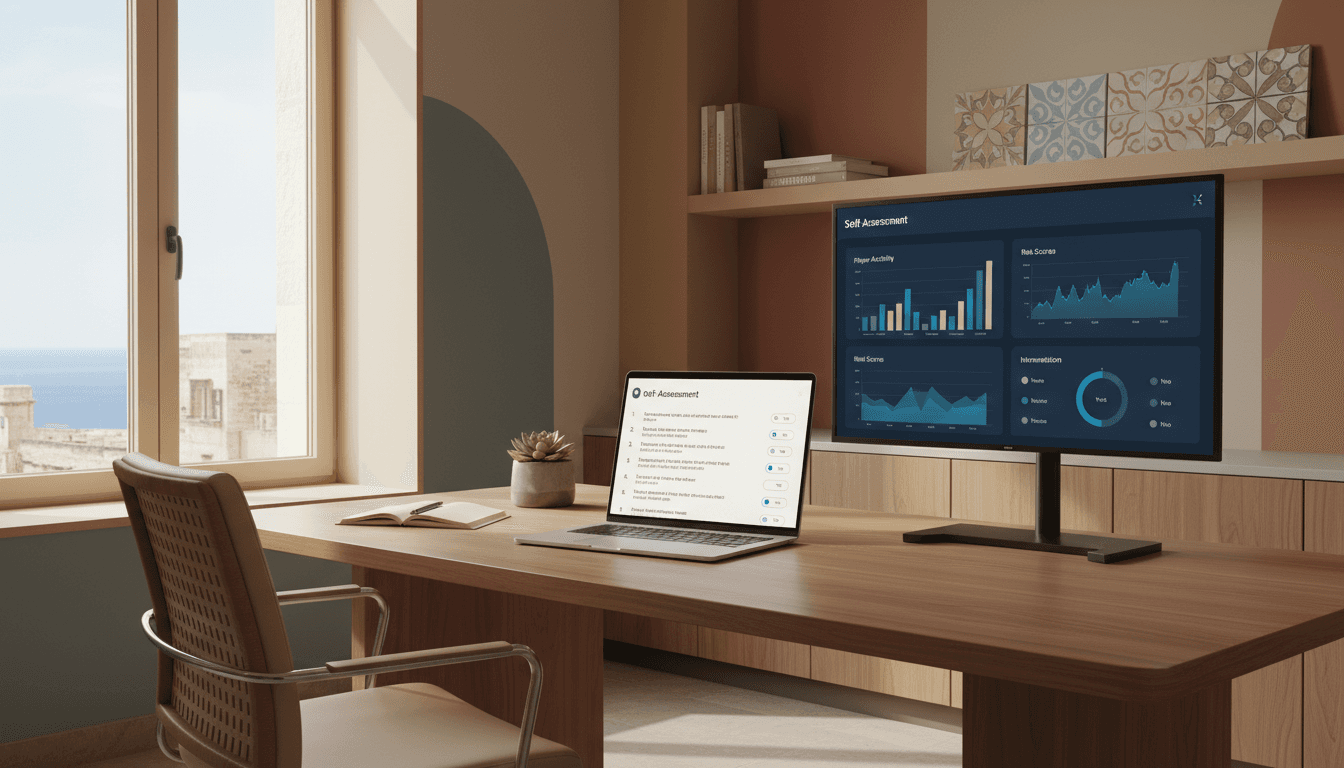
MGA Self-Assessment: AI-Ready Responsible Gaming in Malta
A nine-question questionnaire doesn’t sound like much—until you remember what it’s trying to do: help someone catch risky gambling habits early, before they spill into money stress, relationship strain, or mental health issues.
That’s why the Malta Gaming Authority’s new online Self-Assessment Tool matters. It’s anonymous, free, and available in Maltese and English. Just as importantly, it’s built on an evidence-based framework (the Problem Gambling Severity Index) and routes people to local support organisations when the answers suggest they shouldn’t handle it alone.
For anyone working in iGaming in Malta—product, compliance, CRM, data, VIP, payments—this tool is also a signal. The industry is being pushed (in a good way) toward measurable player protection. And that’s where this post connects to our series, “Kif l-Intelliġenza Artifiċjali qed tittrasforma l-iGaming u l-Logħob Online f’Malta”: AI in iGaming shouldn’t be limited to marketing automation or multilingual content. The real opportunity is using AI to scale responsible gaming in a way that’s consistent, auditable, and human.
What MGA’s self-assessment tool actually changes
It changes the moment when “I’m probably fine” becomes “I should check.” That’s the whole point.
The MGA tool is designed for self-reflection, not for policing. It asks nine straightforward questions to gauge gambling behaviour while acknowledging that harm isn’t only about frequency—it’s also about context, pressure, and consequences.
A player-protection tool that respects privacy
The strongest design choice is the simplest one: it’s anonymous and free. That lowers the psychological barrier to using it—especially in a small country where people worry about being recognised or judged.
From a responsible gaming perspective, anonymity is a feature, not a limitation. If someone is hesitating, the best tool is the one they’ll actually use.
Built on an evidence-based model (PGSI)
The tool is rooted in the Problem Gambling Severity Index, a widely used screening instrument in public health. That matters because it means the output isn’t random “wellness content.” It’s structured, comparable, and designed to catch patterns.
For iGaming operators, there’s a parallel lesson: player protection works better when it’s built on clear criteria rather than vague intuition.
A “handoff” to real support, not a dead end
When results suggest a person may need help, the tool points them toward local organisations (including Sedqa, Caritas Malta, the OASI Foundation, and the Responsible Gaming Foundation). This is what “people-first” looks like in practice: screen → guide → support.
And that handoff design is a model operators can borrow when they build safer gambling journeys inside product flows.
Why this is relevant to AI in iGaming (and not just compliance)
AI becomes valuable in responsible gaming when it does one thing well: spot risk earlier than humans can, at scale, with consistency.
Most operators already use automation for acquisition, segmentation, and retention. The uncomfortable truth is that the same sophistication often isn’t applied to harm prevention. That imbalance is increasingly hard to defend—commercially and reputationally.
The best responsible gaming stack is hybrid: self-report + behavioural signals
Self-assessments capture what data can’t:
- emotional state (stress, regret, loss of control)
- hidden consequences (borrowing, conflict at home)
- intent (trying to win back losses)
Behavioural monitoring captures what self-report can’t:
- rapid deposit frequency and escalating stakes
- chasing patterns across sessions
- erratic play times (for example, repeated late-night sessions)
- repeated limit changes or failed attempts to stop
A practical stance: self-assessment tools and AI monitoring aren’t competitors. They complement each other. One is reflective, the other is observational.
Where AI fits: turning patterns into timely interventions
AI-driven player protection systems typically work as a pipeline:
- Collect signals (session data, deposits/withdrawals, game switching, limit use, comms engagement)
- Engineer risk indicators (rate of change, volatility, chasing signatures, time-of-day drift)
- Score risk (rules + machine learning models, ideally explainable)
- Trigger actions (messaging, friction, cooling-off prompts, human outreach, limit nudges)
- Measure outcomes (did risk reduce? did the player accept tools? did they churn?)
If you’re building in Malta for global markets, AI is how you keep player protection consistent across languages, time zones, and player volumes.
A note on what not to do with AI
There’s a lazy version of “AI responsible gaming” that’s basically: score everyone, send generic warnings, tick a box.
It doesn’t work. Players ignore it, regulators don’t trust it, and internally it turns RG into noise.
AI should create specificity:
- message timing that matches the player’s behaviour
- interventions that escalate appropriately
- clear reasons a flag was raised
- audit trails that compliance teams can stand behind
How operators in Malta can connect the MGA tool to product design
The MGA tool is hosted externally, but the thinking behind it can be embedded into operator journeys.
1) Build “reflection moments” into high-risk touchpoints
Start by placing self-check prompts where they’re most likely to help:
- after a sharp increase in deposits week-on-week
- after multiple failed withdrawals (or repeated cancellation attempts)
- after long sessions beyond a set threshold
- after repeated limit increases
The key is tone. Don’t sound like you’re accusing someone. Sound like you’re giving them control.
A good safer gambling prompt feels like a seatbelt reminder, not a siren.
2) Use AI to personalise safer gambling options (not just content)
Personalisation shouldn’t stop at “recommended games.” In a regulated space, the more meaningful use is recommending protective actions.
Examples of AI-personalised RG nudges:
- a player with frequent small deposits might get a deposit limit suggestion
- a player with long late-night sessions might get reality checks + cool-off options
- a player showing chasing behaviour might get a friction step before the next deposit
This is where AI in iGaming becomes genuinely useful for player safety.
3) Make interventions measurable (or you’ll repeat the same mistakes)
If your safer gambling program can’t be measured, it can’t be improved.
Track outcomes like:
- percentage of flagged players who set limits after a nudge
- reduction in risky indicators after interventions
- opt-in rates for time-outs and self-exclusion
- response rates to human outreach
- recurrence (does risk return after 30/60/90 days?)
Even simple measurement beats “we sent a message.”
4) Keep the human escalation path strong
MGA’s initiative works because it connects people to real organisations. Operators should mirror that approach.
A sensible escalation ladder might look like:
- automated nudge (low risk)
- stronger friction + limit prompts (medium risk)
- trained RG team outreach (high risk)
- forced cool-off/self-exclusion flows (critical risk, per policy)
AI decides when to escalate. Humans handle the messy reality of why.
“People also ask” — practical questions teams ask in Malta
Is a self-assessment tool enough on its own?
No. It’s a strong entry point, but it depends on the player choosing to use it. Behavioural monitoring catches risk when players don’t self-identify.
Does AI-based monitoring automatically mean profiling players?
It doesn’t have to. The safest approach is purpose limitation: use data strictly for harm prevention, keep models explainable, and minimise what you store.
What’s the fastest responsible gaming improvement an operator can make?
Add two things: (1) clearer, easier limits and time-outs, and (2) targeted prompts triggered by behavioural thresholds. You don’t need a perfect ML model to start.
How does bilingual delivery matter here?
Malta’s iGaming sector is global. If you can’t deliver safer gambling comms in a player’s language—and in the right tone—you’ll miss the moment. Multilingual AI helps, but it must be reviewed and compliant.
Why MGA’s move is a signal for Malta’s iGaming direction
This self-assessment tool is more than a resource page. It’s regulatory leadership that says: player protection should be usable, local, and based on evidence.
For operators and suppliers, the direction is clear. Responsible gaming isn’t a separate department that sends occasional emails. It’s a product capability—one that AI can strengthen when it’s built with restraint, clarity, and real escalation paths.
If you’re working on AI in iGaming in Malta—content, CRM automation, risk scoring, or player communications—this is a good moment to audit your stack. Where are you strong? Where are you noisy? Where are you relying on players to self-diagnose without giving them support?
The more interesting question for 2026 isn’t whether AI will be used in player protection. It’s whether it will be used to reduce harm measurably, or just to look busy.