Pascal Gaming’s rebrand ahead of ICE 2026 signals AI-ready marketing. See how branding supports multilingual AI content, consistency, and operator activation.
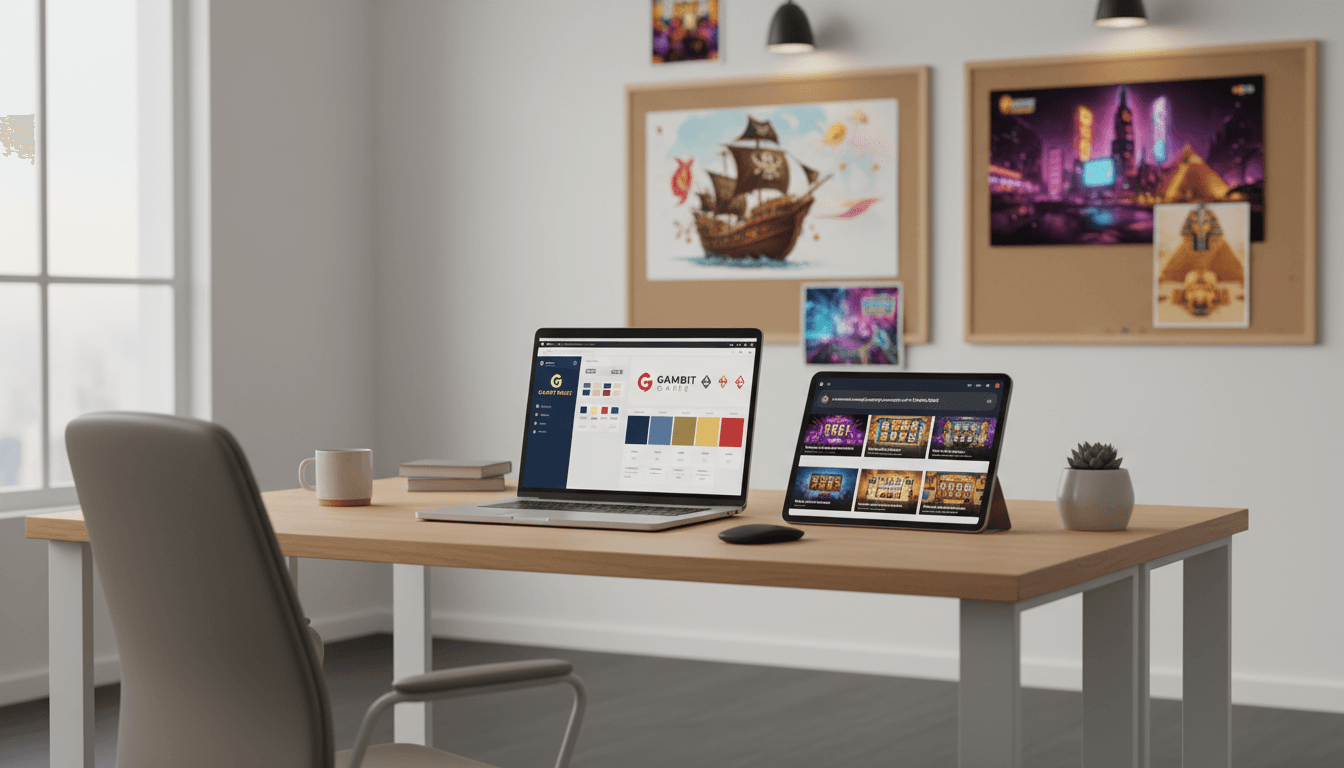
AI-Ready Branding: Pascal Gaming’s ICE 2026 Signal
A rebrand in iGaming usually gets filed under “marketing housekeeping.” New logo, new colours, maybe a sharper website. But when a Malta-linked provider like Pascal Gaming refreshes its identity right before ICE Barcelona 2026, it’s rarely just about aesthetics.
The real story is what sits behind the visuals: how iGaming brands are preparing for an AI-driven go-to-market reality—where content is produced at speed, localized across jurisdictions, tested continuously, and kept consistent across dozens of channels.
Pascal Gaming says its updated visual identity follows internal product developments rather than a change in strategy. I buy that. But here’s the thing: product complexity and AI adoption are now tightly connected. The moment your portfolio, toolset, and market footprint expand, brand consistency becomes an operational problem—not a design preference.
Why branding suddenly matters more in AI-driven iGaming
Branding matters more in 2026 because AI has turned brand execution into a high-frequency system. When operators and suppliers publish, test, and personalize messaging at scale, your brand either holds together—or it fragments.
A provider like Pascal Gaming (reporting 150+ games across 10 categories, ~1.5 million active players, and 14 certifications) isn’t communicating with one “audience.” It’s communicating with:
- Multiple operator partners
- Multiple languages and markets
- Multiple regulators and compliance expectations
- Multiple player segments, often in the same country
AI accelerates that communication. That’s the upside. The downside is brutal: AI also accelerates inconsistency if you don’t have a clear brand system.
The hidden cost of “just a new logo”
A modern rebrand isn’t a logo file. It’s a set of rules that AI tools can follow.
If your tone of voice, iconography, colour system, and layouts aren’t standardized, your AI-generated outputs (landing pages, CRM messages, social ads, in-game promos, help articles) become a patchwork.
That patchwork creates three concrete problems in regulated online gaming:
- Trust leakage: players sense inconsistency quickly.
- Compliance risk: messaging drifts; disclaimers and phrasing vary.
- Operator friction: partners can’t deploy your assets fast, so your games get less “activation.”
Pascal Gaming explicitly emphasizes that game development alone isn’t enough without activation and operator cooperation. That’s a mature stance—and it maps directly to how AI-driven marketing works in Malta’s iGaming ecosystem.
Pascal Gaming’s rebrand: what it signals operationally
Pascal Gaming’s update includes revisions to the logo, brandmark, colour palette, and visual design, with “cleaner layouts” and a “more confident, playful tone.” That wording is telling.
In iGaming, playful doesn’t mean childish. It means the brand has permission to use stronger character, richer narrative, and bolder creative—while still staying inside compliance boundaries.
Brand architecture is the real upgrade
Pascal Gaming mentions the rebrand followed the introduction of a new brand architecture. That’s the part most operators should care about.
Brand architecture is how you structure:
- Master brand vs sub-brands (studios, game families, tool suites)
- Naming conventions
- Visual hierarchy (what gets attention first)
- Tone variations by context (B2B sales decks vs player-facing promos)
Once that’s defined, AI can help produce content faster because it has a clear framework. Without it, you end up “prompting” your way out of a strategic gap, and results vary wildly between campaigns.
Snippet-worthy truth: AI doesn’t create brand consistency. It exposes whether you had any.
The Malta angle: AI-powered localization needs disciplined branding
This post sits inside our series on kif l-intelliġenza artifiċjali qed tittrasforma l-iGaming u l-logħob online f’Malta—and branding is one of the most underrated parts of that transformation.
Malta-based iGaming teams ship multilingual content every day. AI makes that faster, but it also changes what “localization” means:
- It’s not just translation. It’s market fit: idioms, cultural cues, risk wording, and promotional norms.
- It’s not once per campaign. It’s continuous: A/B tests, seasonal variants, player-level personalization.
A refreshed visual identity—done properly—acts like a control system for AI-driven localization. It reduces the number of decisions that humans (and AI) need to make each time a new asset is produced.
Practical example: how a rebrand supports multilingual AI content
If you run CRM in 8 languages, AI can generate message variants quickly. But you still need constraints:
- Approved tone (confident, playful, but not aggressive)
- Visual components (buttons, banners, icon sets)
- Vocabulary do’s and don’ts (especially for responsible gaming)
When those are defined, AI becomes a reliable production engine instead of a creative wildcard.
ICE Barcelona 2026: the stage where AI expectations are now baseline
ICE Barcelona 2026 isn’t just a trade show appearance for Pascal Gaming (they’re scheduled for Stand 2N30). It’s a signalling moment.
The expectation at events like ICE has shifted:
- New games are expected.
- Tools are expected.
- Partner support is expected.
What differentiates suppliers in 2026 is whether they can help operators:
- Activate content faster
- Personalize offers responsibly
- Keep campaigns consistent across channels
- Localize at speed without breaking compliance patterns
That’s why branding and AI belong in the same conversation. Your brand system is the interface layer between your product and the market.
Storytelling + data: why Pascal’s “science, speed, storytelling” is a smart trio
Pascal Gaming highlights three internal focus areas for 2026: science, speed, and storytelling. That’s not fluff if you interpret it the right way.
Science: data-led development (and marketing)
“Science” in iGaming isn’t only about RTP tuning or feature math. It’s also about:
- Learning which themes convert by market
- Understanding session behaviour by segment
- Measuring drop-off points in onboarding and game discovery
AI helps by finding patterns in large datasets and turning them into usable insights. But those insights only pay off if the brand and creative system can respond quickly.
Speed: delivery timelines are now competitive advantage
Speed matters because attention is expensive. Operators run dense calendars: holidays, sports peaks, market launches, VIP pushes.
If a provider can’t supply updated promo packs, localized assets, and operator-ready content fast, the operator will prioritize suppliers who can.
AI accelerates production—but again, only when brand rules are tight.
Storytelling: the underused retention lever
Pascal’s emphasis on narrative elements alongside technical design is more important than many teams admit.
Story-driven casino games create:
- Stronger recall (“the one with the lab theme”, “the one with the chase sequence”)
- More coherent campaign arcs (teasers, drops, sequels)
- Better segmentation (themes that map to player tastes)
AI can support storytelling too—by generating variant copy, quest prompts, and market-specific narrative hooks—without rewriting the game’s identity every time.
What operators in Malta should copy from this move
A provider rebrand might seem distant if you’re an operator or a B2B platform team in Malta. It shouldn’t. The same mechanics apply to your brand.
A 30-day “AI-ready branding” checklist
If you’re planning to expand AI usage in marketing, here’s what I’d standardize first:
- One-page brand tone guide
- 5 traits (e.g., confident, playful, clear, responsible, human)
- 10 example sentences you would publish
- 10 example sentences you won’t publish
- A modular visual kit
- Buttons, banners, cards, icons, backgrounds
- Mobile-first layouts (most traffic lives there)
- Localization rules per market tier
- Tier 1: full human review + AI assist
- Tier 2: AI draft + spot checks
- Tier 3: template-only until volume justifies more
- Compliance-safe prompt templates
- Pre-approved structures for promos, onboarding, RG messages
- Mandatory disclaimer blocks per jurisdiction
- Operator/partner activation pack (if you’re B2B)
- Ready-to-deploy creatives
- Clear naming/versioning
- “What’s new” copy blocks in multiple languages
This isn’t glamorous work. It’s the work that makes AI safe and profitable.
People also ask: does AI replace branding teams?
No—AI reduces repetitive production, but it increases the value of brand leadership.
Brand teams in iGaming are shifting from “designing assets” to designing systems:
- Guardrails, templates, libraries
- Review workflows and QA
- Training data (what great looks like)
If anything, AI punishes teams that skip strategy. It rewards the ones that operationalize it.
The lead-gen reality: where this goes next
Pascal Gaming’s visual refresh ahead of ICE Barcelona 2026 is a clean example of what mature iGaming companies are doing: aligning brand presentation with product reality, and preparing to operate at the speed the market now demands.
If you’re building or scaling an iGaming brand in Malta, don’t wait until your content output becomes unmanageable. Put a brand system in place now, then let AI amplify it. That’s the order that works.
If you want, I can help you map your current marketing workflow (CRM, paid, on-site, affiliate, support content) and identify where AI-driven multilingual content will create the biggest impact without creating compliance headaches. What part of your funnel feels slowest right now: content creation, localization, or activation with partners?