South Asia’s esports surge offers clear lessons for Malta iGaming. See how AI supports localization, personalization, and compliant marketing at scale.
AI Lessons from Esports Growth (for iGaming in Malta)
South Asia’s esports boom in 2025 didn’t happen because someone ran a bigger ad campaign. It happened because the ecosystem finally looked and felt real: structured competition, local culture on full display, and communities that showed up in cafés, colleges, malls, and festivals.
Riot Games’ recap of the year is packed with signals that matter far beyond esports. The numbers alone tell you this isn’t niche anymore: VALORANT Challengers South Asia recorded 103 million total live and non-live views, and the LAN finals crossed 12 million views with a peak of 50,000 concurrent viewers. Add to that 95 teams competing across multiple South Asian countries in Riot’s League of Legends pathway, and you’ve got a familiar problem: growth creates complexity.
This is where our series—Kif l-Intelliġenza Artifiċjali qed tittrasforma l-iGaming u l-Logħob Online f’Malta—connects directly. Malta-based iGaming teams have lived this reality for years: global audiences, local expectations, strict rules, and always-on marketing. The practical lesson from South Asia is simple: scale needs systems. And in 2026, the system almost always includes AI.
South Asia proved that “community” scales when structure exists
The clearest driver in Riot’s story is structure: official circuits, visible progression, and credible endpoints.
For League of Legends, Riot introduced Legends Ascend South Asia, pulling in 95 teams from India, Bangladesh, Sri Lanka, Nepal, Maldives, and Bhutan. This matters because open qualifiers aren’t just a competitive format—they’re a trust mechanism. Players commit when they believe their effort connects to a real pathway.
For VALORANT, the return of PC esports momentum in India wasn’t framed as a vague “revival.” It was measurable and event-based: a season-long circuit culminating in LAN finals that became a collective moment.
The Malta parallel: AI turns “growth” into repeatable operations
In Malta’s iGaming sector, the best operators don’t treat engagement as a one-off spike. They build repeatable pipelines:
- consistent acquisition (multiple channels)
- consistent retention (lifecycle journeys)
- consistent compliance (KYC/AML, responsible gaming)
- consistent localization (language, culture, payment preferences)
AI is what makes those pipelines manageable when you’re operating across markets.
Snippet-worthy stance: Scale isn’t a marketing problem. It’s an operations problem—with a marketing deadline.
Localization isn’t translation—AI makes it personal and fast
Riot’s 2025 wasn’t only about matches. It was about recognition. The V5 anniversary activations used player stories, community jokes, and familiar real-life settings (campuses, cyber cafés, city streets). That’s localization done properly: not “we launched a regional page,” but “we speak your language—culturally.”
That approach mirrors what works in Malta’s iGaming environment, where you’re often speaking to multiple countries at once. The operators winning in 2025 aren’t just translating English copy into five languages. They’re building content systems that adapt.
What AI localization looks like in iGaming (Malta use cases)
AI-driven content workflows can support:
-
Multilingual content production at speed
Promotions, CRM emails, in-app messages, and help center updates need fast turnaround—especially during holiday peaks and sports-heavy weekends. -
Market-specific tone and references
The same offer can be framed differently depending on culture, seasonality, and player motivations. -
Consistency across teams
When Brand, CRM, and Support all publish in multiple languages, AI-supported style guides and review flows reduce drift.
If you’ve ever seen a “perfectly translated” message that still feels off, you already know the gap. AI helps, but only when it’s paired with rules, human QA, and clear brand voice.
Practical takeaway: Use AI to generate versions; use humans to approve meaning, compliance, and tone.
Engagement at this scale needs personalization (and guardrails)
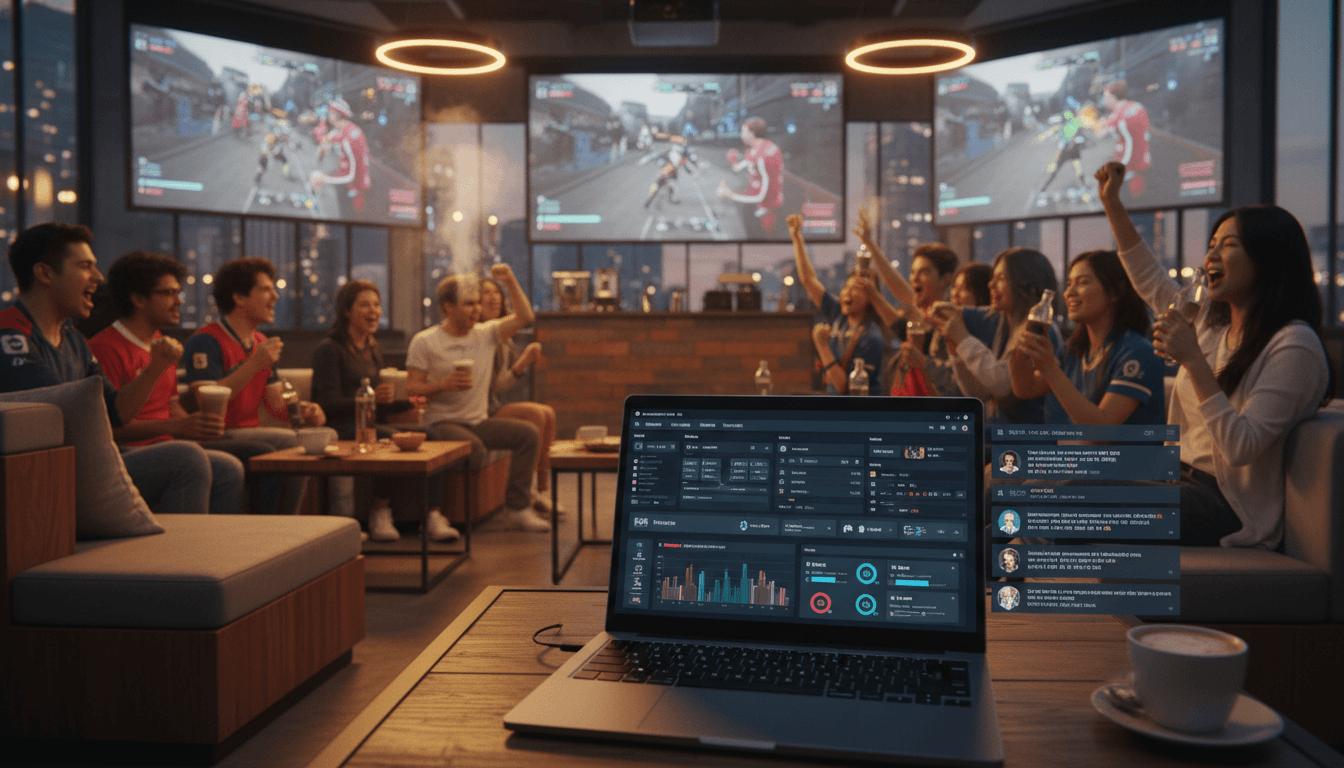
The Riot recap is full of physical, social engagement: watch parties, college corridors buzzing after matches, mall activations, and a major cultural crossover at a hip-hop festival.
Here’s the operational truth behind that: once your audience is big enough, you can’t treat everyone the same. Different segments show up for different reasons:
- competitive players want progression and status
- casuals want belonging and low-friction fun
- spectators want storylines and hype
- newcomers want onboarding that doesn’t make them feel stupid
Malta’s iGaming lesson: AI-powered personalization has to be compliant
Personalization is one of the clearest places AI can create measurable value in iGaming:
- Next-best-action messaging (what to show a player, when)
- Churn prediction (who’s about to leave, and why)
- Offer eligibility logic (reduce wasted bonus spend)
- Content recommendation (lobby ordering, game suggestions)
But iGaming adds a non-negotiable layer: responsible gaming and regulatory controls.
A strong AI approach in Malta typically means:
- personalizing within policy, not around it
- separating “engagement optimization” from “harmful intensity”
- logging decisions for auditability
- building “do not target” rules for risk signals
Clear stance: If your AI can’t explain why a player received a message, it doesn’t belong in a regulated funnel.
The data signals from esports are a blueprint for smarter marketing
Riot shared enough metrics to show what “momentum” looks like when it’s real:
- 103 million views across the VALORANT Challengers South Asia season
- 12 million views for LAN finals
- 50,000 peak concurrent viewers
- 29 broadcast days supporting the League of Legends pathway
These are more than vanity metrics. They show a flywheel:
- more structure → more participation
- more participation → more content
- more content → more watch moments
- more watch moments → more cultural presence
How Malta-based iGaming teams can apply the same flywheel
If you’re generating leads (the goal of this campaign), you need a similar loop—just adapted:
- Structure: clear lifecycle journeys and segment logic
- Participation: onboarding that gets players to a first “win” quickly (not necessarily monetary)
- Content: localized offers and seasonal narratives
- Moments: event-based CRM (finals, big matches, holiday spikes)
- Presence: community touchpoints (social, influencer, affiliate, live events)
AI helps at each step by shortening the time between “we noticed a pattern” and “we shipped the response.”
A practical AI playbook (that won’t blow up compliance)
If you’re building AI capabilities inside an iGaming operation in Malta—or selling services into that market—here’s a grounded implementation sequence that works.
1) Start with one channel and one KPI
Pick a single lever:
- CRM email click-through rate
- first-deposit conversion
- 30-day retention
- support ticket deflection
Then apply AI to one workflow (subject lines, content variations, send-time optimization, or routing logic). You’ll learn faster and avoid “big platform” failures.
2) Build a localization kit before you scale languages
Create a reference pack:
- approved terms (bonus rules, wagering language)
- tone examples (what “friendly” means in each market)
- compliance phrases that must remain unchanged
AI becomes dramatically safer and more useful when it’s constrained by known-good language.
3) Treat responsible gaming as a product feature, not a checkbox
In practice this means:
- excluding high-risk segments from promotional optimization
- designing safer journeys (cooldowns, limits messaging)
- using AI to spot risk earlier, not just sell more
4) Instrument everything
If you can’t measure it, you can’t defend it. In regulated environments, measurement is also protection.
Track:
- which model/prompt/version produced which message
- who approved it
- which segment received it
- what outcome happened
That’s how you make AI workable in Malta’s iGaming context.
What 2026 is likely to reward (in esports and iGaming)
Riot’s South Asia story shows where gaming is heading: community-first, culture-aware, and structured enough to keep momentum.
For Malta’s iGaming sector, 2026 will reward teams that can do three things at once:
- move fast (without breaking brand)
- stay compliant (without killing creativity)
- feel local (without rebuilding from scratch per market)
AI is the connective tissue—but only if it’s deployed like an operating system: with rules, review, measurement, and accountability.
If you’re exploring AI for multilingual content, marketing automation, or player communication in a regulated environment, the smartest next step is to map one end-to-end journey (from acquisition to retention) and identify where AI can remove the bottlenecks your team complains about every week.
The question worth sitting with: if South Asia can turn esports into a shared cultural space at this scale, what could Malta’s iGaming operators build if AI freed them to focus on the human parts—story, trust, and community?