BETBY’s 2026 focus shows why AI-driven localisation is now essential. Learn what Malta iGaming teams should automate to scale across markets.
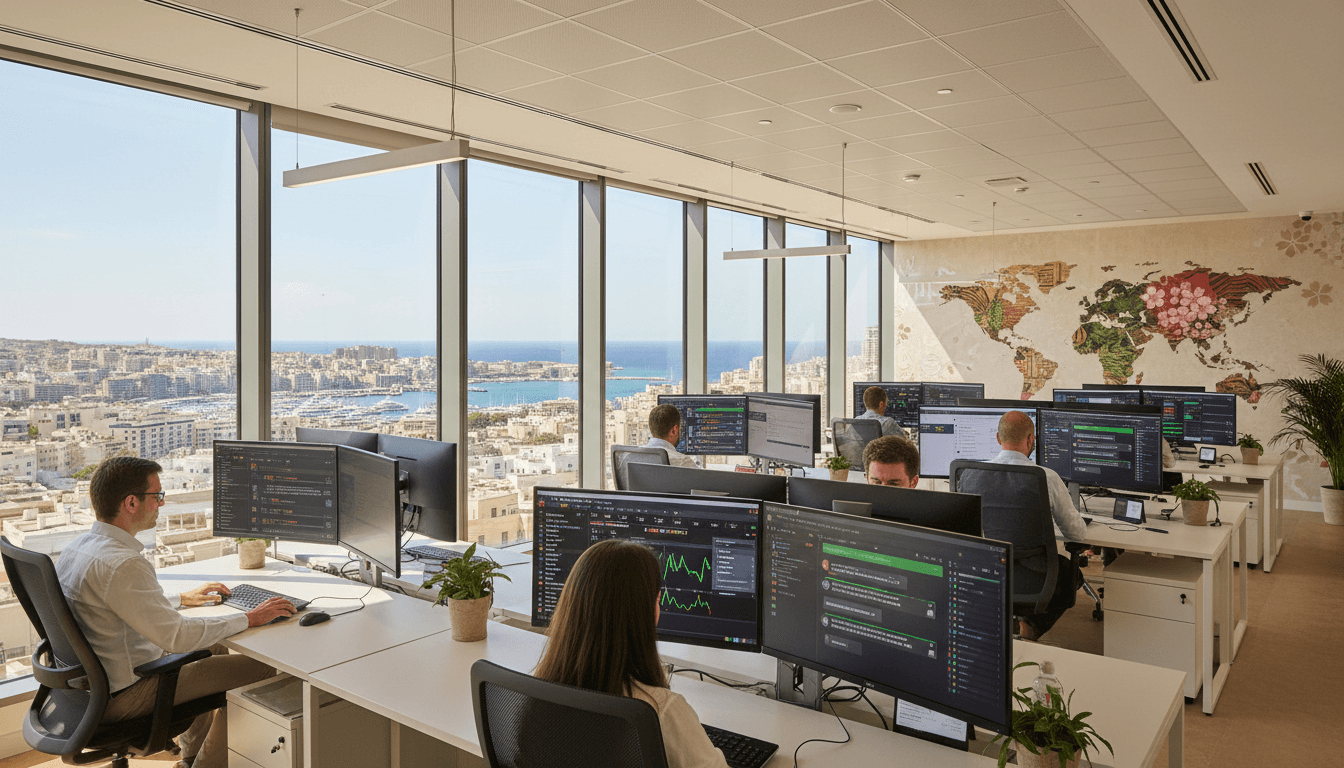
AI-Driven iGaming Expansion: Lessons for Malta in 2026
BETBY’s esports vertical already accounts for around 15% of its total GGR—and the company is still doubling down on AI and localisation as it heads into 2026. That combination tells you what’s really happening in sportsbook tech right now: growth isn’t just about entering new markets; it’s about operating across languages, cultures, and regulations without losing speed or control.
This matters a lot for the Malta iGaming ecosystem. Malta-based operators and suppliers aren’t “local” businesses in any practical sense—they’re global by default. If you’re serving players in Brazil, Peru, or parts of Asia, you’re managing multilingual customer communication, localised UX, payment behaviours, marketing restrictions, and a changing compliance bar… all at the same time.
BETBY’s 2026 plan—continue expanding in Latin America and increase focus on Asia—is a clean case study for this series: Kif l-Intelliġenza Artifiċjali qed tittrasforma l-iGaming u l-Logħob Online f’Malta. The real story isn’t where they’re expanding. It’s how AI makes that expansion economically viable.
Why global expansion now depends on AI (not just licenses)
Global iGaming expansion depends on AI because localisation and compliance scale faster than human teams can. Getting a licence is a gate. Running a high-conversion product in a new region is the hard part.
In BETBY’s 2025 recap, the company points to GLI-33 certification and licences in Brazil and Peru as major milestones. That’s the visible “headline” layer. Underneath it, every newly regulated market creates operational pressure:
- More KYC and AML workflows to adapt
- More responsible gaming policies to enforce and evidence
- More customer support volume in local languages
- More promotional content to produce, review, and publish safely
- More risk management complexity (trading + fraud + bonus abuse)
Most companies get this wrong by treating AI as a marketing gadget. In iGaming, AI is closer to an operating system: it reduces workload, speeds up execution, and keeps decisions consistent when you scale.
The Malta angle: you’re already a cross-border operator
If you’re in Malta iGaming, you’re often selling into multiple jurisdictions with lean teams. That’s why AI adoption in Malta isn’t a trend—it’s a survival skill.
A practical way to think about it: every new market you enter increases “surface area.” AI reduces the cost of that surface area by automating tasks that would otherwise require separate specialists per language, per channel, per jurisdiction.
Localisation isn’t translation: it’s product-market fit at scale
Localisation isn’t translation because players don’t just read different languages—they respond to different contexts. AI helps you get closer to local expectations without rebuilding everything from scratch.
BETBY highlights a focus on localized, user-friendly features and expanded esports titles with localisation. That’s the right direction. Operators that win in Latin America and Asia don’t ship one global sportsbook and hope for the best—they adapt:
- How Bet Builder combinations are displayed and suggested
- How betting tips are written (tone, risk appetite, sports focus)
- Which sports and leagues are prioritised
- Esports content mix (for example, the rise of mobile titles like Free Fire)
- Payment flows and friction points
What AI localisation looks like in real operations
For Malta-based teams, AI can support localisation in three layers:
-
Language production (fast, consistent content)
- Market-specific push notifications, banners, onboarding flows
- Localised FAQs and support macros
-
Experience adaptation (what the product emphasises)
- AI-driven personalisation of the lobby
- Dynamic content modules based on behaviour (not just language)
-
Cultural compliance (what you must avoid)
- Automated checks for restricted claims or risky phrasing
- Jurisdiction-aware templates for promotions and CRM
A simple rule I’ve found useful: if your localisation process can’t be repeated weekly, it’s not a process—it’s a one-off launch. AI makes “weekly localisation” realistic.
AI in sportsbooks: personalisation, risk, and simpler UX
AI in sportsbooks matters most in three places: personalisation, risk management, and UX simplification. BETBY’s interview points directly at this: AI for betting tips, entertainment markets, and operational efficiency.
Personalisation: the difference between growth and churn
Personalisation is revenue because it reduces decision fatigue. In mature sportsbooks, players face too many options. AI helps present the right markets at the right time.
Examples that actually move metrics:
- Reordering markets by a player’s historical preferences (league, market type, odds range)
- Personalised Bet Builder suggestions based on similar users’ behaviour
- Timing recommendations for notifications (send fewer, but send smarter)
For Malta operators managing multiple regions, AI personalisation is also a localisation tool: it adapts the experience without requiring separate product roadmaps per market.
Risk management: you can’t scale without it
If you expand into newly regulated markets, your exposure changes quickly. Risk isn’t only about trading; it’s also about:
- Bonus abuse patterns
- Multi-accounting
- Payment fraud
- Syndicate behaviour
AI can flag behavioural anomalies early and reduce manual review queues. The goal isn’t “zero risk.” The goal is risk handled fast enough that it doesn’t break your unit economics.
Simpler UX: “innovation works best when it keeps things simple”
One quote from the interview is the most telling:
Innovation works best when it keeps things simple for operators and improves the experience for bettors.
AI should reduce complexity, not add another dashboard. If you’re building for Malta-based ops teams, favour AI features that:
- Cut repetitive work (content ops, tagging, segmentation)
- Produce explainable outputs (why a player was flagged, why a bet was suggested)
- Fit existing workflows (CRM, CMS, trading tools)
Latin America + Asia in 2026: what Malta teams should prepare for
Latin America and Asia are attractive because they combine large audiences with fast-evolving digital habits. They’re also tough because regulation, payments, and consumer expectations can shift quickly.
BETBY points to momentum in Latin America beyond Brazil and Peru—Chile debating online gambling law, Uruguay studying a licensing model, and renewed regulatory conversation in Mexico. That signals a familiar pattern: early movers win distribution, but only if they can localise and stay compliant.
A practical “readiness checklist” for Malta operators
If your 2026 plan includes LatAm or Asia, this is the checklist I’d want on the wall:
-
Multilingual content pipeline
- One workflow for creation, review, approvals, and publishing
- AI assistance + human final checks (especially for regulated claims)
-
Jurisdiction-aware marketing controls
- Promo templates by market
- Automated restriction rules (age, location, channel constraints)
-
Player communication that scales
- AI-assisted support macros
- Intent detection and routing (billing vs KYC vs RG)
-
Responsible gaming instrumentation
- Behaviour monitoring and interventions
- Clear logging for audits
-
Talent plan
- The interview calls out talent scarcity as a major industry challenge
- AI helps, but it doesn’t replace domain expertise in compliance, trading, and RG
If you can’t confidently say you’ve got (1) and (2), expansion will feel exciting right up until your operational backlog starts swallowing the team.
Esports growth is a localisation story (and AI makes it manageable)
Esports growth is a localisation story because fandom is region-shaped. BETBY expects the big three—Counter-Strike, League of Legends, Valorant—to remain dominant, while noting the rise of mobile titles like Free Fire, plus trends like co-streaming.
For Malta-based brands, esports is often the first place where “one global approach” fails:
- Different titles trend in different regions
- Event calendars move fast
- Community language and slang matter
- Odds formats, markets, and engagement mechanics vary by audience
AI helps by accelerating the content layer around esports:
- Faster event pages, previews, recaps, and in-product explanations
- Automatic tagging of teams/players/tournaments in a CMS
- Real-time content moderation and safer chat/community features
And the 15% GGR figure is the point: esports isn’t a side feature anymore. Treat it like a product line with its own localisation strategy.
What the EU AI Act changes for Malta iGaming teams
The EU AI Act changes the operating expectations for AI systems used in Europe, and Malta-based businesses will feel that pressure through procurement, audits, and partner requirements.
Even when your players are outside the EU, your company and many of your vendors are often EU-connected. In practice, the shift is toward:
- Better documentation of AI use cases
- Stronger data governance (training data, access controls)
- Explainability for decisions that affect users (especially in risk, RG, or account limitation contexts)
My stance: treat compliance as product quality. If you build AI features that are traceable and well-governed, you move faster in the long run because partners trust them.
Next steps: turning AI into your expansion engine
BETBY’s 2026 direction—Latin America, Asia, esports growth, more AI—fits a wider industry reality: the companies that scale across markets will be the ones that operationalise AI, not the ones that merely “add AI.” Malta is in a strong position here because the ecosystem already understands multi-jurisdiction operations.
If you’re planning expansion or even just trying to defend margin in existing markets, start with one concrete build-out: a multilingual, compliance-aware content and communication pipeline. It’s the highest-leverage AI application in iGaming because it touches acquisition, retention, and support at once.
Where do you think Malta-based operators will feel the most pressure in 2026: localisation speed, compliance reporting, or risk management? The answer usually reveals what you should automate first.