South Asia’s esports boom shows what Malta iGaming can copy: cadence, culture, and AI localisation to scale player engagement responsibly.
AI + Esports Growth: What Malta’s iGaming Can Copy
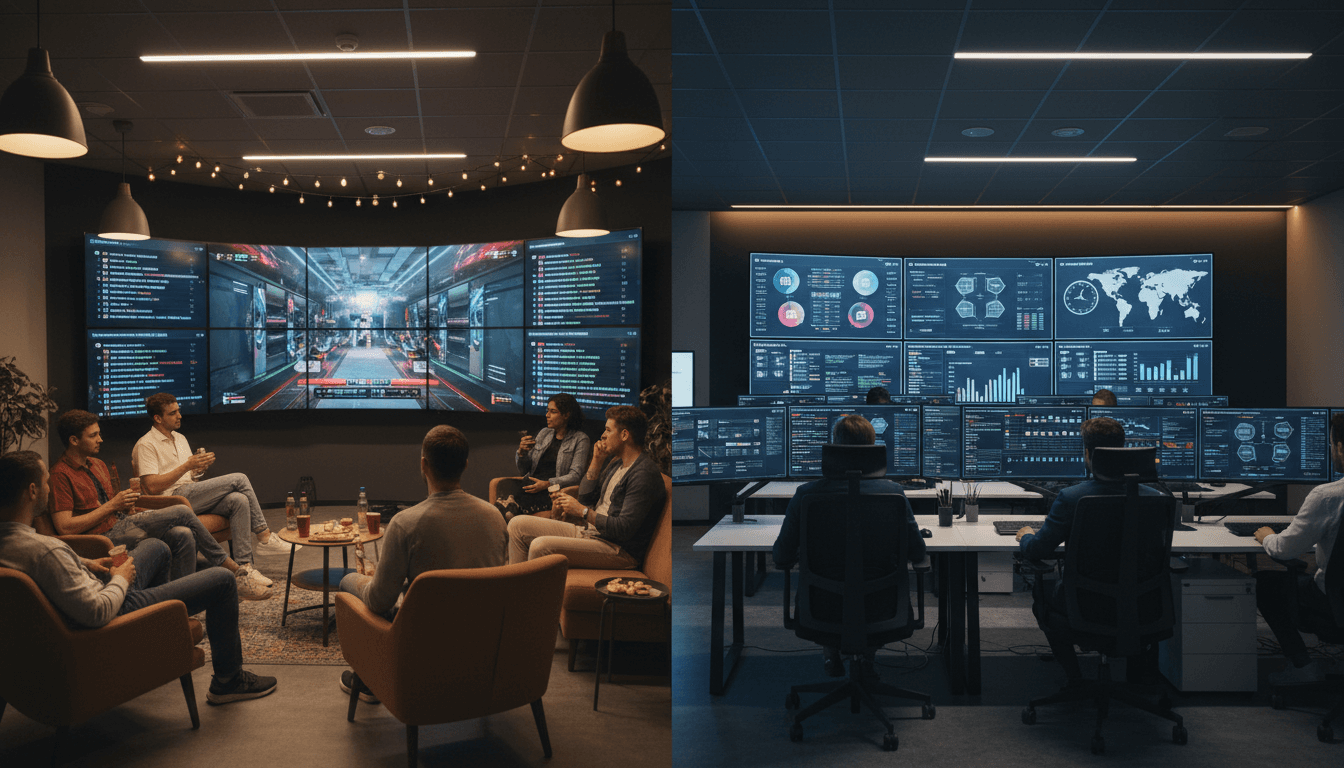
South Asia didn’t “discover” esports in 2025 — it proved it can scale. Riot’s year in the region wasn’t just about tournaments; it was about culture showing up in public: watch parties in cafés, campus activations, billboards that used community inside jokes, and a festival collaboration that put VALORANT next to major music headliners.
Here’s why that matters for Malta. If you work in iGaming, you already know the real constraint isn’t licensing or even product. It’s attention and retention in markets that behave differently, speak differently, and celebrate different things. South Asia’s esports milestones show what happens when a gaming brand builds a local ecosystem deliberately — and they also show where AI in iGaming becomes practical: localised content at speed, smarter player engagement, and better operational decisions without losing the human feel.
This post sits inside our series “Kif l-Intelliġenza Artifiċjali qed tittrasforma l-iGaming u l-Logħob Online f’Malta” and uses Riot’s South Asia playbook as a mirror: not to copy the aesthetic, but to copy the mechanics — and to improve them with intelligent systems.
South Asia’s 2025 esports story is a scaling blueprint
Riot’s South Asia year worked because it combined structure, distribution, and culture. That trio is exactly what many Malta-based operators try to achieve when expanding into new territories.
Riot introduced a credible competitive pathway for League of Legends with Legends Ascend South Asia, pulling in 95 teams from India, Bangladesh, Sri Lanka, Nepal, Maldives, and Bhutan. Over four months, it created momentum across 29 broadcast days — meaning audiences had repeated reasons to return, not a one-off spike.
Then VALORANT Challengers South Asia validated the demand on the PC esports side in India, with reported performance of 103 million live and non-live views, LAN finals crossing 12 million views, and a peak around 50,000 concurrent viewers. Those are numbers that don’t happen by accident. They happen when the funnel is healthy: awareness → community participation → scheduled “appointment viewing” → social amplification.
What Malta can take from this (without being Riot)
Malta’s iGaming sector often thinks in product primitives: casino lobby depth, sportsbook margins, payment UX. Esports ecosystems force a different discipline: audience primitives.
- Regular cadence beats “big launch” energy. 29 broadcast days is basically a retention plan.
- Pathways create legitimacy. Open qualifiers make participation feel possible.
- Culture has to be visible offline. Billboards and campus activations weren’t fluff; they were proof of belonging.
For Malta-based operators, the comparable move isn’t “start an esports league tomorrow.” It’s to engineer repeatable community moments around your core product and use AI to do it efficiently and safely.
AI localisation: the hidden engine behind “homegrown” growth
The fastest way to waste budget in new markets is to ship “translated English” and call it localisation. Riot’s storytelling succeeded because it felt native: inside jokes, familiar rituals, and references that only locals would find funny.
AI can help Malta iGaming companies achieve this level of cultural fit — but only if it’s treated as a workflow, not a copy machine.
Where AI helps most: multilingual content at volume
If you’re marketing across regions (and most Malta operators do), you need content in multiple languages and tones, across multiple channels, with fast iteration.
Practical uses of AI-driven localisation for iGaming and online gaming include:
- Market-specific copy variants (same offer, different cultural framing)
- Creative testing at scale (dozens of headline/CTA combinations per segment)
- Community-first social assets (memes, short captions, chat-style formats)
- LiveOps messaging (timely promos aligned to local moments)
The standard I like is simple: AI drafts, humans approve, performance decides. That keeps the speed without losing compliance control.
A Malta-specific reality check: regulated localisation
iGaming isn’t a streetwear brand. You can’t improvise freely. The win is to build an AI-assisted pipeline with:
- approved phrase banks (what you can and can’t say)
- tone rules per brand and per market
- automated checks for prohibited claims
- human sign-off for anything promotional or sensitive
That’s how you get the “homegrown” feel Riot achieved, while staying aligned with a regulated environment.
AI-driven player engagement: esports teaches iGaming the “why”
Esports engagement is rarely about a bonus. It’s about identity: teams, rivals, ranking, rituals, shared language. iGaming can borrow that logic, and AI can make it personal without turning creepy.
Personalisation that doesn’t feel manipulative
Most companies get personalisation wrong because it’s shallow: “recommended games” widgets that don’t map to intent.
Better personalisation in iGaming uses behavioural signals to shape the experience, not just the catalogue:
- onboarding paths based on familiarity (new vs experienced players)
- session timing recommendations (when a user typically plays)
- responsible pacing nudges (friction when risk increases)
- VIP routing based on service needs, not just value
Esports shows the power of shared moments (watch parties, LAN finals). For iGaming, the equivalent is scheduled community gravity: tournaments, challenges, leaderboards, missions — plus messaging that lands in the user’s language and context.
Real example from the Riot story: culture beats pure performance
Riot’s V5 anniversary work — murals, animated shorts inspired by real player stories, and community-chosen billboards — is the point. It’s not just “marketing.” It’s recognition.
AI can support recognition at scale:
- clustering players into meaningful cohorts (not just “high spender”)
- generating tailored community content by cohort
- recommending which cohorts respond to which event formats
In practice, you’re using AI to decide what to say, to whom, and when, with human oversight and clear boundaries.
From watch parties to conversion funnels: operational AI that matters
Esports organisers obsess over operational execution: broadcast schedules, formats, teams, venues, moderation, and distribution across platforms. Malta iGaming teams face similar complexity across acquisition, CRM, payments, fraud, and support.
AI becomes valuable when it reduces operational drag and improves decisions.
Three high-impact AI systems Malta operators should prioritise
-
Next-best-action CRM
- chooses the best message for a player based on history and predicted intent
- prevents over-messaging (fatigue is real)
-
Player support automation with human escalation
- resolves simple issues instantly
- routes edge cases to humans with context
- keeps multilingual support consistent
-
Risk and integrity analytics
- detects fraud patterns earlier
- flags problem gambling risk signals
- supports responsible gaming interventions
If you want a single quotable line: AI should reduce noise so your team can focus on judgement.
The festival crossover lesson: distribution isn’t optional
Riot showing up at Rolling Loud India is a distribution move: meeting audiences where they already are. Malta’s iGaming brands can learn from that without sponsoring a festival.
The equivalent is to align content and community with places your segments already live:
- creator partnerships that match your product vertical
- community events that fit local entertainment habits
- content formats built for the platform (not resized ads)
AI helps you choose and optimise these routes by analysing what content actually retains attention by market.
“People also ask” questions Malta iGaming teams are asking
Can AI really help with esports-style community building?
Yes — but indirectly. AI can’t create authentic culture, but it can identify what communities respond to, support localisation, and keep engagement consistent across languages and channels.
What’s the quickest AI win for an iGaming marketing team in Malta?
An AI-assisted content pipeline for multilingual campaigns: faster variants, stronger testing, and fewer bottlenecks — with a compliance review layer built in.
How do you avoid AI personalisation crossing ethical lines?
Set hard rules: no targeting based on sensitive attributes, clear responsible gaming safeguards, and human review for high-impact journeys. Personalisation should improve relevance, not pressure.
A practical 30-day plan to apply this in Malta
If you want to turn these ideas into leads and measurable outcomes, don’t start with “AI everywhere.” Start with one market and one funnel.
- Week 1: Pick one market + one segment
- define the target language, cultural context, and success metrics
- Week 2: Build a compliant localisation kit
- approved terms, disallowed phrases, tone rules, examples
- Week 3: Launch a three-variant engagement sequence
- email/push/in-app in local language, tested across cohorts
- Week 4: Add AI insights + human decisions
- let models suggest next actions; let humans choose what ships
The goal isn’t perfection. It’s repeatability.
Where this is heading in 2026 (and why you should care now)
Riot’s South Asia story shows a simple truth: gaming ecosystems scale when they feel local, structured, and socially visible. Malta’s iGaming industry is already global by default — which is exactly why AI-driven localisation and AI-powered player engagement are becoming table stakes rather than nice-to-haves.
If you’re building campaigns for Q1 2026, the opportunity is clear: use AI to move faster, but anchor everything in culture, community, and compliance. That’s the difference between “we translated it” and “players felt seen.”
If South Asia can turn watch parties and campus jokes into tens of millions of views, what would happen if Malta’s iGaming operators treated localisation and engagement with the same seriousness — and used intelligent systems to scale it responsibly?