MGA’s football betting review shows what regulators expect. Here’s how Malta operators can use AI to strengthen integrity, compliance, and safer marketing.
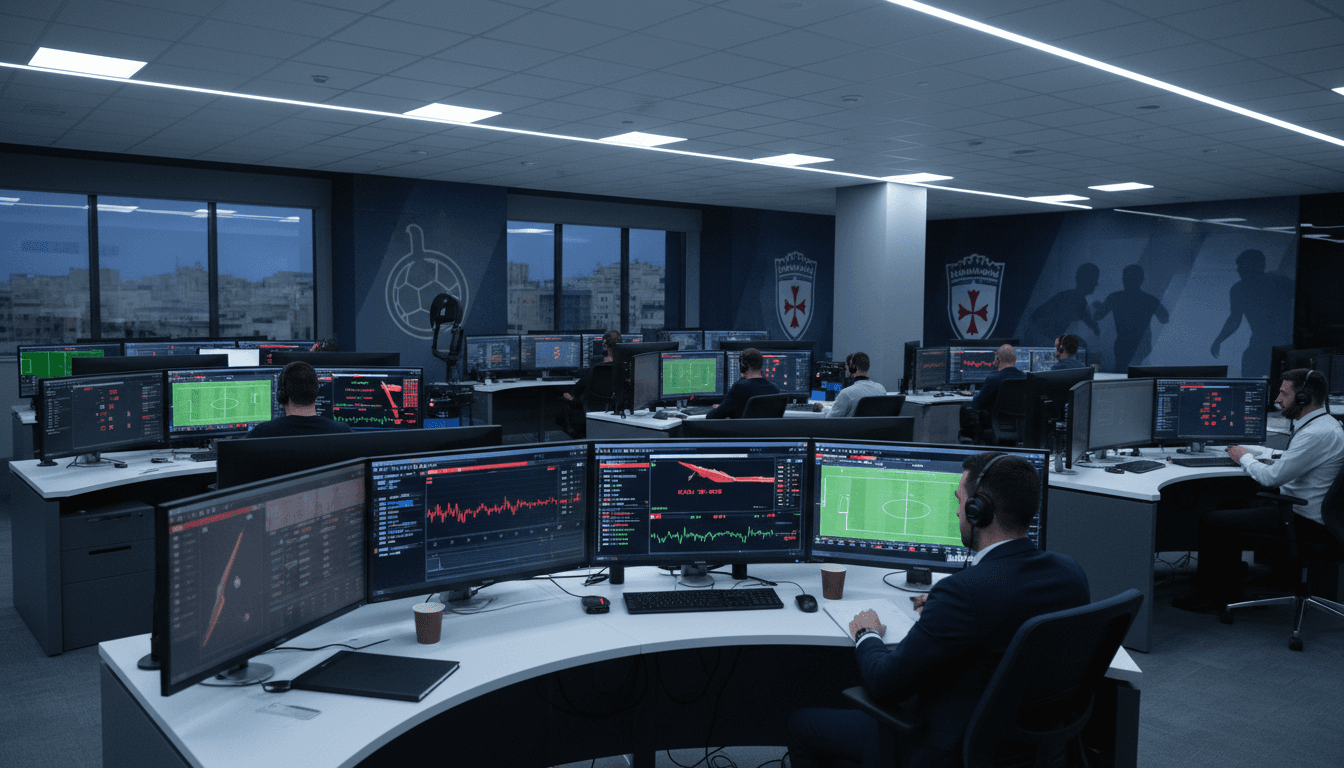
AI & MGA Insights for Malta Football Betting Integrity
The Malta Gaming Authority’s latest thematic review on local football betting is a quiet signal that the market is maturing. Not because Maltese football suddenly became a global betting magnet—it didn’t—but because the MGA is getting more specific about what it expects operators to know, measure, and control.
Here’s why that matters if you work in iGaming in Malta. In late 2025, most operators are pushing harder on AI in iGaming: automated marketing, multilingual content, risk scoring, fraud detection, customer support, and sharper trading decisions. The MGA review effectively tells you what “good” looks like in this niche: modest volumes, mainstream markets, identifiable player demographics, and clear integrity safeguards. That’s a blueprint for where AI can help—and where it can get you into trouble if you deploy it carelessly.
This post breaks down what the MGA’s findings mean in practice, and how to use responsible AI to improve integrity, compliance, and player experience in a regulated Maltese context.
What the MGA review really tells operators (beyond the headline)
The direct answer: the MGA is expecting data-literate operators who can explain their Maltese football betting activity, the players behind it, and the integrity controls protecting it.
The review analysed data from B2C Type 2 licensees for the 2023–2024 football season, focusing on wagering trends, player demographics, and integrity measures. The findings are straightforward: the market is moderate, activity clusters around standard bet types, and local participation is limited.
That sounds simple, but it creates a clear operational requirement: if the regulator can slice the market by competition, bet type, and demographic patterns, you should be able to do the same internally—quickly, accurately, and consistently.
The “moderate market” detail isn’t a footnote
A small-to-moderate market changes how you should run risk and integrity.
- Lower volumes mean fewer data points per match, league, and bet type.
- That makes anomaly detection harder: a single sharp bettor can move the needle.
- It also means you can’t blindly copy models trained on the Premier League or Champions League.
If you’re using machine learning for integrity, the MGA’s review is a reminder to build context-aware monitoring—models tuned to Maltese football realities rather than global football averages.
Betting behaviour is concentrated—AI should reflect that
The direct answer: the review indicates activity is centred on mainstream markets like match winner and total goals, so AI models and controls should prioritise these areas.
When most betting concentrates in a narrow set of markets, your exposure concentrates too. That’s good news: you can focus integrity monitoring where it matters most. It’s also risky: attackers and match-fixers prefer predictable, liquid markets because manipulation blends in.
Where AI can help most: market-level integrity monitoring
If you’re operating football betting in Malta, AI can support integrity in three practical layers:
-
Pre-event risk scoring (fixture risk)
- Score matches by historical alerts, unusual team news volatility, referee patterns, and prior integrity flags.
- Use the score to trigger stake limits, additional human review, or tighter price movement thresholds.
-
In-play anomaly detection (behavioural risk)
- Flag spikes in bet frequency, bet size, or correlated outcomes (for example, unusual clustering on total goals).
- Detect bettor networks (shared devices, payment instruments, IP ranges) that move together.
-
Post-event intelligence (case building)
- Auto-generate an audit timeline: odds movements, customer clusters, bet placement times, and account link analysis.
- That shortens investigation time and improves the quality of suspicious betting reports.
A good rule I’ve found: use AI to reduce noise, not to replace judgement. Regulators don’t want “the model said so.” They want traceable decisions.
A practical KPI set that aligns with MGA expectations
If you want your integrity programme to look credible during a review, track and trend:
- Alerts per 1,000 bets (and by market type)
- Time-to-triage (minutes from alert to first review)
- Percentage of alerts escalated to a case
- Case closure time
- Percentage of cases shared with relevant stakeholders
- False-positive rate by alert category
Even if the MGA doesn’t ask for these exact metrics, being able to produce them signals mature governance.
Player demographics: a compliance and marketing signal, not just a statistic
The direct answer: the review’s demographic pattern—primarily young men in urban areas—should shape both safer gambling controls and AI-driven marketing decisions.
Most operators treat demographics as marketing-only. That’s a mistake, especially in a tightly regulated environment. If a product cluster attracts a specific group, your safer gambling approach has to be credible for that group.
Using AI to strengthen safer gambling (without becoming intrusive)
Young, urban, male cohorts often show distinct risk indicators: higher session frequency, impulse-driven in-play activity, and chasing behaviour after losses. AI can help detect these patterns early.
Practical applications operators in Malta are implementing:
- Real-time behavioural markers: sudden stake escalation, repeated deposits, late-night intensity, loss-chasing sequences.
- Personalised friction: cooling-off nudges, break reminders, deposit limit prompts triggered by behaviour rather than generic popups.
- Risk-tier journeys: different messaging and interventions for low, medium, high-risk profiles.
The stance I’d take: if your AI is good enough to optimise conversion, it’s good enough to reduce harm. Operators who only build AI for revenue optimisation will face tougher questions over time.
Marketing automation: the “responsible personalisation” line
AI-driven marketing in iGaming is powerful, but in Malta it must be defensible. The safer route is to use AI to:
- Personalise language and clarity (not pressure)
- Optimise send times (not intensity)
- Reduce irrelevant promos (not increase frequency)
If your retention model identifies a player who’s slipping into risky patterns, the correct move is suppression and safer gambling messaging, not “bigger bonus, bigger urgency.” That’s the kind of decision-making regulators expect to see reflected in policy and logs.
Integrity safeguards: what “good” looks like—and how AI supports it
The direct answer: the MGA highlights safeguards like suspicious activity monitoring and collaboration with sports bodies; AI should strengthen these controls with better detection, documentation, and consistency.
The MGA’s review points to a familiar integrity toolkit: monitoring suspicious activity, cooperating with the Authority, and working with sports governing bodies. None of that is new. What’s changing is how fast and how well operators can execute it.
AI doesn’t replace your controls—it proves they’re working
AI adds value when it:
- Improves detection sensitivity while controlling false positives
- Standardises investigations so cases don’t depend on which analyst is on shift
- Creates audit-ready records automatically
If you’re serious about compliance, build your AI workflows so you can answer these questions on demand:
- Why was this activity flagged?
- What data points triggered the alert?
- Who reviewed it and when?
- What action was taken?
- What was the outcome and rationale?
That’s not just good governance—it’s operational efficiency.
The minimum “AI governance” operators should have in place
If you’re using AI in betting integrity, marketing, or customer support, document a simple governance stack:
- Model inventory (what models exist, what they do, who owns them)
- Training data notes (sources, time windows, known biases)
- Performance monitoring (drift checks, false positives, periodic recalibration)
- Human oversight rules (what decisions require approval)
- Incident playbooks (what happens when AI fails or flags a high-risk event)
This is the difference between “we use AI” and “we can justify AI.”
Turning MGA insights into multilingual, compliant growth
The direct answer: the thematic review’s market detail can guide AI-generated multilingual content that stays compliant while still performing internationally.
The review notes that Maltese football attracts modest international betting interest, small compared to major competitions. That’s a clear opportunity: you can grow internationally, but you need the right messaging and the right compliance posture.
Here’s where AI content workflows fit the series theme—how AI is transforming iGaming and online gaming in Malta—in a practical way.
A content approach that fits a regulated, global audience
If you’re producing multilingual content for football betting—blogs, match previews, email, in-app banners—AI helps you scale. The trap is that scaling content can also scale mistakes.
A safer, higher-performing workflow:
- Create a single “source of truth” brief per competition and bet type (rules, limits, safer gambling language).
- Use AI to generate localised variants (language, tone, cultural references) from the same brief.
- Run automated checks for restricted phrases, misleading certainty, and missing safer gambling prompts.
- Keep a human editor for final approval on high-visibility pages and paid campaigns.
This matters because regulators don’t care that content errors were accidental. They care that your system prevented them.
Example: match preview content with built-in integrity and responsibility
Instead of generic hype, build templates that:
- Explain what markets are available (match winner, total goals) in plain language
- Avoid “sure thing” claims
- Add contextual responsibility prompts (budgeting, limits)
- Keep odds movement commentary factual (no manipulation)
AI can produce 10 language versions in minutes. Your compliance system should be able to approve or block them just as quickly.
Practical next steps for Malta operators (a 30-day plan)
The direct answer: use the MGA review as a checklist to align AI projects with integrity, safer gambling, and audit readiness.
If you’re a compliance lead, product owner, or marketing manager, here’s a realistic 30-day plan that doesn’t require ripping out your stack:
-
Map your Maltese football betting footprint
- Markets offered, volumes, player segments, high-risk fixtures.
-
Audit your alerting and case workflow
- Are alerts explainable? Are outcomes logged consistently?
-
Tune AI to the local context
- Separate models or thresholds for Maltese football vs top-tier leagues.
-
Add AI governance basics
- Model inventory + oversight rules + drift monitoring.
-
Align marketing automation with safer gambling
- Set suppression rules for high-risk behaviour.
-
Standardise multilingual content production
- One compliance-approved brief, many localised outputs.
If you do only one thing: make sure you can prove how decisions were made. The MGA’s direction of travel is clear—more thematic reviews, more data-led supervision, and higher expectations for internal controls.
Most operators don’t get penalised because they lacked tools. They get penalised because their tools produced decisions they couldn’t defend.
The bigger question for 2026 is straightforward: as AI in iGaming in Malta becomes normal, will your organisation treat integrity and safer gambling as first-class product features—or as compliance paperwork after the fact?