AI koplietošanas ekonomikai pilsētās: prognozēšana, saskaņošana un taisnīgums. Praktiski soļi pašvaldībām, lai sāktu 90 dienās.
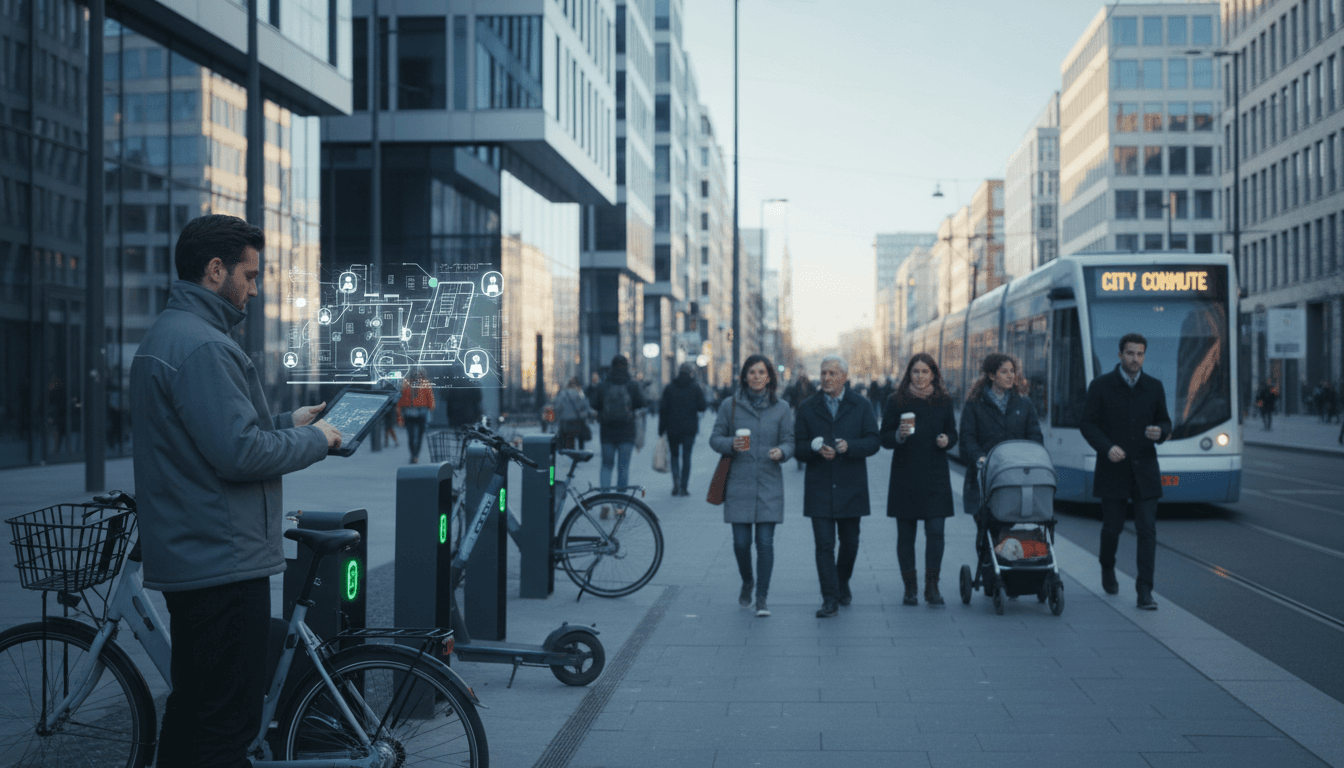
Cities don’t have a “lack of resources” problem as much as they have a coordination problem. There are empty seats in municipal vans, underused sports halls on weekday mornings, idle maintenance equipment between jobs, and volunteers who’d help—if they knew where to show up. The sharing economy, as discussed in the SmartCitiesWorld podcast episode with Chelsea Rustrum, puts a spotlight on one simple truth: cities are the natural platform for sharing because they set rules, run infrastructure, and serve the densest mix of needs.
Now add 2025 realities: tighter budgets, higher expectations for digital public services, and pressure to hit climate targets. If you’re working in a municipality, a state agency, or a smart city team, the question isn’t “Should we support sharing?” It’s how to run sharing models safely, fairly, and at scale. This is where mākslīgais intelekts publiskajā sektorā stops being a buzzword and becomes a practical tool.
Here’s my stance: AI is most valuable in the sharing economy when it’s used as a municipal “coordination layer”—matching supply and demand, forecasting needs, detecting abuse, and keeping services inclusive.
Kāpēc pilsētas ir koplietošanas ekonomikas centrs
Cities are the best “orchestrators” of the sharing economy because they own the rules and much of the context. Platforms can match riders to drivers. Cities can match community needs to public outcomes.
Chelsea Rustrum’s core point—there’s a big opportunity for cities to better harness sharing to achieve municipal goals and give power back to people—lands even harder in public sector work. A city isn’t just a marketplace; it’s a trust framework.
Pilsēta kā uzticības un noteikumu sistēma
The big difference between a typical sharing platform and a city-led or city-enabled model is legitimacy:
- Cities can set fair access rules (so sharing doesn’t become “first come, first served” for the digitally savvy).
- Cities can enforce safety and quality standards.
- Cities can require data transparency (especially when public space or public funds are involved).
If you want the sharing economy to serve municipal goals—lower emissions, better mobility, more resilient neighborhoods—governance is the product.
Blīvums rada potenciālu (un arī berzi)
Urban density creates short travel distances, high asset utilization potential, and large user bases. It also creates friction: parking conflicts, noise, overcrowding, digital exclusion, and “platform capture” where one private system becomes unavoidable.
This matters because AI can reduce friction only if the city defines what “good” looks like.
Kur AI reāli palīdz: no “sharing” uz “smart city”
AI’s job in a smart city isn’t to make everything automated. It’s to make decisions faster, fairer, and more measurable—especially when multiple departments, vendors, and communities are involved.
1) Pieprasījuma prognozēšana un kapacitātes plānošana
The first high-value use case is forecasting. Municipal sharing programs fail when supply is wrong: too few bikes at peak, too many vehicles parked idle off-season, not enough charging capacity.
AI models can combine:
- historical usage (by hour, weekday, season)
- events calendars
- weather patterns
- school schedules
- roadworks and public transport disruptions
…to predict demand and recommend actions (rebalancing, staffing, pricing policies, service windows). In practice, that means less waste and fewer citizen complaints.
2) Reāllaika saskaņošana: “matchmaking” publiskajā sektorā
Sharing economy platforms live or die on matching. Cities can use AI-driven matching beyond transport:
- allocating sports facilities across schools and community groups
- coordinating home-care visits and volunteer support
- matching surplus food from public institutions to charities
- scheduling shared municipal equipment across departments
A useful mental model: AI as a dispatcher for city capacity.
3) Krāpšanas, ļaunprātīgas izmantošanas un riska signāli
Every shared system attracts edge cases: repeated no-shows, vandalism, bot reservations, “professional users” who crowd out residents.
AI can flag patterns for human review:
- unusual booking frequency
- repeated late returns
- correlated damage reports
- suspicious account clusters
The rule I’ve found works: automate detection, not punishment. Public trust collapses when people feel an algorithm “sentenced” them.
4) Līdzdalība un komunikācija: saprotami pakalpojumi, nevis tikai dati
Citizen engagement often becomes a PDF graveyard. AI helps when it turns messy feedback into clear operational signals.
Examples that work in practice:
- clustering complaints by theme and location
- summarizing open-text feedback from consultations
- multilingual service assistants for city portals
That connects directly to the series theme: AI uzlabo e-pārvaldes pakalpojumus when it reduces time-to-answer and improves clarity.
Koplietošanas ekonomika bez kaitējuma: noteikumi, ētika, iekļaušana
The sharing economy has a reputation problem in many cities: short-term rentals driving housing pressure, scooters cluttering sidewalks, “move fast” pilots that ignore accessibility. A municipality can’t afford that.
The fix isn’t banning innovation. It’s designing guardrails upfront.
Datu pārvaldība: kas pieder, kas redz, kas glabā
If sharing systems touch public space, the city should require a clear data policy:
- data minimization (collect what you need, not what you can)
- retention periods (delete by default)
- role-based access (operators vs. city analysts)
- auditable logs
A crisp principle: public value requires public visibility, at least in aggregated form.
Algoritmiskā taisnīguma minimums (praktiski, ne teorētiski)
Fairness isn’t an abstract ethics workshop. It’s operational.
Ask these questions before launch:
- Does the system require a smartphone, card, or bank account?
- What happens to residents without digital skills?
- Are services distributed across neighborhoods, or only in profitable areas?
- How will you measure unequal outcomes quarterly?
Then enforce with policy levers: service coverage requirements, accessibility targets, and non-digital booking channels.
“Digitālie dvīņi” un simulācijas: izmēģini pirms palaid
When stakes are high—traffic, curb space, emergency access—cities should simulate.
A digital twin (even a lightweight one) can test:
- parking and curb allocation scenarios
- micromobility fleet sizing
- emissions impact of shared mobility vs. private car trips
AI helps here by searching through many scenarios quickly and highlighting trade-offs.
Praktiski piemēri: kur sākt pašvaldībai 90 dienās
Most municipalities don’t need a massive smart city platform to see value. Start with one shared service, one dataset, one measurable goal.
Izvēlies “augstas berzes” procesu
Good candidates have queues, complaints, or underutilized assets:
- shared meeting rooms and public venues
- municipal vehicle pools
- bulky waste collection booking
- bike/scooter parking zones
Ievies 3 KPI, kas nav kosmētiski
If you can’t measure outcomes, you’ll end up debating feelings.
Three KPIs that translate well across services:
- utilization rate (hours used / hours available)
- service equity (coverage and usage by neighborhood)
- cost per fulfilled request (not cost per app download)
Datu minimums “pirmajam modelim”
You don’t need perfect data. You need consistent data.
A practical starter set:
- timestamped transactions (booking/ride/request)
- asset ID and location zone
- resolution outcome (fulfilled/cancelled/no-show)
- maintenance/damage events
Then build: forecasting → optimization → policy tuning.
Cilvēks paliek cilpā (un tas ir labi)
Public services are value-laden. AI should recommend; people decide.
A city doesn’t need AI to be “smart”. It needs AI to be accountable.
Set up a simple operating rhythm:
- weekly dashboard review (ops team)
- monthly equity review (policy team)
- quarterly model audit (data team + legal + citizen rep)
Biežākie jautājumi, ko dzirdu no pašvaldībām
Vai koplietošanas ekonomika vienmēr nozīmē privātus operatorus?
No. Cities can run cooperative models, public platforms, or hybrid procurement. The key is aligning incentives with municipal outcomes.
Vai AI nozīmē lielus iepirkumus un ilgu ieviešanu?
Not obligāti. Many wins come from improving one workflow and one dataset. The expensive failures usually come from buying “everything platforms” without a clear service owner.
Kā izvairīties no sabiedrības neuzticēšanās?
Be transparent about what data is collected, how decisions are made, and how residents can appeal. Also: publish aggregated performance results. Silence looks like hiding.
Kur tas satiekas ar “Mākslīgais intelekts publiskajā sektorā un viedajās pilsētās”
This post fits squarely into the series theme: AI improves e-government and smart city operations when it’s used to make services more predictable, more equitable, and easier to access. The sharing economy is a perfect testbed because it exposes the hard parts—governance, trust, fairness—quickly.
If you take one idea from Chelsea Rustrum’s framing, let it be this: cities can give power back to people by designing sharing systems that serve public goals, not just convenience. AI can help—when cities stay in charge of outcomes.
If you’re planning a smart city initiative in 2026, pick one shared service and treat it as your “coordination pilot.” Measure utilization, equity, and cost per request. Publish results. Then scale what works.
Where could your city benefit most from a shared model right now—mobility, public spaces, or municipal operations?