AI-driven decarbonization is changing weaving decisions. See how Sri Lankan textile makers can measure, cut emissions, and win buyers with proof.
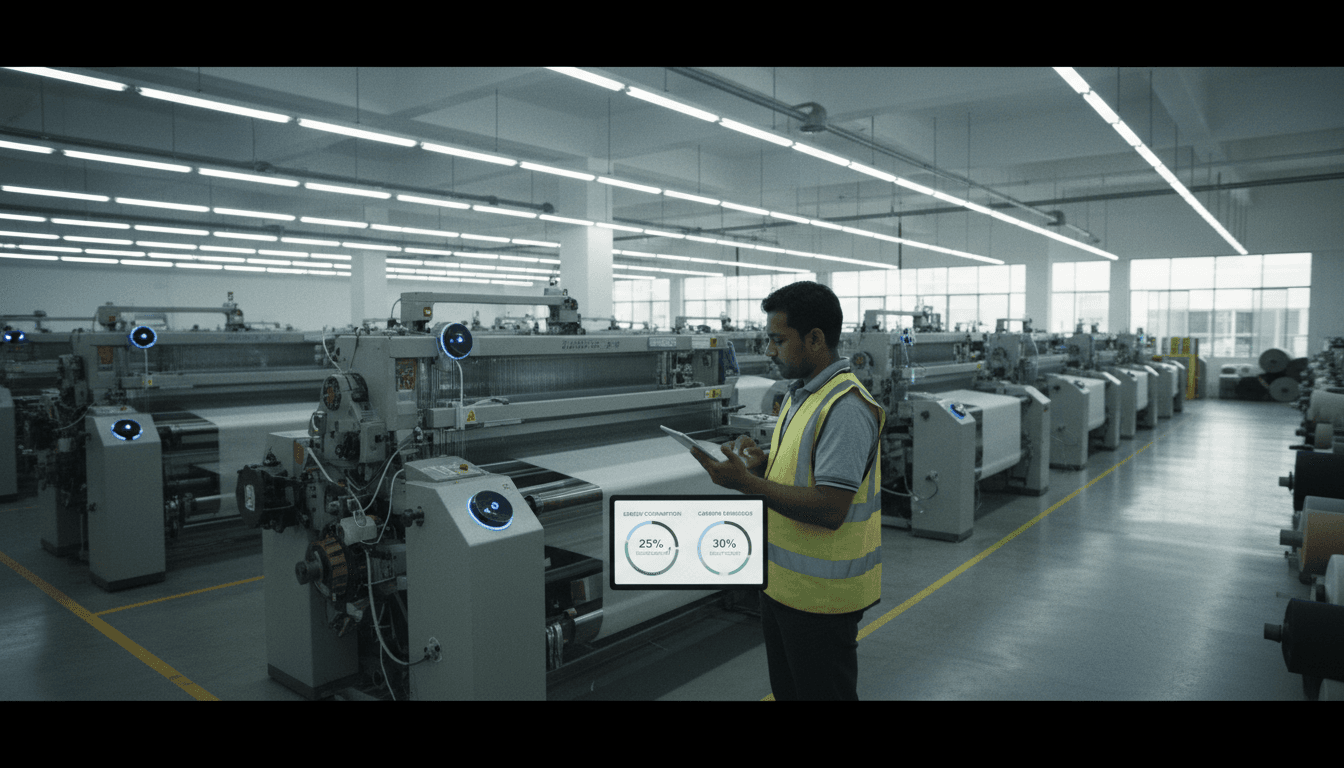
AI-Driven Decarbonization for Sri Lankan Weaving
A weaving machine doesn’t look like climate policy, but it is. Every pick, every stop-start, every compressed-air pulse, every kilowatt-hour shows up in a factory’s carbon footprint—and increasingly, in a buyer’s scorecard.
That’s why a recent move in Europe matters for Sri Lanka: Itema (a major weaving machinery maker) joined Ivy Decarb, a digital marketplace that helps textile companies compare machines based on energy use, emissions, and carbon footprint, and even connects projects to financing via bank partners. On the surface it’s a partnership announcement. In practice, it’s a preview of where the global apparel supply chain is heading: measurable decarbonization, data-first procurement, and finance tied to proof.
This post sits inside our series “ශ්රී ලංකාවේ වස්ත්ර හා ඇඳුම් කර්මාන්තය කෘත්රිම බුද්ධිය මඟින් කෙසේ වෙනස් වෙමින් තිබේද”—because the fastest path to lower emissions in factories isn’t posters on the wall. It’s AI-enabled measurement, automation, and decisioning that turns sustainability into daily operational discipline.
Why this partnership signals a bigger shift (and why Sri Lanka should care)
The core signal is simple: machine selection is becoming a carbon decision, not just a capacity decision. Platforms like Ivy Decarb are building shared evaluation criteria across brands, mills, machinery suppliers, and lenders.
For Sri Lankan manufacturers, this matters because global brands are tightening requirements around Scope 3 emissions (the emissions in their supply chain). When a brand asks for your footprint by product line or order, “we’re efficient” won’t be enough. You’ll need numbers, and those numbers must be defensible.
Two practical implications follow.
Sustainability is turning into procurement math
Traditionally, capex decisions for weaving focused on:
- Speed and output
- Fabric range and quality
- Maintenance and uptime
- Operator availability
Now add:
- kWh per meter (or per kg)
- CO₂e per meter based on your grid mix
- Compressed air and auxiliary loads
- Waste rates and rework (hidden energy)
When these metrics become comparable across suppliers, sustainability stops being a “nice story” and becomes competitive pricing power. If two mills quote the same price, the lower-carbon one often wins the long-term relationship.
Financing will follow verifiable decarbonization
Ivy Decarb’s financing angle is the part many factories underestimate. Banks and lenders increasingly want measurement and governance before offering preferential terms for green upgrades.
The reality? A factory that can show a credible baseline and track reductions monthly is simply a better credit risk for “green” lending than one that can’t.
Where AI fits: decarbonizing weaving isn’t a single project
Weaving decarbonization works when you treat it like a system: measure → diagnose → optimize → verify. AI helps at each step.
Measure: turn machines into carbon data sources
You can’t reduce what you don’t measure, and spreadsheets don’t capture the complexity of weaving.
AI-ready measurement in weaving typically pulls from:
- Loom energy meters (machine-level and line-level)
- Compressed air flow and pressure logs
- Stop/start events, faults, and idle time
- Production meters and fabric specs
- Environmental conditions (temperature/humidity)
Once these streams exist, AI can create a stable baseline: energy per meter by style, shift, loom model, and operator team.
Snippet-worthy truth: “A loom’s carbon footprint is mostly an operational outcome, not just a manufacturer spec.”
Diagnose: find the real drivers of kWh per meter
Most companies get this wrong. They chase “general efficiency” instead of identifying which patterns are expensive.
AI models (even relatively simple ones) can highlight:
- Styles with abnormal stop rates and energy spikes
- The cost of idling during warp changes or quality checks
- Compressed air wastage from leaks or overpressure
- Correlations between humidity and yarn breaks
The value is speed: instead of weeks of trial-and-error, you get a ranked list of “fix these first.”
Optimize: reduce energy, emissions, and rework together
Optimization is where AI stops being a dashboard and starts being a production tool.
Common high-ROI weaving optimizations include:
-
Predictive maintenance for stoppages
- Fewer unplanned stops reduce wasted starts and rework.
- Better uptime also reduces overtime peaks (often higher-cost energy).
-
Compressed air control
- Many weaving sheds run at higher pressure than needed.
- AI can recommend setpoints by loom type and fabric style.
-
Style-level settings libraries
- Capture “best known settings” per fabric and keep them consistent.
- Use anomaly detection to flag deviations.
-
Quality prediction to cut defects early
- Defects are carbon-intensive: you pay energy twice (make + remake).
In Sri Lanka, where energy cost volatility is a real operational risk, these steps aren’t just “green.” They’re margin protection.
Verify: make sustainability auditable, not anecdotal
Verification is where many sustainability efforts collapse—because reporting becomes painful.
A modern approach uses:
- Automated monthly carbon summaries by line/style
- Evidence trails: meter logs, production logs, maintenance logs
- Exception reports (why a line worsened, and what was done)
Platforms like Ivy Decarb point toward a future where machinery and production data can be compared transparently. Sri Lankan manufacturers who prepare for that now will feel far less pressure later.
A practical blueprint for Sri Lankan textile manufacturers
If you’re a Sri Lankan weaving or apparel manufacturer trying to align with international sustainability expectations, start with a plan you can execute in 90–180 days.
Step 1: Pick one “proof line” (not the whole factory)
Choose a single weaving line or product family where you can measure properly. The goal is credibility.
Define three metrics:
- kWh per meter (or per kg)
- Defect rate (and rework meters)
- CO₂e per meter using your electricity emissions factor
Step 2: Instrument the basics
You don’t need perfection, but you do need consistency.
Minimum viable instrumentation:
- Sub-metering at line or machine cluster level
- Production meter capture per shift
- Stop reasons logged (even a structured dropdown helps)
If you can’t sub-meter yet, start with line-level plus production and stop logs. AI can still surface patterns.
Step 3: Run an “energy-to-quality” diagnostic sprint
Run a 2–4 week sprint where you treat energy like a quality parameter.
Ask your team to answer:
- Which two styles consume the most energy per meter?
- What are the top three stop reasons for them?
- How much energy is spent while idling?
Then implement only 2–3 interventions (air pressure tuning, settings standardization, maintenance schedule adjustment) so you can attribute impact.
Step 4: Convert results into a buyer-ready story
Brands respond to clarity.
A buyer-ready sustainability update includes:
- Baseline and new kWh/m
- Production volume affected
- Defect reduction (if achieved)
- CO₂e reduction estimate
- What’s next (next line, next quarter)
This is where AI-supported reporting shines: you produce a clean narrative without burning your team out.
Step 5: Use the data to negotiate smarter capex
When you have real operational benchmarks, capex conversations change.
Instead of “this loom is efficient,” you can say:
- “We need a machine that can achieve X kWh/m on these styles under our operating conditions.”
- “We require machine data outputs compatible with our monitoring stack.”
- “We’ll evaluate suppliers against a carbon-and-cost scorecard.”
That’s exactly the behavior Ivy Decarb is enabling at scale.
What leaders should ask before joining any decarb platform
Joining a marketplace or platform can help—but only if you know what you need.
Here are the questions I’d ask as a Sri Lankan factory leader:
“Will this improve decisions, or just create reporting work?”
If the platform doesn’t help you pick better machines, optimize operations, or access finance, it’s overhead.
“Do we control our data, and can we export it?”
Data lock-in is real. Ensure you can export machine comparisons, footprint calculations, and underlying assumptions.
“Are evaluation criteria aligned with our reality?”
A machine’s declared energy use may not match your yarn mix, humidity, operator skill levels, or maintenance discipline.
The best systems combine:
- Supplier specs
- Your measured performance
- Continuous improvement logs
People also ask: does AI really reduce carbon in textile production?
Yes—when it’s tied to operational controls.
AI reduces emissions in textile production through three direct mechanisms:
- Lower energy per unit by reducing stoppages, idling, and suboptimal settings
- Lower waste and rework by predicting defects earlier
- Better investment decisions by comparing machines and projects using lifecycle energy and carbon metrics
The catch is execution: AI must be paired with instrumentation and process ownership. Otherwise it’s just charts.
Where Sri Lanka can take a stronger stance in 2026
Sri Lanka already has a reputation for quality and compliance. The next advantage should be measurable low-carbon manufacturing, especially as brands push harder on verified supply chain emissions.
Partnerships like Itema joining Ivy Decarb show the direction of travel: sustainability is becoming standardized, comparable, and financeable. AI is the practical engine that makes that possible on the factory floor.
If you’re planning your 2026 roadmap, treat AI-driven decarbonization in weaving as a production strategy, not a CSR project. Start with one line, prove the numbers, then scale. The question that will separate leaders from followers is simple: when your biggest buyer asks for carbon per meter by style, will you have it ready—and will you trust it?