AI-driven decarbonization is becoming a buyer requirement. See how Sri Lankan textile firms can use partnerships, data, and AI to cut emissions and win trust.
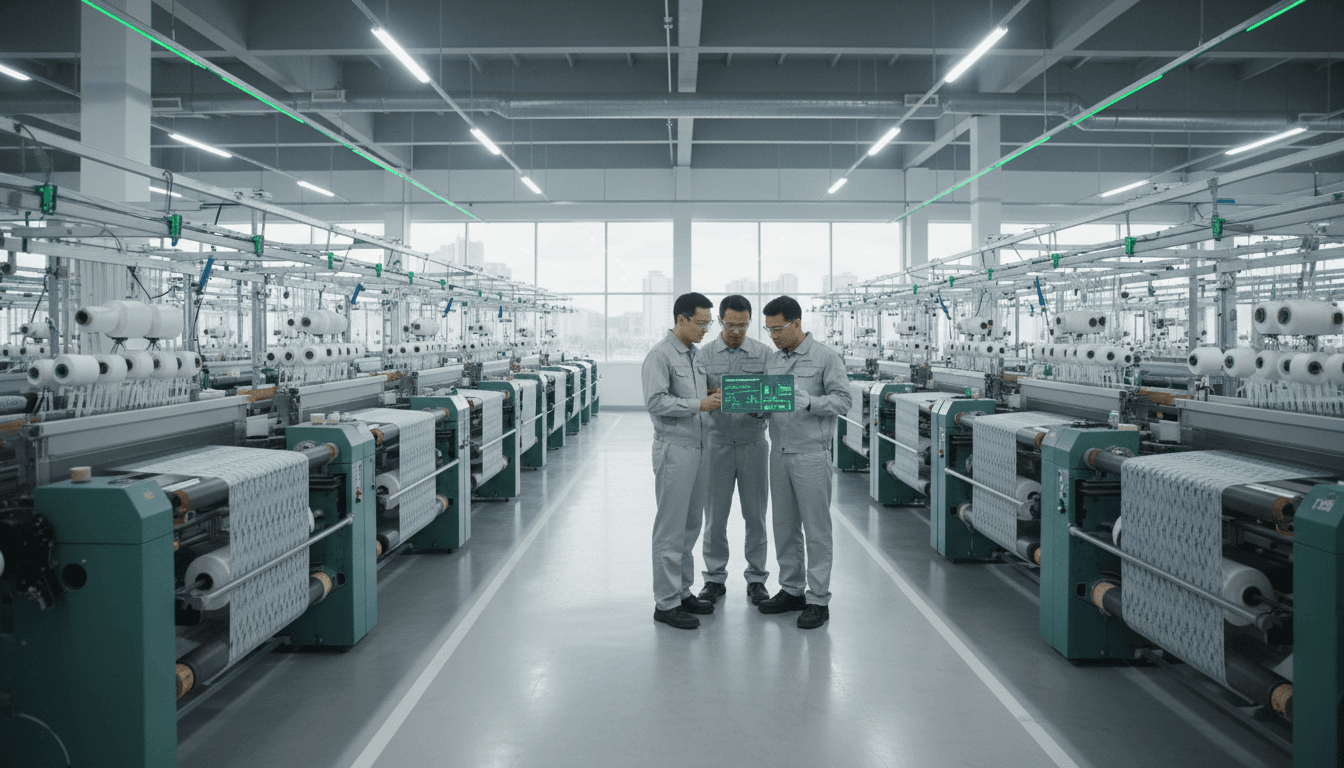
AI-Driven Decarbonization for Sri Lanka’s Textiles
Factories don’t lose export orders because a buyer “doesn’t like the color.” They lose them because sustainability claims can’t be proven—fast, consistently, and at product level. That’s why a seemingly simple announcement from Europe matters: Itema, a weaving machinery manufacturer, joined Ivy Decarb, a digital marketplace that helps mills compare machinery by energy consumption, emissions, and carbon footprint, and even supports financing through bank partnerships.
For Sri Lanka’s apparel and textile sector—already strong in manufacturing discipline and buyer relationships—this is a useful case study. Not because we should copy the exact platform, but because it shows where the industry is heading: decarbonization decisions are becoming data decisions, and data decisions are increasingly handled by AI systems that measure, predict, and optimize.
This post is part of the series “ශ්රී ලංකාවේ වස්ත්ර හා ඇඳුම් කර්මාන්තය කෘත්රිම බුද්ධිය මඟින් කෙසේ වෙනස් වෙමින් තිබේද”. The thread that runs through the whole series is simple: if you want better efficiency, better quality, faster compliance, and stronger brand trust, you need AI-ready operations. Sustainability is now one of the biggest reasons.
Why Itema joining Ivy Decarb is a signal (not just news)
Answer first: This partnership signals that machine selection and capex planning are shifting toward transparent carbon metrics, and digital platforms will increasingly define “acceptable” equipment.
Itema’s move matters because machinery suppliers usually sell on speed, uptime, fabric quality, and service coverage. Ivy Decarb adds a new competitive dimension: machine-by-machine sustainability comparability—energy use, emissions profiles, and footprint reporting.
When Matteo Mutti from Itema says they’re defining evaluation criteria for this now “fundamental aspect” of textile machinery, that’s not PR fluff. It reflects what global brands and financiers are pushing:
- Proof over promises (auditable metrics)
- Comparability over narratives (benchmarking across suppliers)
- Financing tied to performance (preferential terms for measurable impact)
For Sri Lankan manufacturers, the lesson is blunt: the bar is moving from “we are sustainable” to “show me the dataset.”
The marketplace idea: sustainability becomes a procurement feature
Ivy Decarb is positioned as a marketplace connecting machinery makers, textile producers, financial institutions, and brands. That structure is powerful because it turns sustainability into a shared language across the value chain.
In practice, marketplaces like this do three things:
- Standardize reporting inputs (so two machines can be compared)
- Create visibility for buyers and internal teams (procurement, engineering, compliance)
- Enable financial incentives (banks can fund greener upgrades with lower risk)
Sri Lanka doesn’t need the same platform tomorrow. But Sri Lanka does need the same outcomes: standard metrics, trusted measurement, and decision support.
Where AI fits: decarbonization is an optimization problem
Answer first: AI helps decarbonize textiles by measuring real-time energy and process behavior, predicting waste and downtime, and recommending operating settings that reduce emissions without sacrificing output.
A lot of sustainability programs fail because they behave like reporting exercises. AI works when it’s treated like operations engineering.
Here are high-impact AI use cases that connect directly to weaving and broader textile production.
1) AI-based energy analytics: stop guessing, start controlling
If you can’t tie energy peaks to specific machines, shifts, or fabric styles, you can’t reduce them consistently. AI models can:
- Detect abnormal energy spikes by loom, line, or batch
- Correlate consumption with fabric parameters (warp tension, speed, humidity, stoppages)
- Identify “silent losses” like compressed air leaks or poor motor efficiency
For Sri Lankan mills, this is often the quickest win because the data already exists in partial form—utility meters, machine counters, maintenance logs. AI simply connects the dots.
2) Predictive maintenance reduces carbon more than people think
A poorly maintained loom doesn’t just break. It wastes energy through friction, misalignment, repeated stops, rework, and lower first-pass yield.
AI-based predictive maintenance can reduce:
- Unplanned stoppages (less scrap and restart energy)
- Repeat defects (less reprocessing)
- Emergency part shipments (yes, logistics emissions count in some reporting scopes)
The stance I take: if your sustainability plan ignores maintenance data, it’s incomplete.
3) Process optimization: fewer defects = lower footprint
Defects are carbon. Every meter reworked is energy and time burned twice.
Computer vision and machine-learning quality control systems can:
- Flag defect patterns early (before full rolls are produced)
- Trace issues back to settings, yarn lots, or environmental conditions
- Recommend parameter adjustments for stability
This aligns perfectly with the series theme: AI improves quality and sustainability together, so you’re not forced to “choose” between compliance and profitability.
What Sri Lankan textile and apparel exporters should copy from this case study
Answer first: Don’t copy the brand names—copy the operating model: partnership + transparent metrics + finance + AI-driven execution.
Itema joining a platform is a partnership move. Sri Lankan manufacturers can do similar things locally and globally by building a “sustainability stack” with the right allies.
Partnership model #1: Machinery + measurement partner
Many factories buy machines and only later ask “how do we prove this reduces carbon?” Flip it.
A better approach:
- Define the carbon/energy KPI you must improve (per meter, per garment, per batch)
- Select machines that can output the necessary data (or can be retrofitted)
- Use a digital platform or internal system to measure before/after with credibility
This is where AI becomes practical: AI needs consistent signals. “Smart machines” that expose energy and process data are easier to optimize.
Partnership model #2: Factory + bank + performance-based capex
Ivy Decarb’s financing angle is underrated. Many Sri Lankan companies want greener equipment but capex cycles are tight.
A strong structure is performance-based financing, where:
- The factory commits to measurement and reporting
- The bank sees lower risk because performance is trackable
- The project qualifies for better terms if KPIs improve
AI strengthens this because it creates continuous verification, not annual guesses.
Partnership model #3: Factory + buyer transparency workflow
Global brands increasingly want traceable impact. But sending PDFs isn’t “transparency.” It’s paperwork.
AI-assisted compliance workflows can:
- Automate evidence collection (machine logs, energy dashboards, audit trails)
- Create product-level sustainability packs (by order, style, factory line)
- Reduce the time your team spends preparing buyer updates
That last point is a direct series theme: අනුකූලතා ක්රියාවලීන් ස්වයංක්රීය කිරීම (automating compliance processes) isn’t a nice-to-have anymore.
A practical 90-day plan for AI-driven decarbonization in a Sri Lankan mill
Answer first: Start small, instrument one production area, and deliver one measurable KPI improvement that your buyer and finance team can trust.
Most companies get this wrong by starting with a huge “digital transformation” roadmap. The reality? A focused pilot beats a big presentation.
Days 1–15: Pick one metric and one process
Choose a metric that’s simple and defensible:
kWh per 1,000 meters wovenDefect rate per shiftDowntime minutes per loom per day
Pick one area (for example, a weaving section with 10–30 looms) so you can move fast.
Days 16–45: Build the data pipeline (minimum viable)
You don’t need perfection. You need consistency.
- Capture energy data (sub-metering if possible; otherwise estimate by machine group)
- Capture production counters and stoppage data
- Align timestamps (this is where many pilots fail)
If your team can’t align timestamps, your “AI” will produce confident nonsense.
Days 46–75: Apply AI where it pays back quickly
Two fast-return models:
- Anomaly detection (spot abnormal energy use and stoppage patterns)
- Predictive maintenance scoring (rank machines by risk of failure)
Pair the model with an operational routine: daily standups, a maintenance queue, and a simple “action taken” log.
Days 76–90: Prove impact and package the story for buyers
Show results in numbers:
- Energy per output improved by X%
- Defects reduced by Y%
- Downtime reduced by Z%
Then create a buyer-facing one-pager (not a 40-slide deck) that explains:
- What was measured
- What changed
- What’s next
This is how you turn sustainability work into lead generation and buyer confidence, not just internal reporting.
Common questions Sri Lankan leaders ask (and straight answers)
“Do we need new machines to do AI-driven sustainability?”
Not always. Retrofitting sensors and improving data capture often delivers the first 10–15% improvement. But long-term, machines that expose digital metrics make scaling easier.
“Will buyers pay more for lower carbon?”
Sometimes. More often, buyers reward it by reducing risk: longer-term commitments, preferred supplier status, or simpler compliance pathways. That still improves your margins.
“Is this only for weaving?”
No. The same logic applies to dyeing/finishing (heat recovery and recipe optimization), cutting (waste reduction), and sewing (line balancing and defect prevention). Weaving is just an easy place to see machine-driven energy behavior.
What to do next if you want leads, not just learnings
Sri Lanka’s competitive advantage in apparel has always been execution. The next advantage is execution with proof: auditable sustainability performance driven by AI and supported by the right partnerships.
If Itema joining Ivy Decarb tells us anything, it’s that sustainability is becoming a procurement spec, a finance spec, and a buyer requirement—at the same time. Factories that treat AI as the operating layer for decarbonization will move faster and explain their progress more convincingly.
So here’s the question worth sitting with: If a buyer asked for machine-level energy and emissions evidence by next quarter, could your factory produce it without panic?