Industrial electricity tariffs fell 25.3%. Here’s how Sri Lanka’s apparel sector can turn that relief into AI automation, quality gains, and export competitiveness.
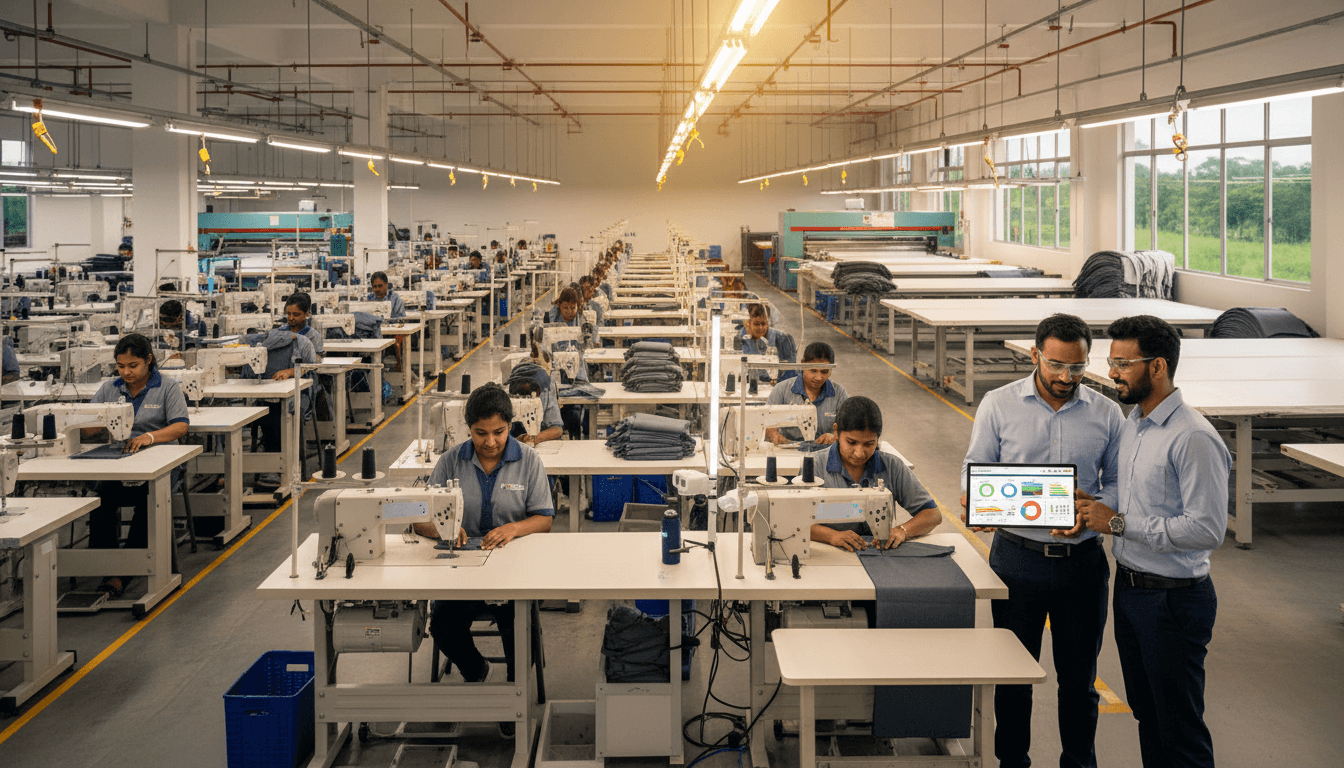
Electricity Tariff Cuts: Sri Lanka Apparel’s AI Moment
A 25.3% cut in industrial electricity tariffs isn’t just good news for Sri Lanka’s apparel exporters—it’s a rare opening to fix a problem the industry has quietly carried for years: too much cash tied up in keeping factories running, too little left to modernise how they run.
When power prices spiked in 2022—from Rs. 6.58/kWh to Rs. 34/kWh—it didn’t only hurt margins. It slowed investment, delayed upgrades, and made “let’s automate this” conversations end with “maybe next year.” Meanwhile, Sri Lanka’s apparel export revenue fell from US$ 5,591.5 million to US$ 4,535.5 million. Those numbers tell a blunt story: competitiveness isn’t only about labour and quality anymore; it’s also about energy costs and how quickly you can adopt technology.
This post sits inside our series on ශ්රී ලංකාවේ වස්ත්ර හා ඇඳුම් කර්මාන්තය කෘත්රිම බුද්ධිය මඟින් කෙසේ වෙනස් වෙමින් තිබේද—and the angle is simple: lower tariffs can fund AI and digital automation, but only if manufacturers treat this relief as capital for transformation, not just a short-term breather.
What the tariff reduction changes (and what it doesn’t)
The immediate change is clear: industrial electricity is cheaper, which improves unit economics for factories running energy-heavy operations (lighting, HVAC, compressors, ironing/finishing, cutting rooms, and increasingly, digital equipment).
The Public Utilities Commission of Sri Lanka (PUCSL) approved the cut despite earlier submissions that would have kept industrial tariffs unchanged. The Joint Apparel Association Forum (JAAF) argued the obvious: Sri Lanka was carrying one of the highest electricity tariff burdens versus competing manufacturing countries, and that was bleeding competitiveness.
Why this matters for exports, not just bills
Sri Lanka’s apparel industry contributes nearly half of national export earnings. When electricity prices swing wildly, exporters face a triple hit:
- Cost uncertainty: buyers negotiate pricing months ahead; volatile power costs crush planning.
- Investment freeze: CFOs protect cash; technology budgets get cut first.
- Capability lag: while competitors automate, you stay labour-heavy and slower.
The tariff reduction helps with (1) and (2). It doesn’t automatically fix (3). That part requires a decision.
The bigger policy signal: predictability
JAAF also called out forecasting errors that pushed tariffs up unnecessarily, noting that the CEB recorded large profits—Rs. 61 Bn (Q3 2023) and Rs. 58 Bn (Q1 2024)—after tariff moves based on inaccurate projections.
Here’s the thing about AI adoption in manufacturing: you can’t build a multi-year digital roadmap on unstable inputs. More accurate forecasting and least-cost generation planning aren’t abstract policy arguments—they’re what makes tech investment rational.
The AI connection: electricity savings are transformation fuel
If you want a practical way to think about the tariff cut, treat it as a budget line that can be reallocated. For many factories, electricity is one of the largest controllable operating expenses after labour. A 25.3% reduction can create meaningful headroom.
The mistake most companies make is using the entire saving to plug short-term gaps—without setting aside any portion to improve the system that created the gap.
Where AI and automation pay back fastest in apparel
The best early AI wins in Sri Lanka’s apparel and textile manufacturing aren’t flashy. They’re operational, measurable, and tied to daily bottlenecks.
High-ROI areas to prioritise:
- AI-based quality inspection (computer vision): detect stitching defects, shade variation, print alignment issues.
- Production planning and line balancing: reduce bottlenecks, improve output per operator hour.
- Predictive maintenance for critical machines: avoid downtime spikes during peak orders.
- Energy analytics: identify compressed air leaks, inefficient motors, HVAC wastage.
- Compliance workflow automation: document control, audit readiness, and traceability.
A useful stance: start with tasks that already have structured data (machine logs, QC photos, downtime codes, ERP exports). AI loves that.
A simple “tariff-to-tech” budgeting rule
If you’re deciding how to use the tariff relief, here’s a rule I’ve found works in manufacturing settings:
- 50%: protect competitiveness (pricing flexibility, margin recovery)
- 30%: resilience (spares, training, preventive maintenance, cybersecurity basics)
- 20%: digital transformation (AI pilots + scaling what works)
That 20% isn’t symbolic. It’s how you stop being trapped in permanent cost-reduction mode.
The practical playbook: how factories can start AI in 90 days
AI projects fail when they’re treated as “innovation theatre.” They succeed when they’re tied to one production problem, one owner, and one measurable outcome.
Step 1: Pick one production pain with a hard metric
Good candidates in apparel plants:
- Defect rate on a specific line (target: reduce by 15–30%)
- Rework hours (target: reduce by 10–20%)
- Unplanned downtime on a key machine group (target: reduce by 20%)
- Cutting room fabric wastage (target: reduce by 1–3% depending baseline)
Choose something you can measure weekly, not quarterly.
Step 2: Build a “minimum data pipeline” (not a perfect one)
Most Sri Lankan factories don’t need a massive data lake to get started. They need:
- One consistent source of truth (ERP/MES export, QC forms, machine logs)
- A shared naming convention (styles, lines, defect categories)
- A process for collecting images or sensor data where needed
If your defect categories are inconsistent, your model will be inconsistent. Fix the taxonomy first.
Step 3: Pilot with operators, not around them
AI adoption in apparel isn’t a tech problem—it’s a workflow problem.
For example, computer vision QC works when:
- Inspectors trust the alerts
- The feedback loop is fast (“flag → verify → correct → learn”)
- Supervisors use the dashboard daily
Make one supervisor the owner. If ownership is “IT + vendor,” the pilot usually dies.
Step 4: Scale only after payback is visible
A disciplined approach:
- Pilot on one line/style
- Prove savings (rework reduction, throughput lift, defect drop)
- Document SOP changes
- Expand to 3–5 lines
- Standardise across plants
This is also where the electricity tariff relief helps: scaling costs money (cameras, edge devices, training, system integration). A lower power bill makes those scale costs easier to approve.
Why energy policy and AI strategy belong in the same meeting
Most factories separate these topics: engineering deals with power; operations deals with production; IT deals with software. That division is now expensive.
Least-cost renewables aren’t only about sustainability
JAAF’s push for a least-cost generation plan with transparent competitive bidding isn’t just a climate position. It’s a pricing position.
Global brands are increasing requirements around decarbonisation, traceability, and supplier data transparency. If Sri Lanka wants to stay strong as a premium sourcing destination, it needs:
- Stable energy pricing (so quotes don’t become risky)
- Cleaner grids (so buyers’ Scope 3 targets are achievable)
- Digitised compliance (so proof is fast and credible)
AI and digital automation support all three—especially in reporting, forecasting, and anomaly detection.
The hidden link: AI increases electricity use (but reduces total cost)
As factories digitise, power usage can shift:
- More devices (sensors, servers, vision systems)
- More cooling for IT rooms
- More automation equipment
That sounds like a downside, but the economics usually work because AI reduces:
- Rework (less wasted labour + machine time)
- Scrap (less wasted fabric)
- Downtime (more stable output)
- Expediting (less last-minute overtime)
Lower tariffs improve the payback even further. The right metric isn’t “energy consumed,” it’s cost per good garment shipped.
People also ask: what AI should Sri Lankan apparel exporters prioritise?
If you can only pick one AI area, start with quality inspection. It directly impacts shipment acceptance, rework cost, and buyer confidence.
If your pain is missed delivery dates, start with planning and line balancing. You’ll feel the impact in throughput and stability.
If you’re under pressure from brands on reporting, start with compliance automation. Getting audit-ready faster is a competitive advantage.
If your factory has frequent stoppages, start with predictive maintenance. It’s one of the most practical uses of machine data.
The ordering isn’t universal, but the principle is: choose the problem where data is easiest and operational impact is immediate.
Turn today’s cost relief into next year’s capability
The tariff reduction gives Sri Lanka’s apparel exporters breathing room. JAAF’s position is also a reminder that energy policy reforms and forecasting accuracy directly affect export competitiveness.
But the bigger opportunity is what you do with the savings. If the industry wants to move from “surviving high costs” to “outpacing competitors,” the move is straightforward: fund AI pilots that reduce defects, stabilise output, and automate compliance—then scale the winners.
This series is about how කෘත්රිම බුද්ධිය (AI) is reshaping Sri Lanka’s apparel sector. The tariff cut is one of those rare moments where the environment supports action. The only real question is whether companies treat it as temporary relief—or as the budget that finally makes transformation unavoidable.
A useful test: if electricity costs dropped and nothing about your factory’s digital roadmap changed, you’re leaving competitiveness on the table.
What would you automate first if you had to show results to a buyer in the next 90 days?