Lithium is now a security priority in the U.S. Here’s what it signals—and how Kazakhstan’s oil-gas and energy sector can respond with practical AI.
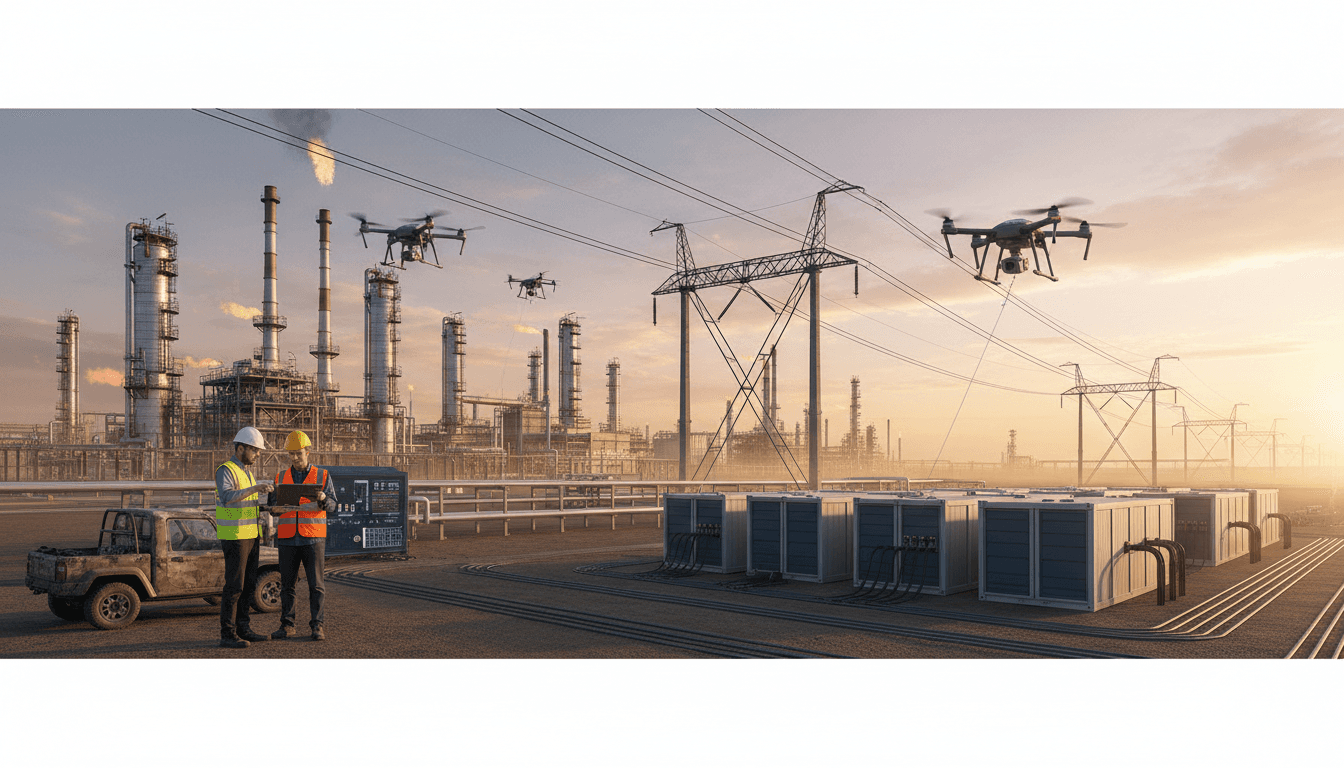
Lithium Security Meets AI: Lessons for Kazakhstan
2025–2026 is the point where critical minerals stopped being a niche policy topic and became boardroom strategy. Lithium—because it sits inside every serious plan for electric transport, grid batteries, and defense electronics—has moved into the “national security” column for the United States. The RSS summary captures the headline: Washington wants more mining and refining at home, and less dependence on China.
That shift matters for Kazakhstan even if you never plan to mine a gram of lithium. Because the U.S. approach reveals a bigger global pattern: energy security now includes data, automation, and supply-chain control. And for Kazakhstan’s energy and oil-gas sector, the fastest way to respond isn’t only by building more physical capacity—it’s by deploying AI where it makes operations resilient, efficient, and predictable.
Here’s the stance I’ll defend: the countries and companies that treat “strategic resources” as an AI problem (not just a geology problem) will win the next decade. The same logic driving the U.S. lithium push is the logic pushing Kazakhstan’s operators to adopt predictive maintenance, automated field optimization, and real-time risk monitoring.
Why the U.S. is treating lithium like a security asset
The core point is simple: lithium supply is a strategic bottleneck, and bottlenecks become security issues when they can slow down electrification, defense readiness, or industrial competitiveness.
The RSS summary notes that the U.S. is accelerating mining and minerals projects to boost self-sufficiency and reduce reliance on China. Even without the full article text, the direction is clear: the U.S. wants to control more of the chain—from extraction to refining—because refining and processing capacity is where dependency often hides.
What “self-sufficiency” really means in 2026
Self-sufficiency isn’t just “more mines.” It’s:
- Permitting speed and project pipelines (how fast you can turn reserves into production)
- Refining and processing capacity (where most supply chains break)
- Transparent traceability (knowing where material comes from, and whether it meets ESG and trade rules)
- Operational reliability (a mine that’s down 12% of the year is not a security asset)
Here’s the connection to our topic series: AI improves the reliability and transparency layers—the parts that policy can’t fix with a speech.
Why it’s also a lesson for oil and gas
Some people frame lithium as “the competitor” to oil and gas. I think that’s too simplistic. The reality is Kazakhstan will likely run a mixed system for years: hydrocarbons funding growth while power systems modernize.
That means Kazakhstan’s energy security depends on two things at once:
- Keeping oil and gas operations efficient, safe, and cost-controlled
- Building credibility and capability in the new energy supply chain (metals, grids, storage)
AI is one of the few tools that helps on both fronts.
The global lithium race mirrors Kazakhstan’s AI moment
The shared theme between the U.S. lithium strategy and Kazakhstan’s energy agenda is reducing external dependency—not by isolating, but by becoming harder to disrupt.
Kazakhstan already sits in a geopolitically sensitive neighborhood of trade routes, capital flows, and technology supply chains. The more digitized your energy system becomes, the more “security” includes:
- sensor integrity
- data quality
- cyber resilience
- vendor dependence (software, cloud, OT systems)
So when the U.S. says “lithium is national security,” read it as: control the constraints. Kazakhstan’s equivalent is: control operational uncertainty—unplanned downtime, safety incidents, methane leakage, and cost overruns.
A practical parallel: lithium refining vs. oilfield optimization
Lithium supply chains have a known pain point: processing and refining. Oil and gas has an equivalent: the daily decisions that determine recovery rates, energy use, and equipment life.
In both cases, the win comes from reducing variability.
- In lithium: variability in ore grade, impurities, process yields
- In oil and gas: variability in reservoir behavior, lift performance, corrosion rates, compressor efficiency
AI is built for variability. That’s the bridge.
Where AI delivers real value in Kazakhstan’s energy and oil-gas sector
The fastest ROI uses of AI in Kazakhstan’s energy and oil-gas operations are not flashy. They’re operationally boring—and that’s why they work.
1) Predictive maintenance that actually reduces downtime
Answer first: Predictive maintenance reduces unplanned shutdowns by forecasting failures before they happen.
Oil and gas assets in Kazakhstan often run in harsh environments: temperature swings, remote logistics, and complex equipment chains (pumps, compressors, turbines). Traditional preventive schedules waste money because they assume average wear.
A practical AI setup looks like this:
- collect vibration/temperature/pressure telemetry
- label historical failure events (even imperfectly)
- train anomaly detection + remaining useful life models
- trigger work orders only when risk crosses a threshold
What I’ve seen work best is starting with one asset class (say, compressors) and proving value in 8–12 weeks, rather than attempting a “full digital twin” immediately.
2) Production optimization: fewer guesses, more signal
Answer first: AI-based production optimization increases stability and reduces energy intensity by continuously tuning setpoints.
In mature fields, small adjustments in artificial lift, choke settings, or water injection can change output and operating cost. Humans can’t reliably evaluate thousands of combinations per day. Models can.
For Kazakhstan operators, the realistic approach is:
- build surrogate models of wells and surface networks (fast to run)
- optimize for a defined objective: barrels/day, energy per barrel, or constraint satisfaction
- apply guardrails (safety, sand production limits, water cut thresholds)
This mirrors the lithium story: the value isn’t only having the resource. It’s producing it consistently.
3) Safety and integrity: AI that prevents incidents
Answer first: Computer vision + risk scoring can reduce exposure to high-severity incidents.
Examples that are already proven globally and translate well:
- PPE compliance detection on sites
- leak/flame/smoke detection via cameras and thermal sensors
- corrosion and crack detection from inspection imagery
- near-miss analytics from incident reports and work permits
A common objection is “we already have HSE procedures.” True—but procedures don’t scale attention. AI does.
4) Emissions management: methane as a measurable operational variable
Answer first: AI turns methane reduction into an operations metric, not a PR metric.
Methane management is becoming a trade and financing issue, not just an environmental one. AI helps by:
- fusing satellite/airborne measurements with SCADA signals
- identifying “super-emitter” equipment patterns
- prioritizing repairs by cost per ton abated
If the U.S. is trying to secure lithium supply chains, Kazakhstan can secure market access by being able to prove emissions performance.
The hard part: data, people, and vendor risk
AI projects fail for predictable reasons. Most companies get this wrong by buying tools before fixing inputs.
Data readiness: what you need before “serious AI”
Answer first: The minimum viable foundation is consistent tags, time sync, and event history.
Before you train models, make sure you can answer these operational questions without arguing about the data:
- Do sensors have stable identifiers (
tag naming) across sites? - Are timestamps synchronized across SCADA, CMMS, and lab systems?
- Can you link maintenance work orders to asset telemetry?
- Do you have a clean history of shutdown causes?
If not, start there. It’s not glamorous, but it’s where ROI begins.
Skills and operating model: AI can’t be “an IT project”
Answer first: The winning model is a joint team: operations + data + reliability engineering.
For Kazakhstan’s energy and oil-gas companies, the most effective structure is:
- a small central AI team (standards, platforms, model governance)
- embedded “product owners” in production, drilling, maintenance
- clear KPIs tied to operations: downtime hours, energy intensity, failure rate
Technology sovereignty: don’t create a new dependency
Answer first: Over-dependence on a single vendor can recreate the same strategic risk the U.S. is trying to avoid in minerals.
This is where the lithium story becomes a warning. If a country wants to reduce dependency in materials, it should also reduce dependency in industrial AI.
Practical safeguards:
- insist on data portability and open interfaces (APIs)
- keep a copy of your data in formats you control
- document models and decision logic for auditability
- negotiate exit clauses and transition support
What leaders in Kazakhstan should do in the next 90 days
Answer first: Pick one operational bottleneck, instrument it, and prove measurable impact quickly.
Here’s a realistic 90-day plan that works for most energy and oil-gas organizations:
- Select one high-cost pain point (compressor failures, well downtime, flaring events, corrosion)
- Define a single KPI with a baseline (hours of downtime/month, MWh per barrel, incidents/quarter)
- Create a data map (what systems, what tags, who owns data)
- Build a pilot model with human-in-the-loop validation
- Operationalize the output (alerts into work processes, not dashboards nobody checks)
- Calculate ROI conservatively (avoid inflated claims; focus on avoided downtime and energy savings)
A useful rule: if the business can’t describe what action they’ll take when the model alerts, the project isn’t ready.
People also ask: does Kazakhstan need lithium to benefit from this trend?
Answer first: No—Kazakhstan benefits by improving energy system resilience and operational efficiency with AI, regardless of lithium production.
Lithium is the symbol of a bigger shift: energy systems are becoming more electrified, more automated, and more sensitive to supply disruptions. AI is how operators keep complex systems stable.
If Kazakhstan does expand its footprint in critical minerals over time, the same AI capabilities—process optimization, predictive maintenance, traceability—transfer directly into mining and refining.
Where this fits in our series: AI as the new energy-security toolkit
The U.S. push to expand lithium production is a signal that energy security is being rewritten. It’s not only about barrels, pipelines, and contracts anymore. It’s about reducing constraints—physical and digital.
For Kazakhstan’s energy and oil-gas sector, AI is the most practical tool to reduce constraints fast: fewer failures, safer sites, tighter emissions control, and more predictable output. That’s how you protect margins and credibility at the same time.
If you’re planning 2026 initiatives, I’d start with a blunt question: Which part of our operation would hurt most if supply chains, financing terms, or regulatory expectations tightened overnight—and what AI use case reduces that risk first?