Heat batteries can decarbonize industrial and district heat in Kazakhstan. Pair them with AI to cut fuel use, shave peaks, and stabilize renewables.
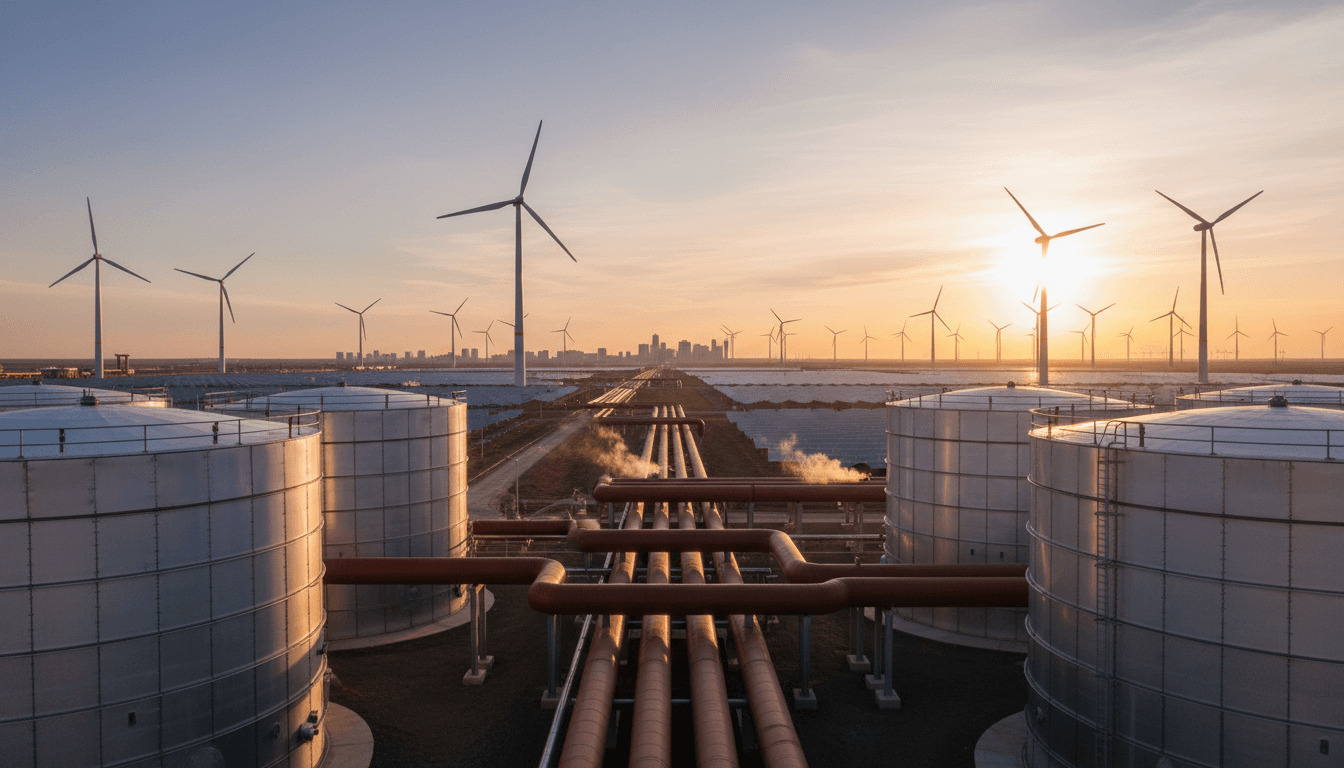
Heat Batteries: Quiet Storage, Big Wins for Kazakhstan
A lot of energy transition talk still sounds like a shopping list: hydrogen, CCS, EVs, grid-scale lithium batteries. Meanwhile, one of the most practical decarbonization tools is sitting in plain sight: heat—and the ability to store it cheaply.
Heat batteries (thermal energy storage) are gaining traction across Europe because they solve a blunt problem that renewables create: electricity is increasingly clean, but heat demand is stubborn, seasonal, and expensive to decarbonize. For Kazakhstan—where heavy industry, district heating, and oil & gas operations depend on steady thermal energy—this matters more than most flashy tech announcements.
Here’s the stance I’ll take: Kazakhstan’s energy transition will move faster when we treat heat as a first-class energy product. And once you do that, the combination of heat batteries + AI-driven optimization becomes an obvious next step in the “Қазақстандағы энергия және мұнай-газ саласын жасанды интеллект қалай түрлендіріп жатыр” series.
Heat batteries: the simplest storage that people ignore
Answer first: Heat batteries store energy as heat (not electricity) and release it later for process heat, steam, hot water, or district heating—often at lower cost per stored kWh than electrochemical batteries when the end-use is heat.
A heat battery can be as “low-tech” as an insulated tank filled with water, rocks, sand, bricks, molten salts, or phase-change materials. The point isn’t aesthetics. The point is physics: if your goal is heat, converting electricity to heat (via resistive heaters) can be close to 100% efficient, and storage can be cheap and long-duration.
What gets overlooked is that many systems don’t need the flexibility of high-voltage, high-speed electrical storage. They need:
- Hours to days of thermal buffering (industrial operations, district heating peaks)
- Seasonal smoothing (winter heating demand)
- Fuel displacement (reduce coal/gas burned for boilers)
That’s exactly where thermal energy storage shines.
Heat vs. electricity: why the economics change
Answer first: Storing heat is usually cheaper than storing electricity because the materials are inexpensive and safety/compliance overhead is lower.
Lithium-ion is fantastic for fast response and compact storage. But for heat-heavy sectors, paying battery prices to later convert electricity to heat is often a mismatch. Thermal storage can be built from commodity materials and scaled up without the same cost curve.
This matters for Kazakhstan because heat demand is large and predictable. Predictable demand is an optimizer’s dream—and a heat battery is basically “thermal inventory” that AI can schedule.
Where heat batteries fit in Kazakhstan’s energy and oil & gas mix
Answer first: Heat batteries can cut fuel use and emissions in three high-impact areas in Kazakhstan: district heating, industrial process heat, and oil & gas field operations.
Kazakhstan’s energy reality is not just electricity. It’s steam, hot water, and industrial heat, especially in mining/metallurgy, refineries, and field infrastructure. If you’re trying to decarbonize quickly, you go where the combustion is continuous.
1) District heating: reduce peak boilers, stabilize winter supply
Answer first: Thermal storage helps district heating systems handle peaks without firing extra boilers.
District heating networks face sharp morning/evening peaks, and winter makes everything more expensive. A properly sized heat battery near a CHP plant, boiler house, or heat exchanger station can:
- Store heat when generation is cheap or low-carbon
- Discharge during peaks to avoid ramping fossil boilers
- Reduce cycling stress on equipment
If Kazakhstan expands renewables and still relies on thermal plants for reliability, heat batteries can also absorb excess renewable electricity via power-to-heat, then feed the heating grid.
2) Industrial process heat: the “hard-to-abate” workhorse
Answer first: Industrial sites can use heat batteries to capture waste heat and shift electric heating to low-cost hours.
Many facilities pay twice: first to buy fuel/electricity, then again to dump waste heat. Thermal energy storage can capture waste heat streams (where temperature fits) and reuse them later.
For electrification, storage matters because grids have constraints. Instead of demanding huge power continuously, a plant can heat-charge storage when power is available (or cheap), then run the process steadily.
3) Oil & gas operations: practical decarbonization without rewriting the field
Answer first: Heat batteries can reduce gas burned for local heat/steam needs and can smooth power-to-heat in remote operations.
Oil & gas assets often need heat for buildings, separation, fluids handling, or auxiliary processes. Even when electrification is planned, reliability and peak loads remain issues. Thermal storage is a buffer—one that doesn’t require fragile chemistry.
And there’s a bigger point for this topic series: AI doesn’t decarbonize by itself; it needs controllable assets. Heat batteries are controllable assets.
The AI angle: heat batteries become valuable when you control them well
Answer first: The highest ROI comes when AI schedules charging/discharging based on prices, weather, demand forecasts, and equipment constraints.
Thermal storage looks simple, but operating it well is not “set and forget.” You’re managing a few moving targets:
- Heat demand (hourly patterns, seasonal swings)
- Electricity tariffs or internal generation costs
- Renewable availability (wind/solar variability)
- Temperature constraints (supply/return temps, process setpoints)
- Asset limits (heater capacity, tank stratification, heat exchanger bottlenecks)
This is exactly the kind of multi-variable optimization Kazakhstan’s energy and oil & gas companies are already applying AI to: production planning, predictive maintenance, energy management systems, safety analytics.
What AI actually does (no magic)
Answer first: AI improves forecasts and dispatch decisions; it doesn’t change thermodynamics.
A practical architecture I’ve seen work (and that can be implemented incrementally):
- Forecasting layer
- Heat demand forecasting (district heating load, process demand)
- Weather-driven models (temperature, wind chill)
- Price forecasting (day-ahead, intra-day if available)
- Optimization layer
- Mixed-integer optimization for charge/discharge schedules
- Constraint handling (min/max temps, ramp rates)
- Control layer
- PLC/SCADA integration
- Safety interlocks and fallback rules
- Learning loop
- Model drift monitoring
- Continuous recalibration with measured temperatures/flows
If you’re running multiple sites (common in oil & gas), the benefit multiplies: you can coordinate storage across assets and avoid synchronized peaks.
KPI targets that energy teams can measure
Answer first: Heat batteries + AI should be judged on fuel displacement, peak reduction, and reliability—not on “AI adoption.”
Track metrics that tie to money and emissions:
- Fuel saved (GJ/day or Nm³ gas/day) by replacing boiler output
- Peak electrical demand reduction (MW) via smart charge scheduling
- Renewable curtailment reduction (MWh) by absorbing surplus
- CO₂ reduction (tCO₂/month) using verified fuel/emissions factors
- System reliability: fewer boiler starts, fewer alarms, stable supply temps
If a vendor can’t discuss these KPIs in your operating language (boilers, flows, setpoints), they’re selling theater.
What Europe’s “quiet revolution” teaches Kazakhstan
Answer first: Europe is scaling thermal storage because it’s modular, uses common materials, and addresses heat decarbonization—one of the hardest parts of net-zero pathways.
The RSS summary points out a pattern: while the spotlight stays on headline tech, thermal energy storage is scaling behind the scenes. That’s not an accident. It’s driven by three realities Kazakhstan also faces:
- Heat is a massive share of final energy consumption in most economies.
- Renewables create volatility; storage is how you turn volatility into reliability.
- Cost and speed matter; thermal storage can be deployed faster than large grid upgrades.
The lesson isn’t “copy Europe.” It’s: don’t wait for perfect market design to start capturing value. Many thermal storage projects work as behind-the-meter assets with clear internal economics.
Implementation playbook: how to start without a mega-project
Answer first: Start with one site, one measurable bottleneck, and a control plan you can trust.
Here’s a pragmatic path for Kazakhstan’s energy and oil & gas companies.
Step 1: Choose the right first use case
Pick a place where heat is already expensive or operationally painful:
- District heating peak shaving at a boiler house
- Industrial facility with frequent boiler cycling
- Site with renewable power nearby and curtailment issues
- Facility with meaningful waste heat that’s currently vented
Step 2: Do a “thermal audit” that’s actually useful
Focus on data you can act on:
- Hourly heat demand profile (at least 4–8 weeks per season)
- Supply/return temperatures and allowable bands
- Boiler efficiency and fuel cost/emissions factor
- Electrical connection limits and tariff structure
Step 3: Size storage for value, not for ego
Thermal storage sizing should answer one question: what operational problem are we solving?
- 2–6 hours often targets peak shaving
- 8–24 hours targets day-night arbitrage and flexibility
- Multi-day/seasonal is possible but needs careful economics and space
Step 4: Add AI where it pays—after instrumentation
If temperature sensors are unreliable and flow meters are missing, AI won’t help. Instrument first, then optimize.
A good early “AI-light” approach:
- Rule-based control + forecasting dashboard
- Then move to optimization when operators trust the system
Step 5: Build the safety case and operator trust
Heat batteries are generally safer than high-energy chemical storage, but industrial heat is still industrial heat. Make sure:
- Interlocks prevent over-temperature/over-pressure
- Manual override exists and is trained
- Performance reports are shared weekly in plain language
Snippet-worthy truth: Thermal storage is cheap hardware. The value comes from dispatch discipline.
People also ask: quick answers for decision-makers
Are heat batteries only for renewables?
No. They work with CHP, boilers, waste heat recovery, and electrified heating. Renewables just improve the emissions story.
Do heat batteries replace lithium-ion batteries?
Not really. They solve different problems. If your end-use is heat, thermal storage is often the more direct tool.
What’s the biggest risk?
Bad integration: underspecified temperature requirements, missing sensors, or controls that operators don’t trust.
What to do next in Kazakhstan’s AI-driven energy transition
Heat batteries won’t get the same headlines as hydrogen, but they can deliver something executives actually like: measurable reductions in fuel burn and peak loads with straightforward engineering.
For this series on how AI is transforming Kazakhstan’s energy and oil & gas sector, heat batteries are a perfect example of a broader pattern: AI works best when paired with flexible physical assets. Storage—especially thermal storage—is flexibility made tangible.
If you’re planning 2026 capex, ask one forward-looking question internally: Where do we waste the most heat (or burn the most fuel) simply because we can’t store and schedule thermal energy? The teams that answer that honestly will be the ones setting the pace.