Graphite demand is rising with batteries. See how Kazakhstan can use AI to run energy storage smarter across grids and oil & gas operations.
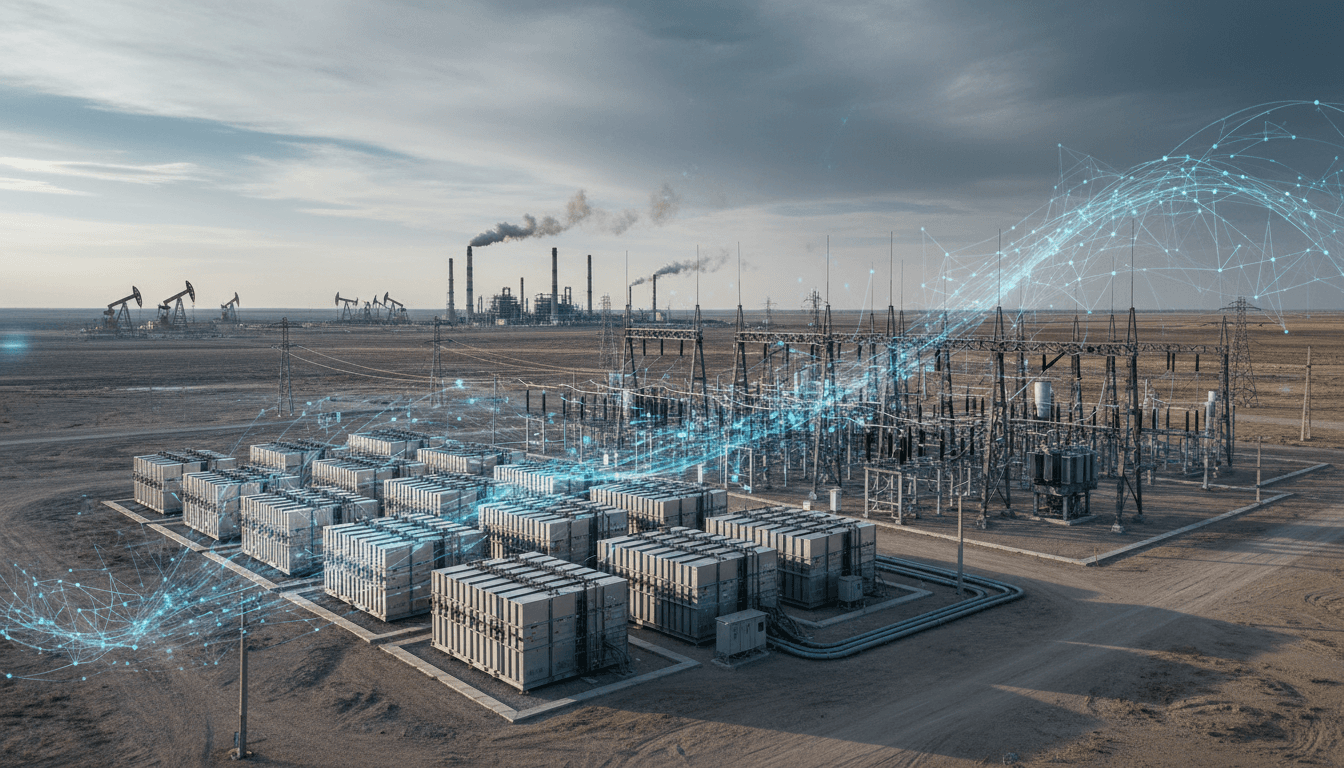
Graphite Boom: AI and Battery Demand in Kazakhstan
Graphite mining stocks are jumping again—and not because graphite suddenly became “rare.” The driver is simpler: batteries. When geopolitics makes supply chains feel fragile and EV + grid-storage demand keeps rising, investors rush toward the materials that sit quietly inside every lithium-ion cell.
But here’s the part many people miss in Kazakhstan: this isn’t only a mining story. It’s also an AI and infrastructure story. As Kazakhstan modernizes power systems and continues to run a major oil-and-gas economy, energy storage becomes less optional—and AI becomes the practical tool that makes storage, generation, and industrial loads work together.
This post reframes the graphite/graphene hype cycle through the lens of our series “Қазақстандағы энергия және мұнай-газ саласын жасанды интеллект қалай түрлендіріп жатыр”. We’ll talk about what’s real (graphite in batteries), what’s still early (graphene commercialization), and why AI in Kazakhstan’s energy and oil & gas sector should care.
Graphite vs. graphene: the hype cycle and what actually sells
Answer first: Graphite sells today because it’s already essential for lithium-ion batteries; graphene still sells mostly as a promise. That distinction matters if you’re planning projects, procurement, or investments.
The RSS summary points to a familiar pattern: after the 2010 Nobel Prize linked to graphene research, markets treated graphene like a “wonder material.” Public companies associated with graphene drew outsized attention and valuations, then corrected when commercial adoption moved slower than the narrative. That’s not a failure of physics; it’s the reality of industrial scale-up.
Why graphite is the battery workhorse
Most commercial lithium-ion batteries use graphite as the dominant anode material. That makes graphite demand highly sensitive to:
- EV production targets
- Grid-scale battery deployments
- Consumer electronics volumes
- Local content rules and supply-chain “de-risking” policies
Graphite also has a practical advantage: supply chains, qualification standards, and manufacturing know-how already exist. For energy companies and industrial operators, that means graphite exposure is tied to near-term capex cycles, not only lab breakthroughs.
Why graphene keeps disappointing investors
Graphene is real, and it’s useful in niches. The issue is scaling consistent material properties at a cost that works for mass-market applications (like “graphene super batteries”). Many graphene claims fail at one of these steps:
- Material consistency at scale
- Integration into existing manufacturing lines
- Reliable performance gains over incumbent materials
- A clear ROI after qualification and retooling
A blunt way to say it: graphene isn’t “late”; it’s “expensive to industrialize.” That’s why the market can swing from euphoria to correction.
Why China tensions amplify graphite prices and stock moves
Answer first: Graphite becomes a strategic material when the market believes supply could be constrained, politicized, or disrupted. That belief alone can move equities fast.
China has a major footprint across the battery supply chain, including processing capacity for critical minerals. When tensions rise—trade restrictions, export controls, shipping disruptions—buyers and investors reassess risk. Even the possibility of constraints can:
- raise spot and contract prices
- accelerate pre-buying and inventory building
- reward non-China supply projects with higher valuations
The real chokepoint: processing, not just mining
For many battery materials, the bottleneck isn’t only pulling ore out of the ground. It’s refining and processing to battery-grade specifications. That’s where industrial policy, permitting, energy costs, and technical know-how matter.
This is highly relevant to Kazakhstan’s energy strategy: if the country wants a stronger role in battery supply chains, processing capacity, quality control, and data-driven operations will matter as much as geology.
Kazakhstan’s energy transition needs storage—and storage needs smarter operations
Answer first: Energy storage is becoming a core grid asset, and AI is the fastest way to operate it profitably and safely.
Kazakhstan sits at an interesting intersection: it’s a major hydrocarbon producer and exporter, while also facing the same grid modernization pressures as everyone else—reliability, peak demand management, renewable integration, and industrial electrification.
Battery energy storage systems (BESS) change grid operations. They don’t just “store energy.” They provide:
- frequency regulation
- peak shaving
- reserve capacity
- voltage support
- renewable smoothing
Where AI fits (and why rule-based control isn’t enough)
A lot of storage projects underperform because operators treat batteries like static equipment. In reality, a BESS is a financial and operational asset that needs continuous optimization:
- Forecasting: demand, price signals, renewable output, outages
- Dispatch optimization: charge/discharge scheduling under constraints
- Degradation management: cycle planning to extend battery life
- Anomaly detection: early warning for thermal/runaway risks
AI models—especially forecasting + optimization—typically create value by reducing unnecessary cycling and improving dispatch timing. For Kazakhstan, this matters because the grid mix and load patterns can be highly seasonal and industrially driven.
A useful rule of thumb: storage without forecasting is just an expensive backup; storage with good forecasting becomes an operating strategy.
Why oil & gas operators in Kazakhstan should care about the battery boom
Answer first: Oil & gas companies will feel battery demand through costs, power reliability needs, and operational electrification—and AI connects all three.
At first glance, graphite and batteries sound like a power-sector issue. But in Kazakhstan’s oil and gas industry, three trends bring batteries into the core operating conversation.
1) Electrification at the field and facility level
Electric drives, compressors, pumps, and digital controls increase power quality requirements. Battery systems can stabilize on-site microgrids, reduce downtime, and lower generator runtime in remote operations.
AI helps by coordinating loads and storage in real time:
- predicting peak loads from production schedules
- optimizing generator dispatch vs. battery discharge
- minimizing fuel burn while meeting reliability constraints
2) Safety and maintenance: batteries are assets, but also risks
Batteries introduce new failure modes (thermal issues, inverter failures, cell imbalance). AI-based condition monitoring can flag problems early using:
- temperature and voltage patterns
- inverter harmonic signatures
- charge/discharge efficiency drift
The goal isn’t fancy dashboards. It’s fewer incidents and fewer unplanned shutdowns.
3) Procurement and supply chain resilience
If graphite supply gets tight, battery prices can rise and delivery times stretch. Oil & gas companies planning electrification or storage pilots need smarter sourcing strategies.
AI can support:
- demand forecasting for spares and replacement packs
- scenario modeling for lead times and supplier risk
- inventory optimization (avoid both stockouts and overstock)
Practical playbook: using AI to make storage projects work in Kazakhstan
Answer first: Start with data you already have, model the operational decision, then automate only what you can measure and audit.
Teams often start by buying software. I’ve found the better path is to start with a decision that hurts—curtailment, peak penalties, diesel burn, outages—then build the AI around that.
Step 1: Define the battery’s job in one sentence
Examples:
- “Reduce peak demand charges at this facility by 15%.”
- “Provide 30 minutes of backup for critical loads with 99.9% availability.”
- “Smooth wind variability to meet dispatch commitments.”
If you can’t state the job clearly, the AI model will be a science project.
Step 2: Build three forecasts (not one)
A useful minimum set:
- Load forecast (15-min to day-ahead)
- Renewable generation forecast (if applicable)
- Price/penalty signal forecast (tariffs, peak pricing, curtailment risk)
Even simple models can outperform manual scheduling when they’re trained on local patterns.
Step 3: Optimize dispatch under constraints
Batteries have constraints: SOC limits, power limits, ramp rates, temperature limits, and degradation costs. Dispatch optimization should explicitly include:
- cycle cost (degradation proxy)
- reliability reserve requirements
- safety constraints (temperature thresholds)
Step 4: Put governance around the model
Industrial AI needs guardrails:
- audit logs for decisions
- override modes for operators
- clear KPI ownership (who is accountable?)
For regulated or safety-critical environments, “black box” is a fast way to lose trust.
People also ask: graphite, graphene, and AI in energy systems
Is graphite the same as graphene?
No. Graphene is a single (or few) layer form of carbon arranged in a hexagonal lattice. Graphite is many layers stacked. They’re related, but behave differently in manufacturing.
Will graphene replace graphite in batteries soon?
Not soon at mass scale. You may see graphene additives or niche designs, but graphite remains the dominant anode material in mainstream lithium-ion supply chains.
What’s the fastest AI win for energy storage in Kazakhstan?
Forecasting + optimized dispatch. It’s measurable, improves economics quickly, and reduces unnecessary cycling.
What this means for Kazakhstan in 2026
Graphite stock rallies can look like a market curiosity. I think they’re a signal: energy storage is no longer “next decade.” It’s an operating requirement, and the materials behind it are becoming strategic.
For Kazakhstan’s energy and oil-and-gas leaders, the smartest move isn’t to chase graphene headlines. It’s to treat storage as a system: materials, supply chain, grid integration, on-site reliability, and AI-driven operational control.
If you’re evaluating BESS for a substation, a wind project, or an oilfield facility, the next question is straightforward: do you have the data and the operating model to run storage profitably and safely—every day, not just on commissioning day?